%22%3E%3Cpath%20fill%3D%22%23000%22%20d%3D%22M79.702%2078.555c0%2033.03%2018.767%2046.361%2035.801%2046.361%2014.149%200%2029.738-7.033%2034.505-28.595l-1.445-.306c-3.61%2015.903-14.005%2027.371-33.06%2027.371-13.86%200-13.716-22.173-13.716-41.594V67.415h49.662c0-23.393-13.136-40.674-35.946-40.674-17.034%200-35.801%2018.94-35.801%2051.814m35.801-50.283c14.437%200%2014.005%2026.455%2013.861%2037.617h-27.573c-.004-18.353.865-37.617%2013.712-37.617%22%2F%3E%3C%2Fg%3E%3Cmask%20id%3D%22b%22%20width%3D%22603%22%20height%3D%22126%22%20x%3D%220%22%20y%3D%220%22%20maskUnits%3D%22userSpaceOnUse%22%20style%3D%22mask-type%3Aluminance%22%3E%3Cpath%20fill%3D%22%23fff%22%20d%3D%22M602.5%200H.5v125.074h602z%22%2F%3E%3C%2Fmask%3E%3Cg%20mask%3D%22url(%23b)%22%3E%3Cpath%20fill%3D%22%23000%22%20d%3D%22M86.81%20105.474h-1.445c0%2010.547-4.475%2011.463-5.483%2011.463-2.454%200-4.475-3.514-4.475-11.921V48.264c0-14.83-10.826-21.558-22.229-21.558-10.97%200-22.66%206.118-25.983%2017.276V8.478c-.515-4.763-4.26-8.48-8.893-8.48H.522v1.53H.5c2.886%200%204.763%201.988%204.763%205.045v110.211c0%203.057-1.877%205.045-4.763%205.045h.022v1.531h31.423v-1.531h.021c-2.885%200-4.762-1.988-4.762-5.045V50.252c0-10.395%208.949-18.806%2016.31-18.806%205.338%200%209.813%204.13%209.813%2014.83v58.74c0%2013.909%207.796%2019.874%2016.165%2019.874%209.958.005%2017.318-6.418%2017.318-19.416%22%2F%3E%3C%2Fg%3E%3Cmask%20id%3D%22c%22%20width%3D%22603%22%20height%3D%22126%22%20x%3D%220%22%20y%3D%220%22%20maskUnits%3D%22userSpaceOnUse%22%20style%3D%22mask-type%3Aluminance%22%3E%3Cpath%20fill%3D%22%23fff%22%20d%3D%22M602.5%200H.5v125.074h602z%22%2F%3E%3C%2Fmask%3E%3Cg%20mask%3D%22url(%23c)%22%3E%3Cpath%20fill%3D%22%23000%22%20d%3D%22M225.911%2042.197c0-10.552-11.259-16.818-22.954-16.818-10.682%200-21.513%205.045-25.119%2016.975v-7.352c-.48-4.574-3.977-8.148-8.364-8.398h-18.322v1.53h-.022c2.886%200%204.763%201.99%204.763%205.046v81.371h.004c.293%204.814%203.942%208.633%208.509%208.846v.004h18.173v-1.53h.022c-2.886%200-4.763-1.989-4.763-5.045V48.62c0-10.552%209.094-19.269%2016.602-19.269%204.763%200%208.805%203.672%209.386%2012.693%200%206.881%204.619%2011.773%2011.119%2011.773%206.631%200%2010.966-4.587%2010.966-11.62%22%2F%3E%3C%2Fg%3E%3Cmask%20id%3D%22d%22%20width%3D%22603%22%20height%3D%22126%22%20x%3D%220%22%20y%3D%220%22%20maskUnits%3D%22userSpaceOnUse%22%20style%3D%22mask-type%3Aluminance%22%3E%3Cpath%20fill%3D%22%23fff%22%20d%3D%22M602.5%200H.5v125.074h602z%22%2F%3E%3C%2Fmask%3E%3Cg%20mask%3D%22url(%23d)%22%3E%3Cpath%20fill%3D%22%23000%22%20d%3D%22M234.434%2028.315c2.925%200%205.583%202.312%206.779%205.863l29.782%2089.218h1.597l20.61-61.852%2020.609%2061.852h1.598l29.781-89.218c1.196-3.556%203.855-5.863%206.78-5.863h.183v-1.776h-11.538v1.776h.184c2.925%200%203.99%202.312%202.794%205.863l-18.082%2054.209-18.082-54.209c-1.196-3.556-.131-5.863%202.794-5.863h.183v-1.776h-33.343v1.776h.183c2.925%200%205.583%202.312%206.78%205.863l8.373%2025.058-9.705%2029.15-18.082-54.208c-1.196-3.556-.131-5.863%202.794-5.863h.184v-1.776h-33.344v1.776z%22%2F%3E%3C%2Fg%3E%3Cmask%20id%3D%22e%22%20width%3D%22603%22%20height%3D%22126%22%20x%3D%220%22%20y%3D%220%22%20maskUnits%3D%22userSpaceOnUse%22%20style%3D%22mask-type%3Aluminance%22%3E%3Cpath%20fill%3D%22%23fff%22%20d%3D%22M602.5%200H.5v125.074h602z%22%2F%3E%3C%2Fmask%3E%3Cg%20mask%3D%22url(%23e)%22%3E%3Cpath%20fill%3D%22%23000%22%20d%3D%22M377.826%20124.491c17.034%200%2038.211-15.699%2038.211-48.882%200-33.03-21.177-48.73-38.211-48.73-17.035%200-38.067%2015.857-38.067%2048.73.004%2033.026%2021.032%2048.882%2038.067%2048.882m0-96.085c13.86%200%2016.121%2028.24%2016.121%2047.356%200%2019.116-2.261%2047.198-16.121%2047.198-13.861%200-15.978-27.777-15.978-47.198%200-19.422%202.122-47.356%2015.978-47.356%22%2F%3E%3C%2Fg%3E%3Cmask%20id%3D%22f%22%20width%3D%22603%22%20height%3D%22126%22%20x%3D%220%22%20y%3D%220%22%20maskUnits%3D%22userSpaceOnUse%22%20style%3D%22mask-type%3Aluminance%22%3E%3Cpath%20fill%3D%22%23fff%22%20d%3D%22M602.5%200H.5v125.074h602z%22%2F%3E%3C%2Fmask%3E%3Cg%20mask%3D%22url(%23f)%22%3E%3Cpath%20fill%3D%22%23000%22%20d%3D%22M490.482%2042.197c0-10.552-11.258-16.818-22.953-16.818-10.683%200-21.513%205.045-25.119%2016.975v-7.352c-.48-4.574-3.977-8.148-8.365-8.398h-18.326v1.53h-.022c2.886%200%204.763%201.99%204.763%205.046v81.371h.004c.293%204.814%203.943%208.633%208.509%208.846v.004h18.173v-1.53h.022c-2.885%200-4.763-1.989-4.763-5.045V48.62c0-10.552%209.094-19.269%2016.602-19.269%204.763%200%208.806%203.672%209.386%2012.693%200%206.881%204.619%2011.773%2011.119%2011.773%206.64%200%2010.97-4.587%2010.97-11.62%22%2F%3E%3C%2Fg%3E%3Cmask%20id%3D%22g%22%20width%3D%22603%22%20height%3D%22126%22%20x%3D%220%22%20y%3D%220%22%20maskUnits%3D%22userSpaceOnUse%22%20style%3D%22mask-type%3Aluminance%22%3E%3Cpath%20fill%3D%22%23fff%22%20d%3D%22M602.5%200H.5v125.074h602z%22%2F%3E%3C%2Fmask%3E%3Cg%20mask%3D%22url(%23g)%22%3E%3Cpath%20fill%3D%22%23000%22%20d%3D%22M602.5%20103.974h-1.445c0%2010.553-4.474%2011.468-5.483%2011.468-2.453%200-4.474-3.519-4.474-11.925V6.585c0-3.056%201.877-5.045%204.762-5.045h-.166V.01h-17.715c-4.942%200-8.953%204.24-8.962%209.475h-.009v23.333c-6.063-3.977-9.84-5.503-16.48-5.503-17.034%200-35.801%2014.169-35.801%2047.046%200%2033.183%2013.101%2050.718%2035.801%2050.718%208.085%200%2013.302-2.294%2019.942-8.254%203.03%204.587%207.797%206.575%2012.704%206.575%209.966-.004%2017.326-6.427%2017.326-19.426m-30.75%2011.625c-4.763%204.435-10.84%205.822-13.38%205.822-11.482%200-19.558-16.933-19.558-46.907%200-29.97%2010.914-43.222%2019.885-43.222%203.3%200%206.264.153%2010.307%203.057v69.172c.004%205.04%201.017%209.017%202.746%2012.078%22%2F%3E%3C%2Fg%3E%3Cmask%20id%3D%22h%22%20width%3D%22603%22%20height%3D%22126%22%20x%3D%220%22%20y%3D%220%22%20maskUnits%3D%22userSpaceOnUse%22%20style%3D%22mask-type%3Aluminance%22%3E%3Cpath%20fill%3D%22%23fff%22%20d%3D%22M602.5%200H.5v125.074h602z%22%2F%3E%3C%2Fmask%3E%3Cg%20mask%3D%22url(%23h)%22%3E%3Cpath%20fill%3D%22%23000%22%20d%3D%22M516.984%20121.865c-2.885%200-4.763-1.988-4.763-5.045V9.466C512.2%204.241%20508.196.01%20503.259.01h-17.724v1.53h-.022c2.89%200%204.763%201.989%204.763%205.045v108.418c.515%204.564%204.029%208.129%208.434%208.337v.06h18.252v-1.53h.022z%22%2F%3E%3C%2Fg%3E%3C%2Fsvg%3E)
Old-school dating makes a comeback in Singapore – but is it working for singles?
As dating events, offline courtship, and upfront emotional honesty gain traction, we examine whether moving beyond swipe culture is truly solving modern dating’s biggest frustrations
By Chelsia Tan -
Share this article
It’s a Friday night in the CBD. But instead of winding down with drinks at a bar, young professionals are gathered at Rasa Space, a trendy club, poring over a Powerpoint presentation projected onto large screens.
Syafiqah Sazali, a guest experience coordinator at a luxury hotel, is pitching her team’s latest project to an audience of over 120. The topic of her presentation? Her manager, Jessica Tan, a 33-year-old single looking for a fun, family-oriented date. Beyond a shot at finding true love, the event also gave Jessica and her team a chance to hang out after work.
“Since we were available that day, we decided to give it a try,” says Syafiqah, speaking to Her World over a video call.
“I wanted it to be a fun thing, so I really gave them my trust – I knew they weren’t going to throw me under the bus,” shares Jessica, adding that she didn’t see the presentation until the event itself.
Organised by San Francisco-based dating app Coffee Meets Bagel (CMB), the Fishbowl x Coffee Meets Bagel Singles Pitch Night is a series of events inspired by the TV series Shark Tank, where aspiring entrepreneurs pitch their business ideas to a panel of investors.
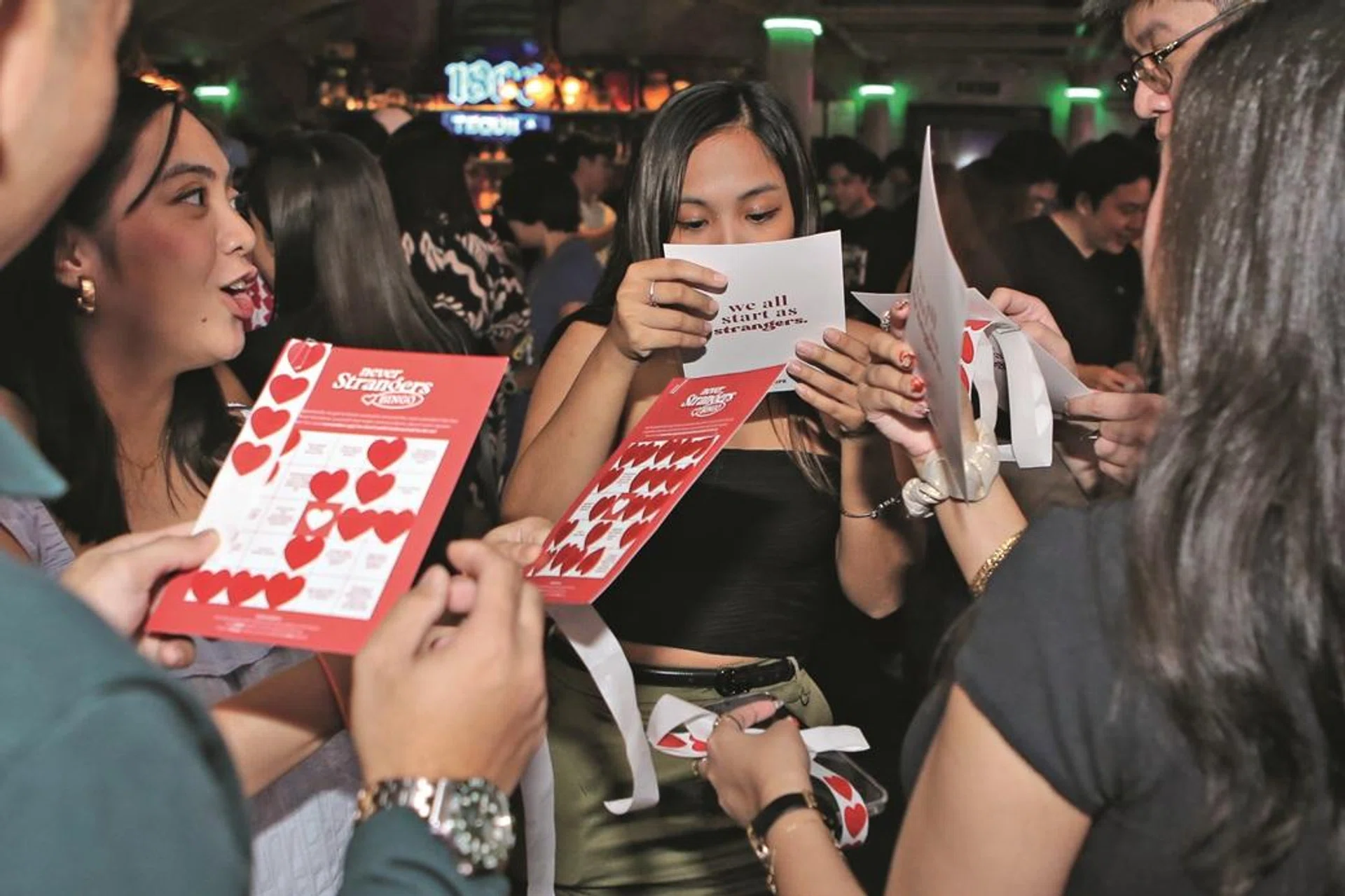
This time, however, singles – or their friends – pitch themselves in three-minute Powerpoint presentations. In Singapore, such events are mushrooming across the island’s nightlife scene. Social mixers like Never Strangers and Offline are bringing people together – whether they’re single or simply curious.
On what prompted CMB to experiment with a pitch-style dating event, Shn Juay, the company’s worldwide CEO, says it was about creating more spaces for offline connections to happen.
She says: “Since our community is made up of professionals and preparing decks is second nature for many Singapore daters, we took something people already knew and gave it a playful dating twist.
“Interestingly, we’d already seen this behaviour in-app too. Some daters were writing their profiles like mini pitches and putting up deck-like visuals as their profile photos, conveying their intent clearly and expressing themselves confidently.”
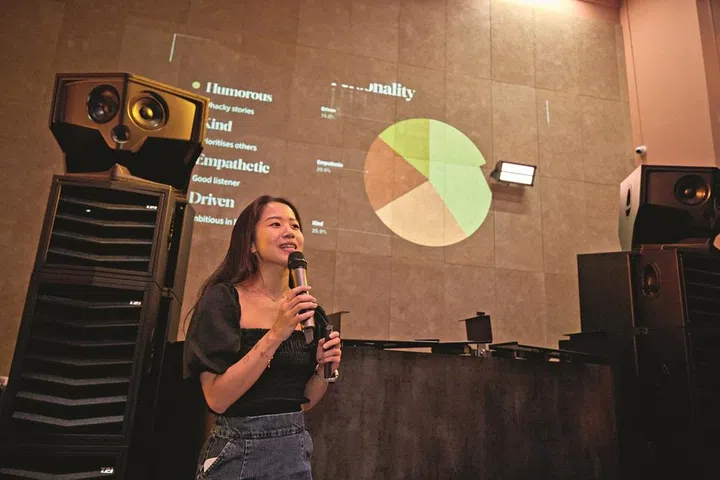
Inspired by Shark Tank, the Fishbowl x Coffee Meets Bagel Singles Pitch Night flips dating into a pitch
Gone, it seems, are the days when singles relied on a vague “let’s see where this goes” approach. Instead, many are taking charge of their dating expectations, giving rise to terms like “clear-coding” – defined as openly communicating one’s relationship intentions, expectations and boundaries from the start.
In many ways, it mirrors traditional courtship norms, where intentions were made known early and ambiguity was less tolerated.
Millennials and Gen Z, in particular, are increasingly seeking out in-person dating events amid growing fatigue with dating apps. Ironically, the number of dating profiles on these online platforms can lead to surface-level interactions, encouraging quick judgments based on polished profiles and appearance.
Alongside this, many users find themselves navigating unhealthy dating dynamics – from being suddenly cut off without explanation, to mixed signals, misrepresentation, or “love bombing” early on – experiences that leave interactions feeling transactional.
A 2025 Forbes report found that 75 per cent of users surveyed described themselves as “burnt out”. Yet the same report also revealed a contradiction at the heart of modern dating: Nearly half of respondents said they were still looking for a long-term connection when using dating apps. This paradox doesn’t seem to faze CMB’s Shn, who says that dating apps and live events serve “very different needs”.
“Apps are great for discovery, but live formats offer real presence, real reactions and shared energy. A live pitch-style event creates a moment where people can show up as themselves, be seen and feel something – even if it’s just laughter or encouragement from the room.
“It’s not about rejecting dating apps; it’s about balancing them. When everything is digital, in-person experiences feel refreshing, grounding and more human,” she adds.
In a dating landscape marked by burnout and disconnection, these back-to-basics approaches suggest that modern romance isn’t necessarily progressing forward, but moving back to something familiar – meeting through people you trust, and in spaces where you can genuinely be seen. Roping in a friend to help meet potential romantic partners is a classic move for those in the dating scene.
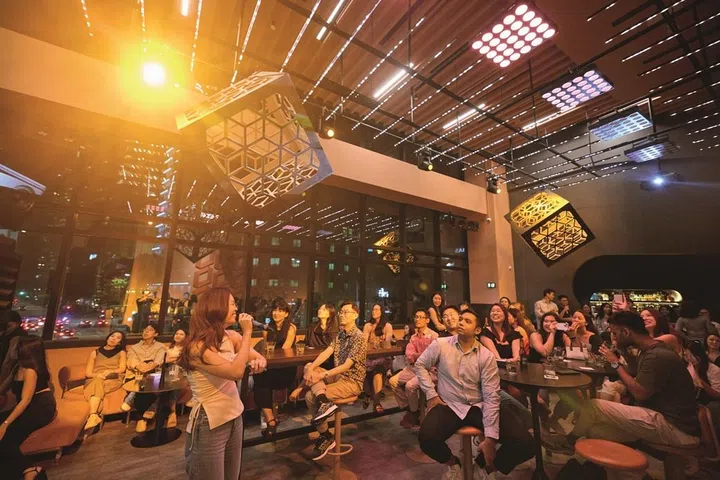
Across Singapore’s nightlife scene, social mixers are bringing people together – whether they’re single or just curious
At CMB’s Fishbowl event, two friends stood out as wingmen for their humorous and creative pitch that caught the attention of the room. Timothy Long, who attended the event as a wingman for his friend Ben, initially thought it would simply be a fun night out.
“But as I sat there listening to all the pitches, I thought to myself, ‘I want him to look as good as possible.’ It felt good knowing I could be part of his potential relationship’s origin story,” quips the 31-year-old operations analyst.
He adds that having friends involved made the experience less intimidating for everyone. By acting as proxies for their single friends, wingmen helped take the pressure off. “I think it really eased the pressure on Ben and allowed him to showcase who he truly was in an unfamiliar setting, in front of people he didn’t know.”
At its core, the appeal of these events lies in the return of friends as matchmakers, buffers and emotional safety nets in an otherwise exhausting dating landscape.
That same experience is what Joy Goh, Mediacorp’s commissioner of unscripted content, is banking on with Wingman, an upcoming reality series in which individuals enlist their closest friends in the search for love. The show is currently in the process of filming, featuring single participants and their friends aged 21 to 35 from across South-east Asia.
“Most dating shows focus entirely on the familiar narrative: boy meets girl, they get together, and perhaps live happily ever after. But that’s not reality.
“What about the friends we gossip with? What about the family we hope will accept our romantic partner?” asks Joy, when queried about the inspiration behind the show.
With Wingman, she hopes to normalise the inclusion of one’s support system in dating journeys.
“It’s perfectly normal – and actually healthy – to ask for help when it comes to dating. In the process of finding a partner, having a best friend alongside us allows us to grow as individuals, reflect on what we value and don’t, and have someone help check our blind spots,” she says.

Joy Goh, Mediacorp’s commissioner of unscripted content, is betting on Wingman – an upcoming reality show where friends step in to help find love
Swipe culture vs traditional dating
Would deleting dating apps in favour of meeting people through friends or in person increase one’s chances of finding a potential partner – or is one approach more effective than the other?
Grace Ann Chua, dating coach and founder of Heart To Heart Talks (HTHT), observes that many people perceive offline dating as more authentic and better suited to reading social cues and “vibe checking” upfront.
“More are willing to end connections early if core values don’t align, seeing this as time-saving. I’ve also observed more individuals wanting to process past relationships, situationships or baggage – such as going for therapy, counselling or coaching – before getting into new relationships,” she says.
Grace adds that many of her clients move in and out of dating apps, intentionally stepping away at times to rest and reset emotionally.
“For women, they may experience decision fatigue or find online dating disappointing – initially hopeful about the process, but after encountering few promising leads, they become tired and discouraged.”
That exhaustion is one that Beverly*, 34, knows well. She hasn’t been on the apps for several months, citing burnout. While she’s recently attended in-person events such as Never Strangers and Timeleft, the followthrough has felt similarly underwhelming. As with matches she met online, connections often tapered off after the initial few meetings.
In Natalie’s* case, a set-up by a friend led to a disastrous first meeting. Her date arrived nearly an hour late, leaving her to queue alone for a table at a popular restaurant he had chosen. His excuse? Trouble finding parking. Still, Natalie assumed it might have been a one-off and agreed to a second date.
“This time, he was 45 minutes late – again because of parking. This is a man who works as a partner at a Big Four firm. I don’t think he would be late to every client meeting because of a parking situation, right?” says the 36-year-old e-commerce manager.
Unsurprisingly, a third date never materialised. Natalie, who returned to the dating scene late last year after a short break, recounts her failed connections with a mix of bemusement and resignation. She’s tried both dating apps and in-person events with little success.
“It’s just my luck. I have friends who met their husbands or first boyfriends on dating apps, but it’s never happened to me,” she laughs.
Similarly, Beverly muses that she has learnt to adjust her expectations after every experience, but remains firm on her boundaries and dating goals.
“The dating pool shrinks as you get older. The men you meet are either lifelong bachelors or divorcees. I think I’m starting to accept the fact that I might be single for a long time,” she shrugs.
Rather than viewing these outcomes as personal failures, Grace offers a reframing for women who feel entrenched in the dating cesspool. She notes that one of the most common fears her clients face is discovering incompatibility – a moment that can be especially painful when you’re enjoying someone’s company or imagining a near future together, only to have that fantasy disrupted by misaligned values or deal-breakers.
“I think it would help if more people understood that the purpose of dating is to discover compatibility – and that both a break-up or the end of a dating experience, as well as an engagement or marriage, are valid definitions of success,” she says.
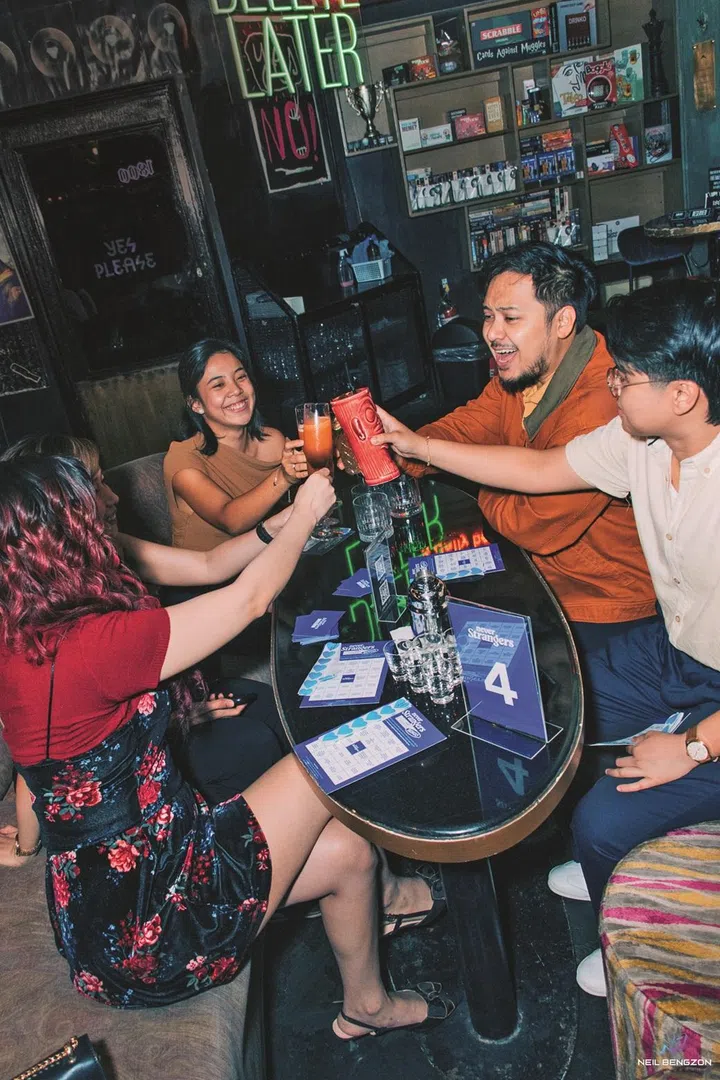
Millennials and Gen Z are turning to in-person dating events like Never Strangers, driven by growing fatigue with dating apps
The rise of clear coding
If the return to offline dating is about being seen, the rise of “clear-coding” is about being understood Increasingly, singles are opting for directness over ambiguity – spelling out intentions, boundaries and expectations early on, rather than leaving things to chance.
After years of failed dates and situationships, project manager Lynne*, 38, had had enough of ambiguity in her dating life.
In 2017, while on a solo trip to Croatia, she decided to pursue a connection she met on Tinder – but not before making her expectations clear. She wanted someone emotionally intelligent, whom she could talk to without feeling judged. Her match, on the other hand, was looking for a true partner – someone he could work well with and trust wholeheartedly.
“We’ve both had our fair share of bad dates and disastrous relationships, and while it’d left us a little scarred and weary, it also gave us clarity of what we were looking for,” she shares. Fast forward nine years, and they are now married and raising a child in Singapore.
“We’re a little older now – rounder and more grizzled – but I think we’re still the same direct and forthcoming duo we were when we first met,” says Lynne.
One might assume that such upfront honesty would scare people off. Instead, Lynne found that stating her intentions early helped cut through uncertainty, setting a clearer foundation for connection from the outset.
According to Angelin Truscott, counselling psychologist at Annabelle Psychology, clearer communication tends to foster healthier relationships – not just faster outcomes.
“When partners name intentions and boundaries openly, they reduce ambiguity and the cognitive strain of guessing, which supports emotional regulation and trust.
“This clarity helps prevent mismatched expectations, which are a common source of distress, and creates a safe space where both individuals feel respected and understood,” she says.
A key bane of modern dating is ghosting trauma and situationship stress, where the absence of closure and undefined relationships erode trust and challenge one’s sense of self-worth. In response, Angelin notes that the shift towards clear-coding reflects deeper needs for security and predictability, helping to reduce the anxiety and ambiguity that often accompany app-based dating.
It also opens the door to more authentic connections, where people feel genuinely recognised and valued, rather than treated as just another swipe. Clear communication can be empowering too, allowing individuals to make informed choices instead of second-guessing mixed signals or lingering in uncertainty.
For Natalie, who is currently seeing a match that seems promising – aside from his habit of going Dutch on every date – this clarity has become especially important.
“I don’t mind picking up the check, but splitting everything down to a T gives me the ick. It troubles me because it hints at how he might manage money in a marriage,” she says, adding that she plans to speak to him about it.
“Everything else about him is fine. We’ll see how he responds – if he doesn’t take it well, then it’s a deal-breaker.”

Hotel manager Jessica Tan (left), and her colleague Syafiqah Sazali, attended Coffee Meets Bagel’s Fishbowl event as a way to bond after work
Choosing yourself first
Even when clarity doesn’t result in a romantic outcome, it can still lead somewhere meaningful.
Despite having a team behind her, Jessica didn’t meet any potential dates at the CMB Fishbowl event. What she and Syafiqah did gain, however, was a deeper understanding of themselves.
“The experience helped me be more transparent about what I want,” reflects Jessica. “But it wasn’t really just about relationships – it was about getting to know new people, basically.”
Syafiqah, who is in a relationship, walked away with a different perspective. Attending the event pushed her outside her comfort zone – she admits to feeling nervous. Putting herself out there as a wingman, she realised, was what made the experience interesting.
“Overall, I felt that there were people who genuinely wanted to meet others. I didn’t realise there would be such a group willing to go out and talk. It was refreshing, because not many people want to go out these days,” she says.
The event also gave another participant, Lim Peilin, 44, an opportunity to bond with her friend. The pair decided to pitch themselves as singles simply because “it was something we’d never tried before”. For Peilin, it was also a chance to confront her fear of public speaking.
“I actually have stage fright, but because there was a reason for me to go, I decided to overcome it,” she recalls. “It became a good opportunity to try, because it wasn’t like a business presentation. The casual setting made it feel a little less intimidating.”
While she walked away with a few new friends, the biggest takeaway was more personal. The experience highlighted an area she wanted to work on.
“I realised I need to improve on my public speaking. I’m very shy and not good at speaking in front of many people, but at least I tried. Because of this event, I even went on to take a course in business presentation and public speaking,” shares Peilin, who works as a supply management executive.
Still, there is no one-size-fits-all approach to dating, as what works for one person may not work for another.
“Even though more alternative dating formats are popping up, many still say it’s scary to put themselves out there at such events, and feel pressure to attend,” says Grace of HTHT.
“I think offline events are gaining popularity because they’re more efficient – you get to meet multiple single people at once and, hopefully, find someone you vibe with. They can also be a fun experience.”
As Timothy puts it, many people – not just singles – struggle with identity, often clinging tightly to what they believe defines them. “Things like, ‘I’m not funny enough’, ‘I’m not good-looking’, or ‘pretty people only want to date other attractive people’,” he elaborates.
He believes these assumptions can snowball into a lack of self-confidence, making people unwilling to put themselves out there in the first place. “On top of that, it becomes harder for them to even know what they’re looking for in a partner.”
Drawing on Sun Tzu’s The Art of War, Timothy explains: “You have to know yourself before anything else.” His takeaway? “Don’t overthink it – just do it.”
*Names have been changed.