%22%3E%3Cpath%20fill%3D%22%23000%22%20d%3D%22M79.702%2078.555c0%2033.03%2018.767%2046.361%2035.801%2046.361%2014.149%200%2029.738-7.033%2034.505-28.595l-1.445-.306c-3.61%2015.903-14.005%2027.371-33.06%2027.371-13.86%200-13.716-22.173-13.716-41.594V67.415h49.662c0-23.393-13.136-40.674-35.946-40.674-17.034%200-35.801%2018.94-35.801%2051.814m35.801-50.283c14.437%200%2014.005%2026.455%2013.861%2037.617h-27.573c-.004-18.353.865-37.617%2013.712-37.617%22%2F%3E%3C%2Fg%3E%3Cmask%20id%3D%22b%22%20width%3D%22603%22%20height%3D%22126%22%20x%3D%220%22%20y%3D%220%22%20maskUnits%3D%22userSpaceOnUse%22%20style%3D%22mask-type%3Aluminance%22%3E%3Cpath%20fill%3D%22%23fff%22%20d%3D%22M602.5%200H.5v125.074h602z%22%2F%3E%3C%2Fmask%3E%3Cg%20mask%3D%22url(%23b)%22%3E%3Cpath%20fill%3D%22%23000%22%20d%3D%22M86.81%20105.474h-1.445c0%2010.547-4.475%2011.463-5.483%2011.463-2.454%200-4.475-3.514-4.475-11.921V48.264c0-14.83-10.826-21.558-22.229-21.558-10.97%200-22.66%206.118-25.983%2017.276V8.478c-.515-4.763-4.26-8.48-8.893-8.48H.522v1.53H.5c2.886%200%204.763%201.988%204.763%205.045v110.211c0%203.057-1.877%205.045-4.763%205.045h.022v1.531h31.423v-1.531h.021c-2.885%200-4.762-1.988-4.762-5.045V50.252c0-10.395%208.949-18.806%2016.31-18.806%205.338%200%209.813%204.13%209.813%2014.83v58.74c0%2013.909%207.796%2019.874%2016.165%2019.874%209.958.005%2017.318-6.418%2017.318-19.416%22%2F%3E%3C%2Fg%3E%3Cmask%20id%3D%22c%22%20width%3D%22603%22%20height%3D%22126%22%20x%3D%220%22%20y%3D%220%22%20maskUnits%3D%22userSpaceOnUse%22%20style%3D%22mask-type%3Aluminance%22%3E%3Cpath%20fill%3D%22%23fff%22%20d%3D%22M602.5%200H.5v125.074h602z%22%2F%3E%3C%2Fmask%3E%3Cg%20mask%3D%22url(%23c)%22%3E%3Cpath%20fill%3D%22%23000%22%20d%3D%22M225.911%2042.197c0-10.552-11.259-16.818-22.954-16.818-10.682%200-21.513%205.045-25.119%2016.975v-7.352c-.48-4.574-3.977-8.148-8.364-8.398h-18.322v1.53h-.022c2.886%200%204.763%201.99%204.763%205.046v81.371h.004c.293%204.814%203.942%208.633%208.509%208.846v.004h18.173v-1.53h.022c-2.886%200-4.763-1.989-4.763-5.045V48.62c0-10.552%209.094-19.269%2016.602-19.269%204.763%200%208.805%203.672%209.386%2012.693%200%206.881%204.619%2011.773%2011.119%2011.773%206.631%200%2010.966-4.587%2010.966-11.62%22%2F%3E%3C%2Fg%3E%3Cmask%20id%3D%22d%22%20width%3D%22603%22%20height%3D%22126%22%20x%3D%220%22%20y%3D%220%22%20maskUnits%3D%22userSpaceOnUse%22%20style%3D%22mask-type%3Aluminance%22%3E%3Cpath%20fill%3D%22%23fff%22%20d%3D%22M602.5%200H.5v125.074h602z%22%2F%3E%3C%2Fmask%3E%3Cg%20mask%3D%22url(%23d)%22%3E%3Cpath%20fill%3D%22%23000%22%20d%3D%22M234.434%2028.315c2.925%200%205.583%202.312%206.779%205.863l29.782%2089.218h1.597l20.61-61.852%2020.609%2061.852h1.598l29.781-89.218c1.196-3.556%203.855-5.863%206.78-5.863h.183v-1.776h-11.538v1.776h.184c2.925%200%203.99%202.312%202.794%205.863l-18.082%2054.209-18.082-54.209c-1.196-3.556-.131-5.863%202.794-5.863h.183v-1.776h-33.343v1.776h.183c2.925%200%205.583%202.312%206.78%205.863l8.373%2025.058-9.705%2029.15-18.082-54.208c-1.196-3.556-.131-5.863%202.794-5.863h.184v-1.776h-33.344v1.776z%22%2F%3E%3C%2Fg%3E%3Cmask%20id%3D%22e%22%20width%3D%22603%22%20height%3D%22126%22%20x%3D%220%22%20y%3D%220%22%20maskUnits%3D%22userSpaceOnUse%22%20style%3D%22mask-type%3Aluminance%22%3E%3Cpath%20fill%3D%22%23fff%22%20d%3D%22M602.5%200H.5v125.074h602z%22%2F%3E%3C%2Fmask%3E%3Cg%20mask%3D%22url(%23e)%22%3E%3Cpath%20fill%3D%22%23000%22%20d%3D%22M377.826%20124.491c17.034%200%2038.211-15.699%2038.211-48.882%200-33.03-21.177-48.73-38.211-48.73-17.035%200-38.067%2015.857-38.067%2048.73.004%2033.026%2021.032%2048.882%2038.067%2048.882m0-96.085c13.86%200%2016.121%2028.24%2016.121%2047.356%200%2019.116-2.261%2047.198-16.121%2047.198-13.861%200-15.978-27.777-15.978-47.198%200-19.422%202.122-47.356%2015.978-47.356%22%2F%3E%3C%2Fg%3E%3Cmask%20id%3D%22f%22%20width%3D%22603%22%20height%3D%22126%22%20x%3D%220%22%20y%3D%220%22%20maskUnits%3D%22userSpaceOnUse%22%20style%3D%22mask-type%3Aluminance%22%3E%3Cpath%20fill%3D%22%23fff%22%20d%3D%22M602.5%200H.5v125.074h602z%22%2F%3E%3C%2Fmask%3E%3Cg%20mask%3D%22url(%23f)%22%3E%3Cpath%20fill%3D%22%23000%22%20d%3D%22M490.482%2042.197c0-10.552-11.258-16.818-22.953-16.818-10.683%200-21.513%205.045-25.119%2016.975v-7.352c-.48-4.574-3.977-8.148-8.365-8.398h-18.326v1.53h-.022c2.886%200%204.763%201.99%204.763%205.046v81.371h.004c.293%204.814%203.943%208.633%208.509%208.846v.004h18.173v-1.53h.022c-2.885%200-4.763-1.989-4.763-5.045V48.62c0-10.552%209.094-19.269%2016.602-19.269%204.763%200%208.806%203.672%209.386%2012.693%200%206.881%204.619%2011.773%2011.119%2011.773%206.64%200%2010.97-4.587%2010.97-11.62%22%2F%3E%3C%2Fg%3E%3Cmask%20id%3D%22g%22%20width%3D%22603%22%20height%3D%22126%22%20x%3D%220%22%20y%3D%220%22%20maskUnits%3D%22userSpaceOnUse%22%20style%3D%22mask-type%3Aluminance%22%3E%3Cpath%20fill%3D%22%23fff%22%20d%3D%22M602.5%200H.5v125.074h602z%22%2F%3E%3C%2Fmask%3E%3Cg%20mask%3D%22url(%23g)%22%3E%3Cpath%20fill%3D%22%23000%22%20d%3D%22M602.5%20103.974h-1.445c0%2010.553-4.474%2011.468-5.483%2011.468-2.453%200-4.474-3.519-4.474-11.925V6.585c0-3.056%201.877-5.045%204.762-5.045h-.166V.01h-17.715c-4.942%200-8.953%204.24-8.962%209.475h-.009v23.333c-6.063-3.977-9.84-5.503-16.48-5.503-17.034%200-35.801%2014.169-35.801%2047.046%200%2033.183%2013.101%2050.718%2035.801%2050.718%208.085%200%2013.302-2.294%2019.942-8.254%203.03%204.587%207.797%206.575%2012.704%206.575%209.966-.004%2017.326-6.427%2017.326-19.426m-30.75%2011.625c-4.763%204.435-10.84%205.822-13.38%205.822-11.482%200-19.558-16.933-19.558-46.907%200-29.97%2010.914-43.222%2019.885-43.222%203.3%200%206.264.153%2010.307%203.057v69.172c.004%205.04%201.017%209.017%202.746%2012.078%22%2F%3E%3C%2Fg%3E%3Cmask%20id%3D%22h%22%20width%3D%22603%22%20height%3D%22126%22%20x%3D%220%22%20y%3D%220%22%20maskUnits%3D%22userSpaceOnUse%22%20style%3D%22mask-type%3Aluminance%22%3E%3Cpath%20fill%3D%22%23fff%22%20d%3D%22M602.5%200H.5v125.074h602z%22%2F%3E%3C%2Fmask%3E%3Cg%20mask%3D%22url(%23h)%22%3E%3Cpath%20fill%3D%22%23000%22%20d%3D%22M516.984%20121.865c-2.885%200-4.763-1.988-4.763-5.045V9.466C512.2%204.241%20508.196.01%20503.259.01h-17.724v1.53h-.022c2.89%200%204.763%201.989%204.763%205.045v108.418c.515%204.564%204.029%208.129%208.434%208.337v.06h18.252v-1.53h.022z%22%2F%3E%3C%2Fg%3E%3C%2Fsvg%3E)
Bhutan is 2026’s hot travel destination, according to Chan Guat Cheng of Chan Brothers Travel
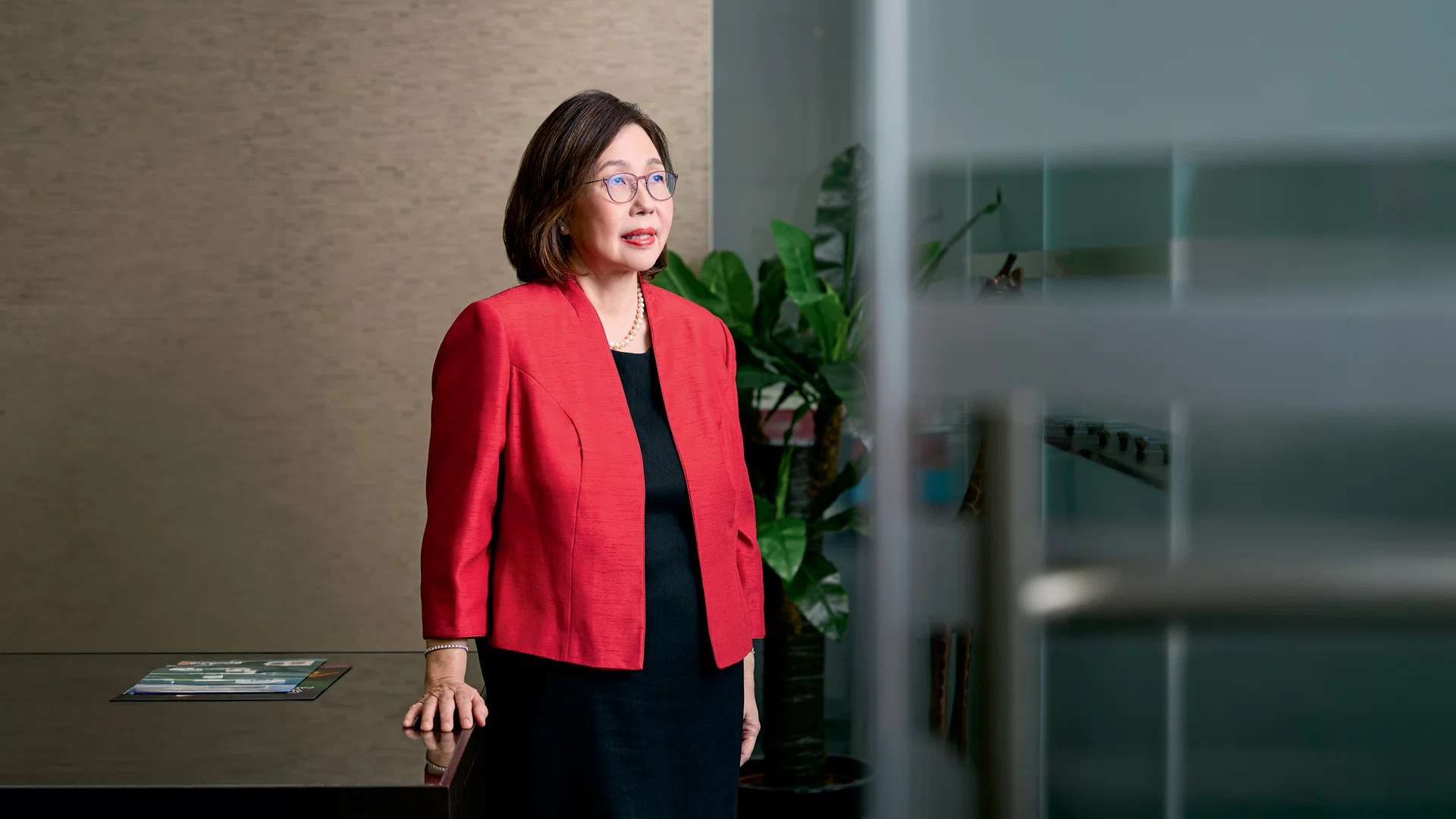
For six decades, Chan Brothers Travel has been a trusted name in travel. Executive director Chan Guat Cheng shares how the family-run agency continues to evolve post-pandemic – from curating experiential trips to championing innovation and community partnerships
By Chelsia Tan -
Share this article
A wellness tour with cardiology experts in Yunnan. A self-drive convoy through the deserts of Xinjiang. Rail journeys across icy Harbin. Even TCM-themed itineraries through Shandong, paired with regional cuisine and cultural immersions.
This is not the Chan Brothers many Singaporeans grew up with.
Long associated with classic guided tours, the 60-year-old travel agency is now reinventing itself for a new generation of travellers – with experiential, wellness-focused and social media-friendly itineraries that tap into today’s appetite for meaning, novelty and connection.
“Younger travellers are looking for experiences beyond the traditional itinerary,” says Chan Guat Cheng, executive director of Chan Brothers Travel.
“We’ve been innovating our products, from self-drive convoys to wellness tours. Post-Covid, China especially has become very popular among young people.”
These new concepts signal a clear shift from the tour bus-centric packages that once defined the agency. This shift is led by Guat Cheng, who has long been modernising the family business from within. Most recently, she helped bolster Chan Brothers’ ties with Bhutan.
In June, Guat Cheng travelled to Bhutan with a group of Singapore journalists, where she moderated a fireside session with the country’s Prime Minister, Tshering Tobgay.
“I was so worried that he wouldn’t be able to make it,” she recalls. “Last December, we were supposed to meet, but he had to prepare for the Thai Prime Minister’s visit. We didn’t know his schedule, so we couldn’t confirm anything with the media beforehand.”
The session was part of a broader effort to deepen tourism ties and expand Chan Brothers’ charter operations – the result of a decade of relationship-building with Bhutan’s tourism authorities.
The discussions culminated in July, when Chan Brothers signed a Memorandum of Understanding (MOU) with Drukair, Bhutan’s national airline, to introduce more direct chartered flights to Bhutan and Uzbekistan.If she felt any nerves, her calm demeanour didn’t show.
Speaking in a measured tone, the 64-year-old explains that although Chan Brothers has worked with the Bhutanese government for years, only recently has the company collaborated closely with the Department of Tourism’s director, Damcho Rinzin, to expand its charter business.
Today, those charters have grown from one or two flights annually to nine scheduled for November and December – with only a few seats left. Bhutan also holds deep personal meaning for her.
“When my daughter and I visited Chimi Lhakhang, the fertility temple, something unexpected happened,” she shares. “My daughter conceived six months after that trip. Maybe that’s why I feel such a special connection to Bhutan.”

Chan Guat Cheng of Chan Brothers in a dialogue with Bhutan’s Prime Minister, Tshering Tobgay
Customers come first
Chan Brothers is a household name in Singapore, and one of the country’s pioneering travel companies. Founded in 1965 by Guat Cheng’s father, Chan Liang Choy, the agency began by selling air and train tickets to neighbouring countries, before expanding into guided tour packages in the 1980s.
Today, it remains a key player supported by specialised divisions – Chan’s World Holidays (Muslim-friendly tours), Chan Brothers Prestige (bespoke travel), and Chan Brothers MICE & Travel (corporate and incentive travel). The group has also expanded its franchise outlets in Kuala Lumpur and Chengdu in 2024, strengthening its regional footprint.
True to her family’s entrepreneurial roots, Guat Cheng – the third of five siblings – began promoting tours in secondary school, even helping organise trips to the Philippines while studying at River Valley High.
“After junior college and before university in Canada, I worked for a year as a tour leader,” she says. “When I was younger, I even delivered air tickets to customers – I’d walk or my brother would cycle. Nowadays, of course, everything’s e-tickets!” she laughs.
Customer service has always been Chan Brothers’ top priority, a cornerstone of its longevity in a business built on crafting memorable experiences.
“I always look at customer feedback – both good and bad – and think about how to improve. If someone says the food or accommodation wasn’t great, we’ll find ways to make it better. I also handle HR and talent management, which I enjoy,” says Guat Cheng.
For certain destinations, the company even flies chefs from Singapore to prepare familiar dishes like bak kut teh and fried rice – a comfort for travellers who miss local flavours. This practice, however, is reserved for places where cuisine may be unfamiliar, such as Bhutan.
It’s an approach forged decades ago. In the early 1990s, when offering New Zealand tours, Chan Brothers’ tour managers taught local operators to prepare Asian-style porridge and noodles for breakfast after feedback from travellers unaccustomed to cold, continental spreads.
“For all tours, our planners review menus to ensure quality,” she says. “We’re meticulous about food, accommodation and transport. For some destinations, we even interview tour guides and train them to understand the needs of Singaporean travellers.”
This attention to detail defines Chan Brothers. “We don’t just leave things to the tour operators; we work with them,” says Guat Cheng.
“We call them our working partners, not land agents. If we do well, they do well.”It’s also a deeply personal ethos. “There are no empty promises,” she says. “If we can deliver it, we’ll promise it – and we’ll always go the extra mile.”
Leading a legacy of 60 years
When asked about her leadership style, Guat Cheng describes herself as a problem solver whose “door is always open”.
“If staff have issues, they come to me and I help them sort it out. They can come any time; I’m not the ‘super power woman’ type where you have to make an appointment,” she says.
Having grown with the company from its early years, she has weathered numerous crises – the Asian Financial Crisis in 1997, SARS in 2003, and most recently Covid-19, which delivered the biggest blow. With global travel halted, sales plunged by up to 90 per cent from its pre-pandemic annual revenue of about $200 million.
Another urgent challenge: getting Singaporean travellers home before borders closed.
“We had 60 people in Morocco, and all flights were full. We worked for days – even considered chartering a flight – and liaised with the Ministry of Foreign Affairs. Whenever seats opened up, we grabbed them and coordinated with our partners to get everyone to the airport. It was two very stressful weeks, but we did it,” she recalls.
For her, resilience comes down to teamwork and preparation.
“With Covid, we’d been through SARS, so we already had experience managing manpower and operations,” she says. “And after 60 years, we’re prepared – you must always have reserves for rainy days.”
Unexpected situations, she notes, happen more often than people realise, from political shifts to natural disasters like tsunamis, floods and earthquakes.
“When I saw the Turkiye earthquake, I immediately checked with our planners – do we have groups there? Are they safe? Last year in Taiwan, there was the Hualien earthquake. Japan has quakes every now and then. These are real challenges.”
What keeps her going? “It’s a family business. Continuing the legacy is my biggest motivation,” she says. “What kept us going was believing we had to survive. My father founded the business. In Chinese, we say, ‘When the sun rises, there’s hope.’ We hold on to that.”
The company also focused on retaining staff. “After SARS, we learnt that when business reopens, you need your people. We invested so much in training, so we tried to keep as many as possible, although about 25 per cent left the industry during Covid.”
Each crisis, she adds, only strengthens the company. “Post-pandemic, we gained valuable experience for future challenges.”
Reaching new audiences
Another challenge is competition from online service providers and shifting preferences among younger travellers.
To stay ahead, Chan Brothers is expanding into experiential travel, wellness tours, self-drive adventures, rail journeys, river cruises and Muslim-friendly travel. Recent wellness tours have taken travellers to Shandong and Yunnan, regions known for scenic beauty, culinary heritage and TCM traditions.
Travellers enjoy local dishes like Kunming’s Fuzhaolou “Ancient Dian” flavours and Tibetan cuisine in Shangri-La, accompanied by experts who share insights on healthy living.
“Post-Covid, demand for China has surged, especially for ‘exotic China’ destinations like Xinjiang and Tibet,” she says. “In Xinjiang, we launched self-drive convoys, which customers loved.”
Social media has also boosted interest. “Platforms like Tiktok have made China very popular among young people. Chongqing suddenly became a hot destination,” she says.
To enhance the customer journey, the company is exploring AI-driven itinerary planning and has upgraded its digital customer relationship management platform, allowing customers to manage bookings and access trip details online. Chan Brothers is also reaching new audiences through collaborations with influencers and live stream hosts.
“We send them to destinations to introduce our products, host broadcasts and interact directly with customers,” she says. “For example, we’ve worked with radio DJ Jing Yun from 96.3FM.”
Travellers are also seeking more immersive journeys. “In China, our rail itineraries are very popular – December is almost fully booked for the Harbin segment. In Europe, river cruises are a hit; your ‘hotel’ moves with you.”
Muslim-friendly travel is another growing segment. “We’ve run these tours for more than 10 years. China is especially popular – Yunnan, Xinjiang, Tibet, and cities like Beijing. Europe and Central Asia are also in demand.”
Where everybody “wins”
Inclusivity lies at the heart of Chan Brothers, guided by Guat Cheng’s “win-win-win” philosophy.
“Our partners must benefit, our employees must be paid well and supported, and customers must receive good service. It’s really four wins: customers win, partners win, employees win… and we win. We don’t squeeze partners so they earn nothing while we earn everything. Everyone should win.”
This approach also shapes her plans ahead. For now, she aims to strengthen Chan Brothers’ partnership with the Bhutanese government and broaden travel experiences for more niche audiences.
“For Bhutan, the local guides say bird-watching is very good. I’m reaching out to a bird-watching group in Singapore – it’s a big community. One of them is my dentist,” she says with a laugh.
True to her love of travel, she is preparing for two upcoming trips: a family getaway to Perth and an exploratory journey through Central Asia.
“I’m doing two trips in December to Australia and Central Asia. I want to see what Central Asia is like – Uzbekistan, Kazakhstan,” she says. “Perth will be a family trip – I usually combine work and holiday.”
When she isn’t travelling, she finds joy closer to home: cooking for her family.
“Every day, I watch Youtube recipes, and on weekends I cook a few dishes. The children come back every Saturday for a family gathering,” she shares. “I’m Hakka, so I cook traditional dishes like mei cai kou rou (pork belly with preserved vegetables). They take time, so weekends are my chance.”
As for the future, Guat Cheng hopes to sustain the family legacy. With younger family members gradually being trained and long-time managers who’ve been with the company for over 15 years, she feels confident that the business is in good hands.
“We’ve started regional expansion. We have four offices in Malaysia, franchisees in Malaysia and Indonesia, a joint venture in Indonesia, and operations in China. But that’s not enough – we’ll continue expanding, hopefully globally,” she says.
“As a travel agency, we have to grow carefully – not too fast or beyond our limits. And we’ll keep investing in digital innovation, because that’s crucial for the years ahead. I’m still learning even today.”

Destinations to watch in 2026
BHUTAN Improved connectivity and growing demand for slower, nature-led travel are directing more interest toward Bhutan’s monasteries, mountain trails and sustainability-focused tourism model.
YUNNAN, CHINA Highland landscapes, tea culture and wellness-oriented activities continue to resonate with travellers seeking restorative trips.
HARBIN, CHINA Known for its ice festival, Harbin is also gaining traction for winter rail itineraries and cold-weather experiences that appeal to younger holidaymakers.
XINJIANG, CHINA Expansive desert roads, emerald lakes and Silk Road heritage make Xinjiang a rising choice for travellers looking for road-trip style adventures.
CENTRAL ASIA (UZBEKISTAN & KAZAKHSTAN) Easier access and renewed interest in Silk Road history are bringing more Singapore travellers to these culturally rich cities.
CHONGQING, CHINA Chongqing’s dramatic topography, neon-lit skyline and strong food culture have raised its profile, particularly among travellers influenced by social media trends.
PHOTOGRAPHY Phyllicia Wang
ART DIRECTION Ray Ticsay
HAIR & MAKEUP Adelene Siow
COORDINATION Chelsia Tan