%22%3E%3Cpath%20fill%3D%22%23000%22%20d%3D%22M79.702%2078.555c0%2033.03%2018.767%2046.361%2035.801%2046.361%2014.149%200%2029.738-7.033%2034.505-28.595l-1.445-.306c-3.61%2015.903-14.005%2027.371-33.06%2027.371-13.86%200-13.716-22.173-13.716-41.594V67.415h49.662c0-23.393-13.136-40.674-35.946-40.674-17.034%200-35.801%2018.94-35.801%2051.814m35.801-50.283c14.437%200%2014.005%2026.455%2013.861%2037.617h-27.573c-.004-18.353.865-37.617%2013.712-37.617%22%2F%3E%3C%2Fg%3E%3Cmask%20id%3D%22b%22%20width%3D%22603%22%20height%3D%22126%22%20x%3D%220%22%20y%3D%220%22%20maskUnits%3D%22userSpaceOnUse%22%20style%3D%22mask-type%3Aluminance%22%3E%3Cpath%20fill%3D%22%23fff%22%20d%3D%22M602.5%200H.5v125.074h602z%22%2F%3E%3C%2Fmask%3E%3Cg%20mask%3D%22url(%23b)%22%3E%3Cpath%20fill%3D%22%23000%22%20d%3D%22M86.81%20105.474h-1.445c0%2010.547-4.475%2011.463-5.483%2011.463-2.454%200-4.475-3.514-4.475-11.921V48.264c0-14.83-10.826-21.558-22.229-21.558-10.97%200-22.66%206.118-25.983%2017.276V8.478c-.515-4.763-4.26-8.48-8.893-8.48H.522v1.53H.5c2.886%200%204.763%201.988%204.763%205.045v110.211c0%203.057-1.877%205.045-4.763%205.045h.022v1.531h31.423v-1.531h.021c-2.885%200-4.762-1.988-4.762-5.045V50.252c0-10.395%208.949-18.806%2016.31-18.806%205.338%200%209.813%204.13%209.813%2014.83v58.74c0%2013.909%207.796%2019.874%2016.165%2019.874%209.958.005%2017.318-6.418%2017.318-19.416%22%2F%3E%3C%2Fg%3E%3Cmask%20id%3D%22c%22%20width%3D%22603%22%20height%3D%22126%22%20x%3D%220%22%20y%3D%220%22%20maskUnits%3D%22userSpaceOnUse%22%20style%3D%22mask-type%3Aluminance%22%3E%3Cpath%20fill%3D%22%23fff%22%20d%3D%22M602.5%200H.5v125.074h602z%22%2F%3E%3C%2Fmask%3E%3Cg%20mask%3D%22url(%23c)%22%3E%3Cpath%20fill%3D%22%23000%22%20d%3D%22M225.911%2042.197c0-10.552-11.259-16.818-22.954-16.818-10.682%200-21.513%205.045-25.119%2016.975v-7.352c-.48-4.574-3.977-8.148-8.364-8.398h-18.322v1.53h-.022c2.886%200%204.763%201.99%204.763%205.046v81.371h.004c.293%204.814%203.942%208.633%208.509%208.846v.004h18.173v-1.53h.022c-2.886%200-4.763-1.989-4.763-5.045V48.62c0-10.552%209.094-19.269%2016.602-19.269%204.763%200%208.805%203.672%209.386%2012.693%200%206.881%204.619%2011.773%2011.119%2011.773%206.631%200%2010.966-4.587%2010.966-11.62%22%2F%3E%3C%2Fg%3E%3Cmask%20id%3D%22d%22%20width%3D%22603%22%20height%3D%22126%22%20x%3D%220%22%20y%3D%220%22%20maskUnits%3D%22userSpaceOnUse%22%20style%3D%22mask-type%3Aluminance%22%3E%3Cpath%20fill%3D%22%23fff%22%20d%3D%22M602.5%200H.5v125.074h602z%22%2F%3E%3C%2Fmask%3E%3Cg%20mask%3D%22url(%23d)%22%3E%3Cpath%20fill%3D%22%23000%22%20d%3D%22M234.434%2028.315c2.925%200%205.583%202.312%206.779%205.863l29.782%2089.218h1.597l20.61-61.852%2020.609%2061.852h1.598l29.781-89.218c1.196-3.556%203.855-5.863%206.78-5.863h.183v-1.776h-11.538v1.776h.184c2.925%200%203.99%202.312%202.794%205.863l-18.082%2054.209-18.082-54.209c-1.196-3.556-.131-5.863%202.794-5.863h.183v-1.776h-33.343v1.776h.183c2.925%200%205.583%202.312%206.78%205.863l8.373%2025.058-9.705%2029.15-18.082-54.208c-1.196-3.556-.131-5.863%202.794-5.863h.184v-1.776h-33.344v1.776z%22%2F%3E%3C%2Fg%3E%3Cmask%20id%3D%22e%22%20width%3D%22603%22%20height%3D%22126%22%20x%3D%220%22%20y%3D%220%22%20maskUnits%3D%22userSpaceOnUse%22%20style%3D%22mask-type%3Aluminance%22%3E%3Cpath%20fill%3D%22%23fff%22%20d%3D%22M602.5%200H.5v125.074h602z%22%2F%3E%3C%2Fmask%3E%3Cg%20mask%3D%22url(%23e)%22%3E%3Cpath%20fill%3D%22%23000%22%20d%3D%22M377.826%20124.491c17.034%200%2038.211-15.699%2038.211-48.882%200-33.03-21.177-48.73-38.211-48.73-17.035%200-38.067%2015.857-38.067%2048.73.004%2033.026%2021.032%2048.882%2038.067%2048.882m0-96.085c13.86%200%2016.121%2028.24%2016.121%2047.356%200%2019.116-2.261%2047.198-16.121%2047.198-13.861%200-15.978-27.777-15.978-47.198%200-19.422%202.122-47.356%2015.978-47.356%22%2F%3E%3C%2Fg%3E%3Cmask%20id%3D%22f%22%20width%3D%22603%22%20height%3D%22126%22%20x%3D%220%22%20y%3D%220%22%20maskUnits%3D%22userSpaceOnUse%22%20style%3D%22mask-type%3Aluminance%22%3E%3Cpath%20fill%3D%22%23fff%22%20d%3D%22M602.5%200H.5v125.074h602z%22%2F%3E%3C%2Fmask%3E%3Cg%20mask%3D%22url(%23f)%22%3E%3Cpath%20fill%3D%22%23000%22%20d%3D%22M490.482%2042.197c0-10.552-11.258-16.818-22.953-16.818-10.683%200-21.513%205.045-25.119%2016.975v-7.352c-.48-4.574-3.977-8.148-8.365-8.398h-18.326v1.53h-.022c2.886%200%204.763%201.99%204.763%205.046v81.371h.004c.293%204.814%203.943%208.633%208.509%208.846v.004h18.173v-1.53h.022c-2.885%200-4.763-1.989-4.763-5.045V48.62c0-10.552%209.094-19.269%2016.602-19.269%204.763%200%208.806%203.672%209.386%2012.693%200%206.881%204.619%2011.773%2011.119%2011.773%206.64%200%2010.97-4.587%2010.97-11.62%22%2F%3E%3C%2Fg%3E%3Cmask%20id%3D%22g%22%20width%3D%22603%22%20height%3D%22126%22%20x%3D%220%22%20y%3D%220%22%20maskUnits%3D%22userSpaceOnUse%22%20style%3D%22mask-type%3Aluminance%22%3E%3Cpath%20fill%3D%22%23fff%22%20d%3D%22M602.5%200H.5v125.074h602z%22%2F%3E%3C%2Fmask%3E%3Cg%20mask%3D%22url(%23g)%22%3E%3Cpath%20fill%3D%22%23000%22%20d%3D%22M602.5%20103.974h-1.445c0%2010.553-4.474%2011.468-5.483%2011.468-2.453%200-4.474-3.519-4.474-11.925V6.585c0-3.056%201.877-5.045%204.762-5.045h-.166V.01h-17.715c-4.942%200-8.953%204.24-8.962%209.475h-.009v23.333c-6.063-3.977-9.84-5.503-16.48-5.503-17.034%200-35.801%2014.169-35.801%2047.046%200%2033.183%2013.101%2050.718%2035.801%2050.718%208.085%200%2013.302-2.294%2019.942-8.254%203.03%204.587%207.797%206.575%2012.704%206.575%209.966-.004%2017.326-6.427%2017.326-19.426m-30.75%2011.625c-4.763%204.435-10.84%205.822-13.38%205.822-11.482%200-19.558-16.933-19.558-46.907%200-29.97%2010.914-43.222%2019.885-43.222%203.3%200%206.264.153%2010.307%203.057v69.172c.004%205.04%201.017%209.017%202.746%2012.078%22%2F%3E%3C%2Fg%3E%3Cmask%20id%3D%22h%22%20width%3D%22603%22%20height%3D%22126%22%20x%3D%220%22%20y%3D%220%22%20maskUnits%3D%22userSpaceOnUse%22%20style%3D%22mask-type%3Aluminance%22%3E%3Cpath%20fill%3D%22%23fff%22%20d%3D%22M602.5%200H.5v125.074h602z%22%2F%3E%3C%2Fmask%3E%3Cg%20mask%3D%22url(%23h)%22%3E%3Cpath%20fill%3D%22%23000%22%20d%3D%22M516.984%20121.865c-2.885%200-4.763-1.988-4.763-5.045V9.466C512.2%204.241%20508.196.01%20503.259.01h-17.724v1.53h-.022c2.89%200%204.763%201.989%204.763%205.045v108.418c.515%204.564%204.029%208.129%208.434%208.337v.06h18.252v-1.53h.022z%22%2F%3E%3C%2Fg%3E%3C%2Fsvg%3E)
I tried HYROX Singapore for the first time and here’s what no one tells you
From rethinking my relationship with running to learning how to pace myself (and my ego), here’s what my first race really taught me
By Shazrina Shamsudin -
Share this article
I never quite understood the hype around HYROX. Why would anyone willingly pay hundreds of dollars to put themselves through what looks like pure physical torture? I’m sure I’m not the only one who’s had that exact thought.
Eight stations. Eight 1km runs. On paper, it doesn’t sound that intimidating. If you’ve ever completed a 10km race, you’d assume this would be manageable, maybe even straightforward. Just 8km in total, broken up with some workout stations in between. How bad could it be?
As I would later find out, very bad. And also, very humbling.
How it all started
HYROX began in Hamburg, Germany, in 2017, founded by Olympic field hockey champion Moritz Fürste and endurance sports organiser Christian Toetzke. What started as a single fitness race has since grown into a global phenomenon spanning over 30 countries.
Singapore joined the movement in October 2023, hosting its inaugural Southeast Asian race at the National Stadium. Around 3,500 participants showed up that first year, which is honestly a strong turnout for something that still felt pretty niche at the time.
Fast forward to today, and it’s anything but.
The rise of HYROX in Singapore
In the years following Covid, something shifted. More people started taking their health seriously, leaning into movement not just for aesthetics, but for mental clarity and overall wellbeing. The wellness wave in Singapore didn’t just grow, it accelerated.
With that came a surge in fitness events. Marathons, competitions, and HYROX.
In just three years, HYROX Singapore has exploded in scale. The most recent race, held from 3 to 5 April, saw about 14,000 participants, quadrupling its debut numbers. People from over 58 countries flew in, turning it into not just a race, but a full-fledged fitness spectacle.
This year felt especially buzzy. Familiar faces like Choi Min-ho, Hong Beom-seok, Amotti, Shota Yamaguchi and Jay Park added to the excitement. The energy was palpable, even for those just watching from the stands.
So, I signed up
For someone who used to physically recoil at the idea of doing HYROX, signing up felt unexpected, to say the least.
The turning point came after watching the November 2025 race. Seeing people of all fitness levels show up, push through, and cross that finish line did something to me. It made the challenge feel less intimidating and more possible.
To be honest, my biggest hesitation wasn’t the workouts. It was the running.
Running has always been my weakest link. I never understood how people found joy in it. To me, it just felt like prolonged suffering, especially when your legs are already tired.
Still, I knew I couldn’t avoid it. So I started training at F45 Boat Quay to build my endurance and overall fitness. I went in thinking I just needed to get physically stronger to survive the race.
What I didn’t expect was how much HYROX would challenge me beyond just fitness.
Because somewhere between the runs, the stations, and the moments where I really wanted to stop, I realised I wasn’t just training my body. I was learning things about myself I didn’t expect.
And those lessons? They’re the ones no one really tells you about.
Running is half the race
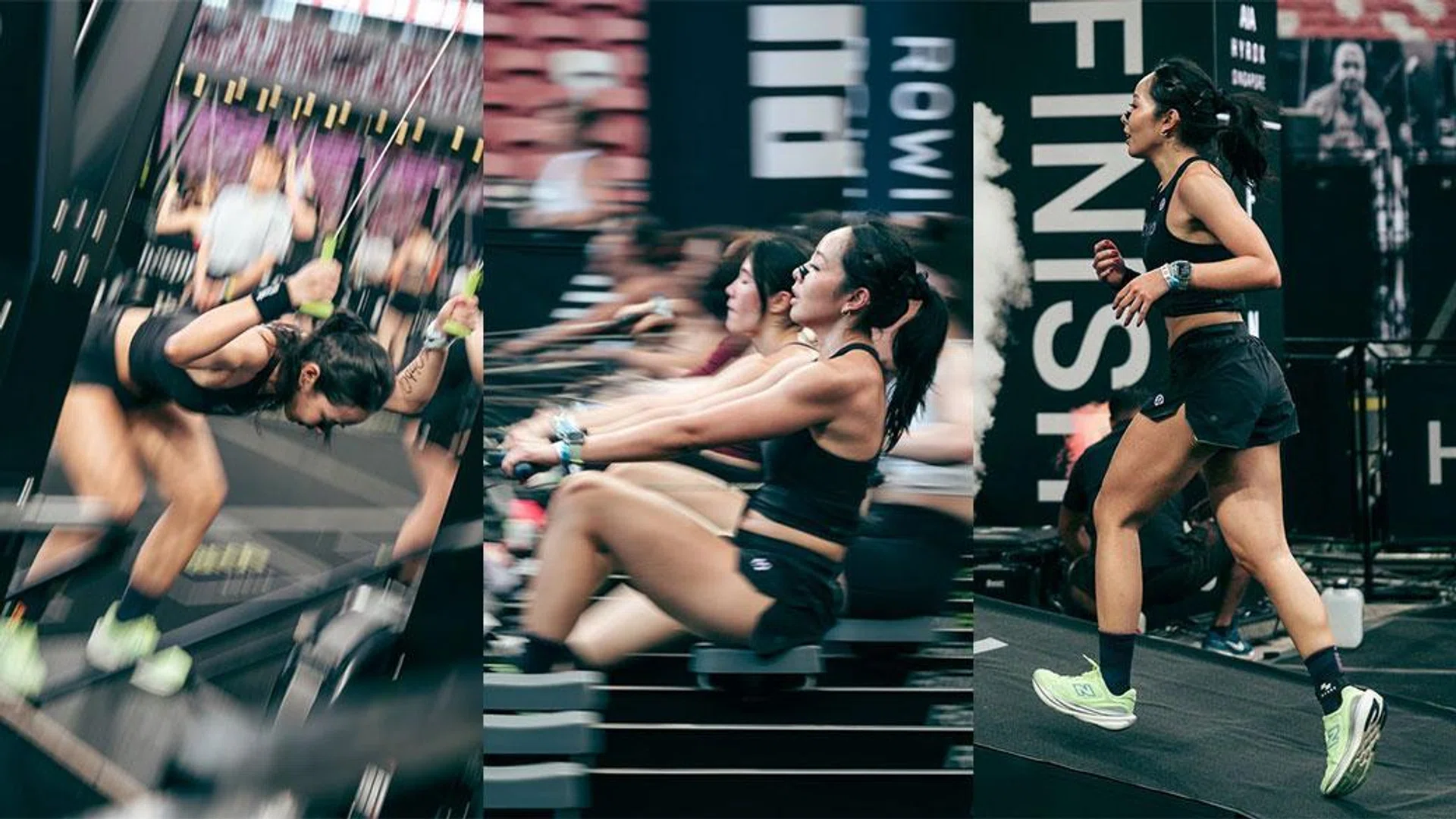
It’s easy to assume that the workout stations are the hardest part. Sled pushes, lunges and wall balls look intimidating, so naturally, that’s where most of the focus goes.
But running makes up half of the race, and it’s something you can’t afford to overlook.
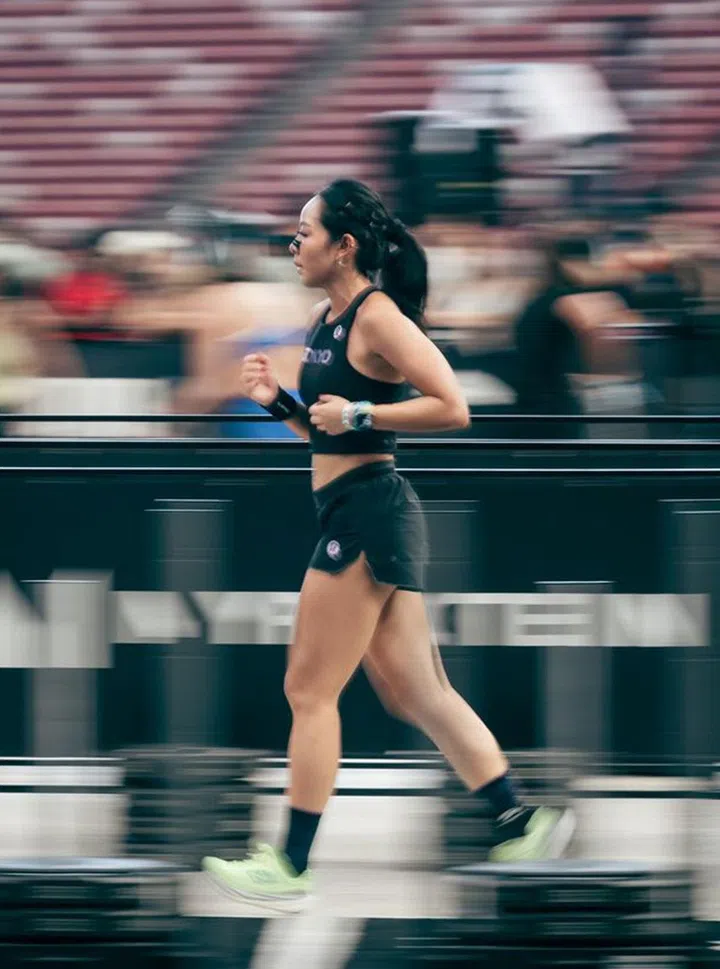
I started running at least twice a week a few months before the race. Not just to improve my speed, but to build endurance and get comfortable with longer distances. Over time, I realised that running wasn’t just about pace. It was about control.
What surprised me most was this idea that the runs between stations are actually your recovery periods. It sounded a bit ridiculous at first, but once I experienced the race for myself, it made sense. Those runs were the only time I could regulate my breathing and bring my heart rate down before the next station.
Push too hard, and you start the next workout already exhausted. That’s when everything begins to spiral.
Train your body to work when it’s tired

Running on fresh legs is one thing. Running after sled pushes or lunges is something else entirely.
That was one of the biggest shocks for me. Your legs feel heavier, your stride changes, and suddenly something that felt manageable during training becomes much harder.
It made me realise how important it is to train under fatigue. Not just for strength, but to familiarise your body with that uncomfortable in-between state where you’re not quite recovered, but you still have to keep going.
Pacing matters more than speed
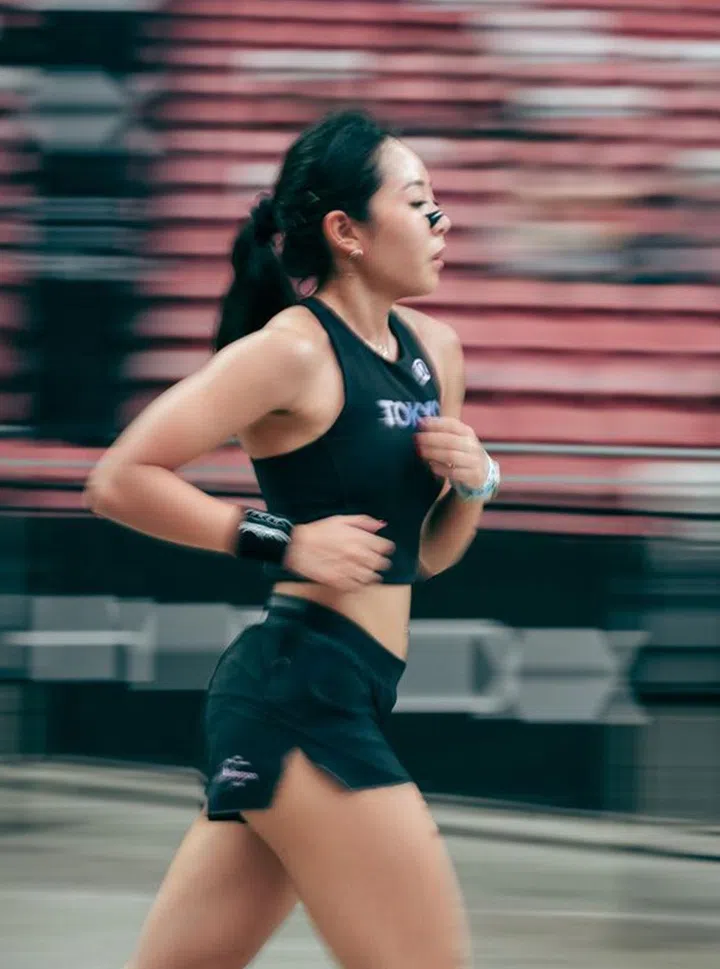
I used to think you had to sprint every 1km to do well. In reality, that’s the fastest way to burn out.
HYROX isn’t about going all out. It’s about sustaining your effort for over an hour. During the race, I had to constantly check myself to make sure I wasn’t pushing too hard too early just to chase a better timing.
Because once you gas out, there’s no real way to recover.
I also saw quite a few participants pushing themselves too hard and ending up with cramps or having to stop midway. It was a reminder that as much as performance matters, so does knowing your limits.
It’s a mental game

Before doing HYROX, I assumed it was purely physical.It’s not.
You’re constantly negotiating with yourself throughout the race. Deciding how hard to push, when to slow down, and convincing yourself to keep going when you feel like stopping.
For me, it was about staying in control and making sure I could sustain my effort for the entire race instead of exhausting myself in the first half just to chase my ego.
Breath control is underrated

This was something I didn’t think much about at first.
I used to run without paying attention to my breathing, assuming it wouldn’t affect my performance that much. But over time, I realised how important it is to actually manage your breath.
If you can’t control your breathing, everything starts to fall apart. Your heart rate spikes, your energy drops, and even simple movements feel harder than they should.
It’s a small adjustment, but it makes a noticeable difference.
Don’t try anything new on race day
Race day is not the time to experiment.
Whether it’s your outfit, your nutrition, or even something as small as a new gel, it’s always better to test everything beforehand. I made sure to do a full simulation two weeks before my race so I knew exactly what worked for me.
The last thing you want is to deal with discomfort or an upset stomach halfway through, especially after all the training you’ve put in.
Breaking reps helps more than you think

When your muscles are fatigued, even simple exercises can feel overwhelming.
One thing that helped me was breaking my reps into smaller sets, especially for movements like wall balls. It made the workload feel more manageable and less intimidating.
Sometimes, it’s not about physical ability. It’s about making things feel doable so you can keep going.
Nutrition is part of the strategy
Energy crashes during the race are very real.
Fueling properly makes a huge difference, not just in performance but in how you feel throughout the race. I made sure to have enough carbs the night before and stuck to a simple, familiar breakfast on race day.
Like everything else, this is something you need to test during training. Not figure out on the spot.
So, would I do it again?

Going into this, I thought HYROX would just be another fitness event.
It turned out to be far more challenging than I expected, both physically and mentally. But what stood out most wasn’t just the difficulty. It was the experience.
There was something incredibly moving about seeing people from all walks of life show up and push themselves. It didn’t feel restrictive or intimidating. It felt like a community.
And somewhere along the way, I realised it wasn’t just about the race itself. It was the journey leading up to it. The hours spent training, the runs I didn’t want to do, and the discipline it took to show up even with a busy schedule.
That’s what stayed with me.
So if you ask me whether I’d sign up again, it would be a resounding yes. Not because I suddenly love running, but because I finally understand why people do it.