%22%3E%3Cpath%20fill%3D%22%23000%22%20d%3D%22M79.702%2078.555c0%2033.03%2018.767%2046.361%2035.801%2046.361%2014.149%200%2029.738-7.033%2034.505-28.595l-1.445-.306c-3.61%2015.903-14.005%2027.371-33.06%2027.371-13.86%200-13.716-22.173-13.716-41.594V67.415h49.662c0-23.393-13.136-40.674-35.946-40.674-17.034%200-35.801%2018.94-35.801%2051.814m35.801-50.283c14.437%200%2014.005%2026.455%2013.861%2037.617h-27.573c-.004-18.353.865-37.617%2013.712-37.617%22%2F%3E%3C%2Fg%3E%3Cmask%20id%3D%22b%22%20width%3D%22603%22%20height%3D%22126%22%20x%3D%220%22%20y%3D%220%22%20maskUnits%3D%22userSpaceOnUse%22%20style%3D%22mask-type%3Aluminance%22%3E%3Cpath%20fill%3D%22%23fff%22%20d%3D%22M602.5%200H.5v125.074h602z%22%2F%3E%3C%2Fmask%3E%3Cg%20mask%3D%22url(%23b)%22%3E%3Cpath%20fill%3D%22%23000%22%20d%3D%22M86.81%20105.474h-1.445c0%2010.547-4.475%2011.463-5.483%2011.463-2.454%200-4.475-3.514-4.475-11.921V48.264c0-14.83-10.826-21.558-22.229-21.558-10.97%200-22.66%206.118-25.983%2017.276V8.478c-.515-4.763-4.26-8.48-8.893-8.48H.522v1.53H.5c2.886%200%204.763%201.988%204.763%205.045v110.211c0%203.057-1.877%205.045-4.763%205.045h.022v1.531h31.423v-1.531h.021c-2.885%200-4.762-1.988-4.762-5.045V50.252c0-10.395%208.949-18.806%2016.31-18.806%205.338%200%209.813%204.13%209.813%2014.83v58.74c0%2013.909%207.796%2019.874%2016.165%2019.874%209.958.005%2017.318-6.418%2017.318-19.416%22%2F%3E%3C%2Fg%3E%3Cmask%20id%3D%22c%22%20width%3D%22603%22%20height%3D%22126%22%20x%3D%220%22%20y%3D%220%22%20maskUnits%3D%22userSpaceOnUse%22%20style%3D%22mask-type%3Aluminance%22%3E%3Cpath%20fill%3D%22%23fff%22%20d%3D%22M602.5%200H.5v125.074h602z%22%2F%3E%3C%2Fmask%3E%3Cg%20mask%3D%22url(%23c)%22%3E%3Cpath%20fill%3D%22%23000%22%20d%3D%22M225.911%2042.197c0-10.552-11.259-16.818-22.954-16.818-10.682%200-21.513%205.045-25.119%2016.975v-7.352c-.48-4.574-3.977-8.148-8.364-8.398h-18.322v1.53h-.022c2.886%200%204.763%201.99%204.763%205.046v81.371h.004c.293%204.814%203.942%208.633%208.509%208.846v.004h18.173v-1.53h.022c-2.886%200-4.763-1.989-4.763-5.045V48.62c0-10.552%209.094-19.269%2016.602-19.269%204.763%200%208.805%203.672%209.386%2012.693%200%206.881%204.619%2011.773%2011.119%2011.773%206.631%200%2010.966-4.587%2010.966-11.62%22%2F%3E%3C%2Fg%3E%3Cmask%20id%3D%22d%22%20width%3D%22603%22%20height%3D%22126%22%20x%3D%220%22%20y%3D%220%22%20maskUnits%3D%22userSpaceOnUse%22%20style%3D%22mask-type%3Aluminance%22%3E%3Cpath%20fill%3D%22%23fff%22%20d%3D%22M602.5%200H.5v125.074h602z%22%2F%3E%3C%2Fmask%3E%3Cg%20mask%3D%22url(%23d)%22%3E%3Cpath%20fill%3D%22%23000%22%20d%3D%22M234.434%2028.315c2.925%200%205.583%202.312%206.779%205.863l29.782%2089.218h1.597l20.61-61.852%2020.609%2061.852h1.598l29.781-89.218c1.196-3.556%203.855-5.863%206.78-5.863h.183v-1.776h-11.538v1.776h.184c2.925%200%203.99%202.312%202.794%205.863l-18.082%2054.209-18.082-54.209c-1.196-3.556-.131-5.863%202.794-5.863h.183v-1.776h-33.343v1.776h.183c2.925%200%205.583%202.312%206.78%205.863l8.373%2025.058-9.705%2029.15-18.082-54.208c-1.196-3.556-.131-5.863%202.794-5.863h.184v-1.776h-33.344v1.776z%22%2F%3E%3C%2Fg%3E%3Cmask%20id%3D%22e%22%20width%3D%22603%22%20height%3D%22126%22%20x%3D%220%22%20y%3D%220%22%20maskUnits%3D%22userSpaceOnUse%22%20style%3D%22mask-type%3Aluminance%22%3E%3Cpath%20fill%3D%22%23fff%22%20d%3D%22M602.5%200H.5v125.074h602z%22%2F%3E%3C%2Fmask%3E%3Cg%20mask%3D%22url(%23e)%22%3E%3Cpath%20fill%3D%22%23000%22%20d%3D%22M377.826%20124.491c17.034%200%2038.211-15.699%2038.211-48.882%200-33.03-21.177-48.73-38.211-48.73-17.035%200-38.067%2015.857-38.067%2048.73.004%2033.026%2021.032%2048.882%2038.067%2048.882m0-96.085c13.86%200%2016.121%2028.24%2016.121%2047.356%200%2019.116-2.261%2047.198-16.121%2047.198-13.861%200-15.978-27.777-15.978-47.198%200-19.422%202.122-47.356%2015.978-47.356%22%2F%3E%3C%2Fg%3E%3Cmask%20id%3D%22f%22%20width%3D%22603%22%20height%3D%22126%22%20x%3D%220%22%20y%3D%220%22%20maskUnits%3D%22userSpaceOnUse%22%20style%3D%22mask-type%3Aluminance%22%3E%3Cpath%20fill%3D%22%23fff%22%20d%3D%22M602.5%200H.5v125.074h602z%22%2F%3E%3C%2Fmask%3E%3Cg%20mask%3D%22url(%23f)%22%3E%3Cpath%20fill%3D%22%23000%22%20d%3D%22M490.482%2042.197c0-10.552-11.258-16.818-22.953-16.818-10.683%200-21.513%205.045-25.119%2016.975v-7.352c-.48-4.574-3.977-8.148-8.365-8.398h-18.326v1.53h-.022c2.886%200%204.763%201.99%204.763%205.046v81.371h.004c.293%204.814%203.943%208.633%208.509%208.846v.004h18.173v-1.53h.022c-2.885%200-4.763-1.989-4.763-5.045V48.62c0-10.552%209.094-19.269%2016.602-19.269%204.763%200%208.806%203.672%209.386%2012.693%200%206.881%204.619%2011.773%2011.119%2011.773%206.64%200%2010.97-4.587%2010.97-11.62%22%2F%3E%3C%2Fg%3E%3Cmask%20id%3D%22g%22%20width%3D%22603%22%20height%3D%22126%22%20x%3D%220%22%20y%3D%220%22%20maskUnits%3D%22userSpaceOnUse%22%20style%3D%22mask-type%3Aluminance%22%3E%3Cpath%20fill%3D%22%23fff%22%20d%3D%22M602.5%200H.5v125.074h602z%22%2F%3E%3C%2Fmask%3E%3Cg%20mask%3D%22url(%23g)%22%3E%3Cpath%20fill%3D%22%23000%22%20d%3D%22M602.5%20103.974h-1.445c0%2010.553-4.474%2011.468-5.483%2011.468-2.453%200-4.474-3.519-4.474-11.925V6.585c0-3.056%201.877-5.045%204.762-5.045h-.166V.01h-17.715c-4.942%200-8.953%204.24-8.962%209.475h-.009v23.333c-6.063-3.977-9.84-5.503-16.48-5.503-17.034%200-35.801%2014.169-35.801%2047.046%200%2033.183%2013.101%2050.718%2035.801%2050.718%208.085%200%2013.302-2.294%2019.942-8.254%203.03%204.587%207.797%206.575%2012.704%206.575%209.966-.004%2017.326-6.427%2017.326-19.426m-30.75%2011.625c-4.763%204.435-10.84%205.822-13.38%205.822-11.482%200-19.558-16.933-19.558-46.907%200-29.97%2010.914-43.222%2019.885-43.222%203.3%200%206.264.153%2010.307%203.057v69.172c.004%205.04%201.017%209.017%202.746%2012.078%22%2F%3E%3C%2Fg%3E%3Cmask%20id%3D%22h%22%20width%3D%22603%22%20height%3D%22126%22%20x%3D%220%22%20y%3D%220%22%20maskUnits%3D%22userSpaceOnUse%22%20style%3D%22mask-type%3Aluminance%22%3E%3Cpath%20fill%3D%22%23fff%22%20d%3D%22M602.5%200H.5v125.074h602z%22%2F%3E%3C%2Fmask%3E%3Cg%20mask%3D%22url(%23h)%22%3E%3Cpath%20fill%3D%22%23000%22%20d%3D%22M516.984%20121.865c-2.885%200-4.763-1.988-4.763-5.045V9.466C512.2%204.241%20508.196.01%20503.259.01h-17.724v1.53h-.022c2.89%200%204.763%201.989%204.763%205.045v108.418c.515%204.564%204.029%208.129%208.434%208.337v.06h18.252v-1.53h.022z%22%2F%3E%3C%2Fg%3E%3C%2Fsvg%3E)
Metro Isn’t Going Anywhere, Here’s How It’s Reinventing the Department Store
From interactive sleep experiences to beauty pop-ups and exclusive brand launches, Metro is betting on experiences to bring shoppers back.
By Lee Siew Hua -
Share this article
When headlines declared on July 20 that Metro will exit its Paragon and Causeway Point anchor spaces upon lease expiry, it sparked a shutdown narrative: another retailer in retreat.
Two days later, the local department store chain responded with an Instagram post that playfully soothed shoppers: “Okay yes, the headlines got everyone talking. But plot twist: nothing changes for you right now. Same stores, same racks (with some upgrades)...
“There’s more ahead for our retail journey, we’ll spill the details when we can. Until then? Come say hi, we’re not going anywhere just yet.”
The post has pulled more than 87,000 views and close to 2,000 likes, comments and shares. The comments are overwhelmingly in the spirit of “please don’t shut down”, says Henry Christian, Metro’s head of loyalty, marketing and partnerships.
The underlying reality is not Metro’s imminent demise, but its long-planned transition from the multi-floor department store model to speciality, smaller-format concepts.
“The journey of reimagining Metro retail to future-proof ourselves started 18 to 24 months ago,” Christian tells The Straits Times.
“Retail is our business. Department stores are a format. Formats evolve. Our business is here to stay.”
Modular, multisensory magic
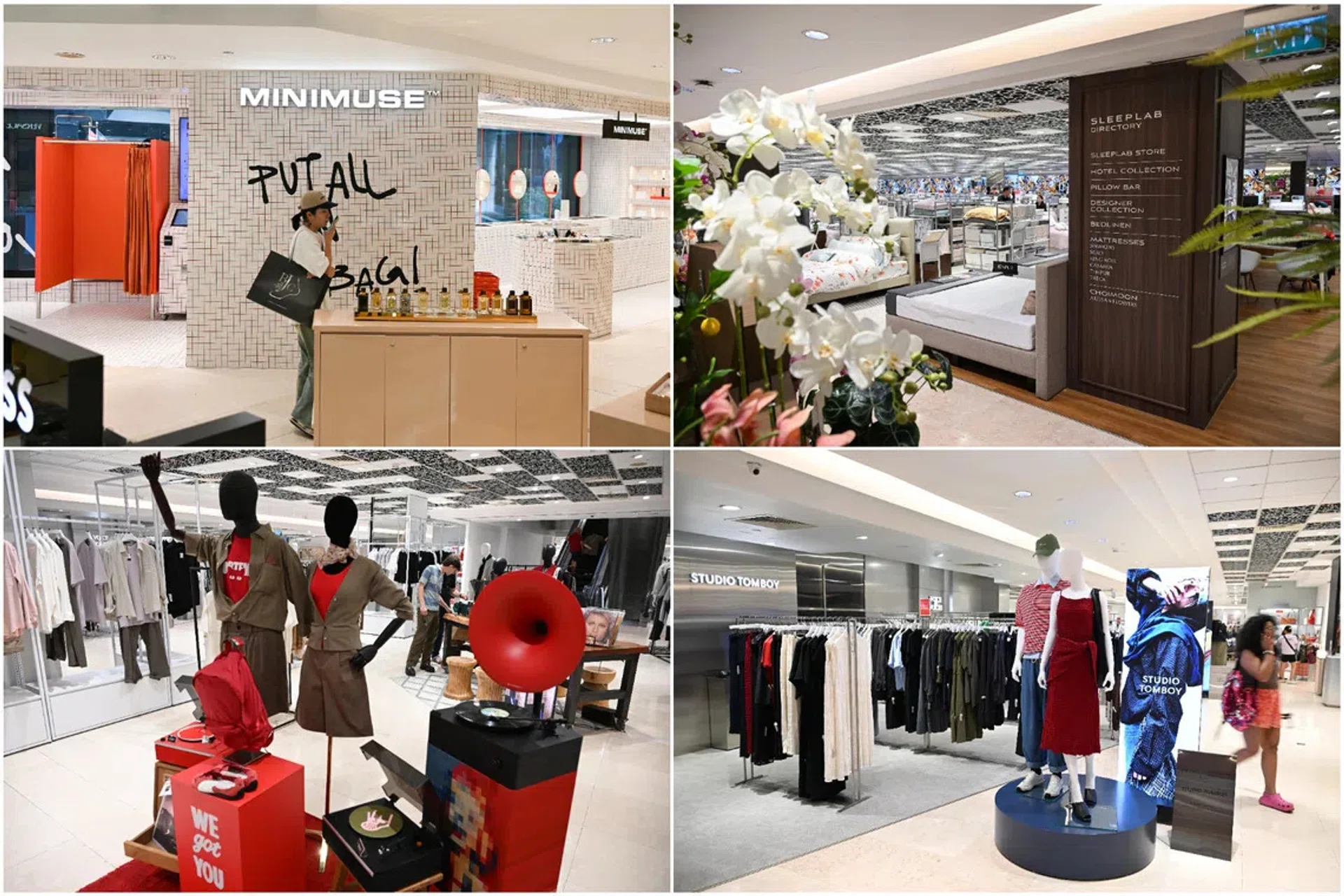
This future-proofing has been under way in several immersive concepts that notably include the new 10,000 sq ft SLEEPLAB sleep and wellness sanctuary on Metro Paragon’s fourth floor.
Launched in March, the mattresses here are displayed alongside artful clusters of sleepwear, skincare, supplements, scents, wearable sleep tech and a dreamscape Samsung LED wall.
Also fresh is the Minimuse beauty sampling corner on Level 2. Unveiled in November 2025, customers can “try first, decide later” by shopping for deluxe minis before splurging later on, for instance, a full-sized Lancome peptide cream or Carolina Herrera eau de parfum.
For rewriting the playbook, Metro gained double accolades in June at the Retail Asia Awards 2026, winning Department Store of the Year and Brand Transformation of the Year.
“The honours reflect Metro’s successful reinvention of the traditional department store model into an experience-led House-of-Concepts, anchored in retail storytelling, curated partnerships, and omnichannel innovation,” according to a report by industry magazine Retail Asia.
The instinct to evolve formats seems embedded in Metro’s operational DNA.
In the 1970s and 1980s, the retailer pioneered upscale shopping with Metro Supreme, Christian points out. In that era before frequent international travel, the landmark store in Supreme House (later redeveloped as Park Mall) was a glamorous gateway for moneyed Singaporeans and regional tourists with an appetite for European fashion houses like Yves Saint Laurent and Cartier.
“We appreciate the legacy. Legacy has brought us to where we are today,” Christian says. “But it’s not going to shackle us. It’s going to fuel our growth for the next phase of retail.”
Metro ‘un-departmentalises’
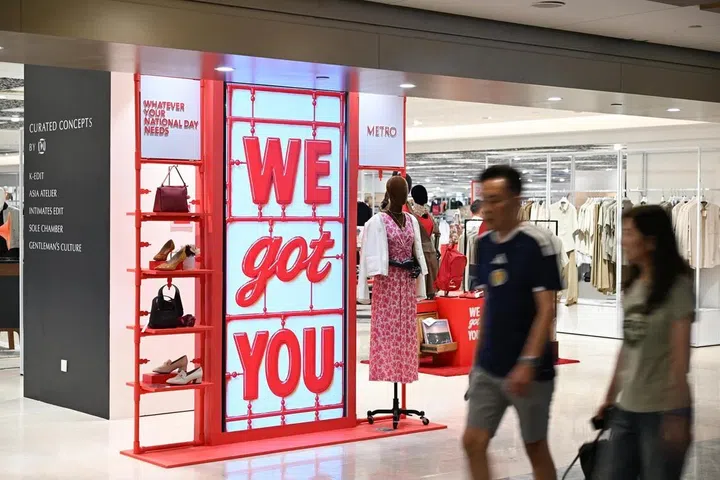
Today, Metro’s future relies on a modular master plan that is nimble and experiential.
These modules can stand alone as boutique shops, cluster together or sit independently within shopping centres rather than under the “Metro Department Store” banner.
This shift to capsule concepts is a necessary reaction to market forces, says Kapil Tuli, deputy dean (research) at Singapore Management University’s Lee Kong Chian School of Business.
“The financial commitment required in terms of rent, deposit, dedicated headcount and maintenance is significantly larger when operating a large-scale department store,” he observes.
“With the smaller format, a firm can adopt a more focused and agile approach in terms of identifying high-margin and high physical-retail demand items that can provide a better ROI (return on investment).”
Still, he cautions that it will take time for capsules to replicate financial returns at the same scale as a big department store.
Meanwhile, Metro’s transformation is framed as experience-led and “age-agnostic”, remarks Christian. Retirees and teens alike suffer some level of sleep deprivation, for example, so SLEEPLAB was conceived for a perfect night’s rest.
“Our concepts are born based on the needs rather than which age bracket you are in,” says Christian. He then quips that following the recent “shutdown” false alarm, he needed a nose clip from SLEEPLAB to survive his own sleeplessness.
He adds: “Young shoppers are welcome but not the sole target. Loyal long-term customers are equally served.”
Eventually, the success of Metro’s brand transformation can be measured by visit frequency, shopping data from its Treasured by Metro programme and “talkability” on social media, he says.
Age of exploration
In the brand transformation, Metro fulfils the modern shopper’s desire for “exploration”, a point that repeatedly emerged in its focus groups, says Roxanne Lim, Metro’s manager for customer relationship management and customer experience.
“They like discovery. They want fresher experiences, whether brands or displays,” she says.
The exploration mindset pivots on flagship lifestyle concepts. Beyond SLEEPLAB and Minimuse, Metro debuted an Accessories Lounge for shoes and bags in March and K-EDIT for Seoul-inspired fashion in July.
The digital cornerstones are the relaunched e-commerce site and Treasured by Metro loyalty programme.
The shape of this transition also depends on the active dialogue with landlords CapitaLand Integrated Commercial Trust (Paragon) and Frasers Centrepoint Trust (Causeway Point).
Landlords routinely pursue asset enhancement initiatives (AEIs) and roll out mall reconfigurations, and Metro will align its transition with their AEIs, Christian explains.
No timeline has been given on when the leases run out.
Rather than a permanent departure from Orchard Road or Woodlands, however, the future will be a “co-created” story built on agile, premium footprints rather than a single massive presence.
“Retailers and mall operators have a symbiotic relationship,” Christian says. “We are co-creating the space together.”
The Straits Times takes a closer look at Metro Paragon’s modular lifestyle concepts that may be flexibly replicated elsewhere in the future.
SLEEPLAB: Sleep and wellness sanctuary
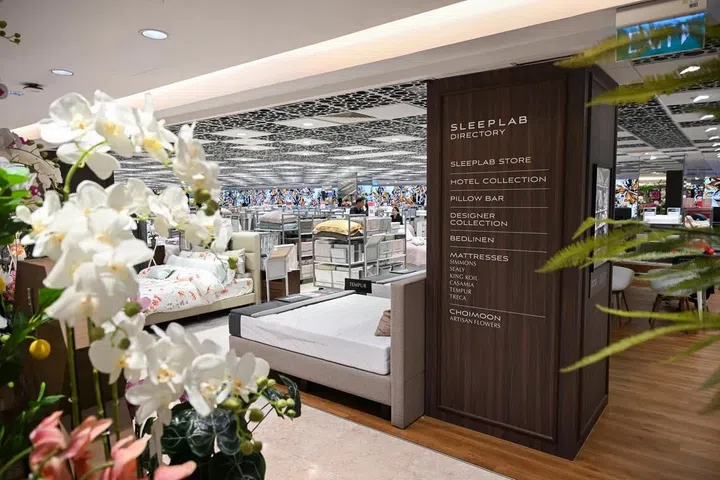
Launched on World Sleep Day in March to mark Metro’s 69th anniversary, SLEEPLAB is a multi-sensory wellness space. Beyond mattresses, it designs a night-time wellness routine to diminish Singapore’s dubious status as among the world’s most sleep-deprived nations.
The layout is dominated by a 60.72m U-shaped Samsung LED display wall running The Theatre Of Seven Dreams – an immersive South Korean-created visual journey that runs on a loop.
The 10,000 sq ft store-within-a-store also spotlights curated sleep-adjacent buys. Among these are wearable Ultrahuman sleep trackers, eye massagers, mist humidifiers, night lamps, silken sleepwear, science-backed supplements from MitoQ and melatonin pills, Gryphon Tea blends, pillow mists and luxury night-time skincare.
Cooling, allergen-free bedlinens from South Korea are showcased here along with luxury mattresses from Treca Paris, recognised as a French national treasure like high-fashion brands Chanel and Louis Vuitton. Treca’s handcrafted mattresses feature natural luxury fillings like alpaca, cashmere and French linen. Incidentally, surveys show that France is the planet’s most well-rested country.
SLEEPLAB also hosts talks by sleep doctor Lee Chuen Peng. In June, the respiratory physician addressed around 40 guests, some of them lounging on mattresses while asking about sleep hygiene.
Minimuse: Risk-free beauty discovery
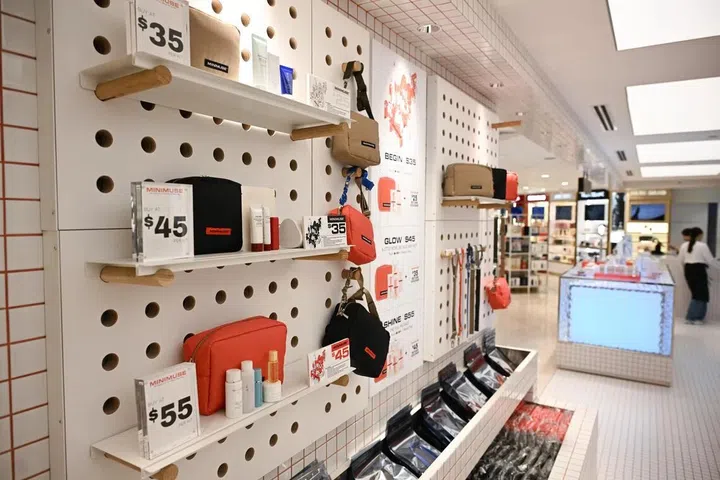
Sequestered on Level 2 (and available online), Minimuse swops out beauty brand silos for an Instagrammable corner with upbeat music and a free photo booth, bright lights and vibrant orange accents.
It introduces a “beauty buffet” allowing shoppers to mix and match pocket-size luxury items before investing in full-size serum or perfume, if they decide later. This “de-risks” purchases. For $55, pick five self-care treats bundled with a $45 return voucher.
The shelves are refreshed monthly with a rotating roster of brands, such as Clarins and Sulwhasoo. Minimuse will sit within a larger, evolving beauty zone.
K-EDIT: The Korean fashion cluster
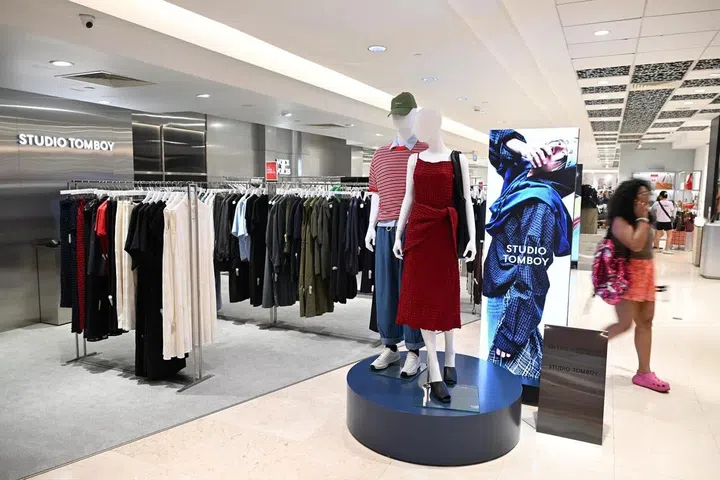
This fashion-forward niche is a partnership between South Korean lifestyle giant Shinsegae International and Metro.
The trend-driven showcase on Level 3 is led by the relaxed genderless silhouettes of Studio Tomboy, the modern femininity of Voice of Voices, and understated streetwear from emerging labels like JAAH, Public Beacon and Lumen.
Pop-ups: Monthly cadence and creativity
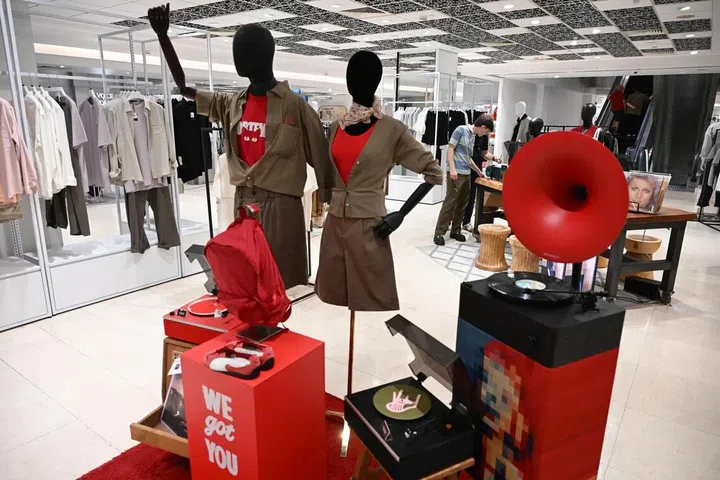
Since Chinese New Year in February, Metro has staged monthly pop-ups, from the hip “Heritage Refreshed” – blending modern retail with vintage gramophones and bespoke creations from local artists – to the travel-centric “Beyond The Suitcase”.
The next activation is slated for September, inspired by the high-octane energy of the Formula One Singapore Grand Prix.
This article was originally published in The Straits Times.