%22%3E%3Cpath%20fill%3D%22%23000%22%20d%3D%22M79.702%2078.555c0%2033.03%2018.767%2046.361%2035.801%2046.361%2014.149%200%2029.738-7.033%2034.505-28.595l-1.445-.306c-3.61%2015.903-14.005%2027.371-33.06%2027.371-13.86%200-13.716-22.173-13.716-41.594V67.415h49.662c0-23.393-13.136-40.674-35.946-40.674-17.034%200-35.801%2018.94-35.801%2051.814m35.801-50.283c14.437%200%2014.005%2026.455%2013.861%2037.617h-27.573c-.004-18.353.865-37.617%2013.712-37.617%22%2F%3E%3C%2Fg%3E%3Cmask%20id%3D%22b%22%20width%3D%22603%22%20height%3D%22126%22%20x%3D%220%22%20y%3D%220%22%20maskUnits%3D%22userSpaceOnUse%22%20style%3D%22mask-type%3Aluminance%22%3E%3Cpath%20fill%3D%22%23fff%22%20d%3D%22M602.5%200H.5v125.074h602z%22%2F%3E%3C%2Fmask%3E%3Cg%20mask%3D%22url(%23b)%22%3E%3Cpath%20fill%3D%22%23000%22%20d%3D%22M86.81%20105.474h-1.445c0%2010.547-4.475%2011.463-5.483%2011.463-2.454%200-4.475-3.514-4.475-11.921V48.264c0-14.83-10.826-21.558-22.229-21.558-10.97%200-22.66%206.118-25.983%2017.276V8.478c-.515-4.763-4.26-8.48-8.893-8.48H.522v1.53H.5c2.886%200%204.763%201.988%204.763%205.045v110.211c0%203.057-1.877%205.045-4.763%205.045h.022v1.531h31.423v-1.531h.021c-2.885%200-4.762-1.988-4.762-5.045V50.252c0-10.395%208.949-18.806%2016.31-18.806%205.338%200%209.813%204.13%209.813%2014.83v58.74c0%2013.909%207.796%2019.874%2016.165%2019.874%209.958.005%2017.318-6.418%2017.318-19.416%22%2F%3E%3C%2Fg%3E%3Cmask%20id%3D%22c%22%20width%3D%22603%22%20height%3D%22126%22%20x%3D%220%22%20y%3D%220%22%20maskUnits%3D%22userSpaceOnUse%22%20style%3D%22mask-type%3Aluminance%22%3E%3Cpath%20fill%3D%22%23fff%22%20d%3D%22M602.5%200H.5v125.074h602z%22%2F%3E%3C%2Fmask%3E%3Cg%20mask%3D%22url(%23c)%22%3E%3Cpath%20fill%3D%22%23000%22%20d%3D%22M225.911%2042.197c0-10.552-11.259-16.818-22.954-16.818-10.682%200-21.513%205.045-25.119%2016.975v-7.352c-.48-4.574-3.977-8.148-8.364-8.398h-18.322v1.53h-.022c2.886%200%204.763%201.99%204.763%205.046v81.371h.004c.293%204.814%203.942%208.633%208.509%208.846v.004h18.173v-1.53h.022c-2.886%200-4.763-1.989-4.763-5.045V48.62c0-10.552%209.094-19.269%2016.602-19.269%204.763%200%208.805%203.672%209.386%2012.693%200%206.881%204.619%2011.773%2011.119%2011.773%206.631%200%2010.966-4.587%2010.966-11.62%22%2F%3E%3C%2Fg%3E%3Cmask%20id%3D%22d%22%20width%3D%22603%22%20height%3D%22126%22%20x%3D%220%22%20y%3D%220%22%20maskUnits%3D%22userSpaceOnUse%22%20style%3D%22mask-type%3Aluminance%22%3E%3Cpath%20fill%3D%22%23fff%22%20d%3D%22M602.5%200H.5v125.074h602z%22%2F%3E%3C%2Fmask%3E%3Cg%20mask%3D%22url(%23d)%22%3E%3Cpath%20fill%3D%22%23000%22%20d%3D%22M234.434%2028.315c2.925%200%205.583%202.312%206.779%205.863l29.782%2089.218h1.597l20.61-61.852%2020.609%2061.852h1.598l29.781-89.218c1.196-3.556%203.855-5.863%206.78-5.863h.183v-1.776h-11.538v1.776h.184c2.925%200%203.99%202.312%202.794%205.863l-18.082%2054.209-18.082-54.209c-1.196-3.556-.131-5.863%202.794-5.863h.183v-1.776h-33.343v1.776h.183c2.925%200%205.583%202.312%206.78%205.863l8.373%2025.058-9.705%2029.15-18.082-54.208c-1.196-3.556-.131-5.863%202.794-5.863h.184v-1.776h-33.344v1.776z%22%2F%3E%3C%2Fg%3E%3Cmask%20id%3D%22e%22%20width%3D%22603%22%20height%3D%22126%22%20x%3D%220%22%20y%3D%220%22%20maskUnits%3D%22userSpaceOnUse%22%20style%3D%22mask-type%3Aluminance%22%3E%3Cpath%20fill%3D%22%23fff%22%20d%3D%22M602.5%200H.5v125.074h602z%22%2F%3E%3C%2Fmask%3E%3Cg%20mask%3D%22url(%23e)%22%3E%3Cpath%20fill%3D%22%23000%22%20d%3D%22M377.826%20124.491c17.034%200%2038.211-15.699%2038.211-48.882%200-33.03-21.177-48.73-38.211-48.73-17.035%200-38.067%2015.857-38.067%2048.73.004%2033.026%2021.032%2048.882%2038.067%2048.882m0-96.085c13.86%200%2016.121%2028.24%2016.121%2047.356%200%2019.116-2.261%2047.198-16.121%2047.198-13.861%200-15.978-27.777-15.978-47.198%200-19.422%202.122-47.356%2015.978-47.356%22%2F%3E%3C%2Fg%3E%3Cmask%20id%3D%22f%22%20width%3D%22603%22%20height%3D%22126%22%20x%3D%220%22%20y%3D%220%22%20maskUnits%3D%22userSpaceOnUse%22%20style%3D%22mask-type%3Aluminance%22%3E%3Cpath%20fill%3D%22%23fff%22%20d%3D%22M602.5%200H.5v125.074h602z%22%2F%3E%3C%2Fmask%3E%3Cg%20mask%3D%22url(%23f)%22%3E%3Cpath%20fill%3D%22%23000%22%20d%3D%22M490.482%2042.197c0-10.552-11.258-16.818-22.953-16.818-10.683%200-21.513%205.045-25.119%2016.975v-7.352c-.48-4.574-3.977-8.148-8.365-8.398h-18.326v1.53h-.022c2.886%200%204.763%201.99%204.763%205.046v81.371h.004c.293%204.814%203.943%208.633%208.509%208.846v.004h18.173v-1.53h.022c-2.885%200-4.763-1.989-4.763-5.045V48.62c0-10.552%209.094-19.269%2016.602-19.269%204.763%200%208.806%203.672%209.386%2012.693%200%206.881%204.619%2011.773%2011.119%2011.773%206.64%200%2010.97-4.587%2010.97-11.62%22%2F%3E%3C%2Fg%3E%3Cmask%20id%3D%22g%22%20width%3D%22603%22%20height%3D%22126%22%20x%3D%220%22%20y%3D%220%22%20maskUnits%3D%22userSpaceOnUse%22%20style%3D%22mask-type%3Aluminance%22%3E%3Cpath%20fill%3D%22%23fff%22%20d%3D%22M602.5%200H.5v125.074h602z%22%2F%3E%3C%2Fmask%3E%3Cg%20mask%3D%22url(%23g)%22%3E%3Cpath%20fill%3D%22%23000%22%20d%3D%22M602.5%20103.974h-1.445c0%2010.553-4.474%2011.468-5.483%2011.468-2.453%200-4.474-3.519-4.474-11.925V6.585c0-3.056%201.877-5.045%204.762-5.045h-.166V.01h-17.715c-4.942%200-8.953%204.24-8.962%209.475h-.009v23.333c-6.063-3.977-9.84-5.503-16.48-5.503-17.034%200-35.801%2014.169-35.801%2047.046%200%2033.183%2013.101%2050.718%2035.801%2050.718%208.085%200%2013.302-2.294%2019.942-8.254%203.03%204.587%207.797%206.575%2012.704%206.575%209.966-.004%2017.326-6.427%2017.326-19.426m-30.75%2011.625c-4.763%204.435-10.84%205.822-13.38%205.822-11.482%200-19.558-16.933-19.558-46.907%200-29.97%2010.914-43.222%2019.885-43.222%203.3%200%206.264.153%2010.307%203.057v69.172c.004%205.04%201.017%209.017%202.746%2012.078%22%2F%3E%3C%2Fg%3E%3Cmask%20id%3D%22h%22%20width%3D%22603%22%20height%3D%22126%22%20x%3D%220%22%20y%3D%220%22%20maskUnits%3D%22userSpaceOnUse%22%20style%3D%22mask-type%3Aluminance%22%3E%3Cpath%20fill%3D%22%23fff%22%20d%3D%22M602.5%200H.5v125.074h602z%22%2F%3E%3C%2Fmask%3E%3Cg%20mask%3D%22url(%23h)%22%3E%3Cpath%20fill%3D%22%23000%22%20d%3D%22M516.984%20121.865c-2.885%200-4.763-1.988-4.763-5.045V9.466C512.2%204.241%20508.196.01%20503.259.01h-17.724v1.53h-.022c2.89%200%204.763%201.989%204.763%205.045v108.418c.515%204.564%204.029%208.129%208.434%208.337v.06h18.252v-1.53h.022z%22%2F%3E%3C%2Fg%3E%3C%2Fsvg%3E)
Why easy runs are bringing the joy back to running in Singapore
Two local runners reveal how softer, presence-focused runs boost consistency and wellbeing, and why the New Balance Ellipse is one of their go-to daily trainers
By Shazrina Shamsudin -
Share this article
There’s a version of running that lives on a spreadsheet. Splits, targets, qualifying times, the relentless accumulation of kilometres. And then there’s the other kind — the run you don’t plan for, the one that sneaks up on you mid-stride and reminds you why you started in the first place.
For Singaporean runners Romaine Soh and Verna Goh, the best runs they’ve ever had aren’t necessarily the fastest. In fact, they’re usually the ones where time quietly folds in on itself, and for a moment, they’re not keeping track of time.
The city has caught the running bug
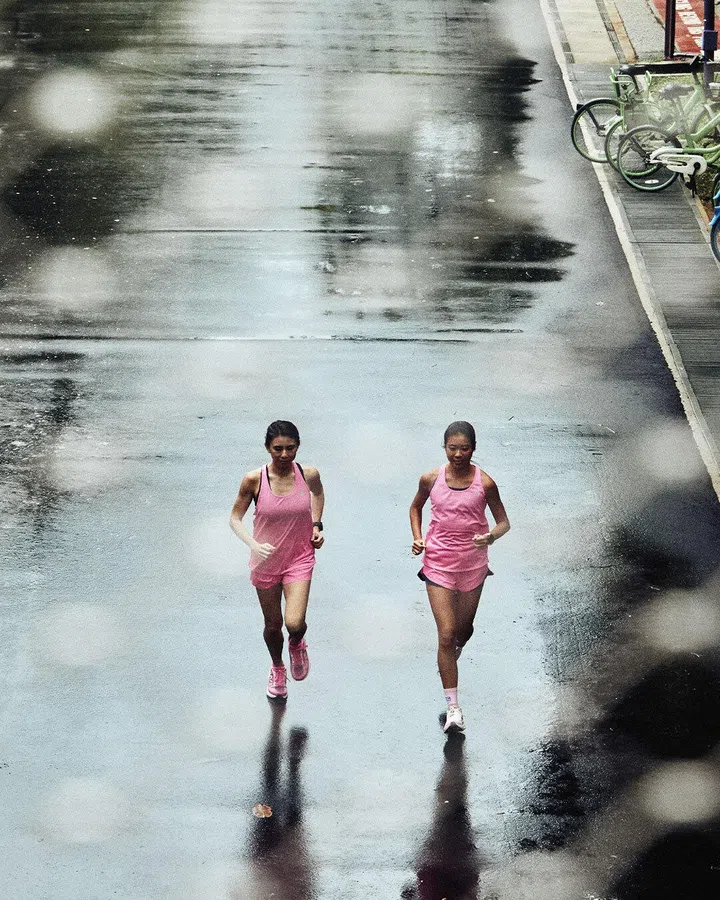
Walk along any popular route on a weekend morning and you’ll feel it – the shift. Run clubs have multiplied. Friends who once grimaced through the 2.4km fitness test are now training for their first full marathon.
“People I know who did not exercise before, when you reconnect with them now, they’re like, ‘I’m training for a half marathon,’” says Romaine, who has a corporate day job and competes on the performance end of the spectrum in her free time. “These are people who hated running. Going from one end to the other — if that helps with their fitness goals, I’m all for it.”
Verna sees the same duality playing out. “As competitive athletes, we tend to want to chase pace too, and there’s always a time and place for that,” she says. “But there’s also a time and place for the chill, easy runs with friends where you don’t even look at the watch, when time just passes more quickly.” The two modes, she’s learned, aren’t in opposition. They balance each other. “I could never just do the fast-paced runs without the easy ones. It would be too stressful, too pressurising. And that’s not why I run.” Like Romaine, Verna holds a corporate day job but still manages to balance it with her training.
What a “good run” actually looks like
Neither of them defines a good run by her finish time anymore.
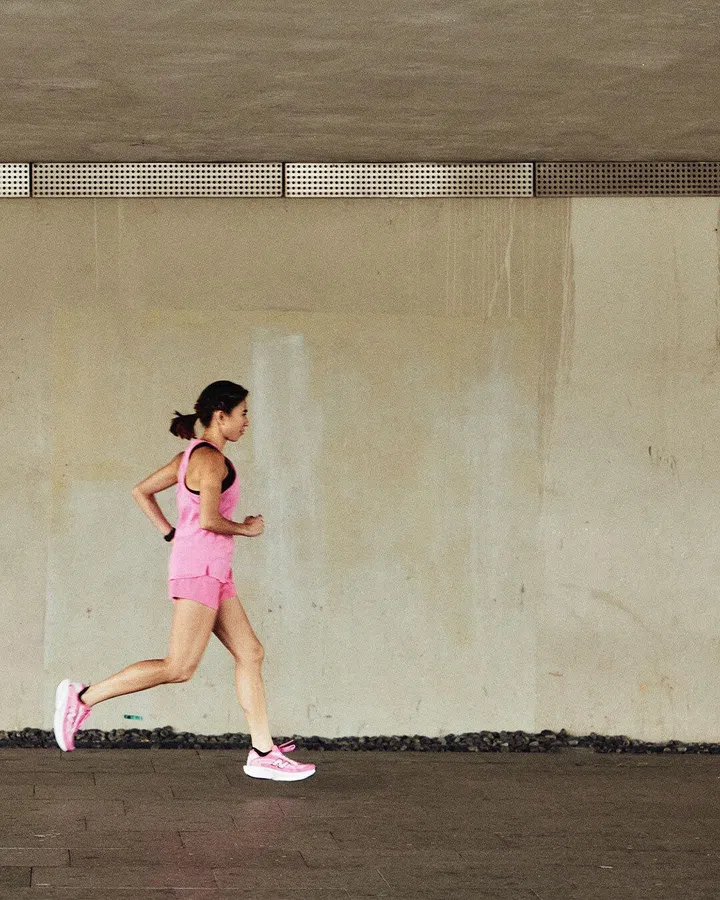
For Romaine, it often begins in reluctance. She gets home from a nine-to-six feeling spent, legs heavy, the sofa calling. But somewhere in that tired hour, something shifts. “My legs just feel itchy,” she says. “I regret not going out for at least some movement.” So she goes and what starts as obligation quietly becomes relief. There are runs where she’s counting every kilometre, and others where she zones out so completely that she surfaces already done, thirty minutes gone without a thought.

Verna’s take of a good run, on the other hand, includes what comes after. “I look forward to a good coffee, a good breakfast. On weekends, I push through the long runs knowing I get to reward myself at the end.” While it may sound like a small little ritual, but to her, it’s her way of making the effort feel like a gift to herself.
The small things that keep you going
Consistency, both women have found, is rarely about willpower. It lives in the details.
Romaine has a trick she swears by: “When I get home, I immediately put my running shoes at the door. My mum notices and says, ‘Oh, you’re going for a run?’ — and now there’s one more person holding me accountable.” She might lie down for ten minutes. But the shoes are waiting. And somehow, that’s enough.
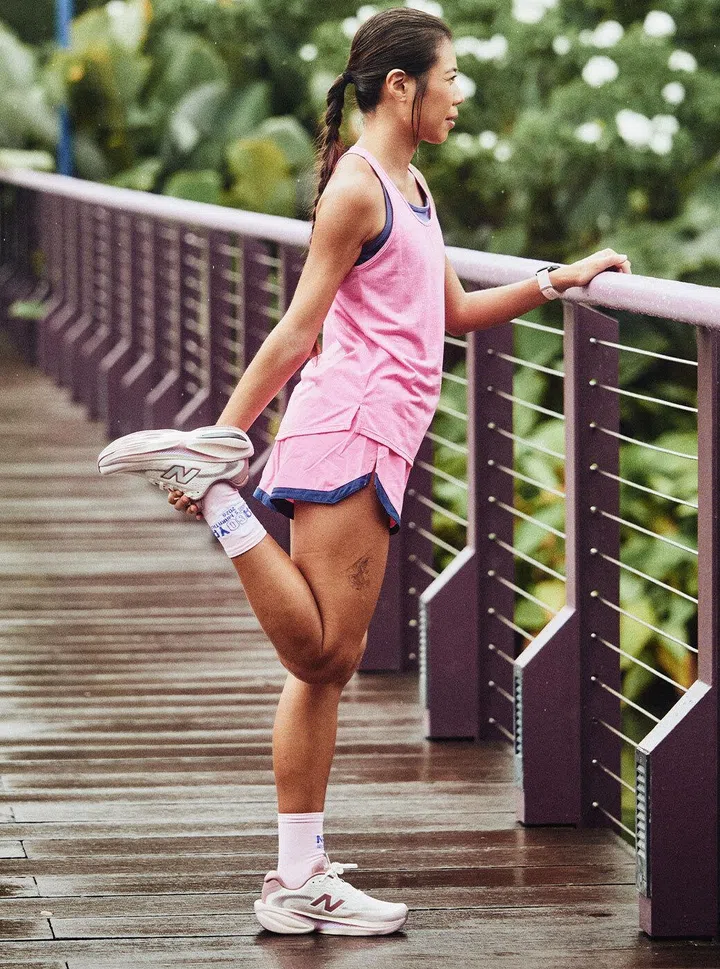
Verna’s rituals run deeper into the body itself. “To be consistent, I need to be healthy with no injuries. I used to have a tendency to overdo things.” Now she’s deliberate: balancing intensity with easy runs, taking protein after every session, protecting her sleep as best she can around a full working schedule. Her husband, also a runner, keeps her honest. “We always remind each other, keep each other in check.”
Showing up even when you don’t want to
Both women have sat with the question of whether to go or not to go, and both have learned to be honest about the answer.
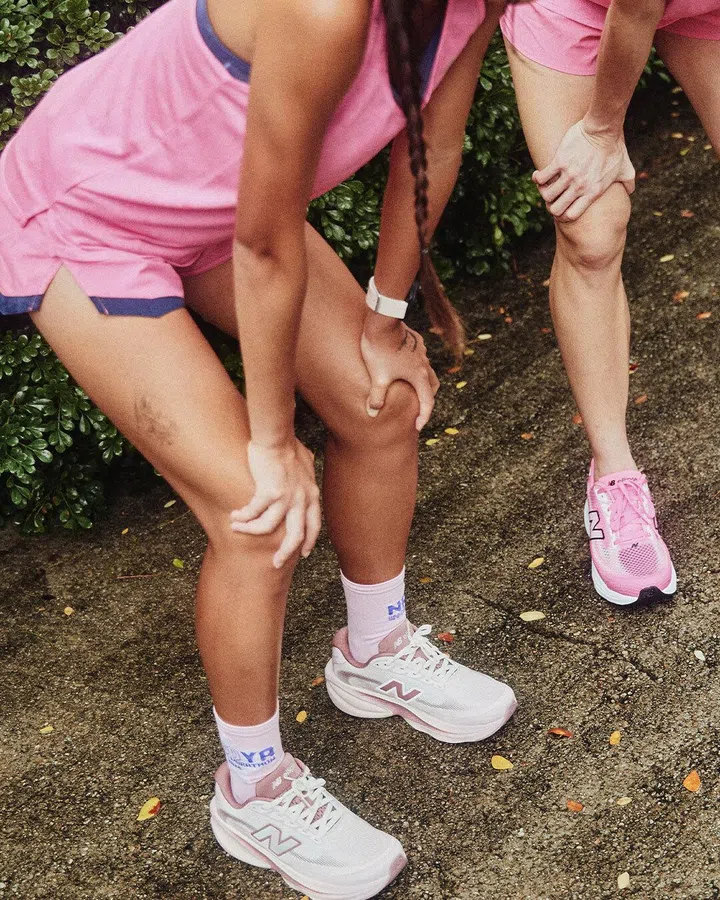
“I ask myself: if I decide to stay home, how much will I regret it?” says Romaine. “And more importantly, will I feel at peace with myself if I take this rest day? Because personal well-being, mental and physical, is very important to me. If I need a rest day to get through the rest of the week, I’m going to take it. No regrets.” As someone who trains regularly, Romaine shares that training, for her, can go up to seven days a week with no rest.
Aside to Verna, she frames it slightly differently: sometimes showing up means knowing when to hold back. “Even when your legs feel heavy, you know they’ll feel better in the middle of a run. But you also have to know when not to push yourself, because you might go over the edge.” Verna, an avid marathoner, also shared that she enjoys running so much, she’s travelled overseas to participate in different marathons, and she’s even even deliberating on signing up for the 2027 Boston marathon after Coachella which she plans to check out. “Might as well do a marathon while I’m there,” she said.
And it’s obvious, that even for both of them, showing up, is less about perfect attendance and more about honest presence.
Running as reset
Now, when you ask either of them what running does for their mind, their answers come rather quickly.
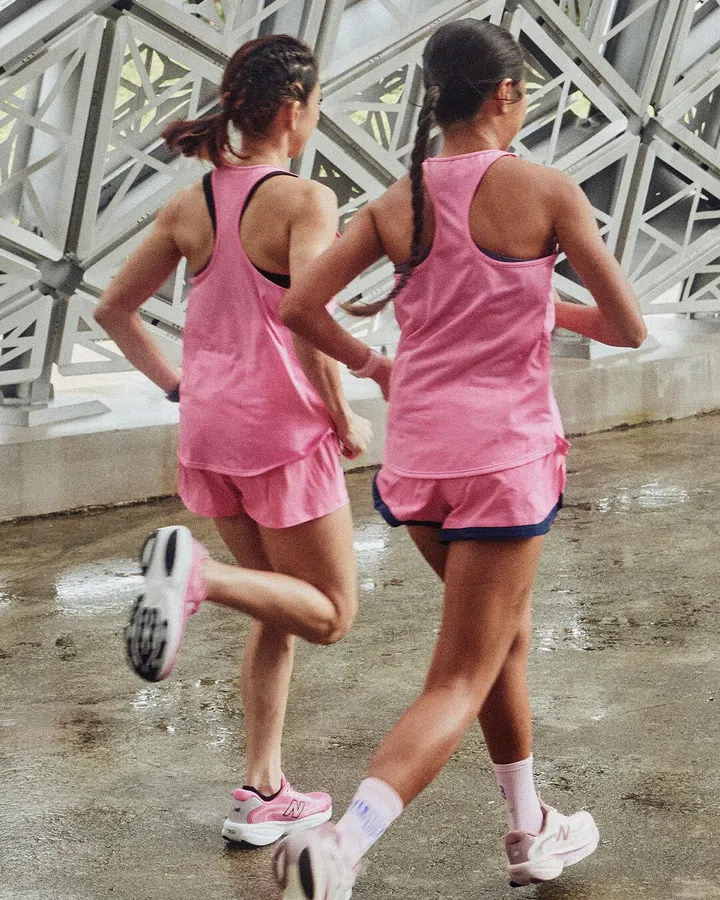
“After being at a desk for eight to nine hours, some movement is going to help you no matter what,” Romaine says. “There are days when you just need to get out and think about absolutely nothing. Zoning out is actually more beneficial for your mental wellbeing than you’d think. Having to think about nothing after being so wound up all day, it’s a meditation of sorts.”
For Verna, running has always been the escape hatch. She first picked it up during a particularly stressful stretch at university. “It’s first and foremost time for myself that I carve out during the day. Something I feel like I can’t live without.” She’s learned too that having people around who respect that time makes the whole thing sustainable. “You need your sacred time.”
From racing clocks to savouring strides
Both runners have walked the well-worn path from joy to obsession and found their way back.

Romaine describes her earlier self as single-track: hit the interval session, meet the target, don’t ask too many questions. “There wasn’t so much awareness of: how is my body feeling today? Am I happy? Do I need to take a step back?” But looking back, she reflects and mentioned that she’s gentler with herself now. She checks in before she laces up. Running, she says, has made her more in touch with her emotions.
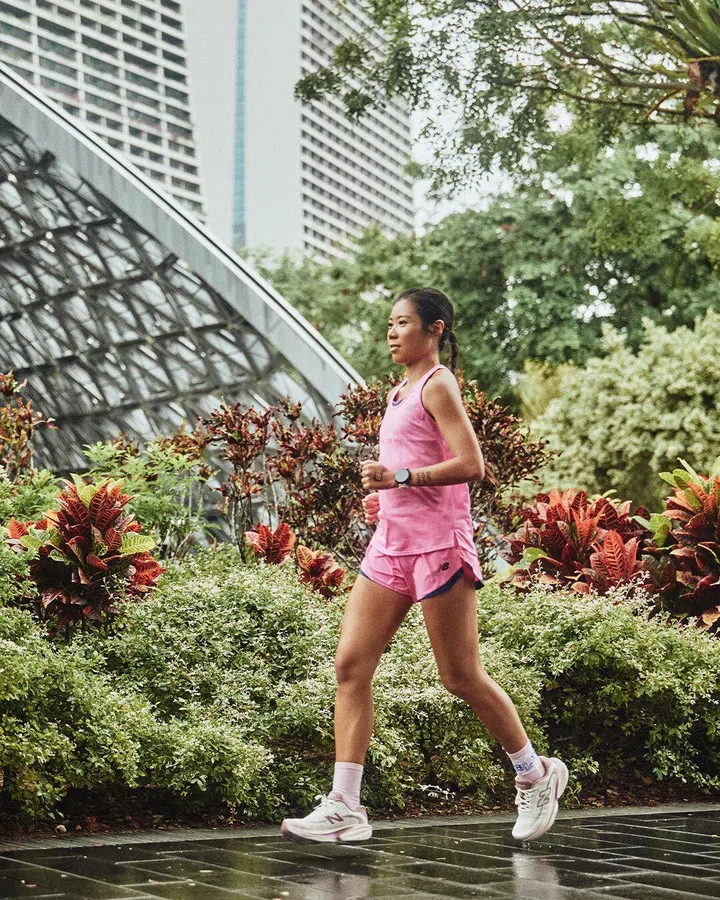
For Verna, who once stacked marathon after marathon chasing qualification times, it became clear that fitness doesn’t simply compound across races.”It was a never-ending chase,” she says. “I got burnt out.” It took hitting that wall to remember what had drawn her to running in the first place. “I had to go back to my roots. Back to why I even started.”
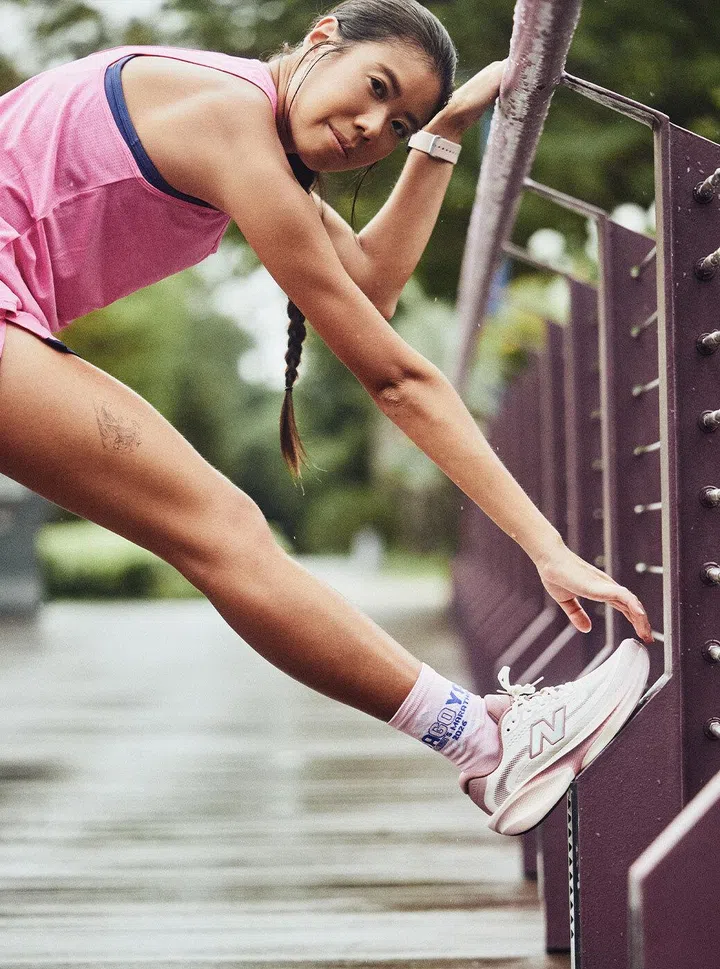
That return – to running as something personal and joyful rather than measured and proven – is where both women found their footing again. Not faster, but just to be more themselves.
The gear that gets out of the way
There’s a particular kind of gear that earns a runner’s trust quietly. It’s not by how it looks or by demanding attention, but by disappearing into the run itself. For both Romaine and Verna, comfort isn’t a nice-to-have. It’s the whole point.
“If I’m feeling good in what I wear, it reflects in my emotions,” says Romaine. “Shoes especially, if they’re comfortable, it really helps you feel good about yourself when you step out the door, whether or not you’re feeling great on the day.” The right pair, she says, makes it that much easier to lose track of time entirely.
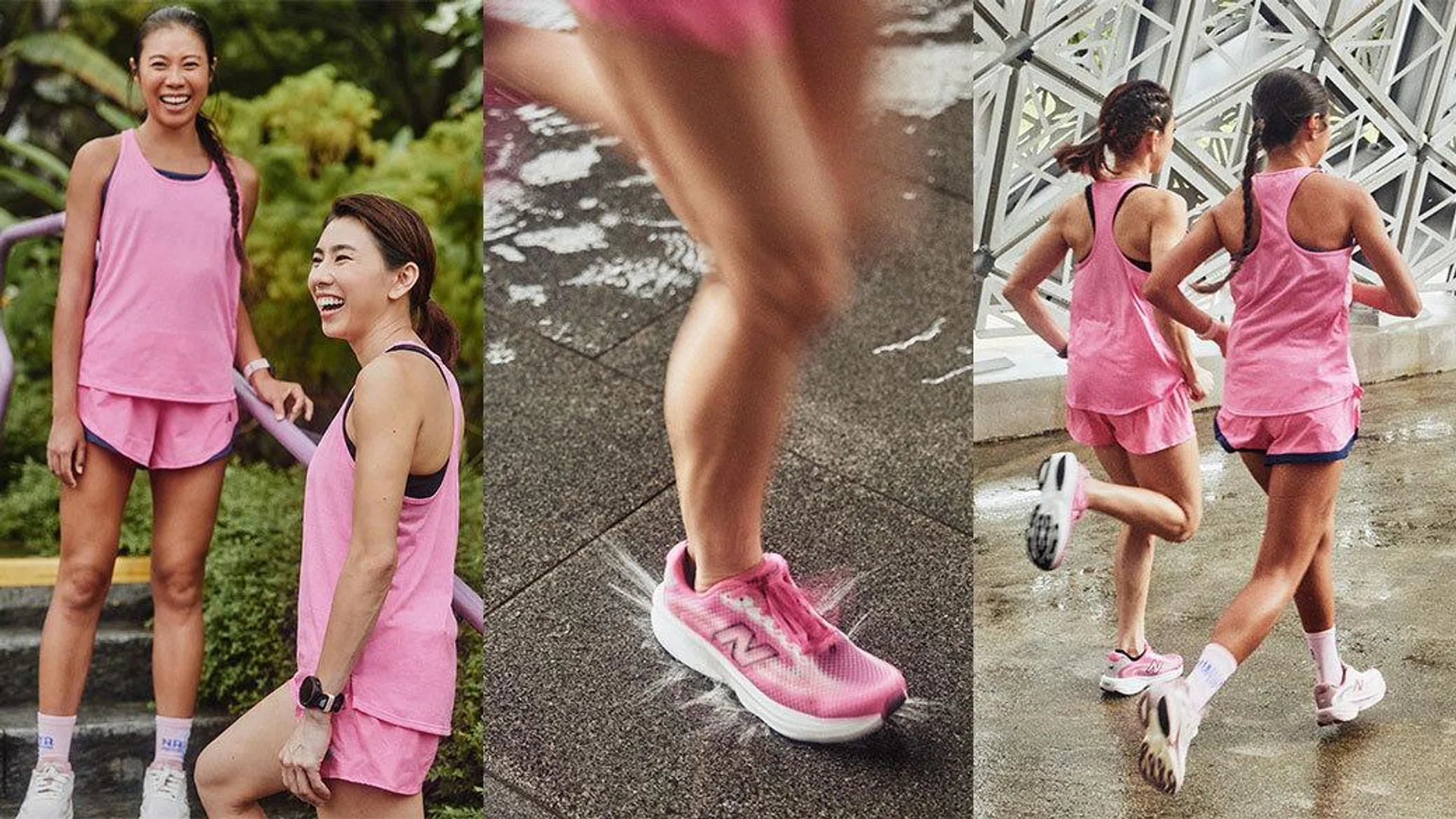
The New Balance Ellipse was designed for runners like them and everyone who runs for the same reasons.
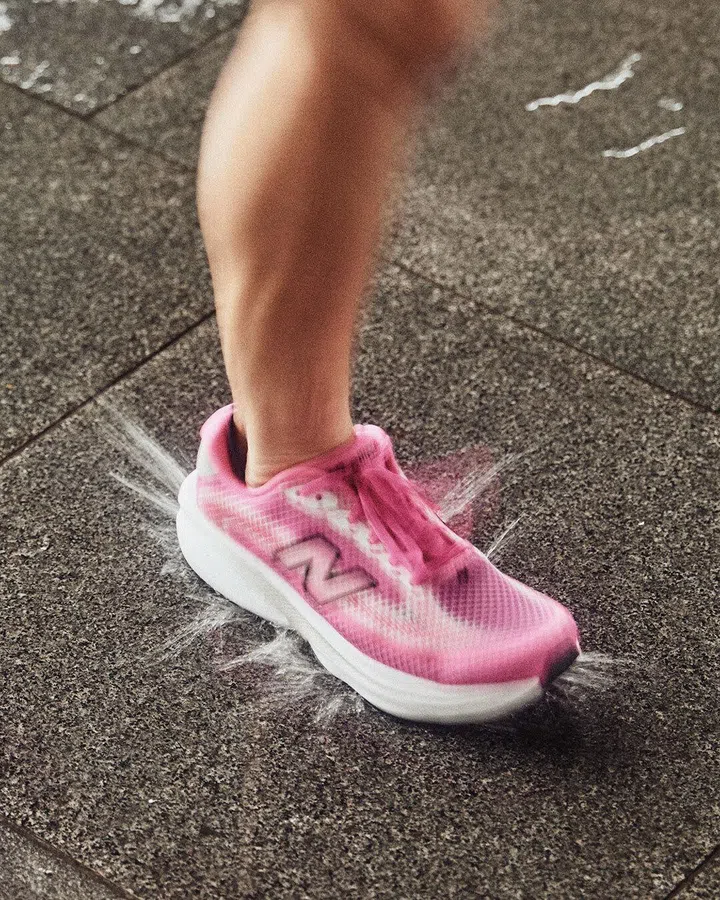
Launched earlier this year, the Ellipse is New Balance’s answer to a running world increasingly obsessed with metrics and marginal gains. Rather than adding more technology, New Balance stripped things back and made a shoe that’s built on their trusted Fresh Foam X midsole, reimagined with a bouncier, more energised underfoot feel that makes daily runs genuinely enjoyable rather than just functional. Boasting a rockered silhouette, the shoes help to keep momentum going naturally, so each stride flows into the next without demanding effort from the runner. The breathable engineered mesh upper, cushioned tongue, and stretch laces all work toward a single goal: a fit that molds to your foot and gets out of your way.
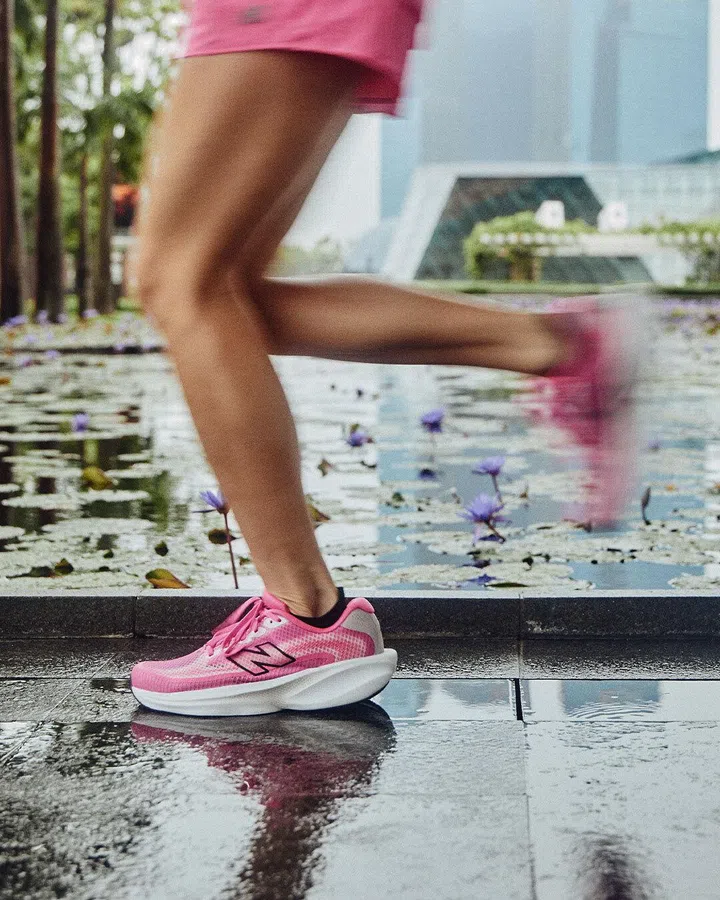
What sets the Ellipse apart in a crowded daily trainer market is less about technical specification and more about intent. Where most shoes at this level are designed to improve your run, the Ellipse is designed to make you want to run and to keep running without realising how far you’ve gone. It’s cushioned enough for your long easy zone two runs, yet it’s also responsive enough that it doesn’t feel like running on a mattress.
It’s a shoe, in other words, built for exactly the kind of run Romaine and Verna have both been describing. Not the run on the training plan. The run you go on because your legs feel itchy. The run that ends with a coffee and a quiet kind of contentment. The one where you get home and realise you lost track of time.