%22%3E%3Cpath%20fill%3D%22%23000%22%20d%3D%22M79.702%2078.555c0%2033.03%2018.767%2046.361%2035.801%2046.361%2014.149%200%2029.738-7.033%2034.505-28.595l-1.445-.306c-3.61%2015.903-14.005%2027.371-33.06%2027.371-13.86%200-13.716-22.173-13.716-41.594V67.415h49.662c0-23.393-13.136-40.674-35.946-40.674-17.034%200-35.801%2018.94-35.801%2051.814m35.801-50.283c14.437%200%2014.005%2026.455%2013.861%2037.617h-27.573c-.004-18.353.865-37.617%2013.712-37.617%22%2F%3E%3C%2Fg%3E%3Cmask%20id%3D%22b%22%20width%3D%22603%22%20height%3D%22126%22%20x%3D%220%22%20y%3D%220%22%20maskUnits%3D%22userSpaceOnUse%22%20style%3D%22mask-type%3Aluminance%22%3E%3Cpath%20fill%3D%22%23fff%22%20d%3D%22M602.5%200H.5v125.074h602z%22%2F%3E%3C%2Fmask%3E%3Cg%20mask%3D%22url(%23b)%22%3E%3Cpath%20fill%3D%22%23000%22%20d%3D%22M86.81%20105.474h-1.445c0%2010.547-4.475%2011.463-5.483%2011.463-2.454%200-4.475-3.514-4.475-11.921V48.264c0-14.83-10.826-21.558-22.229-21.558-10.97%200-22.66%206.118-25.983%2017.276V8.478c-.515-4.763-4.26-8.48-8.893-8.48H.522v1.53H.5c2.886%200%204.763%201.988%204.763%205.045v110.211c0%203.057-1.877%205.045-4.763%205.045h.022v1.531h31.423v-1.531h.021c-2.885%200-4.762-1.988-4.762-5.045V50.252c0-10.395%208.949-18.806%2016.31-18.806%205.338%200%209.813%204.13%209.813%2014.83v58.74c0%2013.909%207.796%2019.874%2016.165%2019.874%209.958.005%2017.318-6.418%2017.318-19.416%22%2F%3E%3C%2Fg%3E%3Cmask%20id%3D%22c%22%20width%3D%22603%22%20height%3D%22126%22%20x%3D%220%22%20y%3D%220%22%20maskUnits%3D%22userSpaceOnUse%22%20style%3D%22mask-type%3Aluminance%22%3E%3Cpath%20fill%3D%22%23fff%22%20d%3D%22M602.5%200H.5v125.074h602z%22%2F%3E%3C%2Fmask%3E%3Cg%20mask%3D%22url(%23c)%22%3E%3Cpath%20fill%3D%22%23000%22%20d%3D%22M225.911%2042.197c0-10.552-11.259-16.818-22.954-16.818-10.682%200-21.513%205.045-25.119%2016.975v-7.352c-.48-4.574-3.977-8.148-8.364-8.398h-18.322v1.53h-.022c2.886%200%204.763%201.99%204.763%205.046v81.371h.004c.293%204.814%203.942%208.633%208.509%208.846v.004h18.173v-1.53h.022c-2.886%200-4.763-1.989-4.763-5.045V48.62c0-10.552%209.094-19.269%2016.602-19.269%204.763%200%208.805%203.672%209.386%2012.693%200%206.881%204.619%2011.773%2011.119%2011.773%206.631%200%2010.966-4.587%2010.966-11.62%22%2F%3E%3C%2Fg%3E%3Cmask%20id%3D%22d%22%20width%3D%22603%22%20height%3D%22126%22%20x%3D%220%22%20y%3D%220%22%20maskUnits%3D%22userSpaceOnUse%22%20style%3D%22mask-type%3Aluminance%22%3E%3Cpath%20fill%3D%22%23fff%22%20d%3D%22M602.5%200H.5v125.074h602z%22%2F%3E%3C%2Fmask%3E%3Cg%20mask%3D%22url(%23d)%22%3E%3Cpath%20fill%3D%22%23000%22%20d%3D%22M234.434%2028.315c2.925%200%205.583%202.312%206.779%205.863l29.782%2089.218h1.597l20.61-61.852%2020.609%2061.852h1.598l29.781-89.218c1.196-3.556%203.855-5.863%206.78-5.863h.183v-1.776h-11.538v1.776h.184c2.925%200%203.99%202.312%202.794%205.863l-18.082%2054.209-18.082-54.209c-1.196-3.556-.131-5.863%202.794-5.863h.183v-1.776h-33.343v1.776h.183c2.925%200%205.583%202.312%206.78%205.863l8.373%2025.058-9.705%2029.15-18.082-54.208c-1.196-3.556-.131-5.863%202.794-5.863h.184v-1.776h-33.344v1.776z%22%2F%3E%3C%2Fg%3E%3Cmask%20id%3D%22e%22%20width%3D%22603%22%20height%3D%22126%22%20x%3D%220%22%20y%3D%220%22%20maskUnits%3D%22userSpaceOnUse%22%20style%3D%22mask-type%3Aluminance%22%3E%3Cpath%20fill%3D%22%23fff%22%20d%3D%22M602.5%200H.5v125.074h602z%22%2F%3E%3C%2Fmask%3E%3Cg%20mask%3D%22url(%23e)%22%3E%3Cpath%20fill%3D%22%23000%22%20d%3D%22M377.826%20124.491c17.034%200%2038.211-15.699%2038.211-48.882%200-33.03-21.177-48.73-38.211-48.73-17.035%200-38.067%2015.857-38.067%2048.73.004%2033.026%2021.032%2048.882%2038.067%2048.882m0-96.085c13.86%200%2016.121%2028.24%2016.121%2047.356%200%2019.116-2.261%2047.198-16.121%2047.198-13.861%200-15.978-27.777-15.978-47.198%200-19.422%202.122-47.356%2015.978-47.356%22%2F%3E%3C%2Fg%3E%3Cmask%20id%3D%22f%22%20width%3D%22603%22%20height%3D%22126%22%20x%3D%220%22%20y%3D%220%22%20maskUnits%3D%22userSpaceOnUse%22%20style%3D%22mask-type%3Aluminance%22%3E%3Cpath%20fill%3D%22%23fff%22%20d%3D%22M602.5%200H.5v125.074h602z%22%2F%3E%3C%2Fmask%3E%3Cg%20mask%3D%22url(%23f)%22%3E%3Cpath%20fill%3D%22%23000%22%20d%3D%22M490.482%2042.197c0-10.552-11.258-16.818-22.953-16.818-10.683%200-21.513%205.045-25.119%2016.975v-7.352c-.48-4.574-3.977-8.148-8.365-8.398h-18.326v1.53h-.022c2.886%200%204.763%201.99%204.763%205.046v81.371h.004c.293%204.814%203.943%208.633%208.509%208.846v.004h18.173v-1.53h.022c-2.885%200-4.763-1.989-4.763-5.045V48.62c0-10.552%209.094-19.269%2016.602-19.269%204.763%200%208.806%203.672%209.386%2012.693%200%206.881%204.619%2011.773%2011.119%2011.773%206.64%200%2010.97-4.587%2010.97-11.62%22%2F%3E%3C%2Fg%3E%3Cmask%20id%3D%22g%22%20width%3D%22603%22%20height%3D%22126%22%20x%3D%220%22%20y%3D%220%22%20maskUnits%3D%22userSpaceOnUse%22%20style%3D%22mask-type%3Aluminance%22%3E%3Cpath%20fill%3D%22%23fff%22%20d%3D%22M602.5%200H.5v125.074h602z%22%2F%3E%3C%2Fmask%3E%3Cg%20mask%3D%22url(%23g)%22%3E%3Cpath%20fill%3D%22%23000%22%20d%3D%22M602.5%20103.974h-1.445c0%2010.553-4.474%2011.468-5.483%2011.468-2.453%200-4.474-3.519-4.474-11.925V6.585c0-3.056%201.877-5.045%204.762-5.045h-.166V.01h-17.715c-4.942%200-8.953%204.24-8.962%209.475h-.009v23.333c-6.063-3.977-9.84-5.503-16.48-5.503-17.034%200-35.801%2014.169-35.801%2047.046%200%2033.183%2013.101%2050.718%2035.801%2050.718%208.085%200%2013.302-2.294%2019.942-8.254%203.03%204.587%207.797%206.575%2012.704%206.575%209.966-.004%2017.326-6.427%2017.326-19.426m-30.75%2011.625c-4.763%204.435-10.84%205.822-13.38%205.822-11.482%200-19.558-16.933-19.558-46.907%200-29.97%2010.914-43.222%2019.885-43.222%203.3%200%206.264.153%2010.307%203.057v69.172c.004%205.04%201.017%209.017%202.746%2012.078%22%2F%3E%3C%2Fg%3E%3Cmask%20id%3D%22h%22%20width%3D%22603%22%20height%3D%22126%22%20x%3D%220%22%20y%3D%220%22%20maskUnits%3D%22userSpaceOnUse%22%20style%3D%22mask-type%3Aluminance%22%3E%3Cpath%20fill%3D%22%23fff%22%20d%3D%22M602.5%200H.5v125.074h602z%22%2F%3E%3C%2Fmask%3E%3Cg%20mask%3D%22url(%23h)%22%3E%3Cpath%20fill%3D%22%23000%22%20d%3D%22M516.984%20121.865c-2.885%200-4.763-1.988-4.763-5.045V9.466C512.2%204.241%20508.196.01%20503.259.01h-17.724v1.53h-.022c2.89%200%204.763%201.989%204.763%205.045v108.418c.515%204.564%204.029%208.129%208.434%208.337v.06h18.252v-1.53h.022z%22%2F%3E%3C%2Fg%3E%3C%2Fsvg%3E)

Singapore’s strongest woman: Farhanna Farid
Fresh off her 13th world record, the powerlifter reflects on her growth – and why being told to stay positive can sometimes be more frustrating than helpful.
By Sophie Hong -
Share this article
I first met Farhanna Farid in 2019, while profiling young Singaporean women who were breaking new ground. She had made her powerlifting debut a year prior and announced her arrival in emphatic fashion. Right off the bat, she broke four national records and went on to set a record at the Asian Classic Powerlifting Championships with a 173kg deadlift – more than three times her body weight.
Six years on, we meet again for another chat. Just two weeks earlier, she crushed her 13th world record – a 217.5kg deadlift at the 2025 Asian Powerlifting Championships in Istanbul. At under 52kg, the petite powerhouse is now lifting over four times her own weight.
When I mention her earlier numbers, a wistful smile crosses her face.
“Feels like a lifetime ago,” she ruminates, pausing for a moment. “And it’s quite crazy, because you only see how much you’ve grown when you look back. You don’t realise it as you’re going through the day-to-day.”
Those who have been following Farhanna’s journey wouldn’t be surprised by her latest achievement. After all, she has been rewriting her own records year after year since her debut. What the public doesn’t know is that just three weeks before the championships, Farhanna felt a niggling pain in her back.
“It started to feel like an injury,” she recalls. Even the simplest everyday acts – walking, putting on shoes – came with pain or discomfort, never mind lifting record-breaking weights. “That shattered my confidence a little,” she reveals.
Still, she persevered – an instinct familiar to elite athletes who have learnt how to operate under pressure, uncertainty and pain.
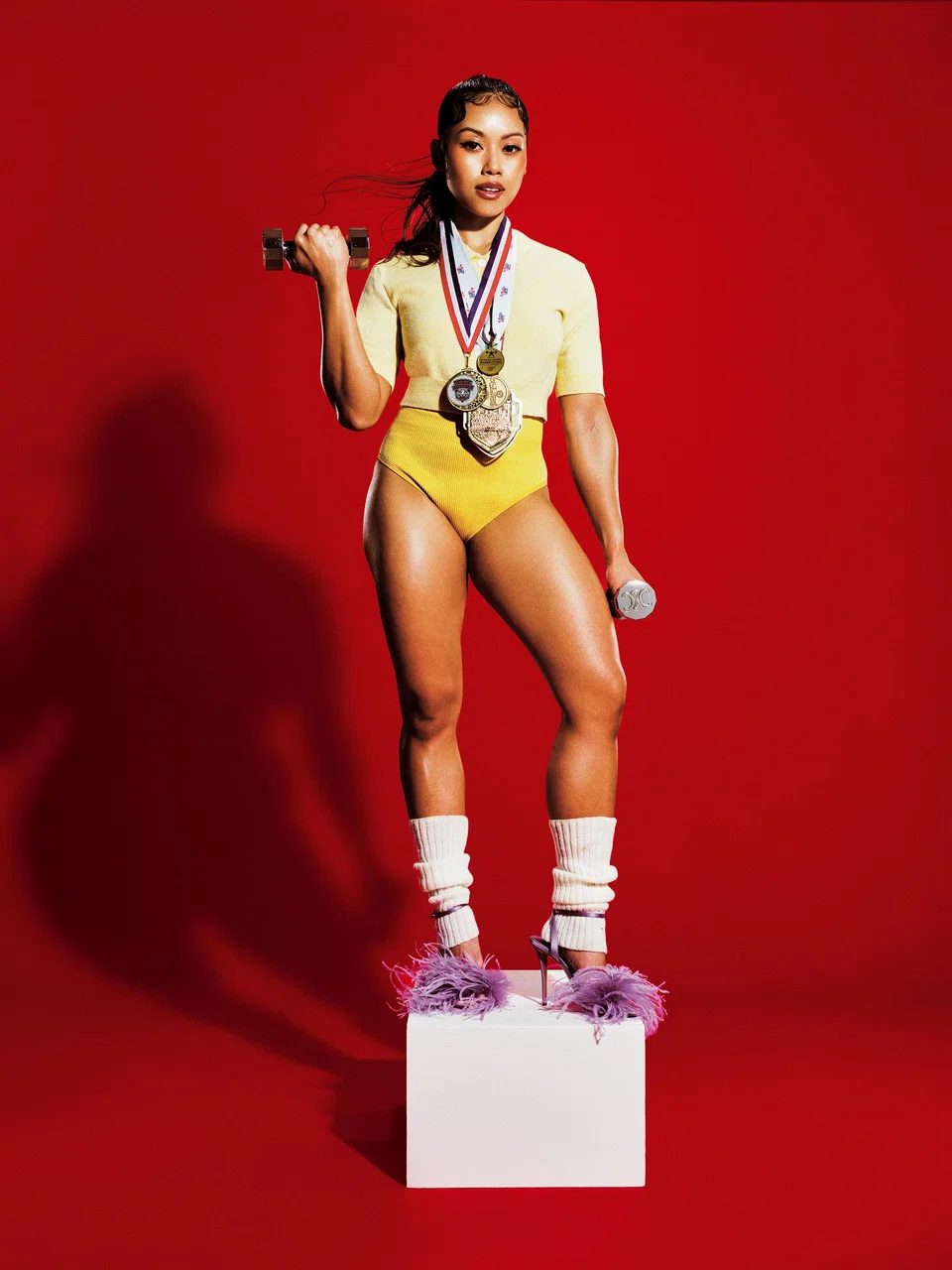
Wool cropped top, Onitsuka Tiger. Miss Z Poupi crepe satin sandals, Christian Louboutin. Steel silver and Triomphe canvas 2kg dumbbells, Celine. Bodysuit and leg warmers, stylist’s own. Assorted medals, Farhanna’s own
“I wanted to give myself a fighting chance, so I was quite committed to seeing it through. But I was also willing to drop certain numbers… and be okay with not hitting the world record,” she says.
As if Murphy’s Law were in full effect, things took another turn the day before she flew out for the competition: She fell ill.
“It was a full-blown fever – body aches, everything. It felt like the world was against me with this current world record,” she confesses. “It was a testing period, and I got very frustrated. There were moments when I indulged in the negativity. I was just so tired.”
The 33-year-old athlete arrived in Turkiye already running on fumes. At some point, someone struck up a conversation, casually asking if she was planning to break another record.
“And I was like, honestly, I’m exhausted, I’m sick, and I’m kind of injured. So I don’t know how I’m going to perform,” she recounts. The response? A well-meaning reminder to stay positive.
“I got really annoyed,” Farhanna says, without hesitation. “Do you think positivity is all it takes to fix my injury and sickness? Just let me whine! I was genuinely tired.”
It’s a moment of candour I hadn’t expected. Athletes are often asked to perform not just physically, but emotionally – to remain composed, resilient, unshakeable, even under immense pressure. What rarely gets acknowledged is how brutal that demand can be: months, sometimes years, of training distilled into a single attempt, a single outcome.
That is why Farhanna’s frustration feels quietly radical. To hear an elite athlete articulate disappointment, fatigue, even anger, is humanising. It disrupts the tidy narrative of grit and triumph. And perhaps, more importantly, it reframes excellence as the ability to sit with discomfort and still show up.
“An athlete can be tired and miserable, and maybe still perform,” Farhanna states matter-of-factly.
I bring up swimmer Quah Jing Wen, who just days before, broke down in a post-race interview at the SEA Games after finishing third in the 200m butterfly – a race she had won for four consecutive Games since 2017. The reaction was telling. Spectators are quick to celebrate triumph, but less comfortable bearing witness to disappointment and loss.
Farhanna nods. “At the end of the day, we are human.” Failure, she believes, is simply part of the work: sitting with the discomfort, accepting it as fact, and then moving on with a clearer sense of what to do next.
Constant positivity, she adds, is not resilience. “If you’re just being positive all the time, it’s very hard to grow. And you’re not being real.”
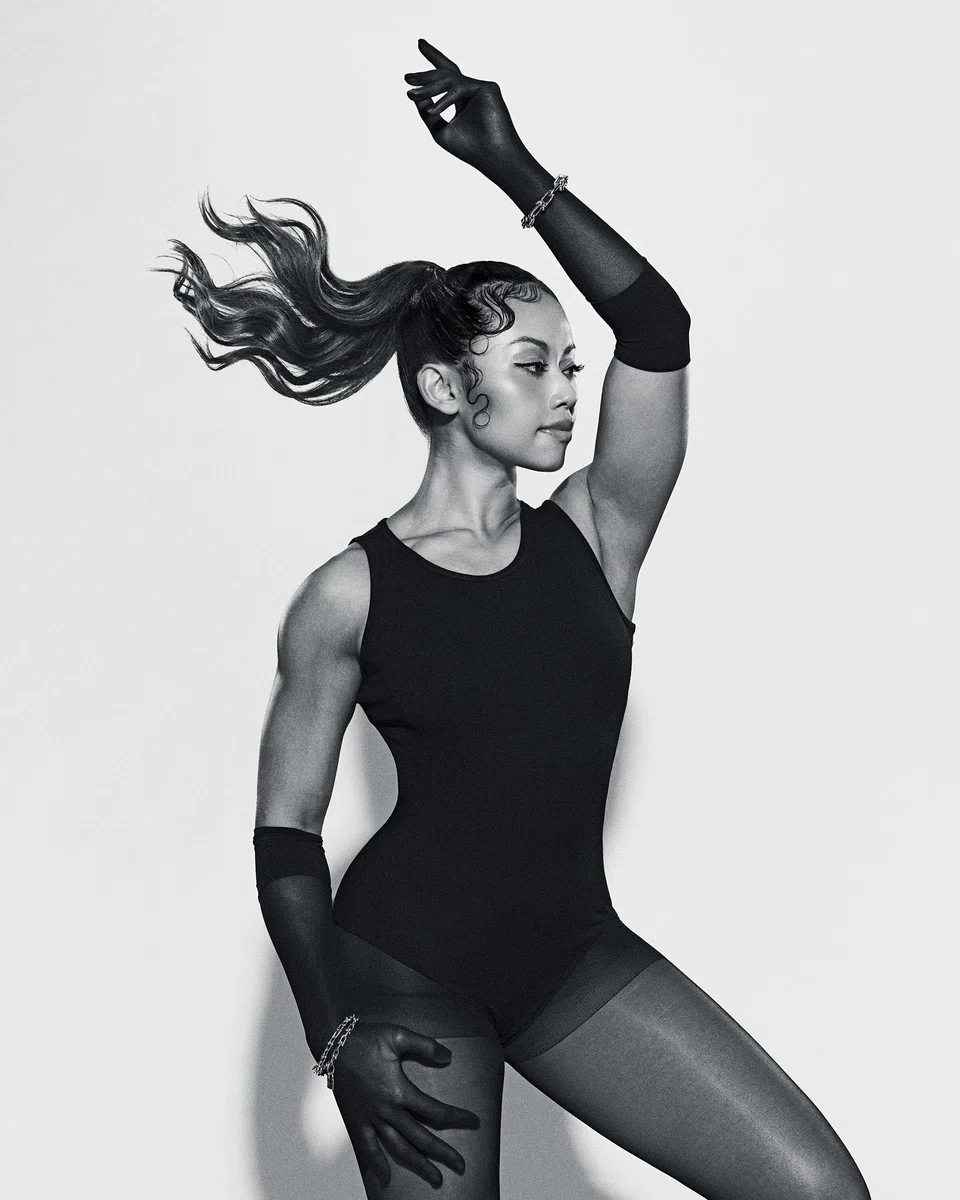
Tiffany Hardwear Medium Link yellow gold bracelet with diamonds, and Tiffany Hardwear Small Wrap yellow gold bracelet, Tiffany & Co. Bodysuit, gloves and stockings, stylist’s own
A supportive partner
Farhanna’s career cannot be told without James Barcelo, her husband and a competitive powerlifter in his own right. When they were dating, she followed him to the gym out of curiosity, and he began coaching her in powerlifting.
She laughs recalling those early sessions. She wasn’t taking training seriously, and James would get frustrated when she forgot her form or grip. She, in turn, bristled at his clipped coaching style, so different from how he usually talks to her.
“We had to take time-outs to argue outside the gym, because we didn’t want to create a scene inside,” she says with a sheepish smile.
“We knew how to not step on each other’s toes after that, but it took a lot of time-outs outside the gym to figure that out.”
The two first met as schoolmates at Anglo-Chinese Junior College, but it wasn’t love at first sight. They became friends – “constants in each other’s lives”, as she puts it. Years later, James enrolled at the National University of Singapore, where Farhanna was in her second year. He invited her out to lunch, which led to them spending more time together. The two got closer, and the rest is history.
“Ever since then, he’s just been my partner-in-crime,” she says. She credits him for seeing her potential, and giving her the support and confidence she needed to step away from her day job to focus on powerlifting.
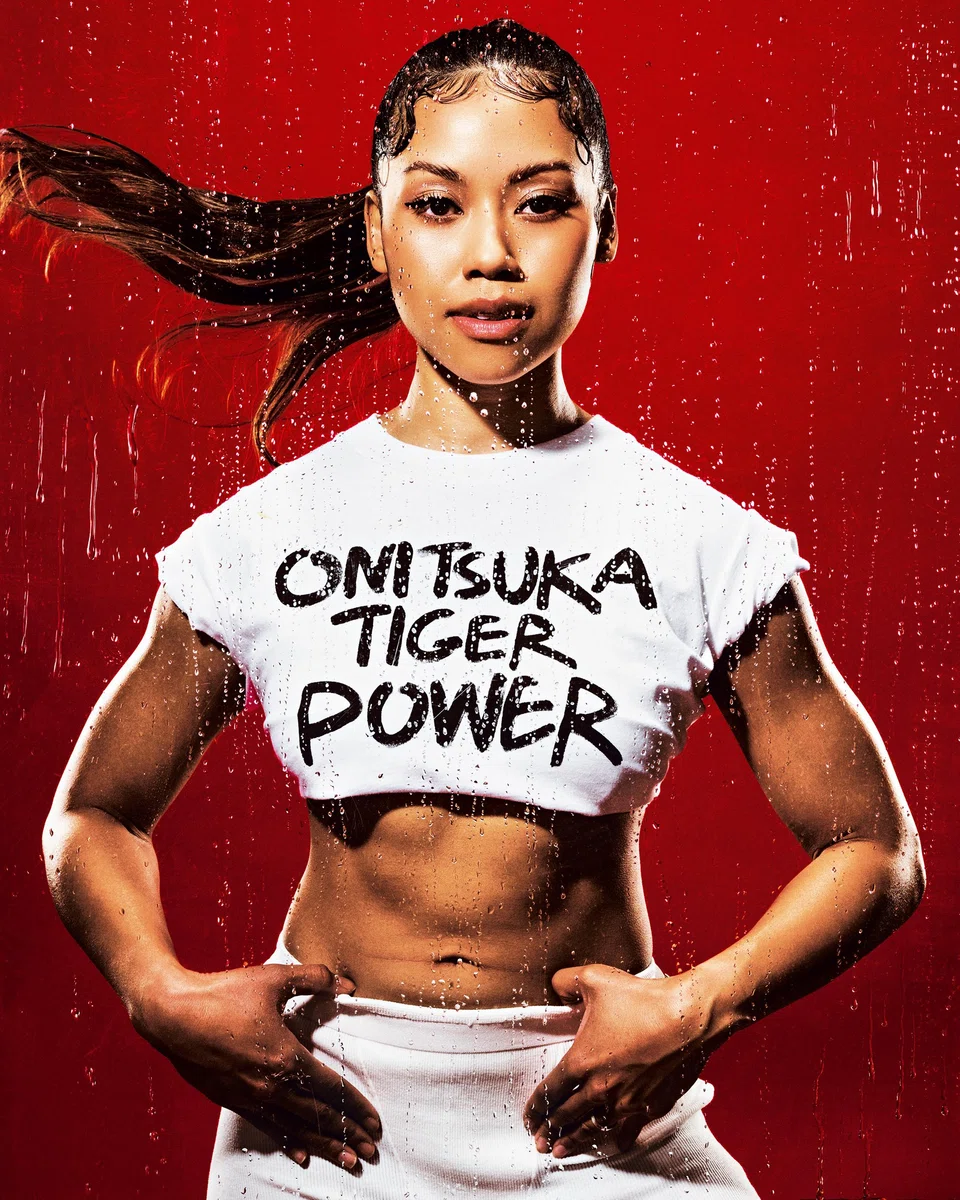
Cotton printed T-shirt, Onitsuka Tiger. Cotton boy shorts, H&M
A scroll through social media shows them being inseparable – at work engagements, social events, and especially at competitions where he’s never far from her side, offering quiet encouragement before a lift and beaming with pride afterwards. And while he was once her coach, the tables have now turned. Since 2023, he has been under the tutelage of his wife.
“We joke that it’s probably out of convenience, and he doesn’t want to pay for coaching,” she says with a laugh, noting that he’s doing well in his powerlifting career.
“He used to focus on me all the time, on me being an athlete and my progress. We’re switching gears and focusing on him a little bit more now,” she adds, a hint of pride in her voice.
Looking ahead, they are also “possibly starting a family” this year. Farhanna acknowledges that her priorities will be shifting, but one thing will remain constant: “I will definitely still be lifting weights. I don’t think you can get me out of the gym until I’m due.”
After that, she hopes to have a space where she can train with her kids close by. “Hopefully there’ll be gyms that are open to that. I think that’ll be quite healthy for mums, so they don’t feel mum guilt while they’re doing something for themselves,” she says. And no, don’t count on her retiring just yet.
“Competition and training will take a backseat during that period, until I feel like everything has stabilised.”
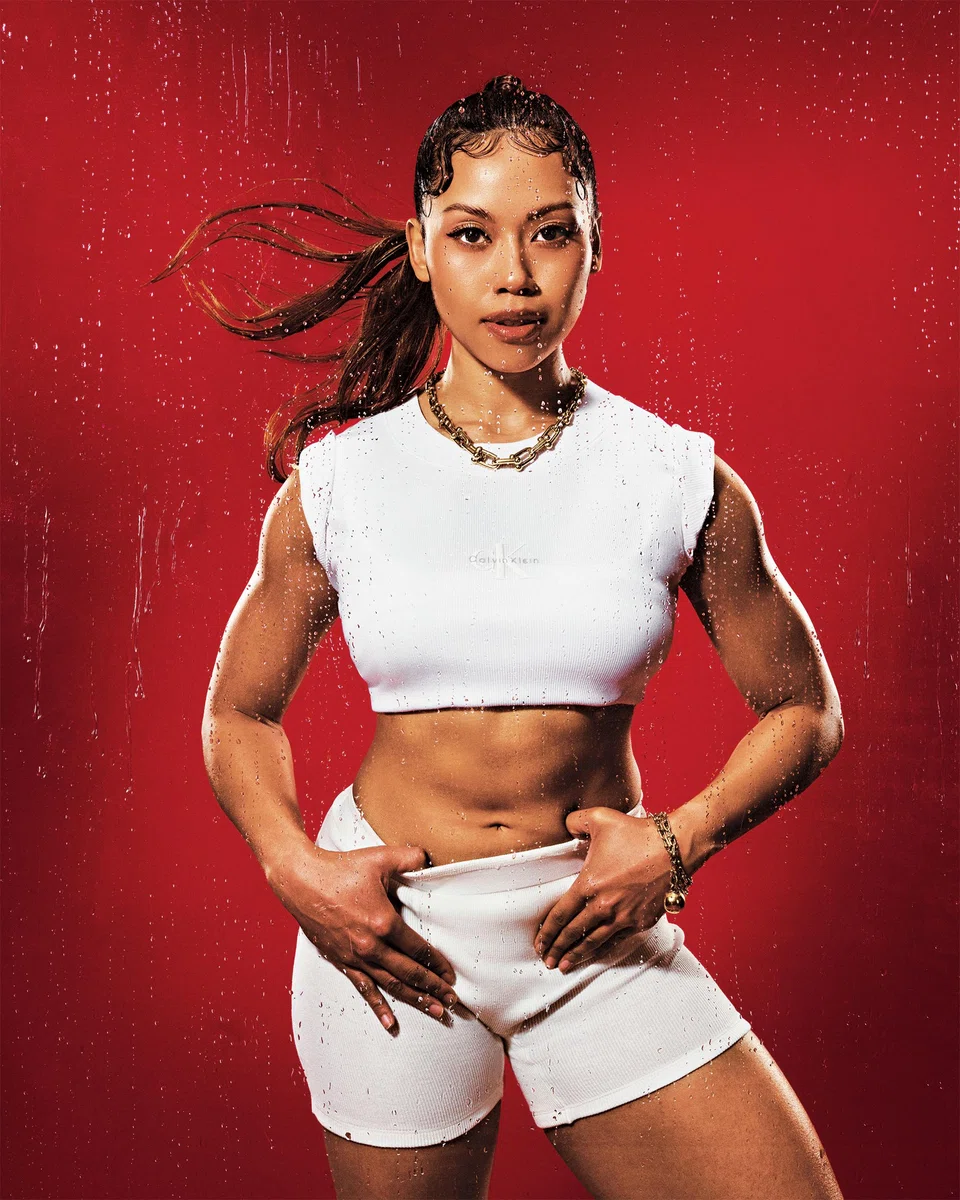
Outfit, Calvin Klein. Jewellery, Tiffany & Co.
Paving the way
Farhanna notes that there has been a huge shift in women’s interest in lifting – and how muscular women are perceived.
“When I first started, it wasn’t really ‘acceptable’ for women to lift heavy weights,” she recounts. Today, with growing awareness of strength training’s benefits and shows like Physical: 100 and Physical: Asia, Farhanna observes that “it’s wholly acceptable for women to lift, even more, it’s celebrated if you lift heavy”.
“Social media has given women who are doing incredible things a space and platform to show how much lifting can benefit us, and how capable we are,” she adds. On a larger scale, she hopes powerlifting gains recognition as a national sport in Singapore. She’s quick to point out that the country already has a good pool of athletes, with even more potential waiting to be tapped.
“Powerlifting is genuinely very accessible. Anyone can rock up and start powerlifting from the lowest of levels, and at any age. We’ve had athletes in their 60s who were diagnosed with osteoporosis and started powerlifting, and before they know it, they’re representing Singapore,” she shares.
“I’m 100 per cent biased, but I genuinely believe powerlifting can be a sport for all,” she continues, noting that government support would be helpful as many talented athletes fizzle out simply because they cannot afford to compete multiple times a year.
Since 2020, Farhanna has been paying it forward through coaching. A defining moment came at the 2022 Asian Powerlifting Championships in Dubai, where she brought five of her athletes with her. Both she and Amanda Seow (who co-runs Valkyrie Powerlifting with Farhanna) topped their categories.
“It pretty much set things in stone,” Farhanna says with resolve. “This is what I want to do, and how I contribute to society. This is how I find my purpose.”
PHOTOGRAPHY Zantz Han, assisted by Tan Peng Sheng, Jackie Tan & Darrel Ng
CREATIVE DIRECTION & STYLING Lena Kamarudin, assisted by Helaine Ercia
ART DIRECTION Ray Ticsay
MAKEUP Zhou Aiyi
HAIR Christvian Goh