%22%3E%3Cpath%20fill%3D%22%23000%22%20d%3D%22M79.702%2078.555c0%2033.03%2018.767%2046.361%2035.801%2046.361%2014.149%200%2029.738-7.033%2034.505-28.595l-1.445-.306c-3.61%2015.903-14.005%2027.371-33.06%2027.371-13.86%200-13.716-22.173-13.716-41.594V67.415h49.662c0-23.393-13.136-40.674-35.946-40.674-17.034%200-35.801%2018.94-35.801%2051.814m35.801-50.283c14.437%200%2014.005%2026.455%2013.861%2037.617h-27.573c-.004-18.353.865-37.617%2013.712-37.617%22%2F%3E%3C%2Fg%3E%3Cmask%20id%3D%22b%22%20width%3D%22603%22%20height%3D%22126%22%20x%3D%220%22%20y%3D%220%22%20maskUnits%3D%22userSpaceOnUse%22%20style%3D%22mask-type%3Aluminance%22%3E%3Cpath%20fill%3D%22%23fff%22%20d%3D%22M602.5%200H.5v125.074h602z%22%2F%3E%3C%2Fmask%3E%3Cg%20mask%3D%22url(%23b)%22%3E%3Cpath%20fill%3D%22%23000%22%20d%3D%22M86.81%20105.474h-1.445c0%2010.547-4.475%2011.463-5.483%2011.463-2.454%200-4.475-3.514-4.475-11.921V48.264c0-14.83-10.826-21.558-22.229-21.558-10.97%200-22.66%206.118-25.983%2017.276V8.478c-.515-4.763-4.26-8.48-8.893-8.48H.522v1.53H.5c2.886%200%204.763%201.988%204.763%205.045v110.211c0%203.057-1.877%205.045-4.763%205.045h.022v1.531h31.423v-1.531h.021c-2.885%200-4.762-1.988-4.762-5.045V50.252c0-10.395%208.949-18.806%2016.31-18.806%205.338%200%209.813%204.13%209.813%2014.83v58.74c0%2013.909%207.796%2019.874%2016.165%2019.874%209.958.005%2017.318-6.418%2017.318-19.416%22%2F%3E%3C%2Fg%3E%3Cmask%20id%3D%22c%22%20width%3D%22603%22%20height%3D%22126%22%20x%3D%220%22%20y%3D%220%22%20maskUnits%3D%22userSpaceOnUse%22%20style%3D%22mask-type%3Aluminance%22%3E%3Cpath%20fill%3D%22%23fff%22%20d%3D%22M602.5%200H.5v125.074h602z%22%2F%3E%3C%2Fmask%3E%3Cg%20mask%3D%22url(%23c)%22%3E%3Cpath%20fill%3D%22%23000%22%20d%3D%22M225.911%2042.197c0-10.552-11.259-16.818-22.954-16.818-10.682%200-21.513%205.045-25.119%2016.975v-7.352c-.48-4.574-3.977-8.148-8.364-8.398h-18.322v1.53h-.022c2.886%200%204.763%201.99%204.763%205.046v81.371h.004c.293%204.814%203.942%208.633%208.509%208.846v.004h18.173v-1.53h.022c-2.886%200-4.763-1.989-4.763-5.045V48.62c0-10.552%209.094-19.269%2016.602-19.269%204.763%200%208.805%203.672%209.386%2012.693%200%206.881%204.619%2011.773%2011.119%2011.773%206.631%200%2010.966-4.587%2010.966-11.62%22%2F%3E%3C%2Fg%3E%3Cmask%20id%3D%22d%22%20width%3D%22603%22%20height%3D%22126%22%20x%3D%220%22%20y%3D%220%22%20maskUnits%3D%22userSpaceOnUse%22%20style%3D%22mask-type%3Aluminance%22%3E%3Cpath%20fill%3D%22%23fff%22%20d%3D%22M602.5%200H.5v125.074h602z%22%2F%3E%3C%2Fmask%3E%3Cg%20mask%3D%22url(%23d)%22%3E%3Cpath%20fill%3D%22%23000%22%20d%3D%22M234.434%2028.315c2.925%200%205.583%202.312%206.779%205.863l29.782%2089.218h1.597l20.61-61.852%2020.609%2061.852h1.598l29.781-89.218c1.196-3.556%203.855-5.863%206.78-5.863h.183v-1.776h-11.538v1.776h.184c2.925%200%203.99%202.312%202.794%205.863l-18.082%2054.209-18.082-54.209c-1.196-3.556-.131-5.863%202.794-5.863h.183v-1.776h-33.343v1.776h.183c2.925%200%205.583%202.312%206.78%205.863l8.373%2025.058-9.705%2029.15-18.082-54.208c-1.196-3.556-.131-5.863%202.794-5.863h.184v-1.776h-33.344v1.776z%22%2F%3E%3C%2Fg%3E%3Cmask%20id%3D%22e%22%20width%3D%22603%22%20height%3D%22126%22%20x%3D%220%22%20y%3D%220%22%20maskUnits%3D%22userSpaceOnUse%22%20style%3D%22mask-type%3Aluminance%22%3E%3Cpath%20fill%3D%22%23fff%22%20d%3D%22M602.5%200H.5v125.074h602z%22%2F%3E%3C%2Fmask%3E%3Cg%20mask%3D%22url(%23e)%22%3E%3Cpath%20fill%3D%22%23000%22%20d%3D%22M377.826%20124.491c17.034%200%2038.211-15.699%2038.211-48.882%200-33.03-21.177-48.73-38.211-48.73-17.035%200-38.067%2015.857-38.067%2048.73.004%2033.026%2021.032%2048.882%2038.067%2048.882m0-96.085c13.86%200%2016.121%2028.24%2016.121%2047.356%200%2019.116-2.261%2047.198-16.121%2047.198-13.861%200-15.978-27.777-15.978-47.198%200-19.422%202.122-47.356%2015.978-47.356%22%2F%3E%3C%2Fg%3E%3Cmask%20id%3D%22f%22%20width%3D%22603%22%20height%3D%22126%22%20x%3D%220%22%20y%3D%220%22%20maskUnits%3D%22userSpaceOnUse%22%20style%3D%22mask-type%3Aluminance%22%3E%3Cpath%20fill%3D%22%23fff%22%20d%3D%22M602.5%200H.5v125.074h602z%22%2F%3E%3C%2Fmask%3E%3Cg%20mask%3D%22url(%23f)%22%3E%3Cpath%20fill%3D%22%23000%22%20d%3D%22M490.482%2042.197c0-10.552-11.258-16.818-22.953-16.818-10.683%200-21.513%205.045-25.119%2016.975v-7.352c-.48-4.574-3.977-8.148-8.365-8.398h-18.326v1.53h-.022c2.886%200%204.763%201.99%204.763%205.046v81.371h.004c.293%204.814%203.943%208.633%208.509%208.846v.004h18.173v-1.53h.022c-2.885%200-4.763-1.989-4.763-5.045V48.62c0-10.552%209.094-19.269%2016.602-19.269%204.763%200%208.806%203.672%209.386%2012.693%200%206.881%204.619%2011.773%2011.119%2011.773%206.64%200%2010.97-4.587%2010.97-11.62%22%2F%3E%3C%2Fg%3E%3Cmask%20id%3D%22g%22%20width%3D%22603%22%20height%3D%22126%22%20x%3D%220%22%20y%3D%220%22%20maskUnits%3D%22userSpaceOnUse%22%20style%3D%22mask-type%3Aluminance%22%3E%3Cpath%20fill%3D%22%23fff%22%20d%3D%22M602.5%200H.5v125.074h602z%22%2F%3E%3C%2Fmask%3E%3Cg%20mask%3D%22url(%23g)%22%3E%3Cpath%20fill%3D%22%23000%22%20d%3D%22M602.5%20103.974h-1.445c0%2010.553-4.474%2011.468-5.483%2011.468-2.453%200-4.474-3.519-4.474-11.925V6.585c0-3.056%201.877-5.045%204.762-5.045h-.166V.01h-17.715c-4.942%200-8.953%204.24-8.962%209.475h-.009v23.333c-6.063-3.977-9.84-5.503-16.48-5.503-17.034%200-35.801%2014.169-35.801%2047.046%200%2033.183%2013.101%2050.718%2035.801%2050.718%208.085%200%2013.302-2.294%2019.942-8.254%203.03%204.587%207.797%206.575%2012.704%206.575%209.966-.004%2017.326-6.427%2017.326-19.426m-30.75%2011.625c-4.763%204.435-10.84%205.822-13.38%205.822-11.482%200-19.558-16.933-19.558-46.907%200-29.97%2010.914-43.222%2019.885-43.222%203.3%200%206.264.153%2010.307%203.057v69.172c.004%205.04%201.017%209.017%202.746%2012.078%22%2F%3E%3C%2Fg%3E%3Cmask%20id%3D%22h%22%20width%3D%22603%22%20height%3D%22126%22%20x%3D%220%22%20y%3D%220%22%20maskUnits%3D%22userSpaceOnUse%22%20style%3D%22mask-type%3Aluminance%22%3E%3Cpath%20fill%3D%22%23fff%22%20d%3D%22M602.5%200H.5v125.074h602z%22%2F%3E%3C%2Fmask%3E%3Cg%20mask%3D%22url(%23h)%22%3E%3Cpath%20fill%3D%22%23000%22%20d%3D%22M516.984%20121.865c-2.885%200-4.763-1.988-4.763-5.045V9.466C512.2%204.241%20508.196.01%20503.259.01h-17.724v1.53h-.022c2.89%200%204.763%201.989%204.763%205.045v108.418c.515%204.564%204.029%208.129%208.434%208.337v.06h18.252v-1.53h.022z%22%2F%3E%3C%2Fg%3E%3C%2Fsvg%3E)

Retro video games are back... and millennials are leading its revival
From dusty consoles to rebuilt arcade cabinets, retro video games are no longer a niche obsession. As millennials return to the arcades and cartridges of their youth, nostalgia is fuelling a growing revival that goes beyond play
By Chelsia Tan -
Share this article
Tucked away on the fourth floor of Sim Lim Square is a time capsule devoted to retro video games, drawing office workers eager to revisit their childhoods during lunch breaks, as well as intrepid gamers in search of consoles and titles long out of production.
Retronutz is the only shop of its kind in Singapore, where collectors hunt for games from the 1970s to the 2000s, from Street Fighter and Super Mario to Sonic the Hedgehog. Owner Philip Lee, 65, has an encyclopaedic knowledge of video games.
When he’s not busy modifying old Game Boy consoles at his work desk, he’s helping customers track down rare or longdefunct titles from Nintendo, Sega, Capcom, Bandai – you name it, he likely has it. Ask him what his customers typically gravitate towards, and he doesn’t hesitate.
“I think because social media is so widespread now, the main one they go for is the Game Boy. When I say Game Boy, you think of Super Mario.
“That’s why Nintendo is always here to stay. They have iconic games… Sony and Xbox don’t have that,” says Philip, who names Shigeru Miyamoto – the creator behind the Super Mario Bros franchise – as his favourite game developer. He adds that his bestsellers are games by Nintendo.
“The main ones are Super Mario, Pokemon, and The Legend of Zelda. These are all exclusives. You won’t find them on other consoles, not even on PC. They keep them exclusive.”
That strategy of exclusivity, he suggests, is what continues to fuel demand – not just for new releases, but for retro titles as well. Once a niche pursuit, collecting vintage video games and its merchandise is now a growing trend among millennials eager to reconnect with the franchises they grew up with.
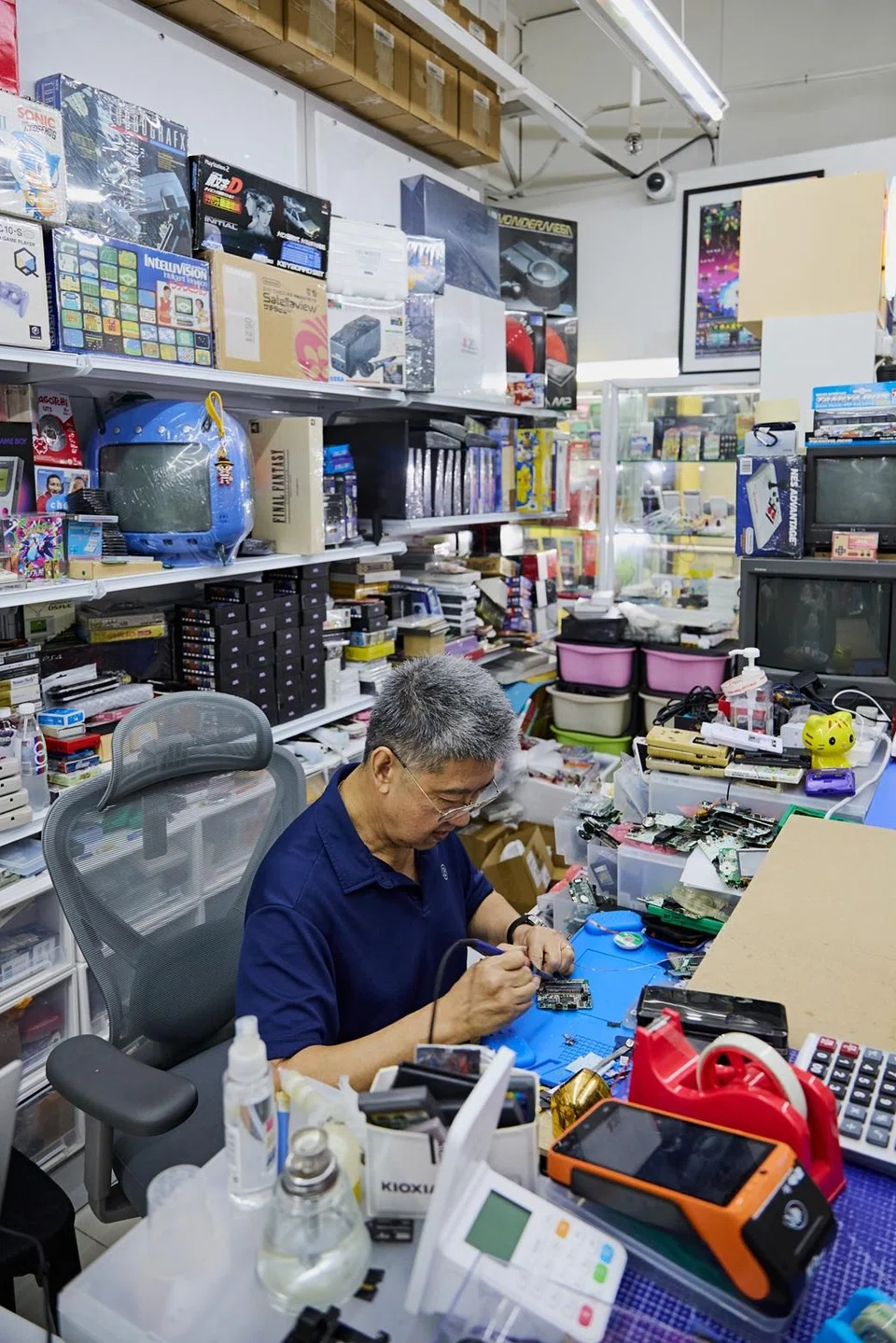
Philip Lee, owner of Retronutz. Collectors come to here to hunt down rare or defunct titles from Nintendo, Sega, Capcom and Bandai
One of the world’s most recognisable anime icons – a fuzzy yellow creature with a lightning-bolt tail and rosy red cheeks – recently made headlines in Singapore with a staggering $1.3 million price tag.
For millennials who once traded Pokemon cards in school corridors, Pikachu was childhood currency. Few would have imagined those playground swops would one day translate into multimilliondollar deals. A rare 1990s Pikachu Illustrator card was showcased at the Singapore Card Show last December.
One of just 39 believed to exist, its owner reportedly turned down the million-dollar offer, betting that its value will only climb. Just last month, American influencer Logan Paul sold his Pikachu Illustrator card for a cool $20.8 million.
Conceived by Satoshi Tajiri, president of Japanese video game developer Game Freak, and first released on the Game Boy in 1996, the Pokemon franchise has since grown into a global phenomenon spanning manga, trading cards and video games – so popular that the term “Pokemania” was coined.
Such is the extent of fandom for Pokemon, an anime and gaming franchise celebrating its 30th anniversary this year.
In January, Pokemon launched its highly anticipated Pokepark Kanto in Kawasaki, a city sandwiched between Tokyo and Yokohama. Spanning 26,000 sqm, its first permanent outdoor theme park is located within the Yomiuriland amusement park.
Closer to home, Singapore’s first Pokemon Trading Card Game Gym Deluxe store opened at *SCAPE in January, offering dedicated trading card game spaces, tournaments, official merchandise, and Pokemon Mezastar arcade game machines.
“I think the nostalgia factor is very strong,” says Poh Keng Jin, 48, also known as KJ. The game developer and founder of Retrocade, who conducts workshops on assembling retro arcade machines, started this side hustle in 2016 with the desire to recreate the arcade gaming experience of the past.
“My customers, some of them say, ‘I played this game when I was young, now I finally have the chance to play it again.’ Others tell me they want their kids to grow up playing the same games they did,” he shares.
“So definitely, the companies must be seeing this too – that the people who grew up buying their products are now old enough, and affluent enough, to spend more on them.”
Revisiting pixelated memories
That same sentiment plays out across town at Retronutz. Philip recalls a customer who visited his shop to browse his collection of handheld Game & Watch devices – pocket-sized units first introduced in 1980 that paired a single built-in game with a digital clock on an LCD screen.
The series went on to sell 43.4 million units worldwide, marking Nintendo’s first major global success in gaming.
“She told me very frankly that she couldn’t afford these games when she was younger, and now that she’s a working adult, she’s revisiting her childhood,” he says. “She later bought a few of those Game & Watch models from me.”
In many ways, her story mirrors his own. Philip adds that it was also one of the first games he ever bought for himself, having scrimped and saved to afford what was considered a luxury when he was 21.
“It was seen as an expensive thing to own, and I saved for months just to buy it,” he recalls.
Today, he owns around 80 Game & Watch devices, featuring titles from Mickey Mouse and Popeye to Octopus and Super Mario, collected over the years from various sources. Nostalgia – and the memories it stirs – has a way of pulling us back.
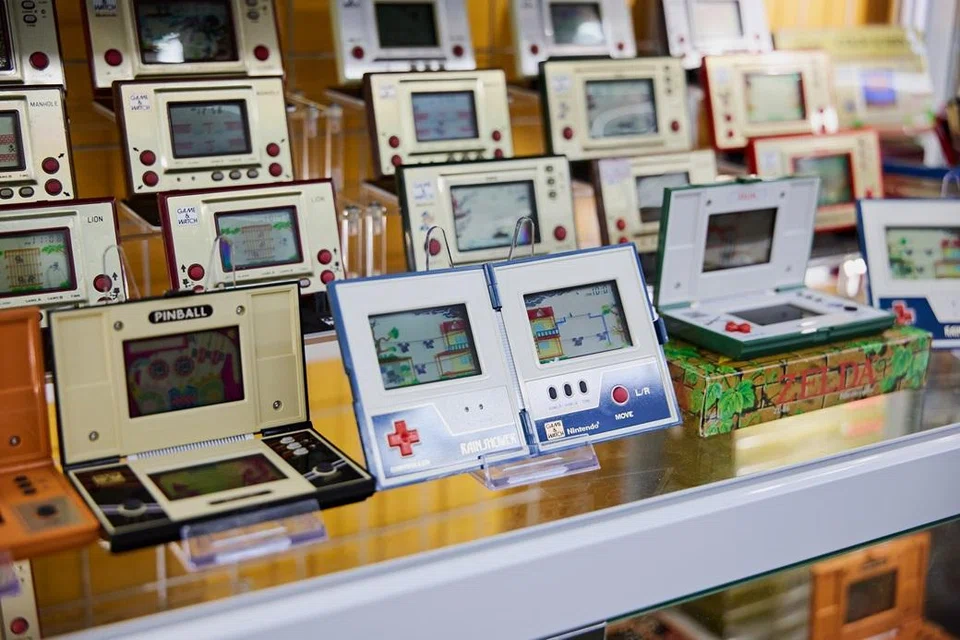
There are about 80 Game & Watch devices in Philip’s collection
When Cheryl Leong was 10, her parents bought her a Sega Mega Drive with a handful of single-game cartridges. She grew up playing titles like Castle of Illusion, Golden Axe, Shadow Dancer, Quackshot, and Sonic the Hedgehog.
“A childhood friend also had a Sega, so we’d spend afternoons after school swopping cartridges and playing together,” recalls the 41-year-old project manager. Gaming was also how Cheryl bonded with her mother, who was a homemaker.
“Castle of Illusion was our favourite,” she says. “When she passed away in 2021, I felt an intense urge to find the console again. I wasn’t even sure it still existed, but I hunted down a modern version online with the games built in.”
Revisiting those carefree days brought back memories of afternoons spent with her mum. As an only child, her mother had been her first playmate.
“The frustration, the joy, the small victories when we finally beat the final boss of each level,” she recalls.
In some way, playing Castle of Illusion also helped Cheryl process the grief of losing a parent. “Towards the end of her life, my mum was frail and a shadow of her past self, so playing the game helped me remember a time when she was healthier and happier.”
That instinct to return to the past is not uncommon. According to clinical psychologist Jiayong Lin of Annabelle Psychology, nostalgia can feel especially comforting during periods of stress, burnout or emotional overload, because it allows us to pause and step back from feeling overwhelmed.
“It can help separate the perceived ‘threat’ from our sense of self, preserving our self-worth and psychological safety – which in turn brings comfort,” he explains. “Our younger selves often reflect a more naive, curious and contented state. Nostalgic games can serve as a temporary passage through time, allowing us to reconnect with that inner child.”
In doing so, he adds, such moments can evoke self-compassion, reminding us of what once mattered and prompting us to consider how those needs might still be met in adulthood.
For Cheryl, that connection is poignant. “I’m actually not much of a gamer,” she admits.
“I don’t really play any modern games, and scrolling is just a distraction for me. “But when I think about Sega, it’s an emotional connection – which is probably why I’ll always have a soft spot for it, and why I know I’ll come back to it one day.”
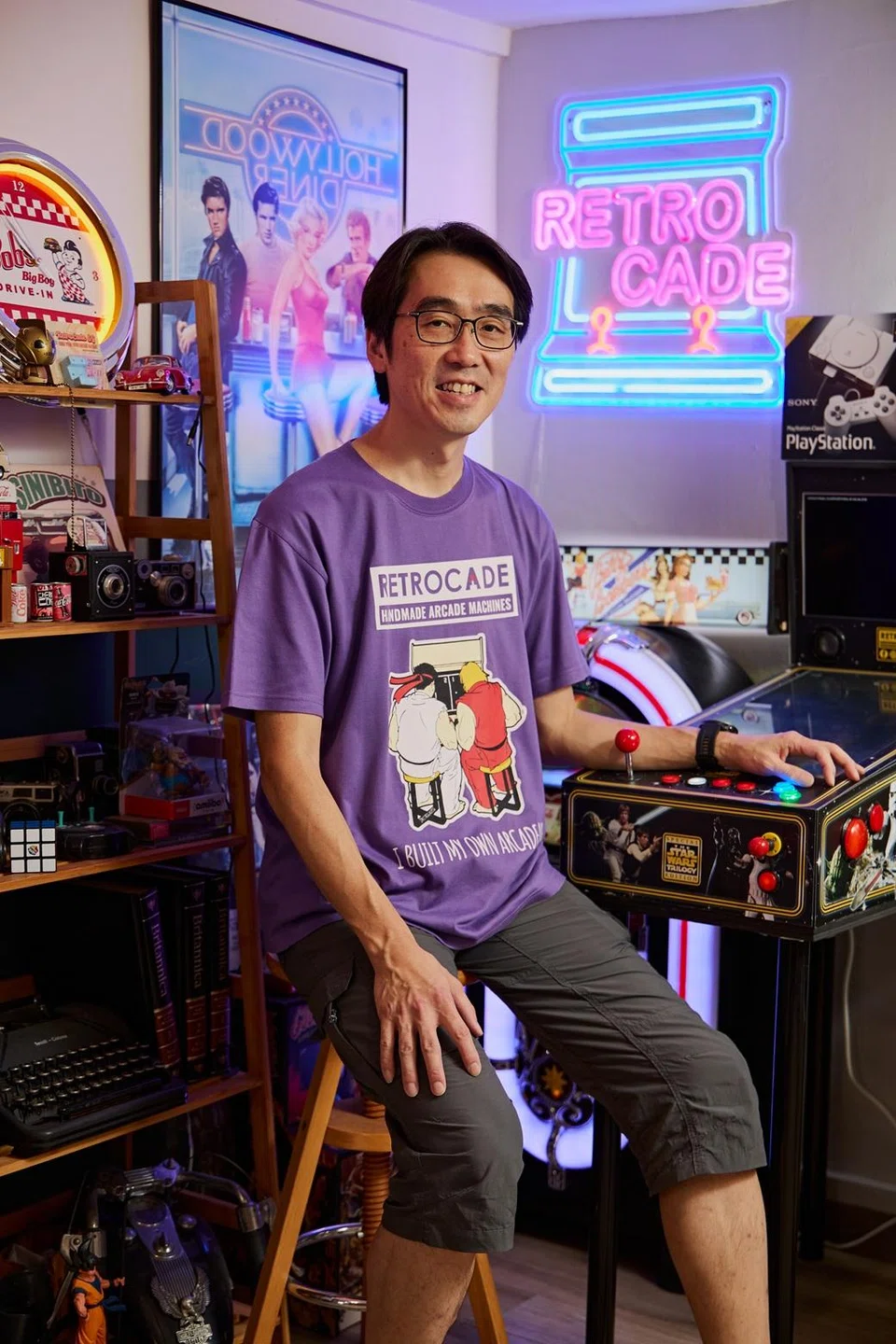
Poh Keng Jin, also known as KJ, owner of Retrocade
Bringing the arcade back to life
Similarly, Retrocade’s KJ started rebuilding retro arcade games machines because he wanted to play Street Fighter, a game he would visit the arcade with his brother for as a teenager.
“You can’t quite find it in the arcade anymore. In Singapore, it’s very, very hard. When I went to Japan last year, there were still old arcades with retro arcade games, so I could go in and play like I used to,” he says.
The idea that arcade machines could be accessible and relatively easy to build – “I had a friend who told me that a lot of people in the US were building their own arcade machines” – gave him the push he needed, though sourcing the parts proved challenging.
“It took a long time to source the parts – things like a Raspberry Pi, which is a small microcomputer. The joysticks had to be ordered from overseas. It took months, maybe even up to a year, before I could finally put the first machine all together,” he shares.
At the time, he was working at a small game development studio, creating and selling original titles across PC, Playstation and Nintendo, and showcasing them at trade shows. But breaking through was tough – it was hard to get people to notice a game from a company no one had heard of.
“So when I was building the arcade machine, I thought, why not put our game into an arcade form? When we brought it to trade shows, people came over because it was an arcade machine. It felt inviting,” he says.
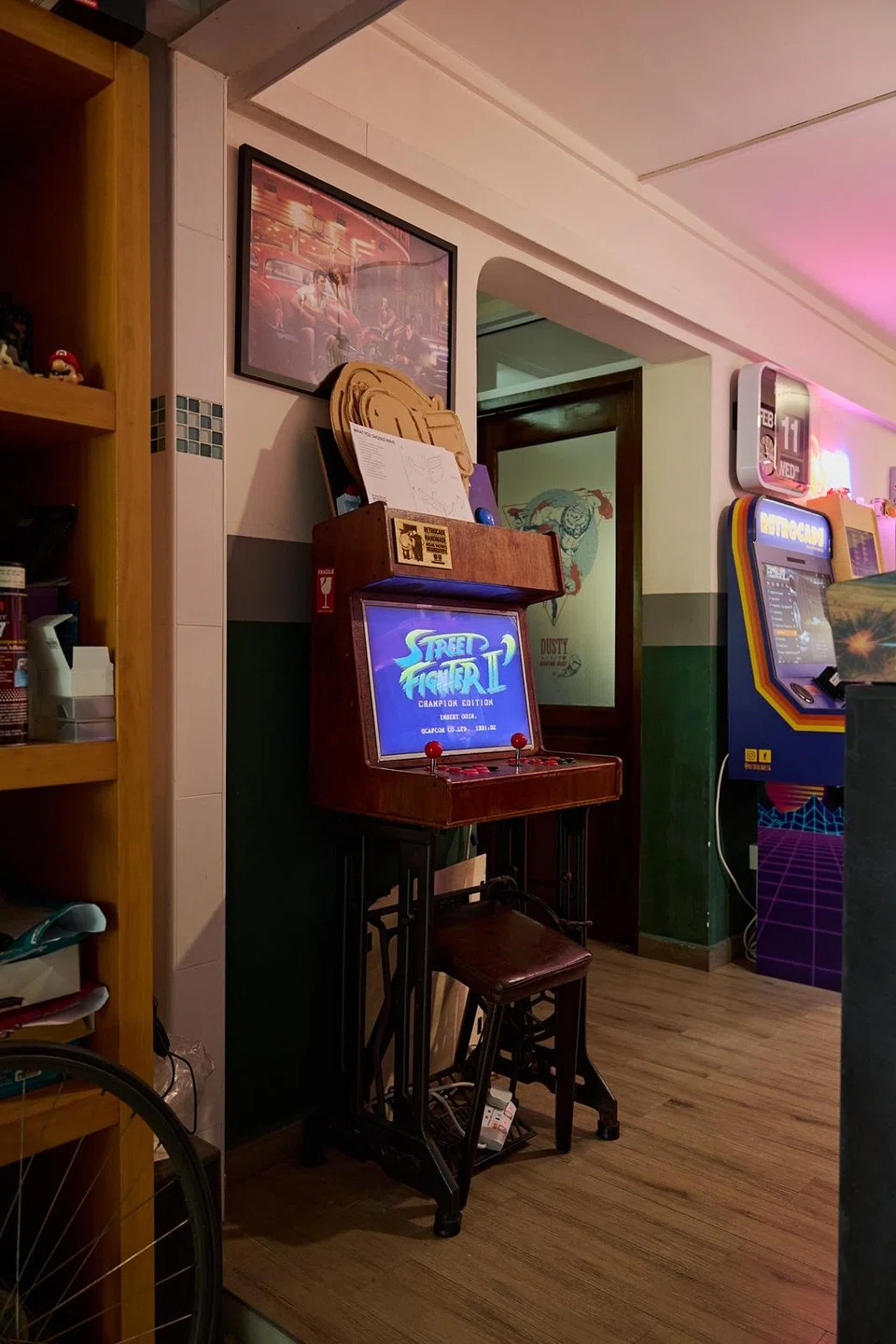
One of the earliest handmade arcade machines built by KJ. The visual appeal of arcade machines is one of the reasons why people are still drawn to them today
Over time, he redesigned the machines to make them easier to assemble. When he first built them, he posted photos on Facebook. Friends quickly asked, “This is so cool – are you selling it?” Before long, enquiries started coming in.
Rather than building them for customers, he began to wonder if people might prefer to build their own. That thinking led him to start running workshops, where participants pay about $500 to build a singleplayer machine and $900 for a two-player version. His customers range from families and couples to millennials.
Brands in Singapore have also jumped on the retro arcade bandwagon as a marketing tool. Retrocade has partnered with Uniqlo to produce arcade machines promoting the brand’s vintage Marvel gaming T-shirt collection in 2019, with the machines installed across four stores.
The classic, nostalgic design of an arcade machine – paired with its large, tactile buttons that players can enthusiastically hit – has also given government agencies a creative way to engage the public and encourage learning.
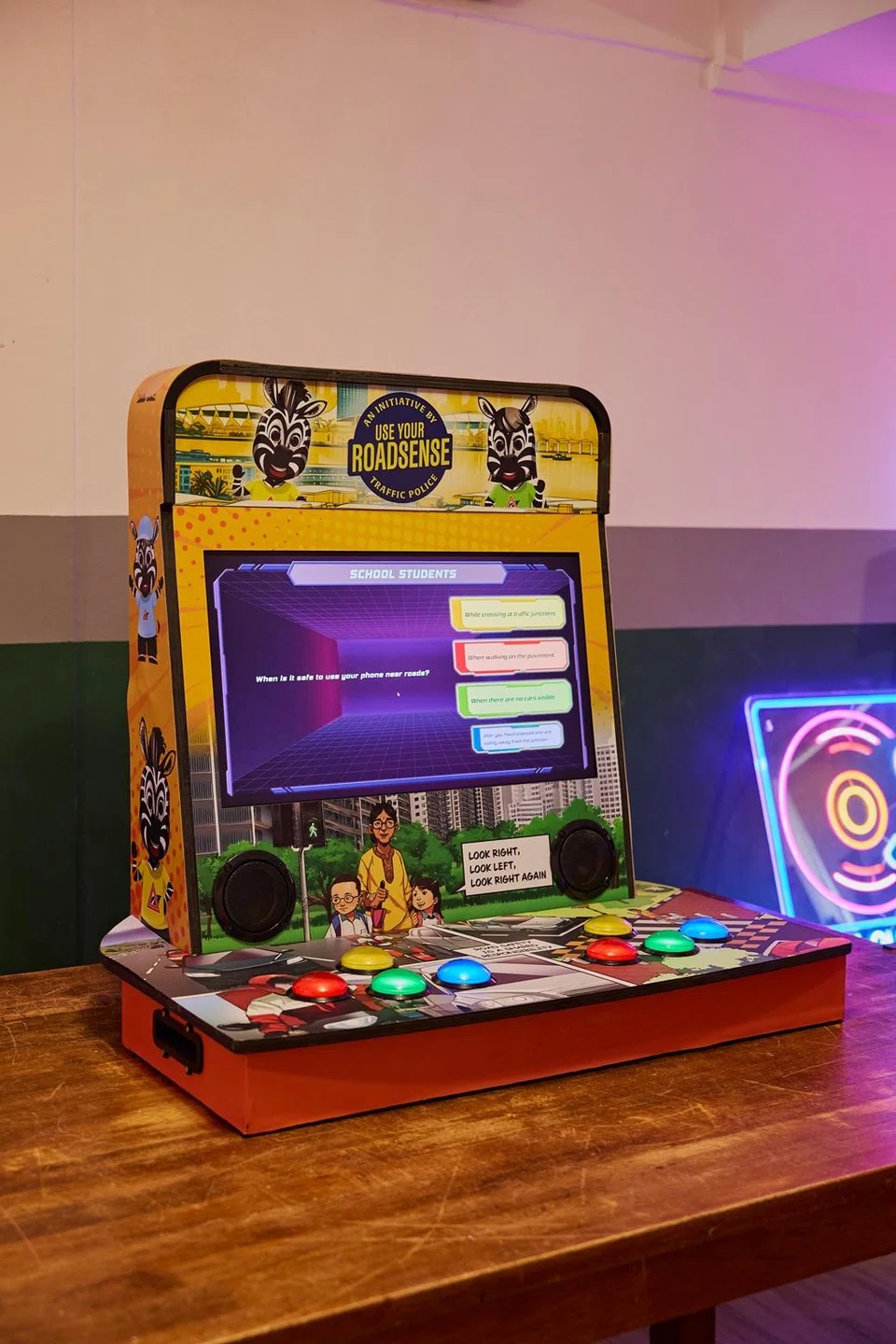
KJ has built four sets of machines for the Singapore Traffic Police
More recently, he has built machines for the Singapore Traffic Police, featuring a gamified version of a road safety quiz for children. The appearance of an arcade machine, he says, makes it more interesting and engaging for them. That broad appeal extends beyond public campaigns.
When he first started running the workshops, he assumed his participants would mostly be men in their 30s or 40s. Instead, his very first session surprised him: half the room was filled with women in their 20s. Since then, the demographic has only broadened, drawing a mix of men and women, young and old.
“Some join to build the machine; others treat it as a family activity. Partners buy it as a surprise, companies use it for team-building, and schools incorporate it into maker-space programmes or CCAs,” he shares.

Rachel Liew is a Tamagotchi collector who owns over 200 of the egg-shaped devices
Finding comfort in virtual pets
That same playful spirit of nostalgia is also fuelling the revival of another unlikely icon: the Tamagotchi.
First launched in 1996 by Japanese toy company Bandai, the egg-shaped digital pet became a global obsession, teaching children responsibility through the simple acts of feeding, cleaning and tending to a pixelated creature.
The toy has since endured, spawning numerous iterations of the device. Earlier this year, Tamagotchi celebrated its 30th anniversary with a major exhibition at Tokyo’s Roppongi Museum, featuring immersive displays and exclusive merchandise.
That momentum has carried into its latest iteration. Tamagotchi Paradise, launched in 2025, features a larger screen, bigger buttons and four shell designs – Pink Land, Blue Water, Purple Sky and Jade Forest – with gameplay centred on building a “paradise” planet through nurturing and character collection.
Targeted at the “kidult” – adults revisiting their childhoods – it builds on a franchise that has shipped more than 100 million devices globally since its debut in 1996. Its revival suggests that nostalgia today is not only about play, but also about ritual and care. In a time marked by uncertainty and digital overload, the appeal of nurturing something feels grounding.
“I think I was about six when I first saw some older kids playing with Tamagotchi. When my mum told me it was a digital pet, I was fascinated – especially since I wasn’t allowed a real one. It felt like the perfect alternative, and that’s how my interest began,” says Rachel Liew, 36, a Tamagotchi collector who has amassed over 200 of the devices since 2014.
For her, the appeal lies in having an emotional companion to care for in the form of a virtual pet. The hobby eventually led her to seek out vintage and rare editions of the toy. Her most prized Tamagotchi is a collaboration with Suntec City Mall, which she purchased from a local seller for $200.
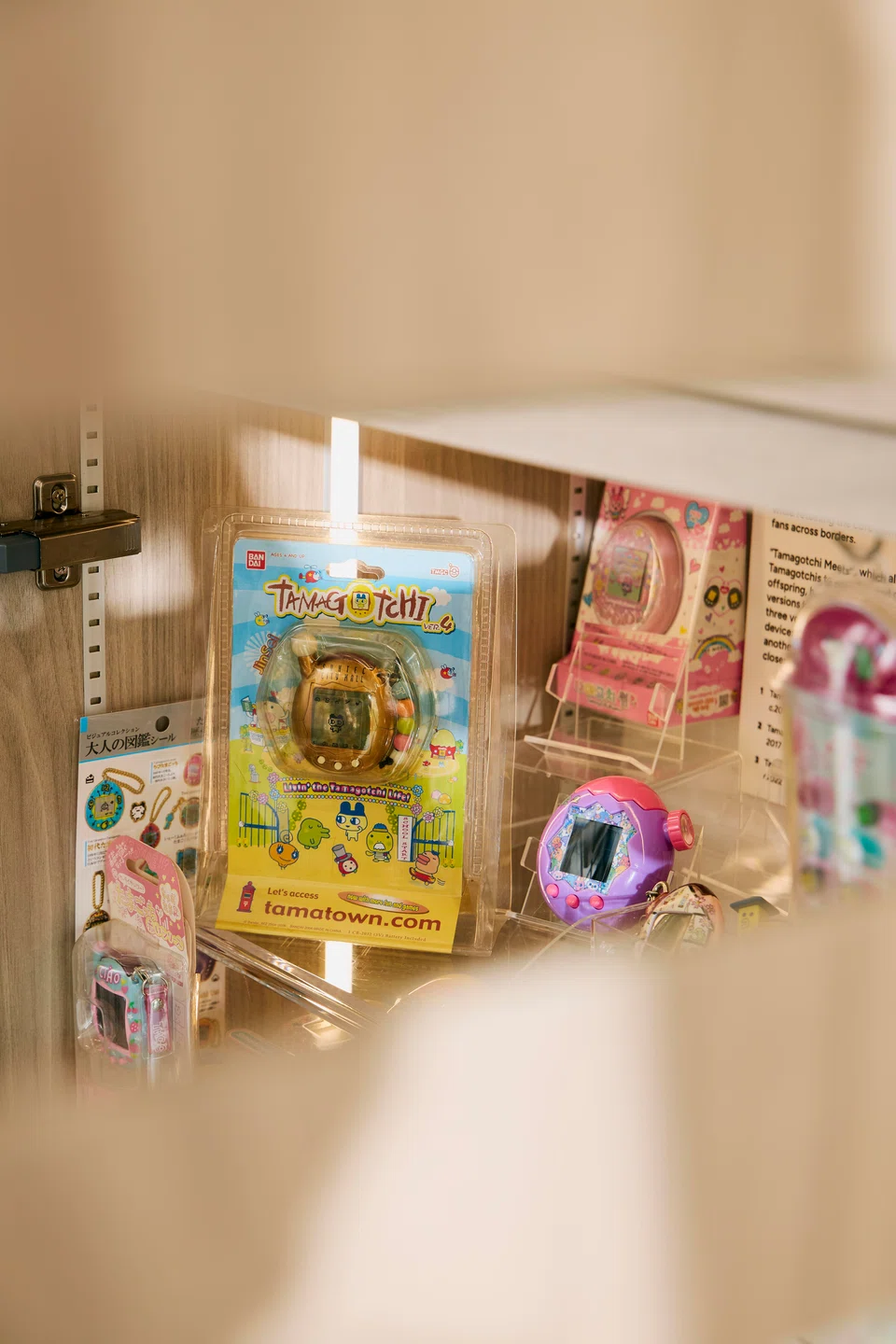
The crown jewel in Rachel’s collection is a rare, gold-coloured Tamagotchi produced in collaboration with Suntec City Mall
It has even inspired a side hustle designing and crafting Tamagotchi covers. Prices range from $10 for simple designs to around $50, with more complex pieces exceeding $100.
“My side hustle started when I saw people selling handmade Tamagotchi covers in Facebook groups. I wanted one but found them expensive, so I thought I’d crochet my own. Eventually, it became a business,” says Rachel, who works full-time as a HR systems trainer.
She is not alone in rediscovering the digital pet. Another player, marketing manager Rachel Xie, got into the Tamagotchi revival last year, drawn by a special edition launched in collaboration with SKZOO, a character series by K-pop boy band Stray Kids.
“The series has eight different colourways, each with a matching SKZOO character sleeve – one for each member. You can hatch a SKZOO character at random, each with its own graphics and animations,” says the 37-year-old.
She adds: “The aspect of cultivating something, like feeding your Tama specific foods and making sure it’s well taken care of is somewhat more purposeful, because there is a goal to achieve, unlike doom-scrolling.”
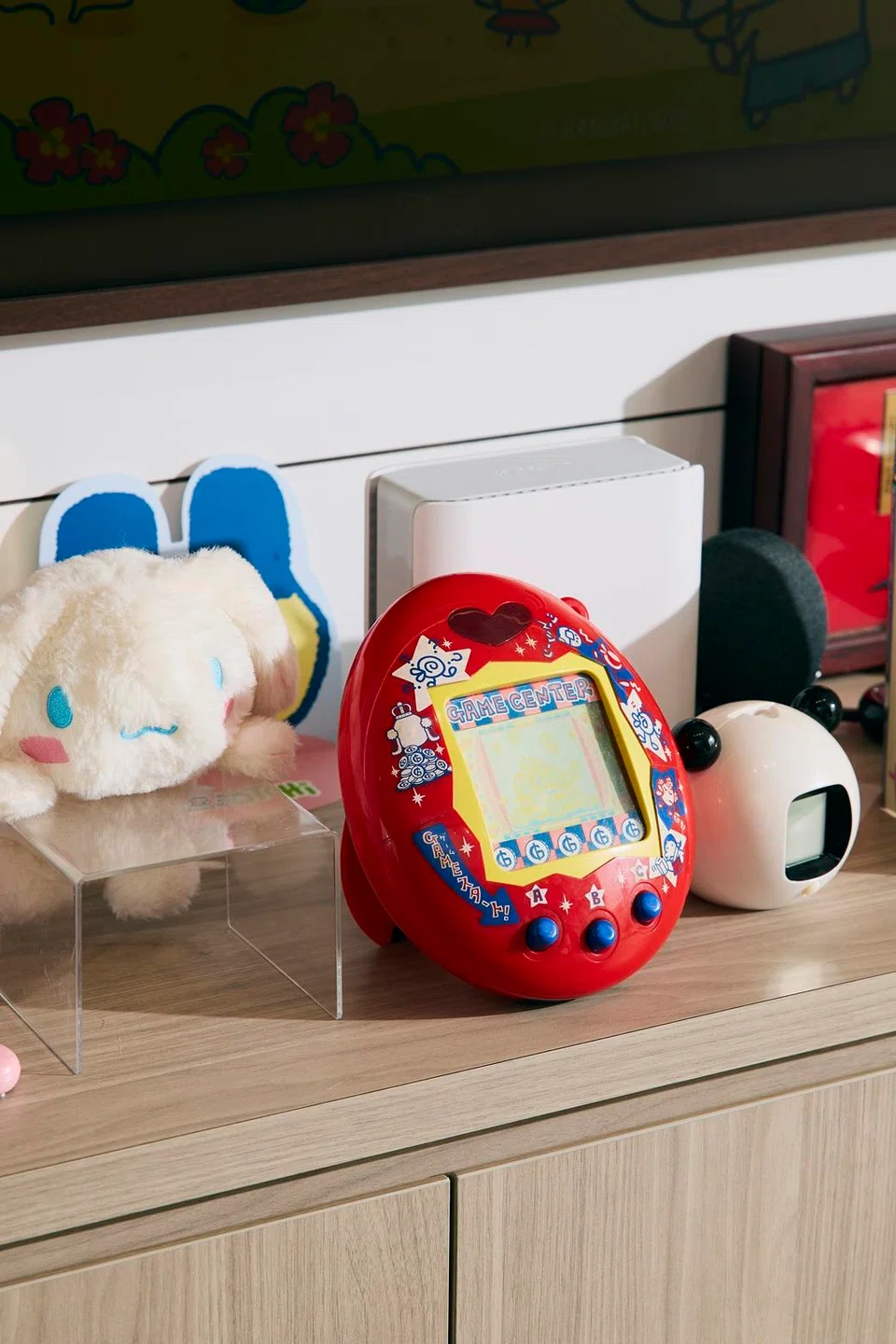
Rachel sources rare and vintage Tamagotchi from online platforms
Playing through stressful times
In many ways, Tamagotchi feels like an early version of what is now called a “cosy game”. Instead of fast reflexes or high-stakes battles, it’s about slow, gentle tasks: feeding, cleaning, checking in and nurturing.
While the genre can be traced back to life simulation games such as Little Computer People (1985) and The Sims (2000), it was the release of Nintendo’s Animal Crossing: New Horizons during the Covid-19 lockdowns in 2020 that boosted the popularity of cosy games.
In fact, a study conducted in Japan during the pandemic found that individuals who won a game console through a lottery and subsequently played more video games reported better mental well-being.
According to Vincent Oh, a senior lecturer in psychology at the Singapore University of Social Sciences, such video games can provide a helpful way of supporting and managing our psychological well-being.
“In stressful times, games can restore individuals in ways that go beyond escapism. For example, they can fulfil our need to feel accomplished through in-game achievements – whether that’s earning points, beating challenging stages or enemies, or successfully building something within the game,” he explains.
In the case of cosy games – some of which let players build farms and form relationships with nonplayer characters – they can also help fulfil relational needs and the desire for companionship.
He adds: “The term ‘open-world fatigue’ or ‘completionist fatigue’ is used in online circles to describe the exhaustion that comes from playing vast modern games where there is seemingly too much to do – to the point that it begins to feel like work and can even lead to burnout.”
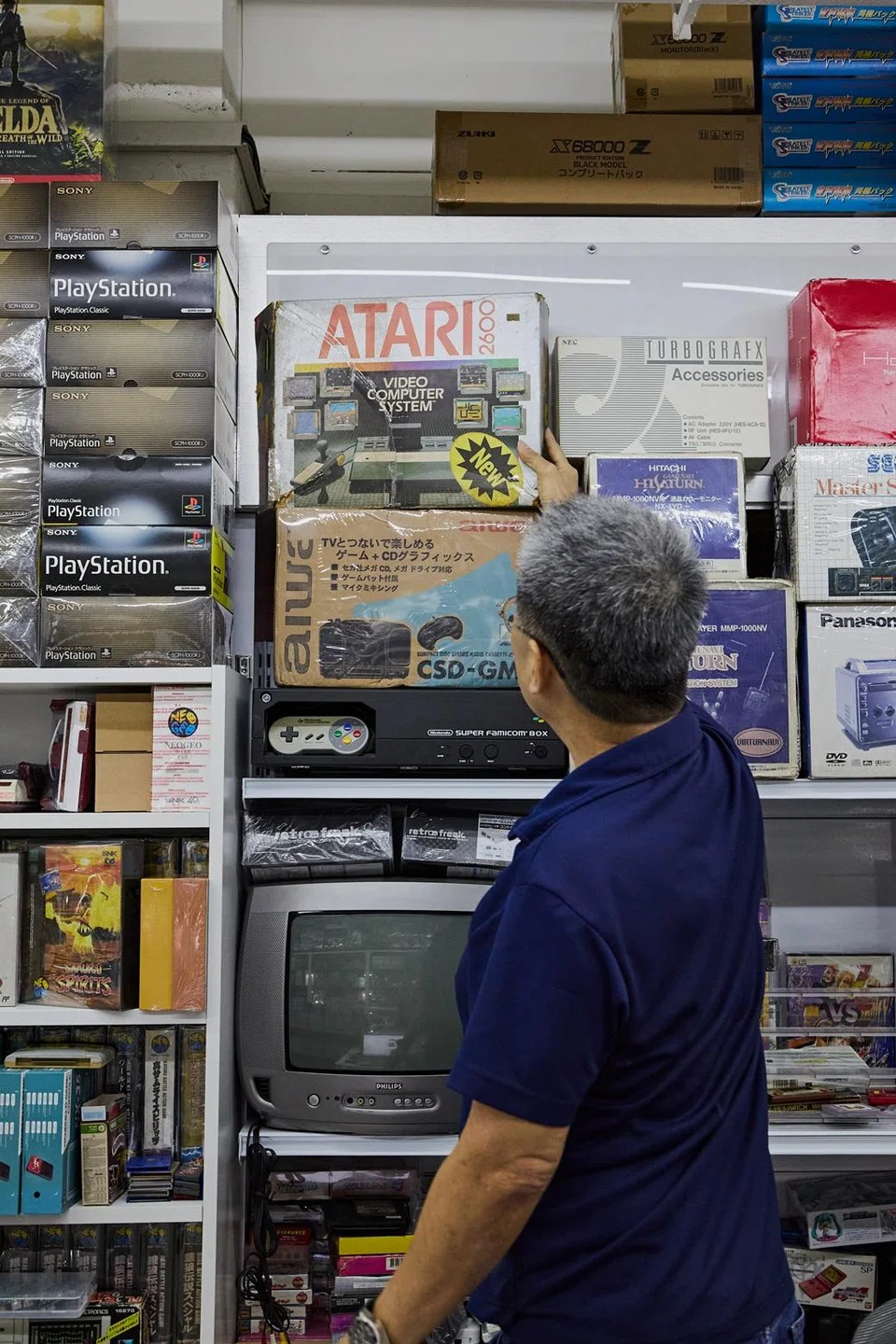
Philip owns one of the world’s first gaming consoles, the Atari 2600 which was launched in 1977
Why retro gaming endures today
Retronutz’s Philip believes the retro gaming trend will only continue to grow, driven by its sheer sense of fun – even as popular titles such as Super Mario and Street Fighter are repeatedly reissued. Modern gaming, he argues, has taken some of the challenge out of play.
“Old games are easy to pick up, but hard to conquer, because you can’t save your progress. If you die at the last stage, you start from the beginning. To me, that’s fun.”
Still, that did not deter senior UX designer Aliff Tee, 36, from picking up Street Fighter IV in 2008.
“That game single-handedly revived the fighting game genre when it was in decline. It was an amazing entry, with great new mechanics and a stellar cast,” he says. “That was also when I truly started getting serious [about gaming], because of the online ranked matches.”
Aliff has been playing since the early 90s, beginning with the classic Super Street Fighter II. He recalls first trying the game on his cousin’s Sega Genesis before graduating to neighbourhood arcades.
“I appreciate that Street Fighter doesn’t take itself too seriously – I have a soft spot for the wacky characters and ridiculous storylines,” he shares. “Some modern games can feel almost too immersive. While that has its appeal, after a long day you sometimes just want to switch off, keep it simple, and give Akuma the beating of a lifetime.”
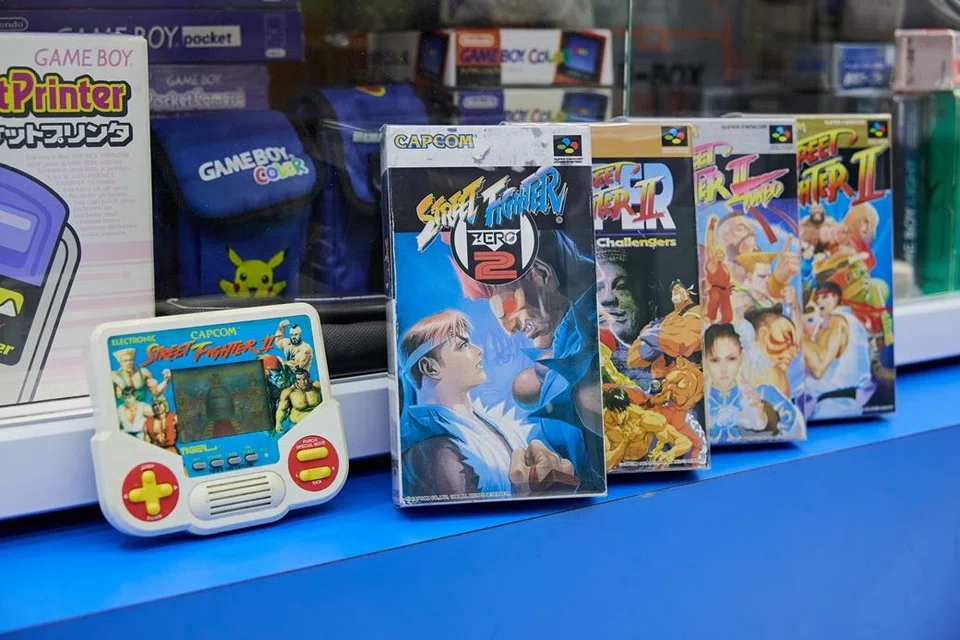
Retronutz is the only store in Singapore dedicated to selling retro video games like Street Fighter
That enduring pull of simplicity may explain why retro gaming shows little sign of fading. In 2024, American video game company Atari – a pioneer of arcade games, home consoles and early computers in the 1970s – launched a modernised reissue of its iconic Atari 2600, followed by the Atari 2600+ Pac-Man Edition in 2025.
First released in 1977, the console came bundled with two joystick controllers, a pair of paddle controllers and a game cartridge featuring titles such as Pac-Man.
Philip still owns what he believes to be one of the earliest Atari models – and refuses to sell it. Instead, he dreams of collaborating with a shopping mall in Singapore to exhibit his collection of vintage consoles, games and gadgets as a museum of sorts.
“I’ve had big collectors offer five figures for some items in my shop. I can’t sell – not because I don’t want the money, but because there’s no reference price. So I don’t know how to value it,” he explains.
Yet Philip insists he is not a gamer. His passion lies elsewhere – in the machines themselves. He hunts down decommissioned consoles, repairing and modifying them.
“Even today, I’m not a gamer. Nobody believes me because of my knowledge. It’s the passion and interest behind it,” he says.
“To me, the game is still just a game. I like the machines – how different versions are built differently. I like the mechanics, how such a small thing can create something amazing.”
PHOTOGRAPHY Angela Guo & Isabelle Seah
ART DIRECTION Ray Ticsay & Adeline Eng
COORDINATION Chelsia Tan