%22%3E%3Cpath%20fill%3D%22%23000%22%20d%3D%22M79.702%2078.555c0%2033.03%2018.767%2046.361%2035.801%2046.361%2014.149%200%2029.738-7.033%2034.505-28.595l-1.445-.306c-3.61%2015.903-14.005%2027.371-33.06%2027.371-13.86%200-13.716-22.173-13.716-41.594V67.415h49.662c0-23.393-13.136-40.674-35.946-40.674-17.034%200-35.801%2018.94-35.801%2051.814m35.801-50.283c14.437%200%2014.005%2026.455%2013.861%2037.617h-27.573c-.004-18.353.865-37.617%2013.712-37.617%22%2F%3E%3C%2Fg%3E%3Cmask%20id%3D%22b%22%20width%3D%22603%22%20height%3D%22126%22%20x%3D%220%22%20y%3D%220%22%20maskUnits%3D%22userSpaceOnUse%22%20style%3D%22mask-type%3Aluminance%22%3E%3Cpath%20fill%3D%22%23fff%22%20d%3D%22M602.5%200H.5v125.074h602z%22%2F%3E%3C%2Fmask%3E%3Cg%20mask%3D%22url(%23b)%22%3E%3Cpath%20fill%3D%22%23000%22%20d%3D%22M86.81%20105.474h-1.445c0%2010.547-4.475%2011.463-5.483%2011.463-2.454%200-4.475-3.514-4.475-11.921V48.264c0-14.83-10.826-21.558-22.229-21.558-10.97%200-22.66%206.118-25.983%2017.276V8.478c-.515-4.763-4.26-8.48-8.893-8.48H.522v1.53H.5c2.886%200%204.763%201.988%204.763%205.045v110.211c0%203.057-1.877%205.045-4.763%205.045h.022v1.531h31.423v-1.531h.021c-2.885%200-4.762-1.988-4.762-5.045V50.252c0-10.395%208.949-18.806%2016.31-18.806%205.338%200%209.813%204.13%209.813%2014.83v58.74c0%2013.909%207.796%2019.874%2016.165%2019.874%209.958.005%2017.318-6.418%2017.318-19.416%22%2F%3E%3C%2Fg%3E%3Cmask%20id%3D%22c%22%20width%3D%22603%22%20height%3D%22126%22%20x%3D%220%22%20y%3D%220%22%20maskUnits%3D%22userSpaceOnUse%22%20style%3D%22mask-type%3Aluminance%22%3E%3Cpath%20fill%3D%22%23fff%22%20d%3D%22M602.5%200H.5v125.074h602z%22%2F%3E%3C%2Fmask%3E%3Cg%20mask%3D%22url(%23c)%22%3E%3Cpath%20fill%3D%22%23000%22%20d%3D%22M225.911%2042.197c0-10.552-11.259-16.818-22.954-16.818-10.682%200-21.513%205.045-25.119%2016.975v-7.352c-.48-4.574-3.977-8.148-8.364-8.398h-18.322v1.53h-.022c2.886%200%204.763%201.99%204.763%205.046v81.371h.004c.293%204.814%203.942%208.633%208.509%208.846v.004h18.173v-1.53h.022c-2.886%200-4.763-1.989-4.763-5.045V48.62c0-10.552%209.094-19.269%2016.602-19.269%204.763%200%208.805%203.672%209.386%2012.693%200%206.881%204.619%2011.773%2011.119%2011.773%206.631%200%2010.966-4.587%2010.966-11.62%22%2F%3E%3C%2Fg%3E%3Cmask%20id%3D%22d%22%20width%3D%22603%22%20height%3D%22126%22%20x%3D%220%22%20y%3D%220%22%20maskUnits%3D%22userSpaceOnUse%22%20style%3D%22mask-type%3Aluminance%22%3E%3Cpath%20fill%3D%22%23fff%22%20d%3D%22M602.5%200H.5v125.074h602z%22%2F%3E%3C%2Fmask%3E%3Cg%20mask%3D%22url(%23d)%22%3E%3Cpath%20fill%3D%22%23000%22%20d%3D%22M234.434%2028.315c2.925%200%205.583%202.312%206.779%205.863l29.782%2089.218h1.597l20.61-61.852%2020.609%2061.852h1.598l29.781-89.218c1.196-3.556%203.855-5.863%206.78-5.863h.183v-1.776h-11.538v1.776h.184c2.925%200%203.99%202.312%202.794%205.863l-18.082%2054.209-18.082-54.209c-1.196-3.556-.131-5.863%202.794-5.863h.183v-1.776h-33.343v1.776h.183c2.925%200%205.583%202.312%206.78%205.863l8.373%2025.058-9.705%2029.15-18.082-54.208c-1.196-3.556-.131-5.863%202.794-5.863h.184v-1.776h-33.344v1.776z%22%2F%3E%3C%2Fg%3E%3Cmask%20id%3D%22e%22%20width%3D%22603%22%20height%3D%22126%22%20x%3D%220%22%20y%3D%220%22%20maskUnits%3D%22userSpaceOnUse%22%20style%3D%22mask-type%3Aluminance%22%3E%3Cpath%20fill%3D%22%23fff%22%20d%3D%22M602.5%200H.5v125.074h602z%22%2F%3E%3C%2Fmask%3E%3Cg%20mask%3D%22url(%23e)%22%3E%3Cpath%20fill%3D%22%23000%22%20d%3D%22M377.826%20124.491c17.034%200%2038.211-15.699%2038.211-48.882%200-33.03-21.177-48.73-38.211-48.73-17.035%200-38.067%2015.857-38.067%2048.73.004%2033.026%2021.032%2048.882%2038.067%2048.882m0-96.085c13.86%200%2016.121%2028.24%2016.121%2047.356%200%2019.116-2.261%2047.198-16.121%2047.198-13.861%200-15.978-27.777-15.978-47.198%200-19.422%202.122-47.356%2015.978-47.356%22%2F%3E%3C%2Fg%3E%3Cmask%20id%3D%22f%22%20width%3D%22603%22%20height%3D%22126%22%20x%3D%220%22%20y%3D%220%22%20maskUnits%3D%22userSpaceOnUse%22%20style%3D%22mask-type%3Aluminance%22%3E%3Cpath%20fill%3D%22%23fff%22%20d%3D%22M602.5%200H.5v125.074h602z%22%2F%3E%3C%2Fmask%3E%3Cg%20mask%3D%22url(%23f)%22%3E%3Cpath%20fill%3D%22%23000%22%20d%3D%22M490.482%2042.197c0-10.552-11.258-16.818-22.953-16.818-10.683%200-21.513%205.045-25.119%2016.975v-7.352c-.48-4.574-3.977-8.148-8.365-8.398h-18.326v1.53h-.022c2.886%200%204.763%201.99%204.763%205.046v81.371h.004c.293%204.814%203.943%208.633%208.509%208.846v.004h18.173v-1.53h.022c-2.885%200-4.763-1.989-4.763-5.045V48.62c0-10.552%209.094-19.269%2016.602-19.269%204.763%200%208.806%203.672%209.386%2012.693%200%206.881%204.619%2011.773%2011.119%2011.773%206.64%200%2010.97-4.587%2010.97-11.62%22%2F%3E%3C%2Fg%3E%3Cmask%20id%3D%22g%22%20width%3D%22603%22%20height%3D%22126%22%20x%3D%220%22%20y%3D%220%22%20maskUnits%3D%22userSpaceOnUse%22%20style%3D%22mask-type%3Aluminance%22%3E%3Cpath%20fill%3D%22%23fff%22%20d%3D%22M602.5%200H.5v125.074h602z%22%2F%3E%3C%2Fmask%3E%3Cg%20mask%3D%22url(%23g)%22%3E%3Cpath%20fill%3D%22%23000%22%20d%3D%22M602.5%20103.974h-1.445c0%2010.553-4.474%2011.468-5.483%2011.468-2.453%200-4.474-3.519-4.474-11.925V6.585c0-3.056%201.877-5.045%204.762-5.045h-.166V.01h-17.715c-4.942%200-8.953%204.24-8.962%209.475h-.009v23.333c-6.063-3.977-9.84-5.503-16.48-5.503-17.034%200-35.801%2014.169-35.801%2047.046%200%2033.183%2013.101%2050.718%2035.801%2050.718%208.085%200%2013.302-2.294%2019.942-8.254%203.03%204.587%207.797%206.575%2012.704%206.575%209.966-.004%2017.326-6.427%2017.326-19.426m-30.75%2011.625c-4.763%204.435-10.84%205.822-13.38%205.822-11.482%200-19.558-16.933-19.558-46.907%200-29.97%2010.914-43.222%2019.885-43.222%203.3%200%206.264.153%2010.307%203.057v69.172c.004%205.04%201.017%209.017%202.746%2012.078%22%2F%3E%3C%2Fg%3E%3Cmask%20id%3D%22h%22%20width%3D%22603%22%20height%3D%22126%22%20x%3D%220%22%20y%3D%220%22%20maskUnits%3D%22userSpaceOnUse%22%20style%3D%22mask-type%3Aluminance%22%3E%3Cpath%20fill%3D%22%23fff%22%20d%3D%22M602.5%200H.5v125.074h602z%22%2F%3E%3C%2Fmask%3E%3Cg%20mask%3D%22url(%23h)%22%3E%3Cpath%20fill%3D%22%23000%22%20d%3D%22M516.984%20121.865c-2.885%200-4.763-1.988-4.763-5.045V9.466C512.2%204.241%20508.196.01%20503.259.01h-17.724v1.53h-.022c2.89%200%204.763%201.989%204.763%205.045v108.418c.515%204.564%204.029%208.129%208.434%208.337v.06h18.252v-1.53h.022z%22%2F%3E%3C%2Fg%3E%3C%2Fsvg%3E)
“There is so much more emphasis and interest in older women’s stories now.”
She’s ready for her close-up! In town for her Asia debut of Sunset Boulevard, Sarah Brightman talks about fame, maintaining relevance in a fickle industry and the importance of having older women’s stories on screen
By Cheryl Chan -
Share this article
Lights, camera, action! These are words that both English soprano Sarah Brightman and Sunset Boulevard’s Norma Desmond have undoubtedly heard over the course of their careers.
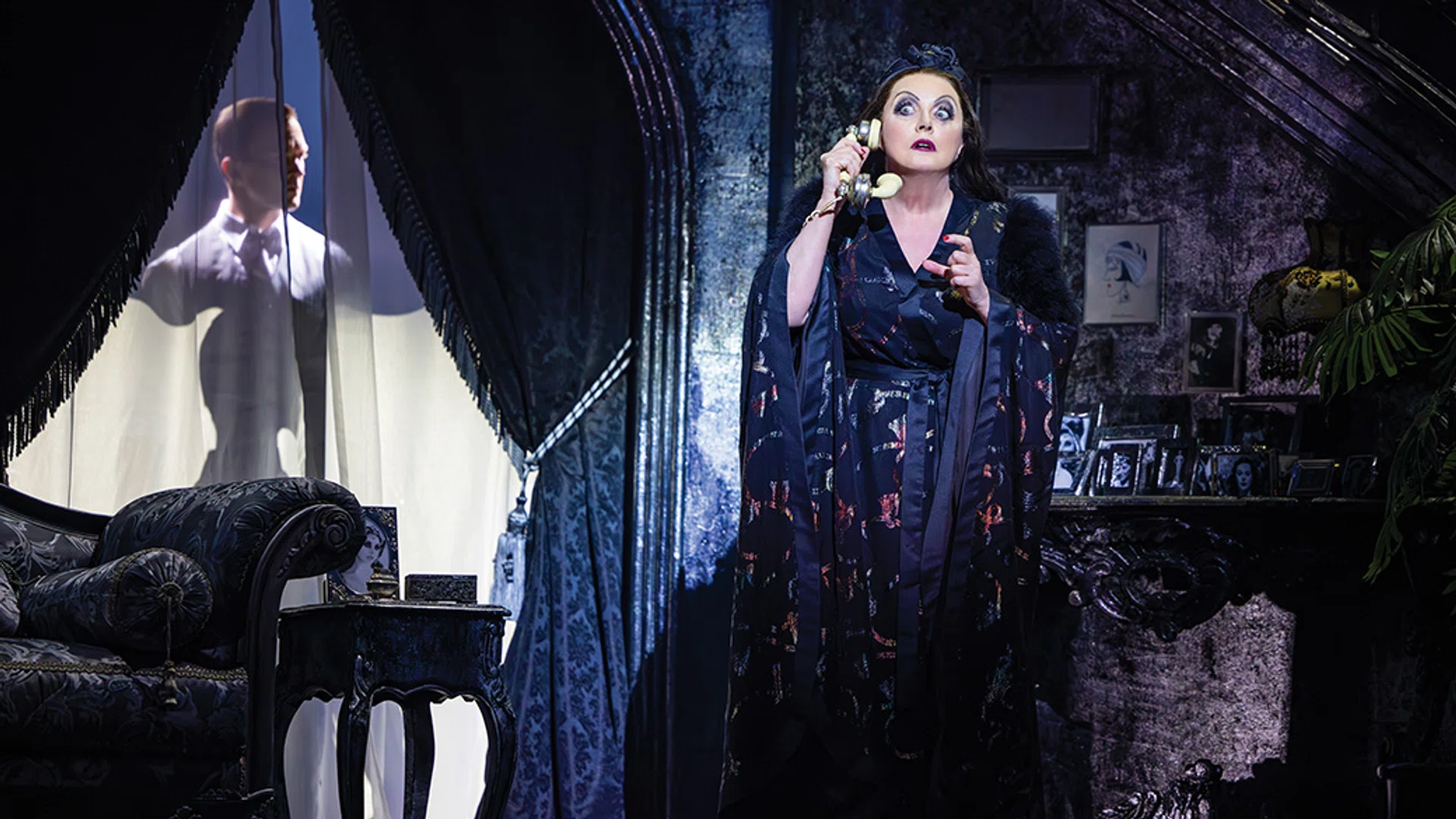
Playing a role like Norma Desmond seems almost meta – a tragic tale of a former Hollywood starlet who found fame in the silent film era of the 1920s, and then quickly discarded by the same people who placed her on a pedestal when they deemed her no longer relevant. Based on the 1950 film, Brightman is playing the titular character for the Asia premiere of the musical adaptation.
But that’s where the similarities between Brightman and her latest character end. The musical sensation has continued to prevail, enjoying an illustrious, three-decade-long (and counting) career that spans almost all parts of the entertainment industry. From her roots in musical theatre (she originated the role of Christine Daaé in The Phantom Of The Opera), pop music, acting, live performances, opera and now back to musical theatre again, Brightman’s career has come full circle. And it’s this experience that allows her to embody a character as complex as Norma Desmond fully.
As Brightman prepares for the Singapore leg of the Sunset Boulevard Asian tour, she speaks to Her World about maintaining relevance in a fickle industry, the complex relationship artists have with fame, and the importance of having older women’s stories on screen.
You’ve had such a multi-faceted career in music, musical theatre, and beyond. I even read that you did a disco single at some point! What inspired you to return to the musical theatre stage, and why did you choose Sunset Boulevard as your comeback project?
Sunset Boulevard and the role of Norma Desmond are incredible. I wouldn’t even call it a musical—it’s more of a play with music. It’s very cinematic, very deep, and requires an experienced performer to convey the complexities of Norma’s emotions and struggles. I also knew that some of the music was originally written with my voice in mind (Andrew Lloyd Webber who wrote the musical was also Brightman’s ex-husband), so it felt like a natural fit. I saw Norma as a very vulnerable character—on the surface, she appears tough, but she’s had to fight through an industry that moved on without her. That level of depth is what drew me to the role.
Was it the challenge of going back to acting again that drew you to it?
Not necessarily. I’ve done plays, films, and acting throughout my life. It was the role itself that intrigued me—I felt I could truly bring something unique to Norma. There have been other roles I’ve been offered before, but I never felt like I could bring something fresh to them. This one just came at the right time.

Norma Desmond is such an iconic character, with layers of ambition, vulnerability, and longing. Do you see elements of yourself in her story? How do you view her complex relationship with fame and the passage of time?
While I’ve had a very international career in a different era, some struggles remain the same for single female performers navigating the industry. Norma went from silent films to talkies, and I’ve witnessed similar shifts—especially with the rise of digital music and streaming. In the late 1990s, the music industry changed dramatically, and many artists and producers struggled. I was fortunate that my career was built on live performance, so I could adapt. Similarly, Norma didn’t see the change coming, and it drastically affected her life. The key difference is that today, we have more history to learn from, and performers are more adaptable.
Now, artists train to be multi-skilled. Unlike my training days, today’s performers are expected to master acting, singing, dancing, and even acrobatics. It’s fascinating to see how the industry has evolved.
And now they’re also content creators, having to constantly post on social media.
Exactly! They’re incredibly multi-functional.
Have you ever experienced a struggle similar to Norma’s, where you had to grapple with fame, time, or maintaining a public image?
It’s difficult for all performers—male or female. This career demands complete focus, especially for those who are perfectionists. It often impacts personal relationships because maintaining excellence requires sacrifices. I’ve found that later in life, I’ve been able to balance it better by finding someone who is just as busy as I am. That way, we both understand and respect each other’s work commitments.
Did you ever feel like you had to compromise a lot earlier in your career?
I’ve tried, but ultimately, I realised that I couldn’t. To give a truly great performance, you can’t afford to compromise. Perfection takes commitment, and that comes with its own challenges and rewards.
Norma’s story also speaks to themes of ageism. With recent wins like Demi Moore’s Golden Globes Awar win for The Substance, and roles like Nicole Kidman’s in Babygirl, do you think there’s a greater (though still insufficient) appreciation for older women’s stories on screen?
I think it’s happening more now. People’s lives—regardless of age—are fascinating. Unlike Norma’s time, where beauty was the primary focus, today we appreciate depth, experience, and individuality more. True beauty is in the way a person expresses themselves, their vulnerabilities, and their strengths. Society’s perception has evolved, and that’s a positive change.
Have you noticed a difference in how older women are treated in the industry compared to when you started?
Definitely. Today, it’s less about looking young and more about looking and feeling your best at any age. We have more knowledge about health, skincare, and longevity, which helps women stay active and relevant longer. It’s inspiring to see women in their 70s and 80s still thriving, maintaining vibrant lives, and proving that aging doesn’t mean fading away.
That’s encouraging! Even for me in my 30s, seeing diverse women’s stories on screen makes aging feel less daunting.
There’s nothing to fear! Aging is a beautiful journey. The experience and knowledge you gain strengthen you. You become more confident, and challenges that once felt overwhelming become manageable. It’s all about embracing the process.
Now, back to Sunset Boulevard—the song As If We Never Said Goodbye is legendary. Glenn Close, Patti LuPone, and Barbra Streisand have all performed it. Given that the songs were also written with your voice in mind, how do you think your interpretation will be different?
The song is about inner thought, reflecting on the past, and thinking of the future. It’s repetitive, but that’s what makes it powerful—it leads you through a series of emotions. It’s a song full of hope, and people really relate to that.
Every artist brings their own life experiences to a role. I hope to bring authenticity and my own understanding of Norma’s journey to the performance. Singing a song written with my voice in mind feels deeply personal, and I look forward to sharing that with audiences in Singapore.
What have you missed the most about performing in musical theatre?
It’s not so much missing something—I’ll tell you what I don’t like: rehearsals! I’m not great at the rehearsal period because you’re in a big room with bright lights and a table full of production crew taking notes. It’s nerve-wracking. For years, I’ve been doing concerts where I rehearse privately and then step onto the stage. So, returning to a full musical rehearsal process was an adjustment. I kept thinking, “I know what I’m doing, I just need to get on stage!” But you can’t take shortcuts, and I had to get used to that again. Also, I caught COVID in the second week of rehearsals, which made it even harder!
Norma Desmond is synonymous with glamour and extravagance. Does any part of her style resonate with you?
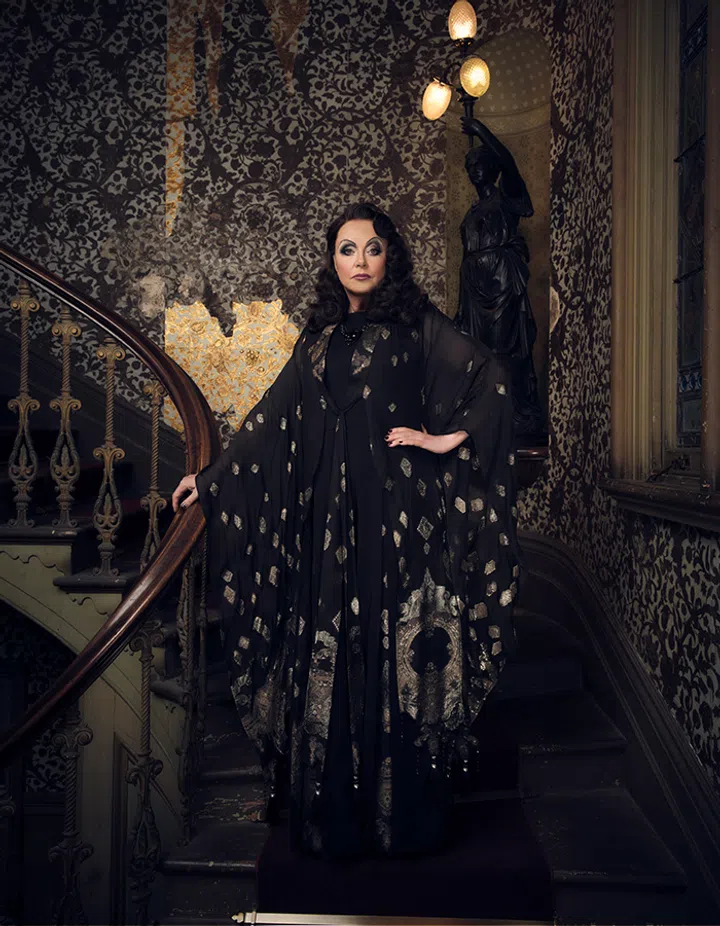
I love fashion and have been fortunate to work with stylists from top magazines. My look has always been very sumptuous, glamorous, and couture. I just finished a Christmas tour, and every gown was a beautiful couture piece—very glittery, of course, because it was a Christmas show! I think people associate me with a certain kind of glamour, and that’s lovely. I also collect art—not necessarily expensive pieces, but things that move me. Fashion and art are connected, and I see them as leading forces in creativity. Designers and artists almost have a psychic ability to capture what’s coming next.
Does dressing up help you get into character?
Absolutely. Once you put on the gown and the makeup, you step into that world. As long as you feel comfortable in what you’re wearing, it’s an essential part of becoming the character.
What do you hope audiences—especially women—take away from this production?
I think people take different things away depending on where they are in their lives. Some may see Norma’s resilience and reinvention as inspiring, while others may see it as a cautionary tale. The musical is different from the film in that it has to entertain while telling the story, but many people who’ve seen this production have told me they’re incredibly moved by it. And ultimately, that’s what we want as performers—to move people in some way. When audiences leave feeling fulfilled, that’s the greatest reward.
Sunset Boulevard will be showing at the Sands Theatre at Marina Bay Sands from 7 - 23 Feburary. Tickets are available here.