%22%3E%3Cpath%20fill%3D%22%23000%22%20d%3D%22M79.702%2078.555c0%2033.03%2018.767%2046.361%2035.801%2046.361%2014.149%200%2029.738-7.033%2034.505-28.595l-1.445-.306c-3.61%2015.903-14.005%2027.371-33.06%2027.371-13.86%200-13.716-22.173-13.716-41.594V67.415h49.662c0-23.393-13.136-40.674-35.946-40.674-17.034%200-35.801%2018.94-35.801%2051.814m35.801-50.283c14.437%200%2014.005%2026.455%2013.861%2037.617h-27.573c-.004-18.353.865-37.617%2013.712-37.617%22%2F%3E%3C%2Fg%3E%3Cmask%20id%3D%22b%22%20width%3D%22603%22%20height%3D%22126%22%20x%3D%220%22%20y%3D%220%22%20maskUnits%3D%22userSpaceOnUse%22%20style%3D%22mask-type%3Aluminance%22%3E%3Cpath%20fill%3D%22%23fff%22%20d%3D%22M602.5%200H.5v125.074h602z%22%2F%3E%3C%2Fmask%3E%3Cg%20mask%3D%22url(%23b)%22%3E%3Cpath%20fill%3D%22%23000%22%20d%3D%22M86.81%20105.474h-1.445c0%2010.547-4.475%2011.463-5.483%2011.463-2.454%200-4.475-3.514-4.475-11.921V48.264c0-14.83-10.826-21.558-22.229-21.558-10.97%200-22.66%206.118-25.983%2017.276V8.478c-.515-4.763-4.26-8.48-8.893-8.48H.522v1.53H.5c2.886%200%204.763%201.988%204.763%205.045v110.211c0%203.057-1.877%205.045-4.763%205.045h.022v1.531h31.423v-1.531h.021c-2.885%200-4.762-1.988-4.762-5.045V50.252c0-10.395%208.949-18.806%2016.31-18.806%205.338%200%209.813%204.13%209.813%2014.83v58.74c0%2013.909%207.796%2019.874%2016.165%2019.874%209.958.005%2017.318-6.418%2017.318-19.416%22%2F%3E%3C%2Fg%3E%3Cmask%20id%3D%22c%22%20width%3D%22603%22%20height%3D%22126%22%20x%3D%220%22%20y%3D%220%22%20maskUnits%3D%22userSpaceOnUse%22%20style%3D%22mask-type%3Aluminance%22%3E%3Cpath%20fill%3D%22%23fff%22%20d%3D%22M602.5%200H.5v125.074h602z%22%2F%3E%3C%2Fmask%3E%3Cg%20mask%3D%22url(%23c)%22%3E%3Cpath%20fill%3D%22%23000%22%20d%3D%22M225.911%2042.197c0-10.552-11.259-16.818-22.954-16.818-10.682%200-21.513%205.045-25.119%2016.975v-7.352c-.48-4.574-3.977-8.148-8.364-8.398h-18.322v1.53h-.022c2.886%200%204.763%201.99%204.763%205.046v81.371h.004c.293%204.814%203.942%208.633%208.509%208.846v.004h18.173v-1.53h.022c-2.886%200-4.763-1.989-4.763-5.045V48.62c0-10.552%209.094-19.269%2016.602-19.269%204.763%200%208.805%203.672%209.386%2012.693%200%206.881%204.619%2011.773%2011.119%2011.773%206.631%200%2010.966-4.587%2010.966-11.62%22%2F%3E%3C%2Fg%3E%3Cmask%20id%3D%22d%22%20width%3D%22603%22%20height%3D%22126%22%20x%3D%220%22%20y%3D%220%22%20maskUnits%3D%22userSpaceOnUse%22%20style%3D%22mask-type%3Aluminance%22%3E%3Cpath%20fill%3D%22%23fff%22%20d%3D%22M602.5%200H.5v125.074h602z%22%2F%3E%3C%2Fmask%3E%3Cg%20mask%3D%22url(%23d)%22%3E%3Cpath%20fill%3D%22%23000%22%20d%3D%22M234.434%2028.315c2.925%200%205.583%202.312%206.779%205.863l29.782%2089.218h1.597l20.61-61.852%2020.609%2061.852h1.598l29.781-89.218c1.196-3.556%203.855-5.863%206.78-5.863h.183v-1.776h-11.538v1.776h.184c2.925%200%203.99%202.312%202.794%205.863l-18.082%2054.209-18.082-54.209c-1.196-3.556-.131-5.863%202.794-5.863h.183v-1.776h-33.343v1.776h.183c2.925%200%205.583%202.312%206.78%205.863l8.373%2025.058-9.705%2029.15-18.082-54.208c-1.196-3.556-.131-5.863%202.794-5.863h.184v-1.776h-33.344v1.776z%22%2F%3E%3C%2Fg%3E%3Cmask%20id%3D%22e%22%20width%3D%22603%22%20height%3D%22126%22%20x%3D%220%22%20y%3D%220%22%20maskUnits%3D%22userSpaceOnUse%22%20style%3D%22mask-type%3Aluminance%22%3E%3Cpath%20fill%3D%22%23fff%22%20d%3D%22M602.5%200H.5v125.074h602z%22%2F%3E%3C%2Fmask%3E%3Cg%20mask%3D%22url(%23e)%22%3E%3Cpath%20fill%3D%22%23000%22%20d%3D%22M377.826%20124.491c17.034%200%2038.211-15.699%2038.211-48.882%200-33.03-21.177-48.73-38.211-48.73-17.035%200-38.067%2015.857-38.067%2048.73.004%2033.026%2021.032%2048.882%2038.067%2048.882m0-96.085c13.86%200%2016.121%2028.24%2016.121%2047.356%200%2019.116-2.261%2047.198-16.121%2047.198-13.861%200-15.978-27.777-15.978-47.198%200-19.422%202.122-47.356%2015.978-47.356%22%2F%3E%3C%2Fg%3E%3Cmask%20id%3D%22f%22%20width%3D%22603%22%20height%3D%22126%22%20x%3D%220%22%20y%3D%220%22%20maskUnits%3D%22userSpaceOnUse%22%20style%3D%22mask-type%3Aluminance%22%3E%3Cpath%20fill%3D%22%23fff%22%20d%3D%22M602.5%200H.5v125.074h602z%22%2F%3E%3C%2Fmask%3E%3Cg%20mask%3D%22url(%23f)%22%3E%3Cpath%20fill%3D%22%23000%22%20d%3D%22M490.482%2042.197c0-10.552-11.258-16.818-22.953-16.818-10.683%200-21.513%205.045-25.119%2016.975v-7.352c-.48-4.574-3.977-8.148-8.365-8.398h-18.326v1.53h-.022c2.886%200%204.763%201.99%204.763%205.046v81.371h.004c.293%204.814%203.943%208.633%208.509%208.846v.004h18.173v-1.53h.022c-2.885%200-4.763-1.989-4.763-5.045V48.62c0-10.552%209.094-19.269%2016.602-19.269%204.763%200%208.806%203.672%209.386%2012.693%200%206.881%204.619%2011.773%2011.119%2011.773%206.64%200%2010.97-4.587%2010.97-11.62%22%2F%3E%3C%2Fg%3E%3Cmask%20id%3D%22g%22%20width%3D%22603%22%20height%3D%22126%22%20x%3D%220%22%20y%3D%220%22%20maskUnits%3D%22userSpaceOnUse%22%20style%3D%22mask-type%3Aluminance%22%3E%3Cpath%20fill%3D%22%23fff%22%20d%3D%22M602.5%200H.5v125.074h602z%22%2F%3E%3C%2Fmask%3E%3Cg%20mask%3D%22url(%23g)%22%3E%3Cpath%20fill%3D%22%23000%22%20d%3D%22M602.5%20103.974h-1.445c0%2010.553-4.474%2011.468-5.483%2011.468-2.453%200-4.474-3.519-4.474-11.925V6.585c0-3.056%201.877-5.045%204.762-5.045h-.166V.01h-17.715c-4.942%200-8.953%204.24-8.962%209.475h-.009v23.333c-6.063-3.977-9.84-5.503-16.48-5.503-17.034%200-35.801%2014.169-35.801%2047.046%200%2033.183%2013.101%2050.718%2035.801%2050.718%208.085%200%2013.302-2.294%2019.942-8.254%203.03%204.587%207.797%206.575%2012.704%206.575%209.966-.004%2017.326-6.427%2017.326-19.426m-30.75%2011.625c-4.763%204.435-10.84%205.822-13.38%205.822-11.482%200-19.558-16.933-19.558-46.907%200-29.97%2010.914-43.222%2019.885-43.222%203.3%200%206.264.153%2010.307%203.057v69.172c.004%205.04%201.017%209.017%202.746%2012.078%22%2F%3E%3C%2Fg%3E%3Cmask%20id%3D%22h%22%20width%3D%22603%22%20height%3D%22126%22%20x%3D%220%22%20y%3D%220%22%20maskUnits%3D%22userSpaceOnUse%22%20style%3D%22mask-type%3Aluminance%22%3E%3Cpath%20fill%3D%22%23fff%22%20d%3D%22M602.5%200H.5v125.074h602z%22%2F%3E%3C%2Fmask%3E%3Cg%20mask%3D%22url(%23h)%22%3E%3Cpath%20fill%3D%22%23000%22%20d%3D%22M516.984%20121.865c-2.885%200-4.763-1.988-4.763-5.045V9.466C512.2%204.241%20508.196.01%20503.259.01h-17.724v1.53h-.022c2.89%200%204.763%201.989%204.763%205.045v108.418c.515%204.564%204.029%208.129%208.434%208.337v.06h18.252v-1.53h.022z%22%2F%3E%3C%2Fg%3E%3C%2Fsvg%3E)
From nurse to CEO: Pauline Tan’s storied four-decade career in nursing
Nursing is often perceived as demanding, thankless and limiting. Pauline Tan proved otherwise, carving out a career path from bedside care to the highest levels of healthcare leadership
By Syed Zulfadhli -
Share this article
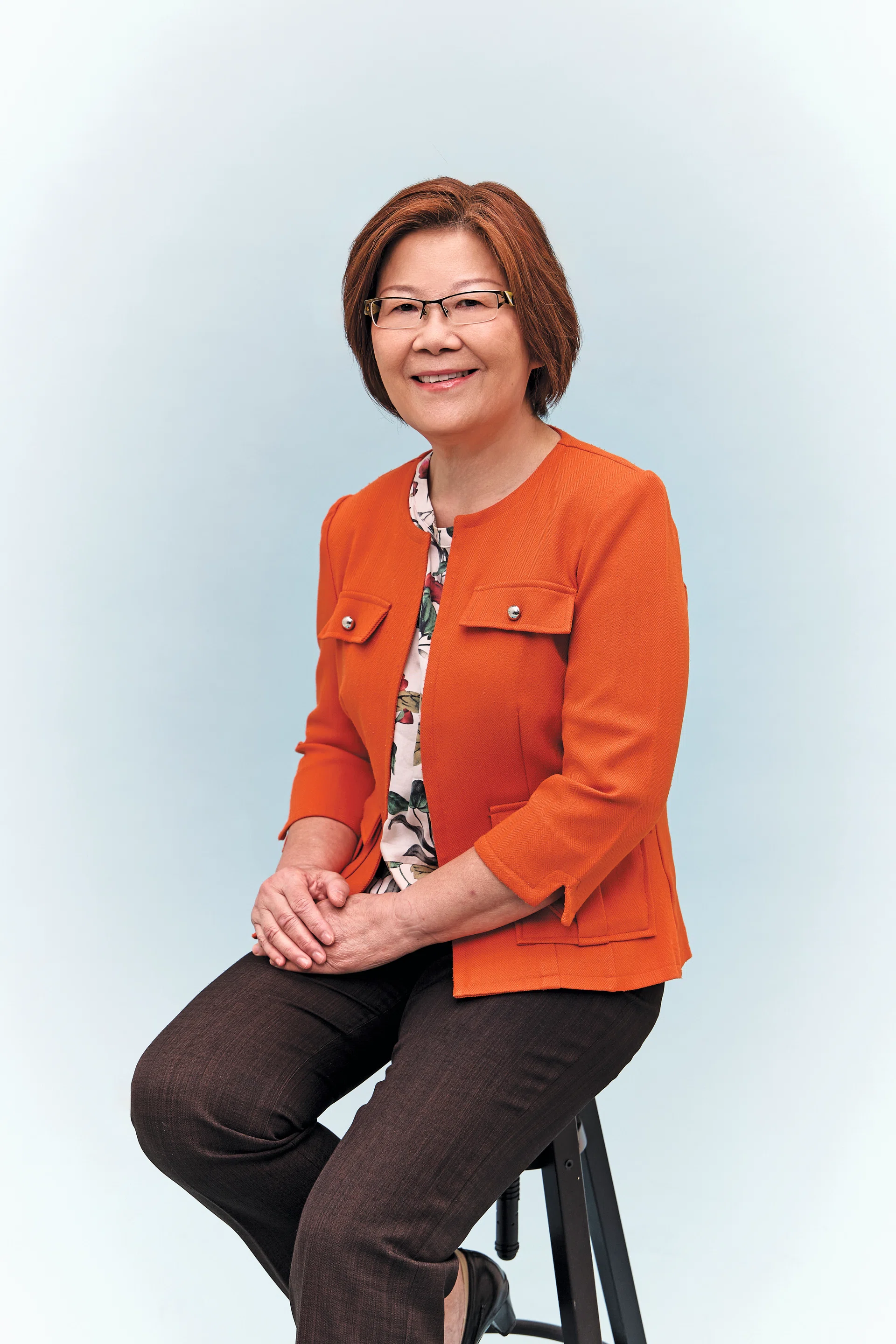
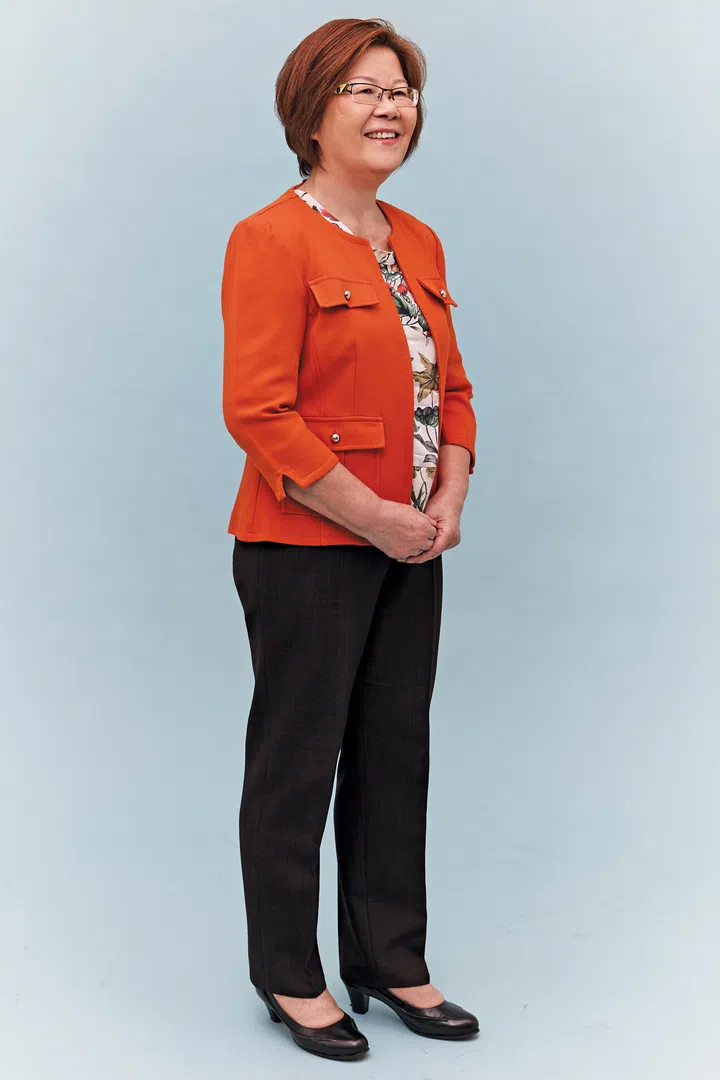
Among the crowd at Toast Box, where our interview takes place, Pauline Tan stands out immediately in a structured mandarin orange jacket. It suits her. During our chat, Pauline comes across as cheerful without being soft, composed without being chilly, and authoritative without being bossy.
Her four-decade career has taken her from frontline nursing to some of healthcare’s most senior roles – including chief nursing officer (CNO) at the Ministry of Health (MOH), CEO of Yishun Community Hospital, and then an orthopaedic hospital in Shanghai, and director of Clinical Quality & Services at Sheares Healthcare International Holdings. She retired last year, and just a couple of months ago, was inducted into the Singapore Council of Women’s Organisations’ (SCWO) Singapore Women’s Hall of Fame.
For someone from a profession long seen as essential yet too often undervalued in the public imagination, the recognition carries weight beyond the individual. “To me, it’s really an affirmation of the work I do,” she says. “I’m glad... because nursing has been unrecognised for so long.”
Humble beginnings
It would be easy to turn Pauline into a tidy symbol – trailblazer, pioneer, first of her kind – but she resists that at once. She goes back instead to a far less glamorous beginning: a cramped rental flat, an eldest daughter’s sense of duty, and a practical decision that would shape the rest of her life.
“My childhood was very uneventful,” she says with a laugh. “Very ordinary, nondescript family, to be honest.” She was the eldest child, raised in a one-room rental flat where seven people squeezed into a single bedroom. There was no carefully plotted ascent; there was simply urgency. Nursing, she says plainly, paid her to study. Better yet, it was a civil service job, which meant stability and, crucially, the possibility of applying for a flat.
“I was determined for my family to live in a more comfortable environment,” she says. “So there was a very practical reason.”
Still, pragmatism was only one part of it. Pauline had studied at convent schools, joined the St John Ambulance Brigade in secondary school, and found herself drawn to healthcare. “I wanted to serve,” she says. “I wanted to do good for mankind.”
When Pauline entered nursing, she quickly discovered that she was good at it. She threw herself into it with a wholeheartedness that she still speaks about with tenderness. “When I went into nursing, that was, to me, the best part of my life, because I really gave it my all,” she reminisces.
The emotional education of a nurse
The early years gave her not just technical grounding, but something more important: emotional range. Nursing, as she describes it, is never merely about tasks. It involves walking with patients through some of the worst moments of their lives, and learning, often painfully, how to remain present without being consumed.
She remembers, for instance, befriending a lawyer with end-stage lupus – difficult, exacting, and widely regarded as a challenge. Even after she left for further studies in Australia, the woman continued writing to her, updating her on fresh complications and admissions. When the patient died, Pauline returned in time for the wake.
She also recalls a teenage boy with uncontrolled juvenile diabetes, and the operating theatre cases that never really leave you: a gunshot wound that could not be saved, and a brain-dead pregnant woman rushed in for an emergency caesarean section. Both mother and baby died later.
“You need to learn to detach,” she shares. “Otherwise, it’s very painful.”
What helped her through, she says, was peer support: colleagues sharing stories over drinks, comparing notes, and talking through what they could have done differently next time. Long before therapy entered the mainstream lexicon, they were doing their own version of it in canteens and during staff gatherings.
For all that nursing has given her, leadership was not something she initially craved. “I am a clinical person. I like to work with the patients and be at the bedside,” she says.
But she had been noticed. Hand-picked for a World Health Organisation scholarship to Australia, she completed a Bachelor of Nursing followed by nursing administration, and returned to Singapore on a path that would no longer be purely clinical.
Over time, she came to see the advantage.
“I find that I can influence more, and my span of control is higher,” she explains. “I turned it into my advantage… to influence nursing and to make an impact.”
From institution to refuge
That instinct became especially visible during her time as director of nursing at the Institute of Mental Health (IMH), where Pauline’s appetite for systems change began to show. She disliked regimentation for its own sake, and anything that diminished dignity. Why, she asked, were nurses still signing attendance books “like students” when they were professionals?
Under her watch, nurses were encouraged to wear civilian clothes instead of uniforms, so patients would see them less as authority figures and more as fellow human beings. The therapeutic environment shifted too, with carpets, fish tanks, music, and a less prison-like atmosphere.
“If I were there, what would I like the environment to be?” she asks. “You’re already unwell… a prison-like environment is not going to help.”
She also discovered, in those years, what kind of leader she would be when tested.
“One of the things I cannot tolerate is bullies,” she says. At IMH, she noticed one ward had persistently high attrition and repeated transfer requests. The cause, she learnt, was a nurse manager who had been driving younger nurses out for years. Pauline called her in, listened to the excuses, then drew a line. She told the manager: “When the next letter of resignation lands on my table, or when the next nurse comes and requests for a change – between that nurse and you, you know whom I will choose.”
The message was clear, and soon after, attrition dropped. Eventually, Pauline identified a different project-based role better suited to the manager’s strengths, and she flourished there. The point was not toughness for its own sake. Pauline knew exactly who needed protecting.
Shaping the future of nursing
By the time MOH came calling, Pauline had already built a reputation for doing difficult work well. She was approached to become CNO after helping to turn IMH around. At first, she said no. She was enjoying herself, and the work was meaningful. During her time there, IMH became the first mental health institution in Asia to achieve Joint Commission International (JCI) accreditation, a globally recognised mark of quality and patient safety.
But she eventually agreed, and stepped into what would become the defining chapter of her career. At MOH, Pauline did not manage hospitals; she “managed the profession”. That meant standards, regulation, identity, education, public messaging, and the long arc of where nursing was headed. She was involved in accrediting nursing curricula, giving input into what schools taught based on the policy demands coming down the line. She taught nursing students, and served as an adjunct associate professor at NUS.
During her time as CNO, she pushed for the first National Nursing Task Force, partly because, as she puts it: “We do a lot, we know a lot, but it’s not articulated.” The task force, together with salary reviews and broader public messaging, helped create a profession that was better paid, better understood, and easier to aspire to.
She also understood that policy papers alone would not change minds. Recruitment fairs and awards ceremonies had their place, but they were not cutting through. So she lobbied repeatedly for a television drama about nursing. The result was You Can Be An Angel Too (2015) and You Can Be An Angel 2 (2016), produced in partnership with MOH. Pauline worked closely on them, choosing actors, shaping scripts, and assigning nurse managers to ensure that the clinical details were exact.
“I want nursing to really be nursing,” she says. “Don’t come in and do half-past-six nursing.” The drama mattered because it made the profession visible, even attractive, to the public.
“A lot of [applicants] were actually eligible to do medicine – top As, all As – [and] chose nursing,” she reveals. “The whole mindset changed.”
By then, the accolades had followed: induction into the American Academy of Nursing, an honorary doctorate from La Trobe University, her alma mater, and the National Day Public Administration Medal (Silver). She speaks of them without vanity. “I’m humbled,” she says. “The more I give, the more I receive.”
When she was approached to become CEO of Yishun Community Hospital (YCH) in 2014, after seven years at MOH, the appeal was not the title, but the chance to return to implementation.
At YCH, she wanted to build a community hospital that stood out. She is careful not to overstate what she did there. The hospital was still nascent, she says, and her time was too short for sweeping transformation. But one initiative she remains pleased with was her effort to recruit people with disabilities into the workforce, particularly in areas such as housekeeping and kitchen support. As she puts it, if staffing was a perennial challenge, why not think differently?
Stepping back
One of the most striking things about Pauline is how little she speaks in the language of grand plans.
“I don’t have any goals in terms of my career,” she says. “Opportunities come my way, and I just take it as it comes.”
Once she is in a role, that is when the real work begins: figuring out what can be improved, what can be built, and how to help people around her do their jobs better.
Even now, retired and newly inducted into the Singapore Women’s Hall of Fame, Pauline does not speak as though she has stepped away from nursing so much as moved to a different vantage point from which to watch it grow. She is pleased by how far it has come: better pay, better staffing, more technology, broader pathways.
For the public, she has a simpler message: Nursing is not a dead end. It is a foundation, a discipline, and a way of learning how to think, work and lead.
For all that she has achieved, Pauline remains strikingly clear about what has guided her: integrity, kindness and truthfulness. “Be true to yourself and be true to others,” she says.
It is a simple credo, but perhaps that is precisely why it has carried her so far. Not one for big declarations, she kept showing up, doing the work, and widening the possibilities of what nursing could be. In that sense, her legacy lies not only in the titles she has held, but in the paths she has made easier for others to follow.