%22%3E%3Cpath%20fill%3D%22%23000%22%20d%3D%22M79.702%2078.555c0%2033.03%2018.767%2046.361%2035.801%2046.361%2014.149%200%2029.738-7.033%2034.505-28.595l-1.445-.306c-3.61%2015.903-14.005%2027.371-33.06%2027.371-13.86%200-13.716-22.173-13.716-41.594V67.415h49.662c0-23.393-13.136-40.674-35.946-40.674-17.034%200-35.801%2018.94-35.801%2051.814m35.801-50.283c14.437%200%2014.005%2026.455%2013.861%2037.617h-27.573c-.004-18.353.865-37.617%2013.712-37.617%22%2F%3E%3C%2Fg%3E%3Cmask%20id%3D%22b%22%20width%3D%22603%22%20height%3D%22126%22%20x%3D%220%22%20y%3D%220%22%20maskUnits%3D%22userSpaceOnUse%22%20style%3D%22mask-type%3Aluminance%22%3E%3Cpath%20fill%3D%22%23fff%22%20d%3D%22M602.5%200H.5v125.074h602z%22%2F%3E%3C%2Fmask%3E%3Cg%20mask%3D%22url(%23b)%22%3E%3Cpath%20fill%3D%22%23000%22%20d%3D%22M86.81%20105.474h-1.445c0%2010.547-4.475%2011.463-5.483%2011.463-2.454%200-4.475-3.514-4.475-11.921V48.264c0-14.83-10.826-21.558-22.229-21.558-10.97%200-22.66%206.118-25.983%2017.276V8.478c-.515-4.763-4.26-8.48-8.893-8.48H.522v1.53H.5c2.886%200%204.763%201.988%204.763%205.045v110.211c0%203.057-1.877%205.045-4.763%205.045h.022v1.531h31.423v-1.531h.021c-2.885%200-4.762-1.988-4.762-5.045V50.252c0-10.395%208.949-18.806%2016.31-18.806%205.338%200%209.813%204.13%209.813%2014.83v58.74c0%2013.909%207.796%2019.874%2016.165%2019.874%209.958.005%2017.318-6.418%2017.318-19.416%22%2F%3E%3C%2Fg%3E%3Cmask%20id%3D%22c%22%20width%3D%22603%22%20height%3D%22126%22%20x%3D%220%22%20y%3D%220%22%20maskUnits%3D%22userSpaceOnUse%22%20style%3D%22mask-type%3Aluminance%22%3E%3Cpath%20fill%3D%22%23fff%22%20d%3D%22M602.5%200H.5v125.074h602z%22%2F%3E%3C%2Fmask%3E%3Cg%20mask%3D%22url(%23c)%22%3E%3Cpath%20fill%3D%22%23000%22%20d%3D%22M225.911%2042.197c0-10.552-11.259-16.818-22.954-16.818-10.682%200-21.513%205.045-25.119%2016.975v-7.352c-.48-4.574-3.977-8.148-8.364-8.398h-18.322v1.53h-.022c2.886%200%204.763%201.99%204.763%205.046v81.371h.004c.293%204.814%203.942%208.633%208.509%208.846v.004h18.173v-1.53h.022c-2.886%200-4.763-1.989-4.763-5.045V48.62c0-10.552%209.094-19.269%2016.602-19.269%204.763%200%208.805%203.672%209.386%2012.693%200%206.881%204.619%2011.773%2011.119%2011.773%206.631%200%2010.966-4.587%2010.966-11.62%22%2F%3E%3C%2Fg%3E%3Cmask%20id%3D%22d%22%20width%3D%22603%22%20height%3D%22126%22%20x%3D%220%22%20y%3D%220%22%20maskUnits%3D%22userSpaceOnUse%22%20style%3D%22mask-type%3Aluminance%22%3E%3Cpath%20fill%3D%22%23fff%22%20d%3D%22M602.5%200H.5v125.074h602z%22%2F%3E%3C%2Fmask%3E%3Cg%20mask%3D%22url(%23d)%22%3E%3Cpath%20fill%3D%22%23000%22%20d%3D%22M234.434%2028.315c2.925%200%205.583%202.312%206.779%205.863l29.782%2089.218h1.597l20.61-61.852%2020.609%2061.852h1.598l29.781-89.218c1.196-3.556%203.855-5.863%206.78-5.863h.183v-1.776h-11.538v1.776h.184c2.925%200%203.99%202.312%202.794%205.863l-18.082%2054.209-18.082-54.209c-1.196-3.556-.131-5.863%202.794-5.863h.183v-1.776h-33.343v1.776h.183c2.925%200%205.583%202.312%206.78%205.863l8.373%2025.058-9.705%2029.15-18.082-54.208c-1.196-3.556-.131-5.863%202.794-5.863h.184v-1.776h-33.344v1.776z%22%2F%3E%3C%2Fg%3E%3Cmask%20id%3D%22e%22%20width%3D%22603%22%20height%3D%22126%22%20x%3D%220%22%20y%3D%220%22%20maskUnits%3D%22userSpaceOnUse%22%20style%3D%22mask-type%3Aluminance%22%3E%3Cpath%20fill%3D%22%23fff%22%20d%3D%22M602.5%200H.5v125.074h602z%22%2F%3E%3C%2Fmask%3E%3Cg%20mask%3D%22url(%23e)%22%3E%3Cpath%20fill%3D%22%23000%22%20d%3D%22M377.826%20124.491c17.034%200%2038.211-15.699%2038.211-48.882%200-33.03-21.177-48.73-38.211-48.73-17.035%200-38.067%2015.857-38.067%2048.73.004%2033.026%2021.032%2048.882%2038.067%2048.882m0-96.085c13.86%200%2016.121%2028.24%2016.121%2047.356%200%2019.116-2.261%2047.198-16.121%2047.198-13.861%200-15.978-27.777-15.978-47.198%200-19.422%202.122-47.356%2015.978-47.356%22%2F%3E%3C%2Fg%3E%3Cmask%20id%3D%22f%22%20width%3D%22603%22%20height%3D%22126%22%20x%3D%220%22%20y%3D%220%22%20maskUnits%3D%22userSpaceOnUse%22%20style%3D%22mask-type%3Aluminance%22%3E%3Cpath%20fill%3D%22%23fff%22%20d%3D%22M602.5%200H.5v125.074h602z%22%2F%3E%3C%2Fmask%3E%3Cg%20mask%3D%22url(%23f)%22%3E%3Cpath%20fill%3D%22%23000%22%20d%3D%22M490.482%2042.197c0-10.552-11.258-16.818-22.953-16.818-10.683%200-21.513%205.045-25.119%2016.975v-7.352c-.48-4.574-3.977-8.148-8.365-8.398h-18.326v1.53h-.022c2.886%200%204.763%201.99%204.763%205.046v81.371h.004c.293%204.814%203.943%208.633%208.509%208.846v.004h18.173v-1.53h.022c-2.885%200-4.763-1.989-4.763-5.045V48.62c0-10.552%209.094-19.269%2016.602-19.269%204.763%200%208.806%203.672%209.386%2012.693%200%206.881%204.619%2011.773%2011.119%2011.773%206.64%200%2010.97-4.587%2010.97-11.62%22%2F%3E%3C%2Fg%3E%3Cmask%20id%3D%22g%22%20width%3D%22603%22%20height%3D%22126%22%20x%3D%220%22%20y%3D%220%22%20maskUnits%3D%22userSpaceOnUse%22%20style%3D%22mask-type%3Aluminance%22%3E%3Cpath%20fill%3D%22%23fff%22%20d%3D%22M602.5%200H.5v125.074h602z%22%2F%3E%3C%2Fmask%3E%3Cg%20mask%3D%22url(%23g)%22%3E%3Cpath%20fill%3D%22%23000%22%20d%3D%22M602.5%20103.974h-1.445c0%2010.553-4.474%2011.468-5.483%2011.468-2.453%200-4.474-3.519-4.474-11.925V6.585c0-3.056%201.877-5.045%204.762-5.045h-.166V.01h-17.715c-4.942%200-8.953%204.24-8.962%209.475h-.009v23.333c-6.063-3.977-9.84-5.503-16.48-5.503-17.034%200-35.801%2014.169-35.801%2047.046%200%2033.183%2013.101%2050.718%2035.801%2050.718%208.085%200%2013.302-2.294%2019.942-8.254%203.03%204.587%207.797%206.575%2012.704%206.575%209.966-.004%2017.326-6.427%2017.326-19.426m-30.75%2011.625c-4.763%204.435-10.84%205.822-13.38%205.822-11.482%200-19.558-16.933-19.558-46.907%200-29.97%2010.914-43.222%2019.885-43.222%203.3%200%206.264.153%2010.307%203.057v69.172c.004%205.04%201.017%209.017%202.746%2012.078%22%2F%3E%3C%2Fg%3E%3Cmask%20id%3D%22h%22%20width%3D%22603%22%20height%3D%22126%22%20x%3D%220%22%20y%3D%220%22%20maskUnits%3D%22userSpaceOnUse%22%20style%3D%22mask-type%3Aluminance%22%3E%3Cpath%20fill%3D%22%23fff%22%20d%3D%22M602.5%200H.5v125.074h602z%22%2F%3E%3C%2Fmask%3E%3Cg%20mask%3D%22url(%23h)%22%3E%3Cpath%20fill%3D%22%23000%22%20d%3D%22M516.984%20121.865c-2.885%200-4.763-1.988-4.763-5.045V9.466C512.2%204.241%20508.196.01%20503.259.01h-17.724v1.53h-.022c2.89%200%204.763%201.989%204.763%205.045v108.418c.515%204.564%204.029%208.129%208.434%208.337v.06h18.252v-1.53h.022z%22%2F%3E%3C%2Fg%3E%3C%2Fsvg%3E)
Share this article
On the streets of Liberia, the west African nation that is still struggling to recover from two bloody civil wars, United Nations police units are helping to maintain law and order among its people.
For the first time, not just in Liberia but anywhere in the world, there are women in the force—put there to protect women civilians from and help victims open up on war crimes.
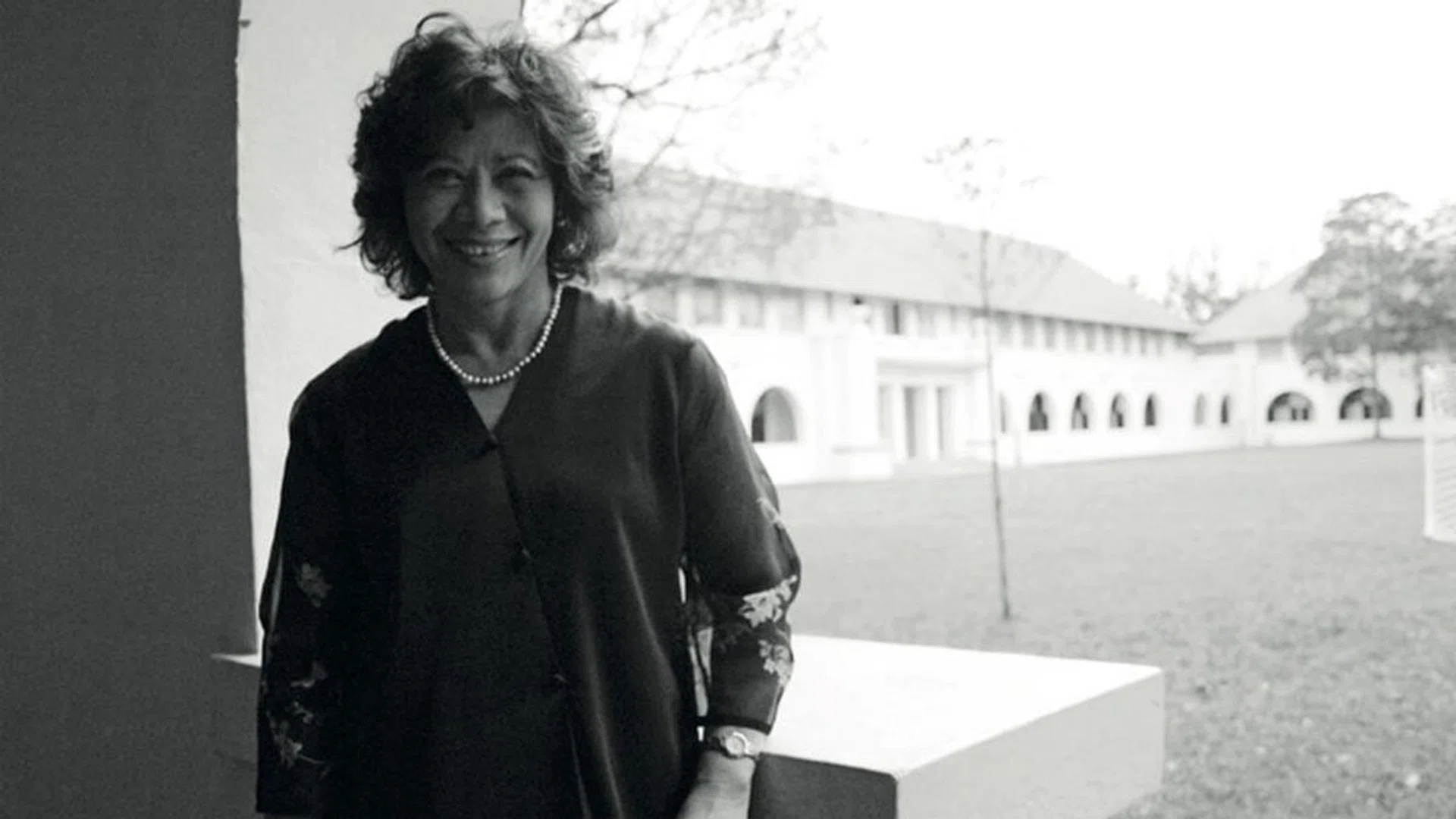
This change, which was effected in Jan 2007, was championed by a Singaporean woman, Dr Noeleen Heyzer, then the executive director of the UN Development Fund for Women (Unifem).
“Previously, peace-keeping operations were weapons-based, carried out by all-male teams. I managed to change the UN’s whole mindset of security and this led to new Security Council resolutions. This couldn’t have been done country by country; it had to come from the top,” says the 59-year-old, now the Under-Secretary-General in the largest United Nations commission, the UN Economic and Social Commission for Asia and the Pacific (Escap).
You wouldn’t expect anything less than high-impact, pro-women reforms from someone who has dedicated herself to humanitarian work at policy level.
“What I try to do in life is look for tides to turn. Not one tide at a time to lift a boat, but transformational changes that will create a lasting change.”
WOMEN COME FIRST

Noeleen has been described as someone with a towering intellect, and one who can walk with everyone from the poor to presidents. Indeed, looking at her resume can leave you more than a little heady with her long list of accolades and appointments.
During her tenure in Unifem from 1994 to 2006, Noeleen was credited with putting issues affecting women high up on the UN agenda. For example, when she first started, there were hardly any countries with laws that dealt with ending violence against women. Today, there are 92 countries that do. So significant have been her contributions to women, peace and justice that she was nominated for the 2005 Nobel Peace Prize.
Last July, Noeleen was made the Under-Secretary-General in Escap, one of the UN’s five regional social and economic development arms. In Escap’s 60-year history, she is the first woman, and first Singaporean, to helm the largest and most complicated among the commissions. As the highest-ranking UN official in the Asia-Pacific region, she reports directly to UN Secretary-General Ban Ki Moon on the social and economic development of ESCAP’s 62 member countries, including India and China.
Indeed, her work at the UN is not just about helping people on the ground, but also to rally the haves to help the have-nots.
“I see myself as a power broker. I look at what’s happening on the ground, and get those realities to where the powers that can make a difference are.”
After the genocide that tore through Rwanda, Noeleen, then head of Unifem, visited the African country and met countless widows there with no source of income. One thing she found out was their ability to weave baskets—something they did for themselves and not for money. As soon as she was back in New York, she started mobilising CEOs of big companies to open up markets for the goods these widows made. Today, these “peace baskets” are sold at Macy’s, a department store in the US.
Noeleen and her Unifem team also created a trust fund that helps finance changes to end violence against women. The fund is now one of Secretary-General Ban’s major campaign areas. Her work with Unifem put her in touch with celebrity too—she’s worked with actress Glenn Close and went on a mission to Kosovo in 2006 with Unifem’s Goodwill Ambassador, Nicole Kidman. So moved was the actress by Noeleen’s charismatic drive and devotion to the cause that she later penned her an email, calling Noeleen “an angel in my world”.
Noeleen in the palace of the Rwandan president
Where did the heart of this former Katong Convent girl, the power broker and change agent, come from? A lot has to do with where she was born and raised. Like so many in her generation, she grew up poor and didn’t go to school until she was eight. She never had books, but was surrounded by aunts, uncles, cousins and a solid caregiver in the form of a grandmother.
The latter created an indelible impression on her. “My grandmother was a wise woman who, like others in her generation, never had educational opportunities, but like many migrant Chinese, believed in investing in the education of their children and grandchildren.”
Her grandma instilled in her values she holds dear until today: Never take more than you need, live in a way that you can support others, and give back to society.
Looking back, Noeleen says that she was a curious child and never took anything as a given without asking why. As a pretty Eurasian girl, she was expected to join the service industry, or become a flight stewardess. “Don’t get me wrong. I love being served on the plane, but I never accepted a reality that was defined for me. It was not who I was or what I wanted to do. Even as a child, I challenged ideas, asked why and tested boundaries,” she says.
The fact that children of mixed parentage were less common at the time also shaped her outlook. She says: “I did not seek to fit into a crowd, because I knew I would never fit in. So I shaped my own internal world—one that was not defined by how I looked or where I came from. I had many friends and enjoyed their company, but I also enjoyed solitude.”
Noeleen was determined to go to university and worked hard to get scholarships and bursaries, which eventually led her to a doctorate in social sciences from Cambridge University. Following her peers, she went into banking, the only job she applied for in her entire life, she adds with a hearty laugh.
Unfortunately, Noeleen’s heart was not in creating material wealth. Instead, she was drawn to solving the troubles around her that resulted from the country’s rapid development of buildings and infrastructure: How migrant workers were falling off buildings or dying in fires, and how few safety regulations and labour rights they had.
She says: “I have a deep sense of common humanity and responsibility. For a while, I could not enter any of the hotels that were being built; I couldn’t go into the coffee houses because I knew who built them and who fell from them.”
Asked why she feels so strongly about these issues when others are content to look the other way, she answers: “I have no explanation as to why some things move me more than others or why I feel such deep joy or deep sadness when I witness human suffering. Sometimes, I tell my children, my problem is I was made too sensitive,” says Noeleen, whose honours thesis was on understanding school dropouts.
But it is this very depth of empathy that has made her exceptionally good at what she does. Her friend of nearly two decades, orthopaedic surgeon Dr Kanwaljit Soin, says: “I think she embodies the best of the human spirit. She is sincere, she’s compassionate, but it doesn’t stop there. She makes sure that the issue at hand is rectified.” Dr Soin says you can almost see the “missionary zeal from her eyes”, when she talks about her work.
Noeleen Heyzer (left) checking out "peace baskets" with Rwanda's Minister of Women's Affairs
Dr Noeleen Heyzer attributes a good part of her success to how she is able to motivate those around her. “I do it by building teams of people and giving them a common purpose and vision. I try to inspire them by talking to their hearts as well as their minds. I try to bring out the best in people by building on their strengths.” It’s important to be a good listener too, she says. “People like to be seen as strong and contributing; they like to be listened to. So I don’t just come in and tell them what’s right or wrong.”
For example, when she started work at Escap’s headquarters in Bangkok, she put on hold all travel plans for three months so she could sit down with all her senior staff members and 11 division chiefs.
She says she spent up to two hours with each of them “to listen to them and to get to know them”. She even set up an email system where staff could send confidential feedback to her without fear of incrimination. “I try very much to be inclusive.”
Another way of earning her staff’s trust: By delivering results quickly. “I’m very results oriented and I often amaze my staff by how fast I get things done. You need to show quick, concrete wins.”
That can involve making some tough decisions. “I have ended people’s contracts in Unifem. The UN is precious, and if its values are not respected, you affect other people. I do run an organisation that’s a tight ship.”
Noeleen with her twin daughters, Pauline and Lilianne
Noeleen’s zeal at work extended to how she raised her twin daughters too. Despite her heavy travel schedule when they were young, both girls never felt closer to anyone other than their mum, says her daughter Lilianne Fan, 30. She is a senior policy adviser for international welfare agency Oxfam, who herself has taken on her mother’s humanitarian mantle: She deferred her doctorate studies at Oxford to live in Aceh, to help rebuild lives there after the 2004 tsunami. Her twin sister Pauline lives in Kuala Lumpur and works as a translator. “In some ways, we did not have a ‘normal’ family life because my mum travelled a lot,” says Lilianne. “But when she came home, she told us these incredible stories of people she met. Our house was always filled with guests of different nationalities.”
She wasn’t a conventional mum. One Christmas holiday, the girls, whom she calls her “dear friends”, followed her to a slum in Kenya. “For us, that was normal!” Noeleen says, laughing. Did she have to make sacrifices for her family or her career? She pauses to think, and notes that she worked around her children. She remembers being offered several positions in universities and in the World Bank, but she turned them all down to head a smaller UN outfit based in Kuala Lumpur.
“For me, it was just work and home,” she says, adding that she relied on aunts, godparents and her husband, who is Malaysian, to care for the girls when she was away on business trips.
Asked what makes her happiest, she says, in what’s probably a reflection of her typically busy schedule: “I am happy to be in solitude for a day. I love listening to music, practising yoga or meditating. I find I need time to work on my own humanity, to be less egoistic, and I can only do that in solitude.”
At work, her most immediate concerns are solving energy and water security issues, and helping Asia-Pacific countries manage their fluctuating economies. In the long-term, she hopes to transform the UN.
“It’s not reached its full potential and I’m looking to bring forth the UN of the future, one that is able to address the urgent situations and help countries come together to find solutions to problems.”
Transformation, she feels, starts from within. She says: “The most important thing is to work from your heart and your own internal compass. Nobody can guide you; at the end of the day, you have to guide yourself. And in order for you to transform your environment, you have to transform yourself first.”
Visiting Foreign Minister George Yeo at the Ministry of Foreign Affairs during a recent trip to Singapore
Her journey in social and economic work started when she was a researcher with the International Labour Organization, where she studied migrant labour. That led her to find out more about women migrant workers and their situations all across emerging economies of the world, particularly in Asia.
Noeleen with Unifem Goodwill Ambassador Nicole Kidman (right)
“It is not acceptable for women to constitute 70 per cent of the world’s 1.3 billion poor. Nor is it acceptable for women to work two-thirds of the world’s working hours, but earn only one-tenth of the world’s income and own less than one-tenth of the world’s property. Many fundamental changes must be made.”
With Queen Rania of Jordan
“It’s not like there were great sacrifices…. I was not a migrant worker who had to slave in somebody else’s home and see their children once a year. Or a worker who worked in a factory and saved up all year to go home for the New Year, only to be trapped in a snowstorm.”
Exchanging pointers with Professor Kishore Mabhubani, dean of the Lee Kuan Yew School of Public Policy
“Exploitation. One of the scenes that made me really upset… took place when I was walking through Bangkok in 1982. This woman had been thrown out of a brothel and she was sleeping on the street with a young child, who was crawling about, next to all these cars passing by. When people are exploited, when there is corruption or a lack of integrity, that makes me angry.”
Addressing a UN meeting with the chief of the African section of the Unifem, Dr Laketch Dirasse
“Firstly, thank you, because what you’ve done is to recognise the work, and to share this work and the UN with a larger audience who may not have been paying attention to what’s really happening on the international stage. So it’s very exciting.”
At lunch with Ambassador-At-Large, Professor Tommy Koh (left)
“Retire from what? Perhaps from being in an organisation, but whatever work I do, I will always be able to assist people wherever I am.”

MILESTONES
1994: Appointed executive director of the UN Development Fund for Women (Unifem). Until 2006, she worked to get women protected from violence and diseases like HIV
2005: Nominee for the Nobel Peace Prize
2007: Appointed to head Escap, the first woman and first Singaporean to helm such a senior position in the UN