%22%3E%3Cpath%20fill%3D%22%23000%22%20d%3D%22M79.702%2078.555c0%2033.03%2018.767%2046.361%2035.801%2046.361%2014.149%200%2029.738-7.033%2034.505-28.595l-1.445-.306c-3.61%2015.903-14.005%2027.371-33.06%2027.371-13.86%200-13.716-22.173-13.716-41.594V67.415h49.662c0-23.393-13.136-40.674-35.946-40.674-17.034%200-35.801%2018.94-35.801%2051.814m35.801-50.283c14.437%200%2014.005%2026.455%2013.861%2037.617h-27.573c-.004-18.353.865-37.617%2013.712-37.617%22%2F%3E%3C%2Fg%3E%3Cmask%20id%3D%22b%22%20width%3D%22603%22%20height%3D%22126%22%20x%3D%220%22%20y%3D%220%22%20maskUnits%3D%22userSpaceOnUse%22%20style%3D%22mask-type%3Aluminance%22%3E%3Cpath%20fill%3D%22%23fff%22%20d%3D%22M602.5%200H.5v125.074h602z%22%2F%3E%3C%2Fmask%3E%3Cg%20mask%3D%22url(%23b)%22%3E%3Cpath%20fill%3D%22%23000%22%20d%3D%22M86.81%20105.474h-1.445c0%2010.547-4.475%2011.463-5.483%2011.463-2.454%200-4.475-3.514-4.475-11.921V48.264c0-14.83-10.826-21.558-22.229-21.558-10.97%200-22.66%206.118-25.983%2017.276V8.478c-.515-4.763-4.26-8.48-8.893-8.48H.522v1.53H.5c2.886%200%204.763%201.988%204.763%205.045v110.211c0%203.057-1.877%205.045-4.763%205.045h.022v1.531h31.423v-1.531h.021c-2.885%200-4.762-1.988-4.762-5.045V50.252c0-10.395%208.949-18.806%2016.31-18.806%205.338%200%209.813%204.13%209.813%2014.83v58.74c0%2013.909%207.796%2019.874%2016.165%2019.874%209.958.005%2017.318-6.418%2017.318-19.416%22%2F%3E%3C%2Fg%3E%3Cmask%20id%3D%22c%22%20width%3D%22603%22%20height%3D%22126%22%20x%3D%220%22%20y%3D%220%22%20maskUnits%3D%22userSpaceOnUse%22%20style%3D%22mask-type%3Aluminance%22%3E%3Cpath%20fill%3D%22%23fff%22%20d%3D%22M602.5%200H.5v125.074h602z%22%2F%3E%3C%2Fmask%3E%3Cg%20mask%3D%22url(%23c)%22%3E%3Cpath%20fill%3D%22%23000%22%20d%3D%22M225.911%2042.197c0-10.552-11.259-16.818-22.954-16.818-10.682%200-21.513%205.045-25.119%2016.975v-7.352c-.48-4.574-3.977-8.148-8.364-8.398h-18.322v1.53h-.022c2.886%200%204.763%201.99%204.763%205.046v81.371h.004c.293%204.814%203.942%208.633%208.509%208.846v.004h18.173v-1.53h.022c-2.886%200-4.763-1.989-4.763-5.045V48.62c0-10.552%209.094-19.269%2016.602-19.269%204.763%200%208.805%203.672%209.386%2012.693%200%206.881%204.619%2011.773%2011.119%2011.773%206.631%200%2010.966-4.587%2010.966-11.62%22%2F%3E%3C%2Fg%3E%3Cmask%20id%3D%22d%22%20width%3D%22603%22%20height%3D%22126%22%20x%3D%220%22%20y%3D%220%22%20maskUnits%3D%22userSpaceOnUse%22%20style%3D%22mask-type%3Aluminance%22%3E%3Cpath%20fill%3D%22%23fff%22%20d%3D%22M602.5%200H.5v125.074h602z%22%2F%3E%3C%2Fmask%3E%3Cg%20mask%3D%22url(%23d)%22%3E%3Cpath%20fill%3D%22%23000%22%20d%3D%22M234.434%2028.315c2.925%200%205.583%202.312%206.779%205.863l29.782%2089.218h1.597l20.61-61.852%2020.609%2061.852h1.598l29.781-89.218c1.196-3.556%203.855-5.863%206.78-5.863h.183v-1.776h-11.538v1.776h.184c2.925%200%203.99%202.312%202.794%205.863l-18.082%2054.209-18.082-54.209c-1.196-3.556-.131-5.863%202.794-5.863h.183v-1.776h-33.343v1.776h.183c2.925%200%205.583%202.312%206.78%205.863l8.373%2025.058-9.705%2029.15-18.082-54.208c-1.196-3.556-.131-5.863%202.794-5.863h.184v-1.776h-33.344v1.776z%22%2F%3E%3C%2Fg%3E%3Cmask%20id%3D%22e%22%20width%3D%22603%22%20height%3D%22126%22%20x%3D%220%22%20y%3D%220%22%20maskUnits%3D%22userSpaceOnUse%22%20style%3D%22mask-type%3Aluminance%22%3E%3Cpath%20fill%3D%22%23fff%22%20d%3D%22M602.5%200H.5v125.074h602z%22%2F%3E%3C%2Fmask%3E%3Cg%20mask%3D%22url(%23e)%22%3E%3Cpath%20fill%3D%22%23000%22%20d%3D%22M377.826%20124.491c17.034%200%2038.211-15.699%2038.211-48.882%200-33.03-21.177-48.73-38.211-48.73-17.035%200-38.067%2015.857-38.067%2048.73.004%2033.026%2021.032%2048.882%2038.067%2048.882m0-96.085c13.86%200%2016.121%2028.24%2016.121%2047.356%200%2019.116-2.261%2047.198-16.121%2047.198-13.861%200-15.978-27.777-15.978-47.198%200-19.422%202.122-47.356%2015.978-47.356%22%2F%3E%3C%2Fg%3E%3Cmask%20id%3D%22f%22%20width%3D%22603%22%20height%3D%22126%22%20x%3D%220%22%20y%3D%220%22%20maskUnits%3D%22userSpaceOnUse%22%20style%3D%22mask-type%3Aluminance%22%3E%3Cpath%20fill%3D%22%23fff%22%20d%3D%22M602.5%200H.5v125.074h602z%22%2F%3E%3C%2Fmask%3E%3Cg%20mask%3D%22url(%23f)%22%3E%3Cpath%20fill%3D%22%23000%22%20d%3D%22M490.482%2042.197c0-10.552-11.258-16.818-22.953-16.818-10.683%200-21.513%205.045-25.119%2016.975v-7.352c-.48-4.574-3.977-8.148-8.365-8.398h-18.326v1.53h-.022c2.886%200%204.763%201.99%204.763%205.046v81.371h.004c.293%204.814%203.943%208.633%208.509%208.846v.004h18.173v-1.53h.022c-2.885%200-4.763-1.989-4.763-5.045V48.62c0-10.552%209.094-19.269%2016.602-19.269%204.763%200%208.806%203.672%209.386%2012.693%200%206.881%204.619%2011.773%2011.119%2011.773%206.64%200%2010.97-4.587%2010.97-11.62%22%2F%3E%3C%2Fg%3E%3Cmask%20id%3D%22g%22%20width%3D%22603%22%20height%3D%22126%22%20x%3D%220%22%20y%3D%220%22%20maskUnits%3D%22userSpaceOnUse%22%20style%3D%22mask-type%3Aluminance%22%3E%3Cpath%20fill%3D%22%23fff%22%20d%3D%22M602.5%200H.5v125.074h602z%22%2F%3E%3C%2Fmask%3E%3Cg%20mask%3D%22url(%23g)%22%3E%3Cpath%20fill%3D%22%23000%22%20d%3D%22M602.5%20103.974h-1.445c0%2010.553-4.474%2011.468-5.483%2011.468-2.453%200-4.474-3.519-4.474-11.925V6.585c0-3.056%201.877-5.045%204.762-5.045h-.166V.01h-17.715c-4.942%200-8.953%204.24-8.962%209.475h-.009v23.333c-6.063-3.977-9.84-5.503-16.48-5.503-17.034%200-35.801%2014.169-35.801%2047.046%200%2033.183%2013.101%2050.718%2035.801%2050.718%208.085%200%2013.302-2.294%2019.942-8.254%203.03%204.587%207.797%206.575%2012.704%206.575%209.966-.004%2017.326-6.427%2017.326-19.426m-30.75%2011.625c-4.763%204.435-10.84%205.822-13.38%205.822-11.482%200-19.558-16.933-19.558-46.907%200-29.97%2010.914-43.222%2019.885-43.222%203.3%200%206.264.153%2010.307%203.057v69.172c.004%205.04%201.017%209.017%202.746%2012.078%22%2F%3E%3C%2Fg%3E%3Cmask%20id%3D%22h%22%20width%3D%22603%22%20height%3D%22126%22%20x%3D%220%22%20y%3D%220%22%20maskUnits%3D%22userSpaceOnUse%22%20style%3D%22mask-type%3Aluminance%22%3E%3Cpath%20fill%3D%22%23fff%22%20d%3D%22M602.5%200H.5v125.074h602z%22%2F%3E%3C%2Fmask%3E%3Cg%20mask%3D%22url(%23h)%22%3E%3Cpath%20fill%3D%22%23000%22%20d%3D%22M516.984%20121.865c-2.885%200-4.763-1.988-4.763-5.045V9.466C512.2%204.241%20508.196.01%20503.259.01h-17.724v1.53h-.022c2.89%200%204.763%201.989%204.763%205.045v108.418c.515%204.564%204.029%208.129%208.434%208.337v.06h18.252v-1.53h.022z%22%2F%3E%3C%2Fg%3E%3C%2Fsvg%3E)
Novelist Meira Chand reflects on the journeys that have shaped her writing
A life lived between cultures became the source of a remarkable body of work for the Cultural Medallion recipient, who was recently inducted into the Singapore Women’s Hall of Fame
By Syed Zulfadhli -
Share this article
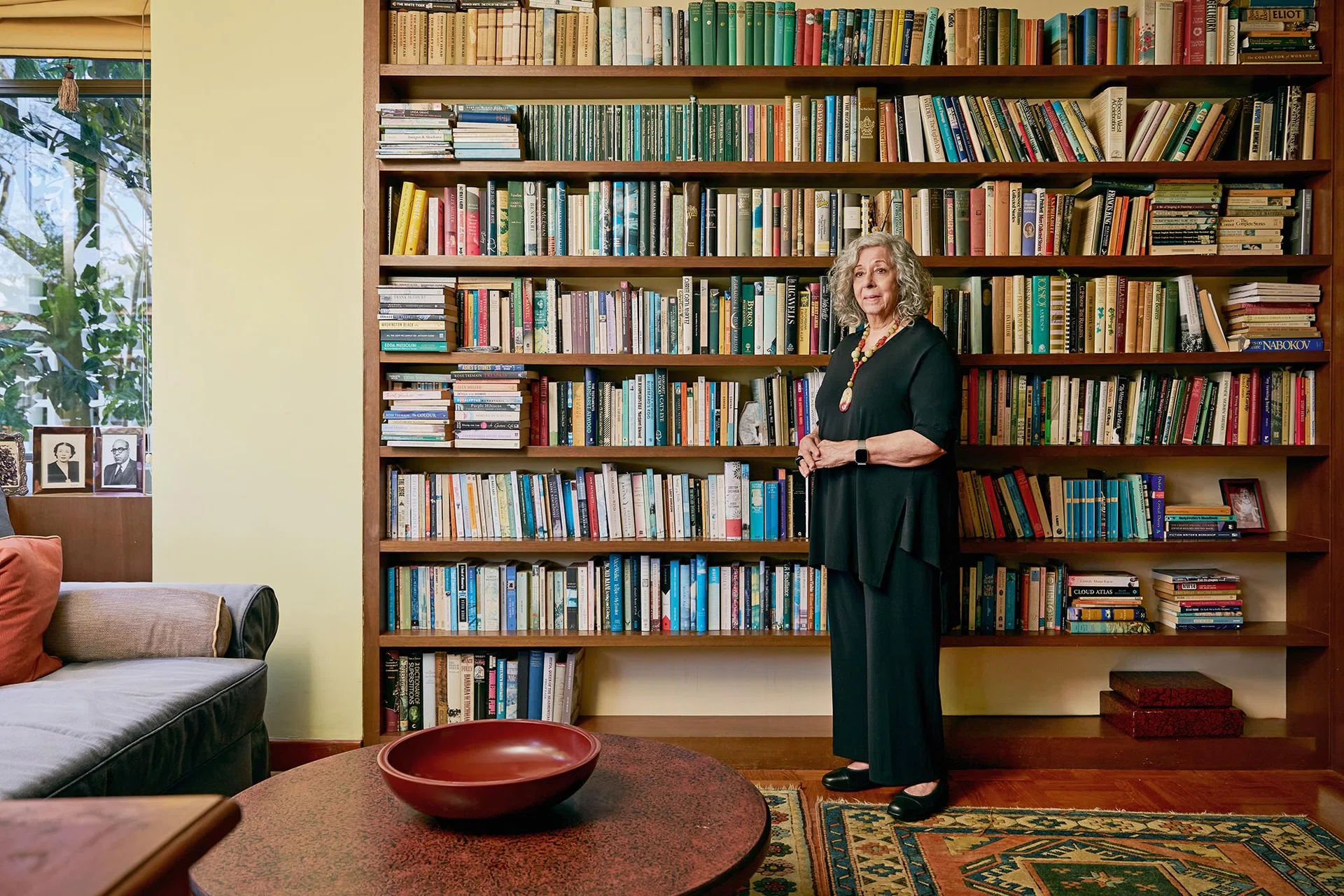
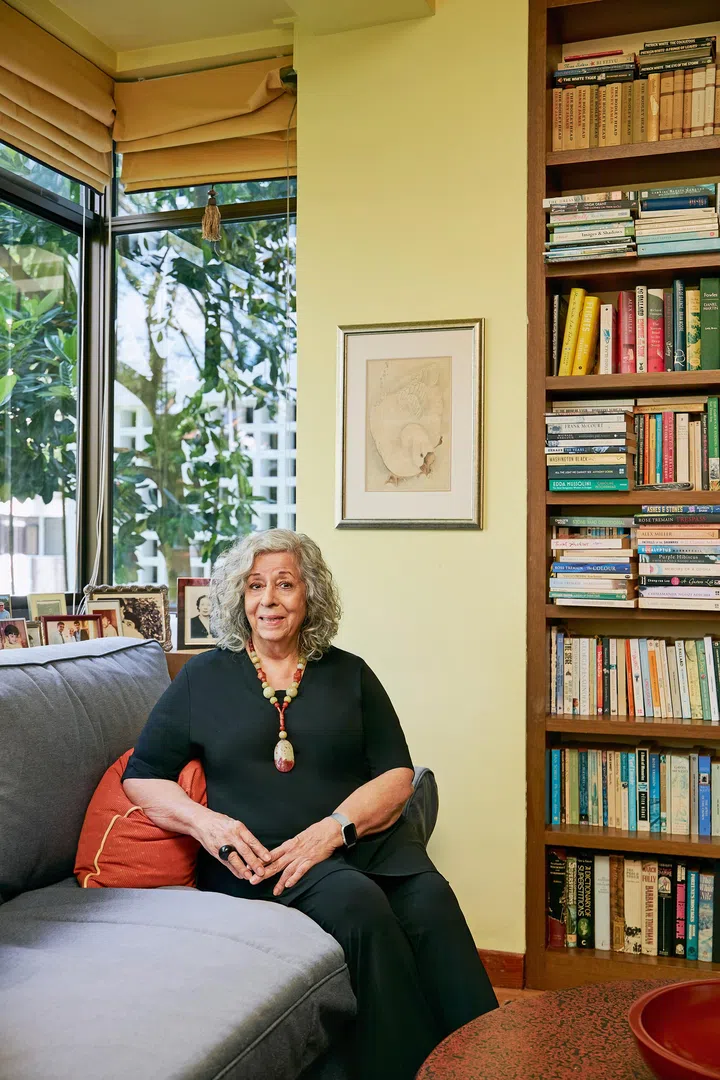
On a quiet morning in her Bukit Timah home, Meira Chand sits by the window, sunlight catching on objects gathered over a lifetime – sculptures from India, paintings from her years in Japan, Chinese calligraphy lining the walls. The room reads like memory itself, accumulated across continents and decades.
She gestures towards a brass figure on horseback and smiles. “They were so cheap when we bought them,” she laughs. “Today, I probably couldn’t afford them.”
Behind her, photographs of her late husband sit beside small metal sculptures of her grandchildren. Beyond the living room, her study resembles a small library, lined with novels, history books, and an entire shelf of her own work.
Across nine novels, her writing has traced themes of displacement, identity and belonging, earning international recognition. The Bonsai Tree (1983) and The Painted Cage (1986) were longlisted for the Booker Prize, while A Different Sky (2010) reached an international audience – appearing on Oprah Winfrey’s recommended reading list and later longlisted for the International IMPAC Dublin Literary Award in 2012.
In 2023, she was awarded the Cultural Medallion, Singapore’s highest honour for the arts. Just last month, she was inducted into the Singapore Women’s Hall of Fame by the Singapore Council of Women’s Organisations (SCWO).
The recognition surprised her. “I live in a little hole of my own,” she chuckles. “I’m not very social. I live a very quiet life.”
Yet it carries weight. For much of her life, Meira felt like she was on the margins of the cultures she moved through. Being recognised within Singapore’s national story feels significant.
“I’m used to being on the margins,” she reflects. “And this is a movement towards the centre.”
Later, she gently reframes that idea. “My position is one of more, not less… a multiplicity of cultural threads,” she explains.
From India and Britain, to Japan and Singapore, those threads have long shaped the depth of her work.
Growing up between identities
Born in London in 1942, during World War II, Meira entered a world already shaped by conflict and displacement.
Her father, an Indian doctor who arrived in Britain in 1918, built a life in a country where he often felt unwelcome. He once told her he had to travel 10 miles – roughly 16km – across London just to find the only other Indian he knew.
His diaries, which she now draws on for a memoir, recount being turned away from lodgings because of his skin colour. Yet he persisted, later becoming a Justice of the Peace, standing for Parliament – losing by just 10 votes – and served for three decades on the London County Council.
At home, assimilation was the guiding principle. Meira describes growing up in a “very European atmosphere”, with little connection to her Indian heritage. “Except for my father’s dark skin and a few brass bowls around the house… I knew absolutely nothing about India.”
She attended the elite Putney High School, where she was “the only ethnically non-British girl”. She had friends, but her awareness of being “different” was uncomfortably glaring. “I just felt my difference,” she says. “Children are very sensitive to not being part of a certain group.”
To cope, she made up stories in her head each night as a child, though she imagined a future in art. She trained at Saint Martin’s School of Art, and later graduated from Hammersmith School of Art, developing an instinct for form that would go on to shape her writing. Looking back, she sees how standing slightly apart taught her to observe – the foundation of her literary work.
Love, letters, and a life abroad
At 15, Meira met the man she would later marry. Her father, who had largely cut himself off from India, decided to take the family there – a two-week journey by ship each way. It was during that trip that she met Kumar Chand. “It was love at first sight,” she says. He was 19.
They wrote to each other every day, letters crossing oceans. Four years later, in 1961, they finally married in London.
Soon after, she followed him to Japan. What was meant to be a short stay – to close a struggling family business – became something else when Kumar chose to rebuild it. Japan would remain home for decades.
For Meira, the early years were disorienting. Fresh out of art school, married, and soon a mother of two, she found herself living near Kobe, in a small house among rice fields. Kumar commuted to Osaka, leaving early and returning late.
“One day, I’d been in art school,” she says. “The next day, I was in the middle of rice fields.”
The sense of being an outsider deepened, shaped by layers of distance, unfamiliarity, and the effort of holding on to a sense of self
Then came Bombay.
After Kumar’s father died, they moved to India for several years. If Japan had sharpened her sense of estrangement, India unsettled and drew her in at once. This was her father’s country, yet she was seen as an outsider.
“I came to love it very much,” she shares. “I felt a spiritual connection with the country.”
For the first time, she began to examine her inheritance more consciously. Painting no longer felt sufficient.
“I needed to write to make sense of what I was feeling. I couldn’t make sense of everything through paint and the brush,” she says.
She began writing short stories – work that would later be collected in The Pink, White and Blue Universe (2023). After spending five years in India, her family eventually returned to Japan. Meira was heartbroken, aware she was leaving behind not just a place she had come to love, but the experiences that had begun to shape her writing.
The buzz of the angry bee
Back in Japan, and after more than a year of unhappiness and a long silence in her writing, a sentence came into her head and refused to leave.
“It buzzed in my head like some angry bee, and it wouldn’t go away,” she recalls.
Resisting proved futile, so she wrote it down. One sentence led to another, until she found herself writing about a half-Japanese, half-English child – a character shaped by the same questions of identity and belonging.
“I had no plan,” she says. “It was as if I were taking dictation.”
That manuscript became The Gossamer Fly (1979).
Writing in isolation without a literary community or mentor, she took a chance and sent it to John Murray – one of Britain’s oldest publishing houses, known for publishing Jane Austen and Lord Byron. She wrapped the manuscript in brown paper, tied it with string, and posted it from Japan to London. It was accepted.
What followed was not sudden fame, but a steady body of work: Last Quadrant (1981), The Bonsai Tree (1983), The Painted Cage (1986), House of the Sun (1989), and A Choice of Evils (1996), many shaped by Japan, India and the complexities of cross-cultural lives, shaped in the wake of the post-war years.
“Writing was an act of survival,” she says. “It kept me alive in very dark times.”
Of her novels, she considers A Choice of Evils – which explores the Sino-Japanese War and the Rape of Nanking – among her most important. It marked a deeper level of research, and would later prove pivotal, drawing the attention of someone who would change the course of her writing once again.
A new chapter in Singapore
In 1997, after more than three decades in Japan, Meira and Kumar moved to Singapore for what she described as “economical reasons”. It was another move in a life shaped by relocation; she knew little of Singapore beyond a brief stopover years earlier.
Not long after arriving, she met former Singapore president, S. R. Nathan, who had read A Choice of Evils. He urged her to write a sweeping historical novel about Singapore – something that could give younger generations a sense of their past.
“I said yes, not realising what I had agreed to,” she recalls with a laugh.
The task proved daunting. She had no lived memory of Singapore, no instinctive feel for its history. So she began building one through research. She read widely, conducted interviews, and immersed herself in the oral history archives at the National Archives of Singapore, listening to voices across society.
“This allowed me to build a memory on other people’s memories,” she explains.
Still, the writing resisted her. She produced nearly 200 pages, only to discard them later on. The facts were there, but the life of the story was not.
Then, after years of research and discarded work, the “angry bee” returned.
One night, at 2am, a sentence came into her head and refused to leave. She got up and wrote it down. Another followed.
It became A Different Sky (2010), spanning Singapore’s history from 1927 to 1956 – from colonial rule to war and the path towards self-governance. The novel would later reach a wide international readership.
“It took me below the surface,” she says. “And it cemented me here.”
The book led to another project. In 2012, Meira was approached to write the synopsis for a proposed opera about Singapore’s first prime minister, Lee Kuan Yew, and the romance between him and his wife, Kwa Geok Choo. She found the idea improbable at first – “Mr Lee, on stage, singing!” she exclaims in amusement – but eventually came on board, pushing for a version that also shared Singapore’s broader history. The project later evolved into The LKY Musical.
The stage was not new to her. More than two decades earlier, House of the Sun was adapted by Tamasha Theatre Company and staged at Theatre Royal Stratford East in 1990 – a rare moment for Asian stories to be presented on a British stage with an all-Asian cast.
Even so, the scale of the musical felt immense. “We were quaking at every step,” she recalls. Months before opening, Lee Kuan Yew died, and the team feared it would be cancelled. Instead, The LKY Musical premiered in 2015, presented by Singapore Repertory Theatre and Aiwei, with music by composer Dick Lee and actor Adrian Pang in the title role. It returned in 2022 as Singapore’s first large-scale post-pandemic musical.
She did not turn to easier work. Instead, her ninth novel, Sacred Waters (2018), emerged from a PhD in creative writing at the University of Western Australia. The book centres on the Rani of Jhansi Regiment – one of the few all-female units of World War II – formed under Indian anti-colonial nationalist Subhas Chandra Bose, with its first training camp in Singapore. Many of its recruits were young women from Malayan rubber estates, rarely recorded in history. Meira spent more than seven years researching the novel, including interviews with surviving members.
“Non-fiction gives you facts,” she says. “But fiction gives you emotion.”
Still writing at 83
Returning to the topic of her induction into the Singapore Women’s Hall of Fame, Meira notes that what strikes her most is not prestige, but inclusion. Singapore, she says, is “an accidental country”, shaped by many histories.
“I’m starting to feel that this is the right place for me – to be in a place where what I have to give is welcomed. This has become home.”
At 83, she still continues to write. She is working on a memoir about her parents and a new novel, both in progress.
“Writing is like breathing,” she states. “I won’t stop until either I drop dead or my mind goes apart.”
PHOTOGRAPHY Angela Guo
ART DIRECTION Ray Ticsay
HAIR & MAKEUP Angel Gwee, using NARS
COORDINATION Syed Zulfadhli