%22%3E%3Cpath%20fill%3D%22%23000%22%20d%3D%22M79.702%2078.555c0%2033.03%2018.767%2046.361%2035.801%2046.361%2014.149%200%2029.738-7.033%2034.505-28.595l-1.445-.306c-3.61%2015.903-14.005%2027.371-33.06%2027.371-13.86%200-13.716-22.173-13.716-41.594V67.415h49.662c0-23.393-13.136-40.674-35.946-40.674-17.034%200-35.801%2018.94-35.801%2051.814m35.801-50.283c14.437%200%2014.005%2026.455%2013.861%2037.617h-27.573c-.004-18.353.865-37.617%2013.712-37.617%22%2F%3E%3C%2Fg%3E%3Cmask%20id%3D%22b%22%20width%3D%22603%22%20height%3D%22126%22%20x%3D%220%22%20y%3D%220%22%20maskUnits%3D%22userSpaceOnUse%22%20style%3D%22mask-type%3Aluminance%22%3E%3Cpath%20fill%3D%22%23fff%22%20d%3D%22M602.5%200H.5v125.074h602z%22%2F%3E%3C%2Fmask%3E%3Cg%20mask%3D%22url(%23b)%22%3E%3Cpath%20fill%3D%22%23000%22%20d%3D%22M86.81%20105.474h-1.445c0%2010.547-4.475%2011.463-5.483%2011.463-2.454%200-4.475-3.514-4.475-11.921V48.264c0-14.83-10.826-21.558-22.229-21.558-10.97%200-22.66%206.118-25.983%2017.276V8.478c-.515-4.763-4.26-8.48-8.893-8.48H.522v1.53H.5c2.886%200%204.763%201.988%204.763%205.045v110.211c0%203.057-1.877%205.045-4.763%205.045h.022v1.531h31.423v-1.531h.021c-2.885%200-4.762-1.988-4.762-5.045V50.252c0-10.395%208.949-18.806%2016.31-18.806%205.338%200%209.813%204.13%209.813%2014.83v58.74c0%2013.909%207.796%2019.874%2016.165%2019.874%209.958.005%2017.318-6.418%2017.318-19.416%22%2F%3E%3C%2Fg%3E%3Cmask%20id%3D%22c%22%20width%3D%22603%22%20height%3D%22126%22%20x%3D%220%22%20y%3D%220%22%20maskUnits%3D%22userSpaceOnUse%22%20style%3D%22mask-type%3Aluminance%22%3E%3Cpath%20fill%3D%22%23fff%22%20d%3D%22M602.5%200H.5v125.074h602z%22%2F%3E%3C%2Fmask%3E%3Cg%20mask%3D%22url(%23c)%22%3E%3Cpath%20fill%3D%22%23000%22%20d%3D%22M225.911%2042.197c0-10.552-11.259-16.818-22.954-16.818-10.682%200-21.513%205.045-25.119%2016.975v-7.352c-.48-4.574-3.977-8.148-8.364-8.398h-18.322v1.53h-.022c2.886%200%204.763%201.99%204.763%205.046v81.371h.004c.293%204.814%203.942%208.633%208.509%208.846v.004h18.173v-1.53h.022c-2.886%200-4.763-1.989-4.763-5.045V48.62c0-10.552%209.094-19.269%2016.602-19.269%204.763%200%208.805%203.672%209.386%2012.693%200%206.881%204.619%2011.773%2011.119%2011.773%206.631%200%2010.966-4.587%2010.966-11.62%22%2F%3E%3C%2Fg%3E%3Cmask%20id%3D%22d%22%20width%3D%22603%22%20height%3D%22126%22%20x%3D%220%22%20y%3D%220%22%20maskUnits%3D%22userSpaceOnUse%22%20style%3D%22mask-type%3Aluminance%22%3E%3Cpath%20fill%3D%22%23fff%22%20d%3D%22M602.5%200H.5v125.074h602z%22%2F%3E%3C%2Fmask%3E%3Cg%20mask%3D%22url(%23d)%22%3E%3Cpath%20fill%3D%22%23000%22%20d%3D%22M234.434%2028.315c2.925%200%205.583%202.312%206.779%205.863l29.782%2089.218h1.597l20.61-61.852%2020.609%2061.852h1.598l29.781-89.218c1.196-3.556%203.855-5.863%206.78-5.863h.183v-1.776h-11.538v1.776h.184c2.925%200%203.99%202.312%202.794%205.863l-18.082%2054.209-18.082-54.209c-1.196-3.556-.131-5.863%202.794-5.863h.183v-1.776h-33.343v1.776h.183c2.925%200%205.583%202.312%206.78%205.863l8.373%2025.058-9.705%2029.15-18.082-54.208c-1.196-3.556-.131-5.863%202.794-5.863h.184v-1.776h-33.344v1.776z%22%2F%3E%3C%2Fg%3E%3Cmask%20id%3D%22e%22%20width%3D%22603%22%20height%3D%22126%22%20x%3D%220%22%20y%3D%220%22%20maskUnits%3D%22userSpaceOnUse%22%20style%3D%22mask-type%3Aluminance%22%3E%3Cpath%20fill%3D%22%23fff%22%20d%3D%22M602.5%200H.5v125.074h602z%22%2F%3E%3C%2Fmask%3E%3Cg%20mask%3D%22url(%23e)%22%3E%3Cpath%20fill%3D%22%23000%22%20d%3D%22M377.826%20124.491c17.034%200%2038.211-15.699%2038.211-48.882%200-33.03-21.177-48.73-38.211-48.73-17.035%200-38.067%2015.857-38.067%2048.73.004%2033.026%2021.032%2048.882%2038.067%2048.882m0-96.085c13.86%200%2016.121%2028.24%2016.121%2047.356%200%2019.116-2.261%2047.198-16.121%2047.198-13.861%200-15.978-27.777-15.978-47.198%200-19.422%202.122-47.356%2015.978-47.356%22%2F%3E%3C%2Fg%3E%3Cmask%20id%3D%22f%22%20width%3D%22603%22%20height%3D%22126%22%20x%3D%220%22%20y%3D%220%22%20maskUnits%3D%22userSpaceOnUse%22%20style%3D%22mask-type%3Aluminance%22%3E%3Cpath%20fill%3D%22%23fff%22%20d%3D%22M602.5%200H.5v125.074h602z%22%2F%3E%3C%2Fmask%3E%3Cg%20mask%3D%22url(%23f)%22%3E%3Cpath%20fill%3D%22%23000%22%20d%3D%22M490.482%2042.197c0-10.552-11.258-16.818-22.953-16.818-10.683%200-21.513%205.045-25.119%2016.975v-7.352c-.48-4.574-3.977-8.148-8.365-8.398h-18.326v1.53h-.022c2.886%200%204.763%201.99%204.763%205.046v81.371h.004c.293%204.814%203.943%208.633%208.509%208.846v.004h18.173v-1.53h.022c-2.885%200-4.763-1.989-4.763-5.045V48.62c0-10.552%209.094-19.269%2016.602-19.269%204.763%200%208.806%203.672%209.386%2012.693%200%206.881%204.619%2011.773%2011.119%2011.773%206.64%200%2010.97-4.587%2010.97-11.62%22%2F%3E%3C%2Fg%3E%3Cmask%20id%3D%22g%22%20width%3D%22603%22%20height%3D%22126%22%20x%3D%220%22%20y%3D%220%22%20maskUnits%3D%22userSpaceOnUse%22%20style%3D%22mask-type%3Aluminance%22%3E%3Cpath%20fill%3D%22%23fff%22%20d%3D%22M602.5%200H.5v125.074h602z%22%2F%3E%3C%2Fmask%3E%3Cg%20mask%3D%22url(%23g)%22%3E%3Cpath%20fill%3D%22%23000%22%20d%3D%22M602.5%20103.974h-1.445c0%2010.553-4.474%2011.468-5.483%2011.468-2.453%200-4.474-3.519-4.474-11.925V6.585c0-3.056%201.877-5.045%204.762-5.045h-.166V.01h-17.715c-4.942%200-8.953%204.24-8.962%209.475h-.009v23.333c-6.063-3.977-9.84-5.503-16.48-5.503-17.034%200-35.801%2014.169-35.801%2047.046%200%2033.183%2013.101%2050.718%2035.801%2050.718%208.085%200%2013.302-2.294%2019.942-8.254%203.03%204.587%207.797%206.575%2012.704%206.575%209.966-.004%2017.326-6.427%2017.326-19.426m-30.75%2011.625c-4.763%204.435-10.84%205.822-13.38%205.822-11.482%200-19.558-16.933-19.558-46.907%200-29.97%2010.914-43.222%2019.885-43.222%203.3%200%206.264.153%2010.307%203.057v69.172c.004%205.04%201.017%209.017%202.746%2012.078%22%2F%3E%3C%2Fg%3E%3Cmask%20id%3D%22h%22%20width%3D%22603%22%20height%3D%22126%22%20x%3D%220%22%20y%3D%220%22%20maskUnits%3D%22userSpaceOnUse%22%20style%3D%22mask-type%3Aluminance%22%3E%3Cpath%20fill%3D%22%23fff%22%20d%3D%22M602.5%200H.5v125.074h602z%22%2F%3E%3C%2Fmask%3E%3Cg%20mask%3D%22url(%23h)%22%3E%3Cpath%20fill%3D%22%23000%22%20d%3D%22M516.984%20121.865c-2.885%200-4.763-1.988-4.763-5.045V9.466C512.2%204.241%20508.196.01%20503.259.01h-17.724v1.53h-.022c2.89%200%204.763%201.989%204.763%205.045v108.418c.515%204.564%204.029%208.129%208.434%208.337v.06h18.252v-1.53h.022z%22%2F%3E%3C%2Fg%3E%3C%2Fsvg%3E)
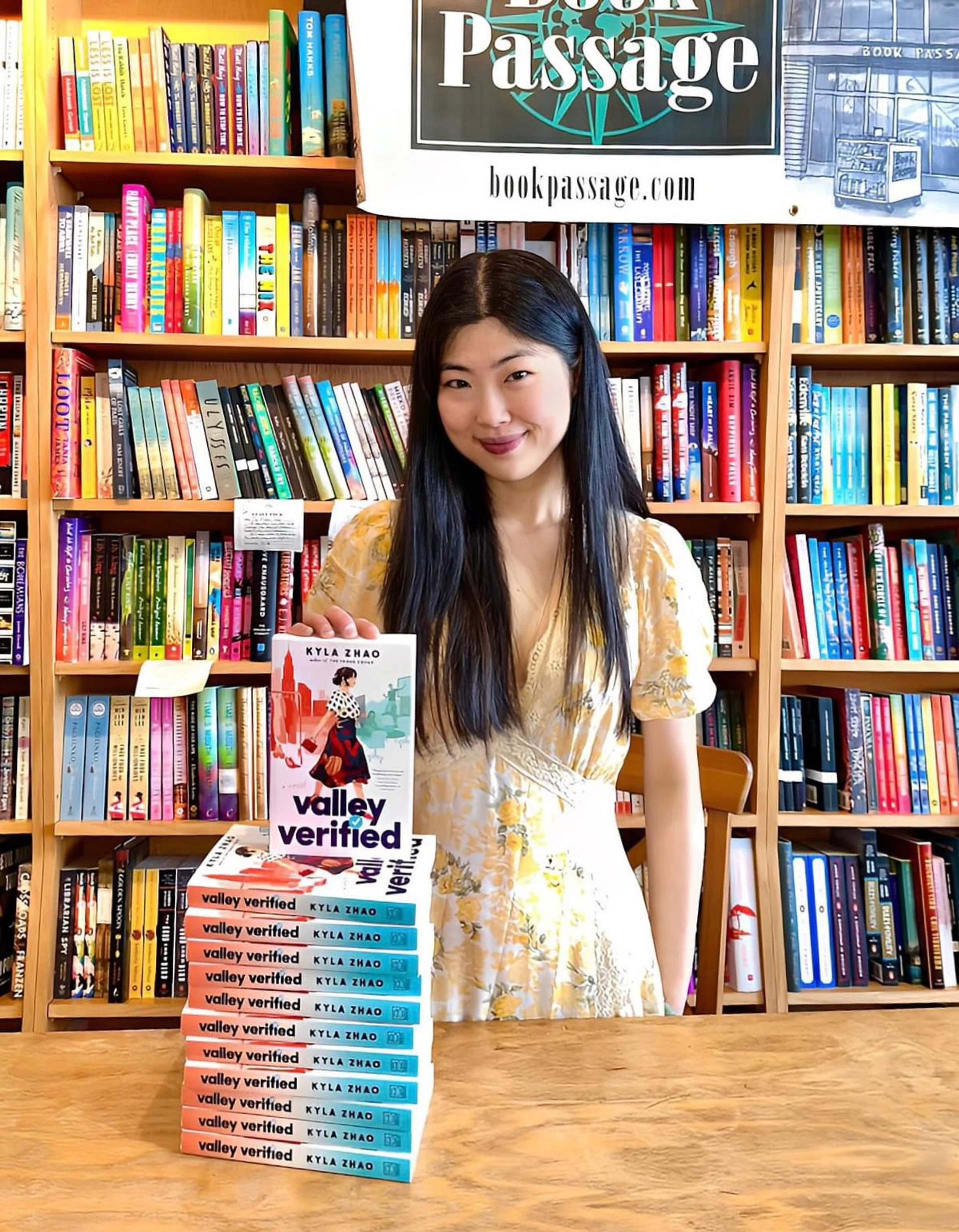
Kyla Zhao, two-time published author at age 25, wants you to open up about imposter syndrome.
Her latest book, Valley Verified, balance heavy topics like imposter syndrome with a breezy writing style and a light-lighted plot
By Saw Yone Yone -
Share this article
Do you like your job? Or wonder what it would be like if you’d gone against your parents’ advice and pursued your dream career? Her World’s Career Confessions column spotlights the professional journeys of its subjects and reveals how each individual’s career path and the choices they have made can have an impact on their personal finances, psychological health, and interpersonal relationships.
“And how can you possibly think of leaving the greatest city on Earth?”
Zoe looked pointedly at the pile of trash bags on the sidewalk right next to the bar. A well-dressed lady stepped daintily over a smaller heap of food scraps that had spewed out from an open hole in one of the bags. The moment she was a safe distance away, a pigeon flew down and began rummaging through the discarded waste. It quickly took flight as two blaring car horns boomed out in quick succession, followed by a stream of colorful shouts from somewhere on the road that was thankfully muffled by the bar’s thick glass windows.
Zoe raised one brow at Bjorn, I rest my case.
Excerpted from VALLEY VERIFIED by Kyla Zhao, published by Berkley, an imprint of Penguin Publishing Group, a division of Penguin Random House, LLC. Copyright ©2024 by Jiayi Zhao.
This excerpt from Kyla Zhao’s second and latest book, Valley Verified, isn’t literary high art – she’ll tell you that herself. But it is richly detailed, almost cinematic: you can imagine what she’s describing as if it’s a comedic film running through your head.
The book retains its breeziness throughout – even as it tackles heavy topics. Valley Verified is about a fashion writer leaving her job and diving into a Silicon Valley startup, where the pressures from the cutthroat world of tech bros threaten to unravel her life. Accordingly, it touches on sensitive issues like alienation in new environments, imposter syndrome and even sexual harassment in male-dominated industries, and does so with tact.
When you combine a light-hearted writing style with a dramatic Legally Blonde-esque plot, you get an addicting, entertaining read. Endeavouring to be a responsible journalist, I decided to skim through Valley Verified the night before interviewing Kyla. I opened page one, and unwittingly finished the book in one sitting.
It’s these qualities in her writing that make her a two-time published author at age 25.
“Like a lot of writers, I got started during the pandemic,” Kyla recalled.
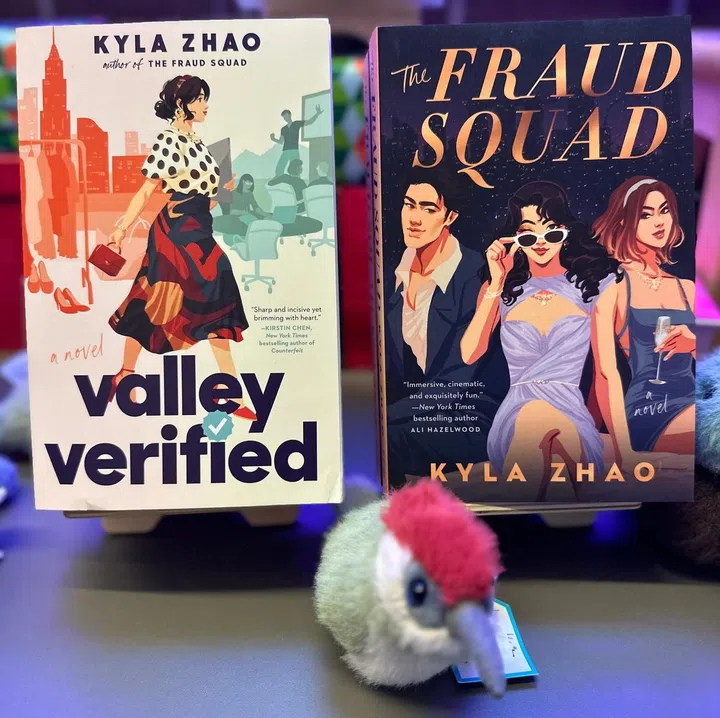
Cloistered in California, Kyla was depressed and homesick. With the widespread Asian hate in the United States then, she wanted to see Asians like herself portrayed more joyfully. Writing The Fraud Squad was an imaginative escape amidst the pandemic reality.
“I crafted this glamorous fantasy high society. That was fun to write about when we were all stuck at home during lockdown in our pyjamas,” she recalled. “Writing about my favourite places in Singapore, my favourite foods, I could stay connected to home at a time when I didn't know when I would be home again.”
The Fraud Squad was sold to Penguin Brenham House in 2021 and published in 2023.
Credit: Kyla Zhao
It was the first time she ever wrote a book.
She had written for magazines in Singapore before – getting her first byline on Harper’s Bazaar at age 16 after cold-emailing her way into an internship – but sustaining motivation for a hundred thousand words is a different ballgame from a thousand.
Writing full novels requires discipline, especially as she juggles writing with a full-time job. Mentally drained after a full workday, she’ll dedicate hours each weekend to pounding out the words.
“It's not something you’re assigned to do. You have to create everything from your own imagination. That’s daunting because you cannot hide behind the name of your magazine. Putting your name on the cover of the book feels a lot more vulnerable.”
That vulnerability extends into the content of her books. This was especially so for Valley Verified — similarly to her main character Zoe, Kyla transitioned from writing at a fashion publication to becoming a data analyst at a tech company in California.
“I felt completely out of my depth. That’s how I came up with the idea for Valley Verified: I was suffering from low self-esteem and self-doubt. I genuinely didn't know if I could last in this job. Writing gave me a safe space to explore my insecurities and emotions because it was a work of fiction, but at the same time, I was writing the happy ending I hoped to get.”
Drawing from her personal experiences means her writing is raw. “To this day, I haven't even read my book since submitting my final draft.”
But it also means the details in her writing are authentic. “I dislike doing a lot of research for my books because I don't want it to feel like homework, so I always draw from personal experience and knowledge. Coming from this world, I could paint a more authentic portrayal.” Examples include the minutiae of a fashion writer’s life, from loaned clothes to SEO optimisation. They’re close to reality, and its the abundance of those details that breathes life into her writing.
Crucially, that authenticity makes the feelings she explores in her book easy to connect with.
“I thought that only people just starting in their careers like me would feel that way. But no, I've had high-ranking tech executives tell me they still feel imposter syndrome. Retired folks tell me they could relate to what my character was going through.”
Name: Kyla Zhao
Highest Education: Masters of Arts in Mass Communication/Media Studies, Stanford University
Job title & industry: Analyst in the tech industry, author in the publishing industry
Years of work experience: 2.5 years for both
What are your inspirations for your writing?
I admire a lot of writers but my writing style doesn’t really resemble theirs. I love reading historical fiction, where the writing style tends to be more lyrical and the topics are heavy. In contrast, I've heard my books described as beach reads, i.e. novels that you can bring on vacation and devour while lounging on the beach.
I'm very inspired by movies. I think that's why many people have described my writing as ‘cinematic’. I love The Devil Wears Prada. That got me interested in fashion, writing and the magazine industry. I love Crazy Rich Asians, Legally Blonde — I like the vibes and I think my writing reflects the same fun quality.
How does your fashion background impact your writing?
I appreciate the power of fashion. I was initially a bit self-conscious about it because I felt like caring so much about fashion and appearances made me seem frivolous. But I think we're starting to see how people can leverage fashion to their own advantage. For instance, when celebrities go to court for lawsuits, they’d wear lighter colours to portray an impression of innocence.
These decisions people make paint an image of themselves, and that's so incredibly powerful. Fashion always plays a big role in my books because the way my characters dress reflects their self-image and aspirations.
What motivated you to switch careers from writing to tech?
After studying in Silicon Valley for four years, I developed a fascination with the tech industry and all the cool technological advancements being made. Even when I was a writer, a lot of my articles were focused on the role that tech plays in fashion, like big fashion houses using NFTs or designers leveraging 3D printing. So when this opportunity at a Silicon Valley tech company arose, I decided to give the industry a shot. I took the plunge, packed my bags, and ended up in California alone.
Your book deals with the struggles women might face in the tech industry.
The tech industry, like every male-dominated industry, has obvious issues like sexual harassment to more subtle ones like microaggressions. I was lucky I never faced anything major personally, but I know people who have.
Since I am touching on pretty sensitive topics, I wanted to craft as authentic a portrayal as possible. I read a lot of non-fiction books written by women who have worked in this industry. I spoke to a lot of women who have worked in this industry within different stages of their careers: some who are just starting out, some who have been around for a long time, and some who have already retired. I compiled what I learned and put as much of it into my book as possible.
What I got was that nothing much has changed.
Your book briefly touches on Silicon Valley culture, and how it almost demands that you commercialise your hobbies. You’re currently commercialising your writing hobby. Thoughts?
When I first started writing, I didn't think of getting published. It was only after I finished the book, after meeting other online writers trying to get published, that I learned more about the industry.
Starting out, I was so idealistic. Like yeah, I'm a writer. I create stories that get read by people – that's amazing! And it is, but you realise that to many others, your book isn't just creative work. It represents dollar signs and sales numbers. You’re also expected to see it as a product, and almost see yourself as a product. As you market your book, you almost inevitably have to market yourself as well.
As an introvert, it gets hard sometimes doing the constant promotion. But I think it is necessary to give your book the best fighting chance. So this is something I'm trying to balance: how I feel about writing versus how I feel about publishing; they aren’t the same thing.
For my own writing, I always choose authenticity over commercial stuff. I tell my agent I don't want to hear any sales numbers or reviews. I don't want to let external factors beyond my control affect my creative mindset. I wouldn't fault anyone for doing so though – I don't consider it selling out. At the end of the day, writing is work. People deserve to be compensated for their work.
That’s also why I don’t intend on writing full-time. If I have to depend on it as a source of income, it’ll be tempting to write what I think would sell, which doesn’t always align with what I want to write. I admit it comes from a place of privilege where I have a steady full-time job, I don't necessarily depend on writing for my rice bowl, and I don't have any people depending on me.
Do you have any book recommendations?
I read The Storm We Made by Vanessa Chan recently. Her book is about Malaya during the Japanese occupation in WW2. I really love Anchee Min’s books; she writes about Chinese imperial history. Another favourite is The Good Earth by Pearl S. Buck.
Do you want to say anything to those undergoing imposter syndrome like you did when writing your book?
Don't keep it to yourself. When I first started working, when my parents asked me how it was going, I didn't want them to worry about me because they were already worried that I was overseas. So, I would always tell them what a great time I was having. When my friends asked, I was too embarrassed to tell them that I felt like a failure. All my friends seem so accomplished and put together. So, I was trying to maintain this impression of success when I felt like I failed.
After Valley Verified came out, my friends read the book. That was when they told me that they experienced a similar thing, but none of us talked about it because we thought we were the only ones who didn’t have our lives put together. I wish I opened up about it sooner because then I would have found a support system. I wouldn't have felt as alone.
Any writing advice?
Don't be afraid to start. It's tempting to say, “Oh, now’s not a good time. I'm too busy with work, with family.”
But the truth is, it’s never going to be a good time. So you should just start now.
What can we look forward to next from you?
I have another book, May the Best Player Win, coming out in September. It's about a chess player who makes a bet with her sexist teammate that girls can be as good as boys when it comes to chess. As she sets out to win their bet, performance anxiety creeps in. She has to ask herself: “Can you play for fun if you're playing to win?” This book is suitable for teenagers, pre-teens and adults.
Any last thoughts?
If anyone reads Valley Verified, I hope you enjoy it. I hope that they had as much fun reading it as I had writing it, that they see a bit of themselves in Zoe or any of the other characters, that they feel seen by my story, and that they're able to relate to it.