%22%3E%3Cpath%20fill%3D%22%23000%22%20d%3D%22M79.702%2078.555c0%2033.03%2018.767%2046.361%2035.801%2046.361%2014.149%200%2029.738-7.033%2034.505-28.595l-1.445-.306c-3.61%2015.903-14.005%2027.371-33.06%2027.371-13.86%200-13.716-22.173-13.716-41.594V67.415h49.662c0-23.393-13.136-40.674-35.946-40.674-17.034%200-35.801%2018.94-35.801%2051.814m35.801-50.283c14.437%200%2014.005%2026.455%2013.861%2037.617h-27.573c-.004-18.353.865-37.617%2013.712-37.617%22%2F%3E%3C%2Fg%3E%3Cmask%20id%3D%22b%22%20width%3D%22603%22%20height%3D%22126%22%20x%3D%220%22%20y%3D%220%22%20maskUnits%3D%22userSpaceOnUse%22%20style%3D%22mask-type%3Aluminance%22%3E%3Cpath%20fill%3D%22%23fff%22%20d%3D%22M602.5%200H.5v125.074h602z%22%2F%3E%3C%2Fmask%3E%3Cg%20mask%3D%22url(%23b)%22%3E%3Cpath%20fill%3D%22%23000%22%20d%3D%22M86.81%20105.474h-1.445c0%2010.547-4.475%2011.463-5.483%2011.463-2.454%200-4.475-3.514-4.475-11.921V48.264c0-14.83-10.826-21.558-22.229-21.558-10.97%200-22.66%206.118-25.983%2017.276V8.478c-.515-4.763-4.26-8.48-8.893-8.48H.522v1.53H.5c2.886%200%204.763%201.988%204.763%205.045v110.211c0%203.057-1.877%205.045-4.763%205.045h.022v1.531h31.423v-1.531h.021c-2.885%200-4.762-1.988-4.762-5.045V50.252c0-10.395%208.949-18.806%2016.31-18.806%205.338%200%209.813%204.13%209.813%2014.83v58.74c0%2013.909%207.796%2019.874%2016.165%2019.874%209.958.005%2017.318-6.418%2017.318-19.416%22%2F%3E%3C%2Fg%3E%3Cmask%20id%3D%22c%22%20width%3D%22603%22%20height%3D%22126%22%20x%3D%220%22%20y%3D%220%22%20maskUnits%3D%22userSpaceOnUse%22%20style%3D%22mask-type%3Aluminance%22%3E%3Cpath%20fill%3D%22%23fff%22%20d%3D%22M602.5%200H.5v125.074h602z%22%2F%3E%3C%2Fmask%3E%3Cg%20mask%3D%22url(%23c)%22%3E%3Cpath%20fill%3D%22%23000%22%20d%3D%22M225.911%2042.197c0-10.552-11.259-16.818-22.954-16.818-10.682%200-21.513%205.045-25.119%2016.975v-7.352c-.48-4.574-3.977-8.148-8.364-8.398h-18.322v1.53h-.022c2.886%200%204.763%201.99%204.763%205.046v81.371h.004c.293%204.814%203.942%208.633%208.509%208.846v.004h18.173v-1.53h.022c-2.886%200-4.763-1.989-4.763-5.045V48.62c0-10.552%209.094-19.269%2016.602-19.269%204.763%200%208.805%203.672%209.386%2012.693%200%206.881%204.619%2011.773%2011.119%2011.773%206.631%200%2010.966-4.587%2010.966-11.62%22%2F%3E%3C%2Fg%3E%3Cmask%20id%3D%22d%22%20width%3D%22603%22%20height%3D%22126%22%20x%3D%220%22%20y%3D%220%22%20maskUnits%3D%22userSpaceOnUse%22%20style%3D%22mask-type%3Aluminance%22%3E%3Cpath%20fill%3D%22%23fff%22%20d%3D%22M602.5%200H.5v125.074h602z%22%2F%3E%3C%2Fmask%3E%3Cg%20mask%3D%22url(%23d)%22%3E%3Cpath%20fill%3D%22%23000%22%20d%3D%22M234.434%2028.315c2.925%200%205.583%202.312%206.779%205.863l29.782%2089.218h1.597l20.61-61.852%2020.609%2061.852h1.598l29.781-89.218c1.196-3.556%203.855-5.863%206.78-5.863h.183v-1.776h-11.538v1.776h.184c2.925%200%203.99%202.312%202.794%205.863l-18.082%2054.209-18.082-54.209c-1.196-3.556-.131-5.863%202.794-5.863h.183v-1.776h-33.343v1.776h.183c2.925%200%205.583%202.312%206.78%205.863l8.373%2025.058-9.705%2029.15-18.082-54.208c-1.196-3.556-.131-5.863%202.794-5.863h.184v-1.776h-33.344v1.776z%22%2F%3E%3C%2Fg%3E%3Cmask%20id%3D%22e%22%20width%3D%22603%22%20height%3D%22126%22%20x%3D%220%22%20y%3D%220%22%20maskUnits%3D%22userSpaceOnUse%22%20style%3D%22mask-type%3Aluminance%22%3E%3Cpath%20fill%3D%22%23fff%22%20d%3D%22M602.5%200H.5v125.074h602z%22%2F%3E%3C%2Fmask%3E%3Cg%20mask%3D%22url(%23e)%22%3E%3Cpath%20fill%3D%22%23000%22%20d%3D%22M377.826%20124.491c17.034%200%2038.211-15.699%2038.211-48.882%200-33.03-21.177-48.73-38.211-48.73-17.035%200-38.067%2015.857-38.067%2048.73.004%2033.026%2021.032%2048.882%2038.067%2048.882m0-96.085c13.86%200%2016.121%2028.24%2016.121%2047.356%200%2019.116-2.261%2047.198-16.121%2047.198-13.861%200-15.978-27.777-15.978-47.198%200-19.422%202.122-47.356%2015.978-47.356%22%2F%3E%3C%2Fg%3E%3Cmask%20id%3D%22f%22%20width%3D%22603%22%20height%3D%22126%22%20x%3D%220%22%20y%3D%220%22%20maskUnits%3D%22userSpaceOnUse%22%20style%3D%22mask-type%3Aluminance%22%3E%3Cpath%20fill%3D%22%23fff%22%20d%3D%22M602.5%200H.5v125.074h602z%22%2F%3E%3C%2Fmask%3E%3Cg%20mask%3D%22url(%23f)%22%3E%3Cpath%20fill%3D%22%23000%22%20d%3D%22M490.482%2042.197c0-10.552-11.258-16.818-22.953-16.818-10.683%200-21.513%205.045-25.119%2016.975v-7.352c-.48-4.574-3.977-8.148-8.365-8.398h-18.326v1.53h-.022c2.886%200%204.763%201.99%204.763%205.046v81.371h.004c.293%204.814%203.943%208.633%208.509%208.846v.004h18.173v-1.53h.022c-2.885%200-4.763-1.989-4.763-5.045V48.62c0-10.552%209.094-19.269%2016.602-19.269%204.763%200%208.806%203.672%209.386%2012.693%200%206.881%204.619%2011.773%2011.119%2011.773%206.64%200%2010.97-4.587%2010.97-11.62%22%2F%3E%3C%2Fg%3E%3Cmask%20id%3D%22g%22%20width%3D%22603%22%20height%3D%22126%22%20x%3D%220%22%20y%3D%220%22%20maskUnits%3D%22userSpaceOnUse%22%20style%3D%22mask-type%3Aluminance%22%3E%3Cpath%20fill%3D%22%23fff%22%20d%3D%22M602.5%200H.5v125.074h602z%22%2F%3E%3C%2Fmask%3E%3Cg%20mask%3D%22url(%23g)%22%3E%3Cpath%20fill%3D%22%23000%22%20d%3D%22M602.5%20103.974h-1.445c0%2010.553-4.474%2011.468-5.483%2011.468-2.453%200-4.474-3.519-4.474-11.925V6.585c0-3.056%201.877-5.045%204.762-5.045h-.166V.01h-17.715c-4.942%200-8.953%204.24-8.962%209.475h-.009v23.333c-6.063-3.977-9.84-5.503-16.48-5.503-17.034%200-35.801%2014.169-35.801%2047.046%200%2033.183%2013.101%2050.718%2035.801%2050.718%208.085%200%2013.302-2.294%2019.942-8.254%203.03%204.587%207.797%206.575%2012.704%206.575%209.966-.004%2017.326-6.427%2017.326-19.426m-30.75%2011.625c-4.763%204.435-10.84%205.822-13.38%205.822-11.482%200-19.558-16.933-19.558-46.907%200-29.97%2010.914-43.222%2019.885-43.222%203.3%200%206.264.153%2010.307%203.057v69.172c.004%205.04%201.017%209.017%202.746%2012.078%22%2F%3E%3C%2Fg%3E%3Cmask%20id%3D%22h%22%20width%3D%22603%22%20height%3D%22126%22%20x%3D%220%22%20y%3D%220%22%20maskUnits%3D%22userSpaceOnUse%22%20style%3D%22mask-type%3Aluminance%22%3E%3Cpath%20fill%3D%22%23fff%22%20d%3D%22M602.5%200H.5v125.074h602z%22%2F%3E%3C%2Fmask%3E%3Cg%20mask%3D%22url(%23h)%22%3E%3Cpath%20fill%3D%22%23000%22%20d%3D%22M516.984%20121.865c-2.885%200-4.763-1.988-4.763-5.045V9.466C512.2%204.241%20508.196.01%20503.259.01h-17.724v1.53h-.022c2.89%200%204.763%201.989%204.763%205.045v108.418c.515%204.564%204.029%208.129%208.434%208.337v.06h18.252v-1.53h.022z%22%2F%3E%3C%2Fg%3E%3C%2Fsvg%3E)
Career Confessions: What does it take to become the first animal psychiatrist in Singapore?
Veterinarian Dr Daphne Ang decided to pursue her calling in animal psychiatry in the US during the Covid-19 pandemic. But this is just one of the many challenges she's faced along the way
By Chelsia Tan -
Share this article
Do you like your job? Or wonder what it would be like if you’d gone against your parents’ advice and pursued your dream career? Her World’s Career Confessions column spotlights the professional journeys of its subjects and reveals how each individual’s career path and the choices they have made can have an impact on their personal finances, psychological health, and interpersonal relationships.
Have you ever spent hours on Google trying to decipher your pet’s sudden change in behaviour? Or even wondered what it is thinking? If this sounds familiar, you are not alone: In her 15 years as a veterinarian in Singapore, Dr Daphne Ang has encountered many clients who would often bring up their pets’ behavioural quirks.
“I’ve had situations where my clients would ask me, ‘How do I know if my pet is happy? ‘Why is my cat biting my ankles?’ or ‘Why is my dog humping my guests when he is sterilised?’” says the 47-year-old mother of three. “It seemed like there was always a behavioural or psychosomatic aspect to every consultation. Some of it is connected to medical problems and serves as an indicator of underlying issues. But often, especially as a young vet then, I’d find myself stumped.”
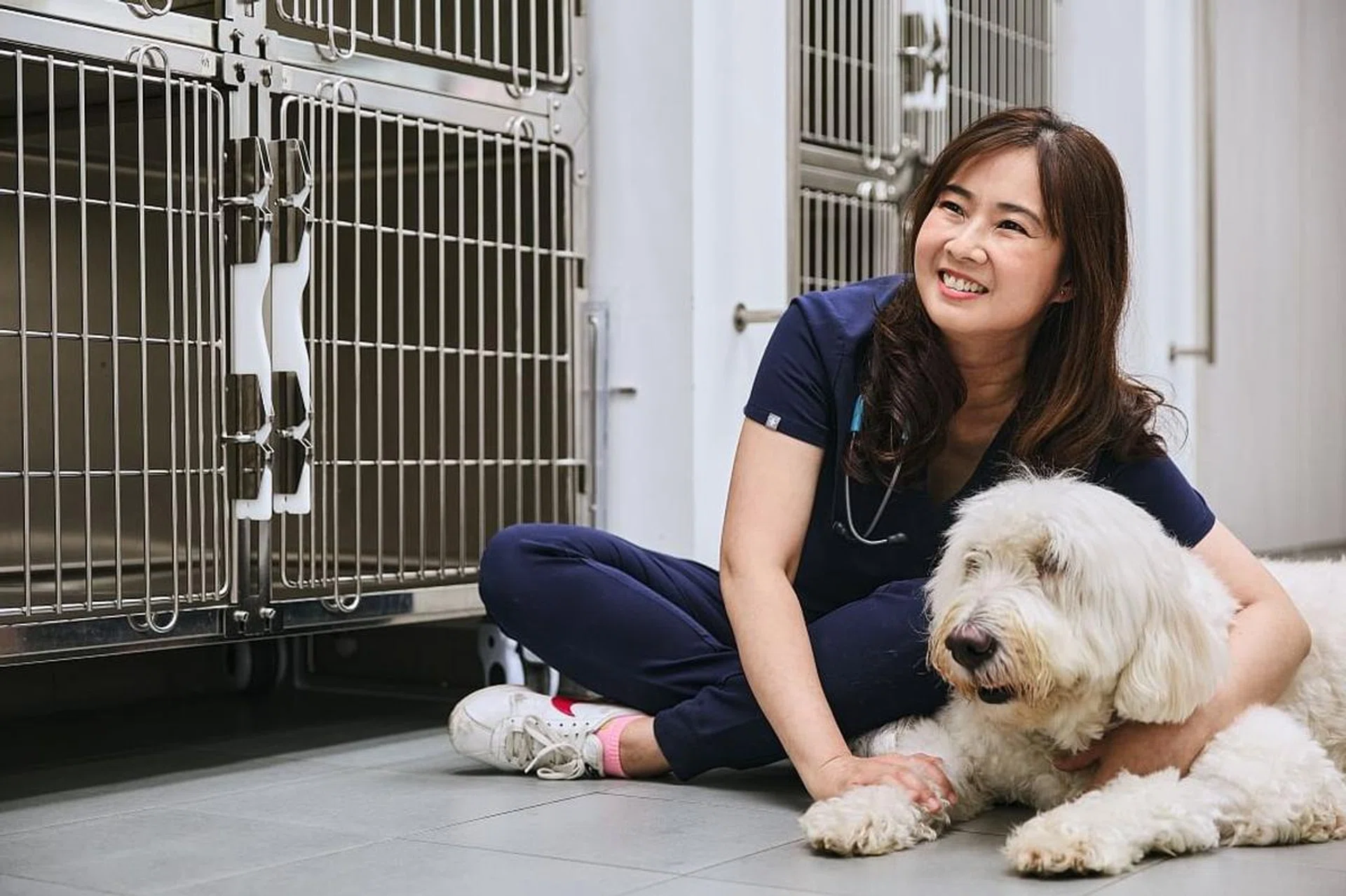
It’s one of the many reasons that propelled Dr Ang, who is currently based in the US, to pursue a speciality in animal psychiatry. When she completes her residency with the American College of Veterinary Behaviorists in 2025 and passes the board exam for Clinical Behavioral Medicine, she will be the first certified animal psychiatrist in Singapore.
But what does animal psychiatry actually entail? In short, this area of medicine mirrors some aspects of human psychiatry, which addresses the emotional well-being of the patient. It treats conditions such as anxiety and aggression, and requires a deep understanding of neurology, psychopharmacology (the use of medications to treat mental health conditions), and neuroscience.
Dr Ang explains: “When you visit a psychologist, they will ask you, ‘How are you feeling now?’ and you can convey your own state. But when dealing with animals, I have to bridge that gap. I observe natural animal behaviours in their environment, and study how the pathways in the brain influences an animal’s neurochemistry, and how that, in turn, affects various emotions.”
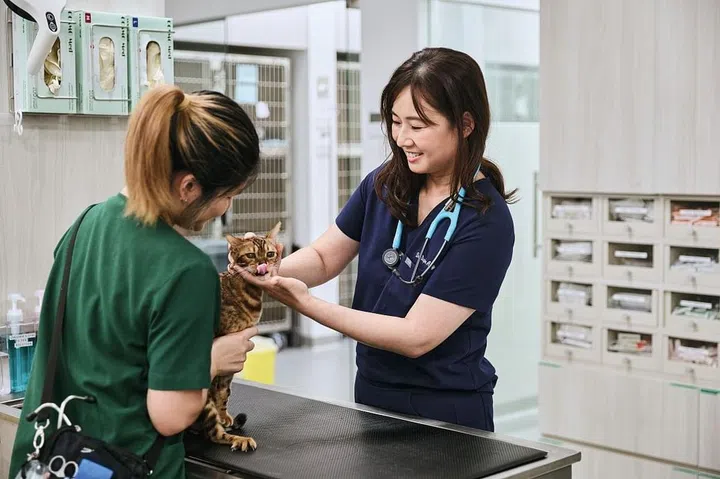
Post-graduate courses in veterinary medicine are not readily available in Singapore. Dr Ang was undeterred by the lack of opportunities, and instead, decided to expand her knowledge by attending conferences overseas.
“I had the opportunity to meet speakers and professionals in the industry. From these conferences, I reached out to specialists worldwide – there are actually less than a hundred [vet psychiatrists] in the world. The majority are in the US, with less than 10 in Australia. In the UK and Europe, there are less than fifty,” she says.
Dr Ang wrote to each one of them, asking if they could be her mentor. When she did not hear back from them, she decided to travel to their clinics and visit the specialists in person.
“In 2018, I did a fair amount of travelling and self-study, and it was mostly on my own dime. I started with short trips; two days at first, then a week. Eventually, I extended my stay to one or two months at a time. I travelled to Sydney and Melbourne, and six US states – California, Florida, Chicago, Virginia, Texas and Michigan – which was a bit intimidating, because I’m a petite Asian woman and an introvert. I didn’t know anyone, and it was my first time going to the US,” shares Dr Ang.
After 24 months, Dr Ang was accepted into the residency programme at the Florida Veterinary Behavior Service after shadowing various specialists and doing multiple externships. It was a hard-won position as she had to take a seven-hour exam prior to being accepted to practise in the US. “I had to study everything from Year One of Veterinary Science again, and also review farm animal and horse medicine,” she shares.
Unfortunately, Covid-19 struck. Fuelled by her determination and passion, she refused to put off her plans and decided to make her move to Florida in 2021, while her family stayed behind in Singapore. “I packed my bags once travel was allowed and I could physically meet other prospective mentors. It was a very scary time as hotels and airports were empty, and people kept to themselves due to Covid. I had anxiety attacks as things were uncertain,” she shares.
It was fortuitous that the vet community in the US was effusive in their support. Through them, Dr Ang found affordable lodging and encouragement. Staff at the clinics she worked at would sometimes open up their homes to her, which also helped ease some of the financial burden of funding her own post-graduate studies. Their kindness made being away from home more bearable.
Says Dr Ang: “I have to work doubly hard to pay the bills, and to also be able to return to Singapore to see my kids, who are seven, 11 and 16. In between, I have to complete self-study modules or clinical rotations in neurology, internal medicine, dermatology as well as ethology, psychology, neuropsychopharmacology, and learning and behaviour in animals.”
Today, Dr Ang shuttles between Singapore and the US by alternating a six-week stay in Florida seeing pets challenged with aggression and anxiety disorders, and then another six weeks as an emergency and critical care veterinarian at Beecroft Animal Specialist and Emergency Hospital.
“Animals share the same emotions as humans, but their perception of the world and their motivations are so different. I find that fascinating and humbling at the same time. It has made me a more empathetic and more holistic clinician.
“My patients are my greatest teachers. I see them with different eyes, and it’s allowed me to appreciate the human-animal bond more fully,” she says.
Name: Dr Daphne Ang
Highest Education: Bachelor of Pharmacy; Bachelor of Veterinary Science (Hons); Membership of the Australian and New Zealand College of Veterinary Scientists (Veterinary Behaviour); Clinical resident, American College of Veterinary Behaviorists
Job Title & Industry: Veterinarian
Years of Work Experience: 15
Why aren’t there other vet behaviourists in Singapore?
I believe that many people have not fully grasped the idea that animals can also suffer from emotional disorders, and that mental health in animals is just as important as physical health. This is no different from human medicine. When I was in veterinary school, behaviour wasn’t a prominent part of the curriculum.
Nowadays, there is a shift to integrate behavioural medicine into the curriculum, which is great. New veterinarians are more cognisant of this aspect; they actively seek out knowledge on how to address behavioural issues using evidence-based approaches. Today, we also have initiatives aimed at creating fear-free, stress-free environments for pets, making veterinary visits more pleasant for the owner and their animals. Because of this, the standard of veterinary care will continue to improve.
As with human medicine, the road to specialisation isn’t easy. The residency training programme is rigorous and takes a minimum of three years, some longer. There is a huge pay cut when one becomes a resident, and most programmes are done abroad. This can be very expensive, and it is all self-funded. Then, to become fully accredited, one will have to pass a two-day board exam.
What do you hope to achieve through your work?
The aim isn’t just to create awareness about emotional stress and disorders in animals I hope to drive progression in the way veterinary medicine is practised, and encourage a more compassionate society.
Together with like-minded and enthusiastic colleagues in the veterinary field, I’d like to work towards putting Singapore on the world map for quality veterinary care, and make the pursuit of animal psychiatry more accessible in the region.
What’s the biggest misconception about your job?
The biggest misconception would be that vets do not understand animal welfare and behaviour. Many behavioural issues, such as emotional disorders, are not training or obedience related. Animals are sentient beings, and they have their own personality and genetics. In addition, many underlying medical conditions can drive different behaviours. Hence, vets should be the first port of call.
What’s the biggest challenge you’ve faced on the job, as well as your proudest accomplishment?
I’m very grateful for the opportunity to not only treat my patients and transform their lives, but also to consistently impact the lives of their owners. Many of my clients are at their wits’ end, wondering, ‘What’s wrong with my pet? No one can help me.’ They contemplate giving up, like relinquishing their pets, or even euthanasia.
Do you have any advice for women who want to follow in your footsteps?
There are moments when I realise I’m pushing myself too hard while trying to juggle everything. Regardless of life’s challenges, if you’re passionate about something, you can overcome them. This underlines the importance of not always taking the easy or most conventional route. Age is only a barrier set by others, and opportunities aren’t always available all the time. When they arise, you must seize them!
PHOTOGRAPHY Lawrence Teo
ART DIRECTION Adeline Eng
HAIR & MAKEUP Benedict Choo, using Gucci Beauty
LOCATION Beecroft Animal Specialist And Emergency Hospital