%22%3E%3Cpath%20fill%3D%22%23000%22%20d%3D%22M79.702%2078.555c0%2033.03%2018.767%2046.361%2035.801%2046.361%2014.149%200%2029.738-7.033%2034.505-28.595l-1.445-.306c-3.61%2015.903-14.005%2027.371-33.06%2027.371-13.86%200-13.716-22.173-13.716-41.594V67.415h49.662c0-23.393-13.136-40.674-35.946-40.674-17.034%200-35.801%2018.94-35.801%2051.814m35.801-50.283c14.437%200%2014.005%2026.455%2013.861%2037.617h-27.573c-.004-18.353.865-37.617%2013.712-37.617%22%2F%3E%3C%2Fg%3E%3Cmask%20id%3D%22b%22%20width%3D%22603%22%20height%3D%22126%22%20x%3D%220%22%20y%3D%220%22%20maskUnits%3D%22userSpaceOnUse%22%20style%3D%22mask-type%3Aluminance%22%3E%3Cpath%20fill%3D%22%23fff%22%20d%3D%22M602.5%200H.5v125.074h602z%22%2F%3E%3C%2Fmask%3E%3Cg%20mask%3D%22url(%23b)%22%3E%3Cpath%20fill%3D%22%23000%22%20d%3D%22M86.81%20105.474h-1.445c0%2010.547-4.475%2011.463-5.483%2011.463-2.454%200-4.475-3.514-4.475-11.921V48.264c0-14.83-10.826-21.558-22.229-21.558-10.97%200-22.66%206.118-25.983%2017.276V8.478c-.515-4.763-4.26-8.48-8.893-8.48H.522v1.53H.5c2.886%200%204.763%201.988%204.763%205.045v110.211c0%203.057-1.877%205.045-4.763%205.045h.022v1.531h31.423v-1.531h.021c-2.885%200-4.762-1.988-4.762-5.045V50.252c0-10.395%208.949-18.806%2016.31-18.806%205.338%200%209.813%204.13%209.813%2014.83v58.74c0%2013.909%207.796%2019.874%2016.165%2019.874%209.958.005%2017.318-6.418%2017.318-19.416%22%2F%3E%3C%2Fg%3E%3Cmask%20id%3D%22c%22%20width%3D%22603%22%20height%3D%22126%22%20x%3D%220%22%20y%3D%220%22%20maskUnits%3D%22userSpaceOnUse%22%20style%3D%22mask-type%3Aluminance%22%3E%3Cpath%20fill%3D%22%23fff%22%20d%3D%22M602.5%200H.5v125.074h602z%22%2F%3E%3C%2Fmask%3E%3Cg%20mask%3D%22url(%23c)%22%3E%3Cpath%20fill%3D%22%23000%22%20d%3D%22M225.911%2042.197c0-10.552-11.259-16.818-22.954-16.818-10.682%200-21.513%205.045-25.119%2016.975v-7.352c-.48-4.574-3.977-8.148-8.364-8.398h-18.322v1.53h-.022c2.886%200%204.763%201.99%204.763%205.046v81.371h.004c.293%204.814%203.942%208.633%208.509%208.846v.004h18.173v-1.53h.022c-2.886%200-4.763-1.989-4.763-5.045V48.62c0-10.552%209.094-19.269%2016.602-19.269%204.763%200%208.805%203.672%209.386%2012.693%200%206.881%204.619%2011.773%2011.119%2011.773%206.631%200%2010.966-4.587%2010.966-11.62%22%2F%3E%3C%2Fg%3E%3Cmask%20id%3D%22d%22%20width%3D%22603%22%20height%3D%22126%22%20x%3D%220%22%20y%3D%220%22%20maskUnits%3D%22userSpaceOnUse%22%20style%3D%22mask-type%3Aluminance%22%3E%3Cpath%20fill%3D%22%23fff%22%20d%3D%22M602.5%200H.5v125.074h602z%22%2F%3E%3C%2Fmask%3E%3Cg%20mask%3D%22url(%23d)%22%3E%3Cpath%20fill%3D%22%23000%22%20d%3D%22M234.434%2028.315c2.925%200%205.583%202.312%206.779%205.863l29.782%2089.218h1.597l20.61-61.852%2020.609%2061.852h1.598l29.781-89.218c1.196-3.556%203.855-5.863%206.78-5.863h.183v-1.776h-11.538v1.776h.184c2.925%200%203.99%202.312%202.794%205.863l-18.082%2054.209-18.082-54.209c-1.196-3.556-.131-5.863%202.794-5.863h.183v-1.776h-33.343v1.776h.183c2.925%200%205.583%202.312%206.78%205.863l8.373%2025.058-9.705%2029.15-18.082-54.208c-1.196-3.556-.131-5.863%202.794-5.863h.184v-1.776h-33.344v1.776z%22%2F%3E%3C%2Fg%3E%3Cmask%20id%3D%22e%22%20width%3D%22603%22%20height%3D%22126%22%20x%3D%220%22%20y%3D%220%22%20maskUnits%3D%22userSpaceOnUse%22%20style%3D%22mask-type%3Aluminance%22%3E%3Cpath%20fill%3D%22%23fff%22%20d%3D%22M602.5%200H.5v125.074h602z%22%2F%3E%3C%2Fmask%3E%3Cg%20mask%3D%22url(%23e)%22%3E%3Cpath%20fill%3D%22%23000%22%20d%3D%22M377.826%20124.491c17.034%200%2038.211-15.699%2038.211-48.882%200-33.03-21.177-48.73-38.211-48.73-17.035%200-38.067%2015.857-38.067%2048.73.004%2033.026%2021.032%2048.882%2038.067%2048.882m0-96.085c13.86%200%2016.121%2028.24%2016.121%2047.356%200%2019.116-2.261%2047.198-16.121%2047.198-13.861%200-15.978-27.777-15.978-47.198%200-19.422%202.122-47.356%2015.978-47.356%22%2F%3E%3C%2Fg%3E%3Cmask%20id%3D%22f%22%20width%3D%22603%22%20height%3D%22126%22%20x%3D%220%22%20y%3D%220%22%20maskUnits%3D%22userSpaceOnUse%22%20style%3D%22mask-type%3Aluminance%22%3E%3Cpath%20fill%3D%22%23fff%22%20d%3D%22M602.5%200H.5v125.074h602z%22%2F%3E%3C%2Fmask%3E%3Cg%20mask%3D%22url(%23f)%22%3E%3Cpath%20fill%3D%22%23000%22%20d%3D%22M490.482%2042.197c0-10.552-11.258-16.818-22.953-16.818-10.683%200-21.513%205.045-25.119%2016.975v-7.352c-.48-4.574-3.977-8.148-8.365-8.398h-18.326v1.53h-.022c2.886%200%204.763%201.99%204.763%205.046v81.371h.004c.293%204.814%203.943%208.633%208.509%208.846v.004h18.173v-1.53h.022c-2.885%200-4.763-1.989-4.763-5.045V48.62c0-10.552%209.094-19.269%2016.602-19.269%204.763%200%208.806%203.672%209.386%2012.693%200%206.881%204.619%2011.773%2011.119%2011.773%206.64%200%2010.97-4.587%2010.97-11.62%22%2F%3E%3C%2Fg%3E%3Cmask%20id%3D%22g%22%20width%3D%22603%22%20height%3D%22126%22%20x%3D%220%22%20y%3D%220%22%20maskUnits%3D%22userSpaceOnUse%22%20style%3D%22mask-type%3Aluminance%22%3E%3Cpath%20fill%3D%22%23fff%22%20d%3D%22M602.5%200H.5v125.074h602z%22%2F%3E%3C%2Fmask%3E%3Cg%20mask%3D%22url(%23g)%22%3E%3Cpath%20fill%3D%22%23000%22%20d%3D%22M602.5%20103.974h-1.445c0%2010.553-4.474%2011.468-5.483%2011.468-2.453%200-4.474-3.519-4.474-11.925V6.585c0-3.056%201.877-5.045%204.762-5.045h-.166V.01h-17.715c-4.942%200-8.953%204.24-8.962%209.475h-.009v23.333c-6.063-3.977-9.84-5.503-16.48-5.503-17.034%200-35.801%2014.169-35.801%2047.046%200%2033.183%2013.101%2050.718%2035.801%2050.718%208.085%200%2013.302-2.294%2019.942-8.254%203.03%204.587%207.797%206.575%2012.704%206.575%209.966-.004%2017.326-6.427%2017.326-19.426m-30.75%2011.625c-4.763%204.435-10.84%205.822-13.38%205.822-11.482%200-19.558-16.933-19.558-46.907%200-29.97%2010.914-43.222%2019.885-43.222%203.3%200%206.264.153%2010.307%203.057v69.172c.004%205.04%201.017%209.017%202.746%2012.078%22%2F%3E%3C%2Fg%3E%3Cmask%20id%3D%22h%22%20width%3D%22603%22%20height%3D%22126%22%20x%3D%220%22%20y%3D%220%22%20maskUnits%3D%22userSpaceOnUse%22%20style%3D%22mask-type%3Aluminance%22%3E%3Cpath%20fill%3D%22%23fff%22%20d%3D%22M602.5%200H.5v125.074h602z%22%2F%3E%3C%2Fmask%3E%3Cg%20mask%3D%22url(%23h)%22%3E%3Cpath%20fill%3D%22%23000%22%20d%3D%22M516.984%20121.865c-2.885%200-4.763-1.988-4.763-5.045V9.466C512.2%204.241%20508.196.01%20503.259.01h-17.724v1.53h-.022c2.89%200%204.763%201.989%204.763%205.045v108.418c.515%204.564%204.029%208.129%208.434%208.337v.06h18.252v-1.53h.022z%22%2F%3E%3C%2Fg%3E%3C%2Fsvg%3E)
Beatrice Chia-Richmond on losing everything – and finding her way back through storytelling
From career highs to publicised failure – and back again – theatre veteran Beatrice Chia-Richmond reflects on resilience, friendship and the power of storytelling, as she returns with an exhibition that re-examines one of Singapore’s defining periods
By Chelsia Tan -
Share this article
It’s 4pm on a Monday afternoon when Beatrice Chia-Richmond sits down with Her World over a video call. Despite being jet-lagged – the theatre director and actor had touched down in Singapore from Florida just hours earlier – she looks sharp and refreshed.
“Please be gentle with me,” she jokes. But the 51-year-old, having weathered both career highs and lows, is hardly one who needs handling with kid gloves.
A veteran of Singapore’s arts and theatre scene, Beatrice Chia-Richmond has directed over 40 productions, and was the first female creative director of Singapore’s National Day Parade (NDP) in 2011, a role she reprised in 2016.
In 2015, she was also appointed creative director of the opening and closing ceremonies of the SEA Games, held in Singapore. Just two years later, in 2017, Beatrice found herself grappling with one of the most challenging chapters of her career. ‘
Her production company, Running Into The Sun (Rits) – which had brought popular acts such as Super Junior, Shinee and Girls’ Generation to Singapore – was summoned to court by Resorts World Sentosa (RWS) over a $200,000 debt linked to Ah Boys to Men: The Musical, staged there in 2014. RWS successfully sued the company for the outstanding amount last year, winning by default after Rits did not mount a defence.
“It was probably the darkest moment of my life, because it was very public,” recounts Beatrice. “I no longer had a company, and I had to let go of a wonderful team.”
She turned to her friend, renowned playwright and screenwriter Michael Chiang, for support. The writer behind Army Daze and Beauty World reached out to Beatrice and handed her the key to a small office he had rented in Tanjong Katong.
“He told me to bring my things and use the space for as long as I needed – no questions asked, no rent. It was a place for me to land and rebuild,” she says.
“I remember calling Michael many times during that period, and he truly held my hand. He reminded me that my body of work was strong, and that I would continue to have a career. That remains one of the greatest acts of friendship I’ve experienced.”
Those dark days are now behind her. Beatrice rebuilt her production company, and today she runs Presplay with a team that includes former members of Rits. “It was my first business, and I learnt a great deal about running a company,” she reflects.
“I was very hard on myself because most of my work before that had been well received, and this failure was both major and public.
“I learnt resilience. I learnt who truly cared for me. The team from that company is still the team I have today at Presplay – they stayed, waited and rebuilt with me. It taught me how important the people around you are, especially during the darkest storms.”
It was that support, she says, that gave her the strength to pick herself up. “After you stop crying, you get up, take a step forward, and rebuild – because you want to keep working with the people you care about.”
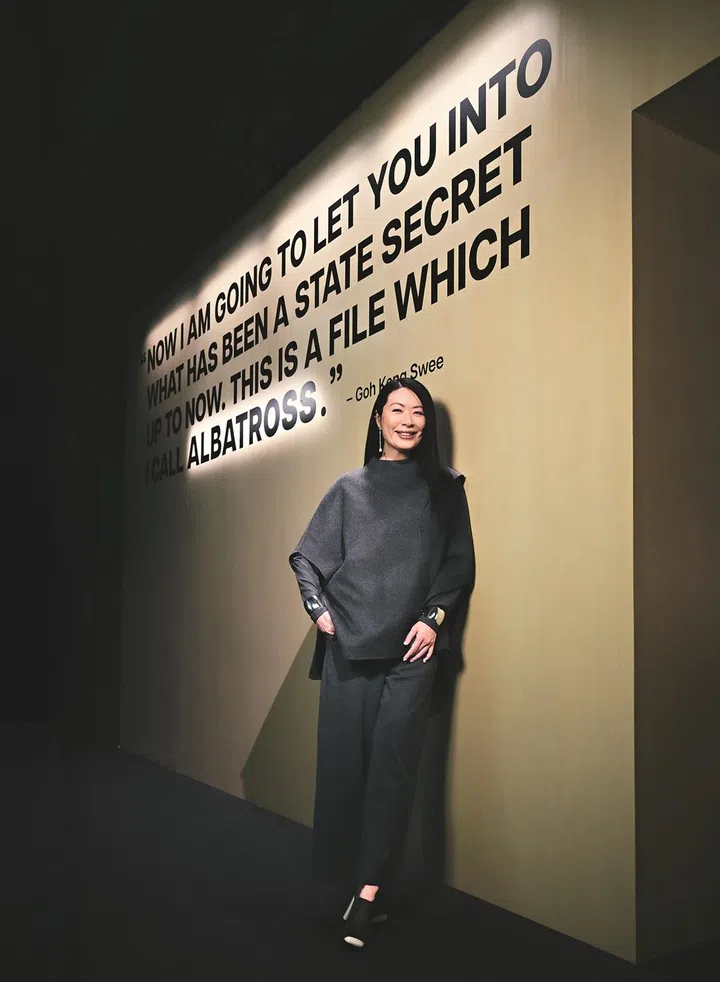
Top, pants, earrings and bangles, Cos. Shoes, Loro Piana
Collaborators in storytelling
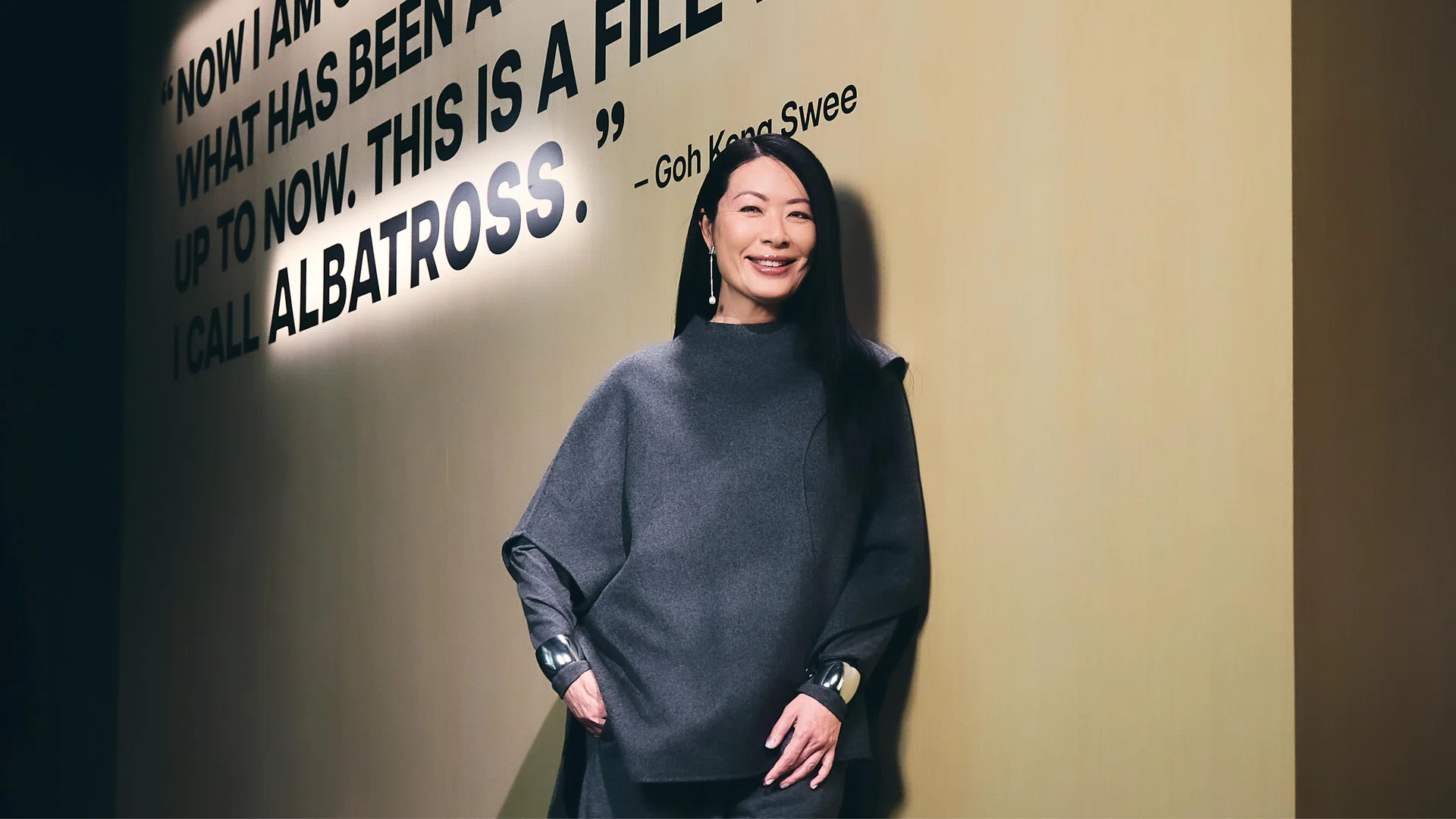
Together with Michael, Beatrice marked another milestone in her professional career. The duo recently worked on The Albatross File: Singapore’s Independence Declassified, currently on show at the National Library.
The significance of the project is clear. Based on the book The Albatross File: Inside Separation, the exhibition takes audiences through handwritten records and oral-history recollections of Singapore’s founding leaders – including former Prime Minister Lee Kuan Yew and former Deputy Prime Minister Goh Keng Swee – in the lead-up to the nation’s separation from Malaysia between 1963 and 1965.
Both Beatrice and Michael Chiang are no strangers to exhibitions that explore Singapore’s nation-building story. The Albatross File follows close on the heels of their SG60 Heart&Soul Experience showcase at Orchard Library in September 2025, which used AI to offer Singaporeans a personalised glimpse into the future.
Before that, the duo also collaborated on 2019’s The Bicentennial Experience – an immersive, multimedia journey through 700 years of Singapore history – staged at Fort Canning.
“I love history – especially the history of Singapore,” says Beatrice, on what drew her to the project. “I had previously worked with Gene Tan, the executive creative director of The Albatross File, on The Bicentennial Experience, and there was already a strong working relationship.”
Working on a project of such historical significance also brought her back together with Michael, whom she describes simply as “an old friend”.
“We didn’t start off as friends – I knew who he was because I grew up reading Army Daze and watching his plays,” she says. “Beauty World, in particular, was life-changing for me. Seeing a Singaporean musical on stage made me realise this was possible for us here.”
Michael, in turn, had also been paying attention to Beatrice’s work on the theatre scene. Her 2001 directorial debut, Shopping and F***ing – based on a play by British playwright Mark Ravenhill – went on to win the Life! Theatre Award for Best Director. In 2003, Beatrice earned the Life! Theatre Award for Best Production for her staging of Bent, Martin Sherman’s seminal play depicting the persecution of gay men in Nazi Germany.
“I didn’t realise then that he had also been aware of my work and was quietly supporting it,” she recalls. “Years later, I found out that when I was casting for Cabaret in 2006 and approached Kris Phillips (Taiwanese-American singer Fei Xiang), Michael had been the one who spoke highly of me. That kind of support meant a great deal.”
Over time, they began working together on stage productions such as Army Daze (2012) and Private Parts (2018), and somewhere along the way, a friendship formed. By then, she says, collaboration came easily – they shared similar sensibilities, trusted each other, and could work through any creative challenge that came their way. Michael Chiang remains one of her favourite collaborators.
“I definitely learnt from him. I learnt a great deal – creatively and personally. The biggest lesson, funnily enough, was about friendship. How he conducted himself with me, the things he did for me – that taught me how to be a better person and a better friend,” says Beatrice.
Carrying it forward
Teamwork is something Beatrice clearly prizes, having emphasised the importance of being collaborative, respectful and patient several times during the interview.
“I started very small – black box productions with tiny budgets. Those were the foundations of my career,” she says. “I learnt to work with limited resources, with people more experienced than me and, over time, with much larger teams.”
That grounding would later shape some of the most defining moments of her career. Moving from acting to directing marked a major turning point for Beatrice, who starred in the television series Triple Nine in 1998 before stepping behind the scenes. Helming the NDP in 2011 also taught her what it meant to “serve a national narrative”.
During that period, she also had the support of former National Day Parade creative directors Ivan Heng and Goh Boon Teck, both Cultural Medallion recipients.
“They walked me through what to expect and encouraged me to be fearless – to be bold, brave and unafraid of voicing how I felt. They checked in constantly to see how I was doing,” she shares.
It is this same generosity of spirit that Beatrice now hopes to pass on. Drawing from her own experiences, she believes mentorship is less about formal structures and more about presence: showing up, championing younger voices, supporting their work publicly and privately, and paying forward the encouragement she once received.
“Resilience is essential. Be clear about your voice. And when you can, bring other women to the table,” she adds.
Over the past four years, Beatrice has also taken on another role – that of a “golf mum” to her only son, Sol. In 2022, she and her husband, sports commentator and former radio DJ Mark Richmond, uprooted to the US to support their son’s passion for the sport. Now 18, Sol trains as a student-athlete at MMG Performance, a premier junior golf academy in Florida, with aspirations of one day competing on the PGA Tour.
“It’s been one of the most exhausting chapters of my life. While living in Florida and taking on a more domestic, golf-mum role, I continued working Singapore and Asian hours.
“I was essentially living in two time zones – mother during the day, creative director through the night. It was exhausting, but it allowed me to be present for my son during a crucial period of his teenage years. Those are moments I’ll never get back,” she shares.
Beatrice says she always knew she wanted to be a mother, inspired in part by the example set by her own. To succeed as a parent, she believes, is to raise someone who will one day no longer need you, and learning to let go has been the hardest part.
“You can’t study or train for him. All you can do is be present, to let him know his family is behind him, no matter what. That sounds simple, but it isn’t. You’re standing by, trusting him to find his own way.”
Beyond the demands of time, the move also required a mental shift. Adjusting from life in a compact city-state to navigating the sheer scale of the US took some getting used to.
“Singapore is small and efficient – everything is close. In America, distance is a reality. Florida alone is vast. You realise how much we take for granted in Singapore, where solutions are often within minutes,” Beatrice observes.
Despite her demanding schedule, Beatrice cherishes the time it affords for mother-son bonding on the road, where tournament days often begin at 4am for early tee times, followed by long drives across unfamiliar parts of the US.
“We travel together for tournaments. Those road trips – conversations in the car, on the golf course – are my favourite moments. We talk, share stories and spend time together. That’s what I treasure most,” she says.

Top and pants, In Good Company
Homeward bound
Beatrice and her family are planning a move back to Singapore in mid-2026, when Sol begins his National Service. The return will also bring Beatrice closer to the local arts scene, which she says has always been part of the nation’s DNA.
“Over the past few decades, we’ve simply paid more attention to the arts,” she reflects. “Today, Singapore is vibrant, expressive and creatively alive.”
The arts have always been her calling, reveals Beatrice, who grew up performing ballet, piano and drama. By the time she was 14, the Raffles Girls’ School alumnus knew this was the path she wanted to pursue. “Over time, I realised it was storytelling I loved most, whether through acting, directing or creative leadership,” she says.
Beatrice still relishes the chance to act, sharing that one of her favourite roles to date was in the English drama series Titoudao (2020-2023), based on the true story of a Chinese opera star.
“It’s an ensemble piece where I played multiple roles, sang in dialect, and truly fell in love with the craft.” But her relationship with ambition has shifted over the years, shaped by age and experience.
“When I was younger, ambition was tied to scale,” she says. “Now, I look for meaning and resonance. The size matters less than whether the story speaks to me.”
Today, what she values most is time, time with her son, her family and her friends. Work, she believes, must now carry meaning and purpose.
“Otherwise, there are better ways to spend that time,” adds Beatrice. What is she looking forward to most when she returns to Singapore?
“Being in the same time zone,” she says without hesitation. “Being in the same room as people. Rolling up my sleeves, working together, sharing meals. Those are the things I’ve missed most.”
THE ALBATROSS FILE: SINGAPORE’S INDEPENDENCE DECLASSIFIED
Currently on display at the National Library Singapore, the permanent exhibition examines Singapore’s path from its merger with Malaysia to separation in 1965.
Using declassified materials, handwritten correspondence from leaders including Goh Keng Swee and Lee Kuan Yew, alongside first-person oral accounts, it unpacks the political tensions, key decisions and lesser-known moments that shaped the nation’s independence.
Tickets are available at thealbatrossfile.nlb.gov.sg (admission is free)
PHOTOGRAPHY Lawrence Teo
ART DIRECTION & STYLING Adeline Eng, assisted by Mandy Tan
HAIR Leong/Hair By Leong
MAKEUP Ginger Lynette, using Shiseido
COORDINATION Chelsia Tan