%22%3E%3Cpath%20fill%3D%22%23000%22%20d%3D%22M79.702%2078.555c0%2033.03%2018.767%2046.361%2035.801%2046.361%2014.149%200%2029.738-7.033%2034.505-28.595l-1.445-.306c-3.61%2015.903-14.005%2027.371-33.06%2027.371-13.86%200-13.716-22.173-13.716-41.594V67.415h49.662c0-23.393-13.136-40.674-35.946-40.674-17.034%200-35.801%2018.94-35.801%2051.814m35.801-50.283c14.437%200%2014.005%2026.455%2013.861%2037.617h-27.573c-.004-18.353.865-37.617%2013.712-37.617%22%2F%3E%3C%2Fg%3E%3Cmask%20id%3D%22b%22%20width%3D%22603%22%20height%3D%22126%22%20x%3D%220%22%20y%3D%220%22%20maskUnits%3D%22userSpaceOnUse%22%20style%3D%22mask-type%3Aluminance%22%3E%3Cpath%20fill%3D%22%23fff%22%20d%3D%22M602.5%200H.5v125.074h602z%22%2F%3E%3C%2Fmask%3E%3Cg%20mask%3D%22url(%23b)%22%3E%3Cpath%20fill%3D%22%23000%22%20d%3D%22M86.81%20105.474h-1.445c0%2010.547-4.475%2011.463-5.483%2011.463-2.454%200-4.475-3.514-4.475-11.921V48.264c0-14.83-10.826-21.558-22.229-21.558-10.97%200-22.66%206.118-25.983%2017.276V8.478c-.515-4.763-4.26-8.48-8.893-8.48H.522v1.53H.5c2.886%200%204.763%201.988%204.763%205.045v110.211c0%203.057-1.877%205.045-4.763%205.045h.022v1.531h31.423v-1.531h.021c-2.885%200-4.762-1.988-4.762-5.045V50.252c0-10.395%208.949-18.806%2016.31-18.806%205.338%200%209.813%204.13%209.813%2014.83v58.74c0%2013.909%207.796%2019.874%2016.165%2019.874%209.958.005%2017.318-6.418%2017.318-19.416%22%2F%3E%3C%2Fg%3E%3Cmask%20id%3D%22c%22%20width%3D%22603%22%20height%3D%22126%22%20x%3D%220%22%20y%3D%220%22%20maskUnits%3D%22userSpaceOnUse%22%20style%3D%22mask-type%3Aluminance%22%3E%3Cpath%20fill%3D%22%23fff%22%20d%3D%22M602.5%200H.5v125.074h602z%22%2F%3E%3C%2Fmask%3E%3Cg%20mask%3D%22url(%23c)%22%3E%3Cpath%20fill%3D%22%23000%22%20d%3D%22M225.911%2042.197c0-10.552-11.259-16.818-22.954-16.818-10.682%200-21.513%205.045-25.119%2016.975v-7.352c-.48-4.574-3.977-8.148-8.364-8.398h-18.322v1.53h-.022c2.886%200%204.763%201.99%204.763%205.046v81.371h.004c.293%204.814%203.942%208.633%208.509%208.846v.004h18.173v-1.53h.022c-2.886%200-4.763-1.989-4.763-5.045V48.62c0-10.552%209.094-19.269%2016.602-19.269%204.763%200%208.805%203.672%209.386%2012.693%200%206.881%204.619%2011.773%2011.119%2011.773%206.631%200%2010.966-4.587%2010.966-11.62%22%2F%3E%3C%2Fg%3E%3Cmask%20id%3D%22d%22%20width%3D%22603%22%20height%3D%22126%22%20x%3D%220%22%20y%3D%220%22%20maskUnits%3D%22userSpaceOnUse%22%20style%3D%22mask-type%3Aluminance%22%3E%3Cpath%20fill%3D%22%23fff%22%20d%3D%22M602.5%200H.5v125.074h602z%22%2F%3E%3C%2Fmask%3E%3Cg%20mask%3D%22url(%23d)%22%3E%3Cpath%20fill%3D%22%23000%22%20d%3D%22M234.434%2028.315c2.925%200%205.583%202.312%206.779%205.863l29.782%2089.218h1.597l20.61-61.852%2020.609%2061.852h1.598l29.781-89.218c1.196-3.556%203.855-5.863%206.78-5.863h.183v-1.776h-11.538v1.776h.184c2.925%200%203.99%202.312%202.794%205.863l-18.082%2054.209-18.082-54.209c-1.196-3.556-.131-5.863%202.794-5.863h.183v-1.776h-33.343v1.776h.183c2.925%200%205.583%202.312%206.78%205.863l8.373%2025.058-9.705%2029.15-18.082-54.208c-1.196-3.556-.131-5.863%202.794-5.863h.184v-1.776h-33.344v1.776z%22%2F%3E%3C%2Fg%3E%3Cmask%20id%3D%22e%22%20width%3D%22603%22%20height%3D%22126%22%20x%3D%220%22%20y%3D%220%22%20maskUnits%3D%22userSpaceOnUse%22%20style%3D%22mask-type%3Aluminance%22%3E%3Cpath%20fill%3D%22%23fff%22%20d%3D%22M602.5%200H.5v125.074h602z%22%2F%3E%3C%2Fmask%3E%3Cg%20mask%3D%22url(%23e)%22%3E%3Cpath%20fill%3D%22%23000%22%20d%3D%22M377.826%20124.491c17.034%200%2038.211-15.699%2038.211-48.882%200-33.03-21.177-48.73-38.211-48.73-17.035%200-38.067%2015.857-38.067%2048.73.004%2033.026%2021.032%2048.882%2038.067%2048.882m0-96.085c13.86%200%2016.121%2028.24%2016.121%2047.356%200%2019.116-2.261%2047.198-16.121%2047.198-13.861%200-15.978-27.777-15.978-47.198%200-19.422%202.122-47.356%2015.978-47.356%22%2F%3E%3C%2Fg%3E%3Cmask%20id%3D%22f%22%20width%3D%22603%22%20height%3D%22126%22%20x%3D%220%22%20y%3D%220%22%20maskUnits%3D%22userSpaceOnUse%22%20style%3D%22mask-type%3Aluminance%22%3E%3Cpath%20fill%3D%22%23fff%22%20d%3D%22M602.5%200H.5v125.074h602z%22%2F%3E%3C%2Fmask%3E%3Cg%20mask%3D%22url(%23f)%22%3E%3Cpath%20fill%3D%22%23000%22%20d%3D%22M490.482%2042.197c0-10.552-11.258-16.818-22.953-16.818-10.683%200-21.513%205.045-25.119%2016.975v-7.352c-.48-4.574-3.977-8.148-8.365-8.398h-18.326v1.53h-.022c2.886%200%204.763%201.99%204.763%205.046v81.371h.004c.293%204.814%203.943%208.633%208.509%208.846v.004h18.173v-1.53h.022c-2.885%200-4.763-1.989-4.763-5.045V48.62c0-10.552%209.094-19.269%2016.602-19.269%204.763%200%208.806%203.672%209.386%2012.693%200%206.881%204.619%2011.773%2011.119%2011.773%206.64%200%2010.97-4.587%2010.97-11.62%22%2F%3E%3C%2Fg%3E%3Cmask%20id%3D%22g%22%20width%3D%22603%22%20height%3D%22126%22%20x%3D%220%22%20y%3D%220%22%20maskUnits%3D%22userSpaceOnUse%22%20style%3D%22mask-type%3Aluminance%22%3E%3Cpath%20fill%3D%22%23fff%22%20d%3D%22M602.5%200H.5v125.074h602z%22%2F%3E%3C%2Fmask%3E%3Cg%20mask%3D%22url(%23g)%22%3E%3Cpath%20fill%3D%22%23000%22%20d%3D%22M602.5%20103.974h-1.445c0%2010.553-4.474%2011.468-5.483%2011.468-2.453%200-4.474-3.519-4.474-11.925V6.585c0-3.056%201.877-5.045%204.762-5.045h-.166V.01h-17.715c-4.942%200-8.953%204.24-8.962%209.475h-.009v23.333c-6.063-3.977-9.84-5.503-16.48-5.503-17.034%200-35.801%2014.169-35.801%2047.046%200%2033.183%2013.101%2050.718%2035.801%2050.718%208.085%200%2013.302-2.294%2019.942-8.254%203.03%204.587%207.797%206.575%2012.704%206.575%209.966-.004%2017.326-6.427%2017.326-19.426m-30.75%2011.625c-4.763%204.435-10.84%205.822-13.38%205.822-11.482%200-19.558-16.933-19.558-46.907%200-29.97%2010.914-43.222%2019.885-43.222%203.3%200%206.264.153%2010.307%203.057v69.172c.004%205.04%201.017%209.017%202.746%2012.078%22%2F%3E%3C%2Fg%3E%3Cmask%20id%3D%22h%22%20width%3D%22603%22%20height%3D%22126%22%20x%3D%220%22%20y%3D%220%22%20maskUnits%3D%22userSpaceOnUse%22%20style%3D%22mask-type%3Aluminance%22%3E%3Cpath%20fill%3D%22%23fff%22%20d%3D%22M602.5%200H.5v125.074h602z%22%2F%3E%3C%2Fmask%3E%3Cg%20mask%3D%22url(%23h)%22%3E%3Cpath%20fill%3D%22%23000%22%20d%3D%22M516.984%20121.865c-2.885%200-4.763-1.988-4.763-5.045V9.466C512.2%204.241%20508.196.01%20503.259.01h-17.724v1.53h-.022c2.89%200%204.763%201.989%204.763%205.045v108.418c.515%204.564%204.029%208.129%208.434%208.337v.06h18.252v-1.53h.022z%22%2F%3E%3C%2Fg%3E%3C%2Fsvg%3E)
The Butterfly Effect: The all-female fitness festival that’s teaching women to trust their bodies again
The global all-female fitness movement arrives in Singapore with a message every woman needs: your body is not something to fix, it’s something to trust
By Shazrina Shamsudin -
Share this article
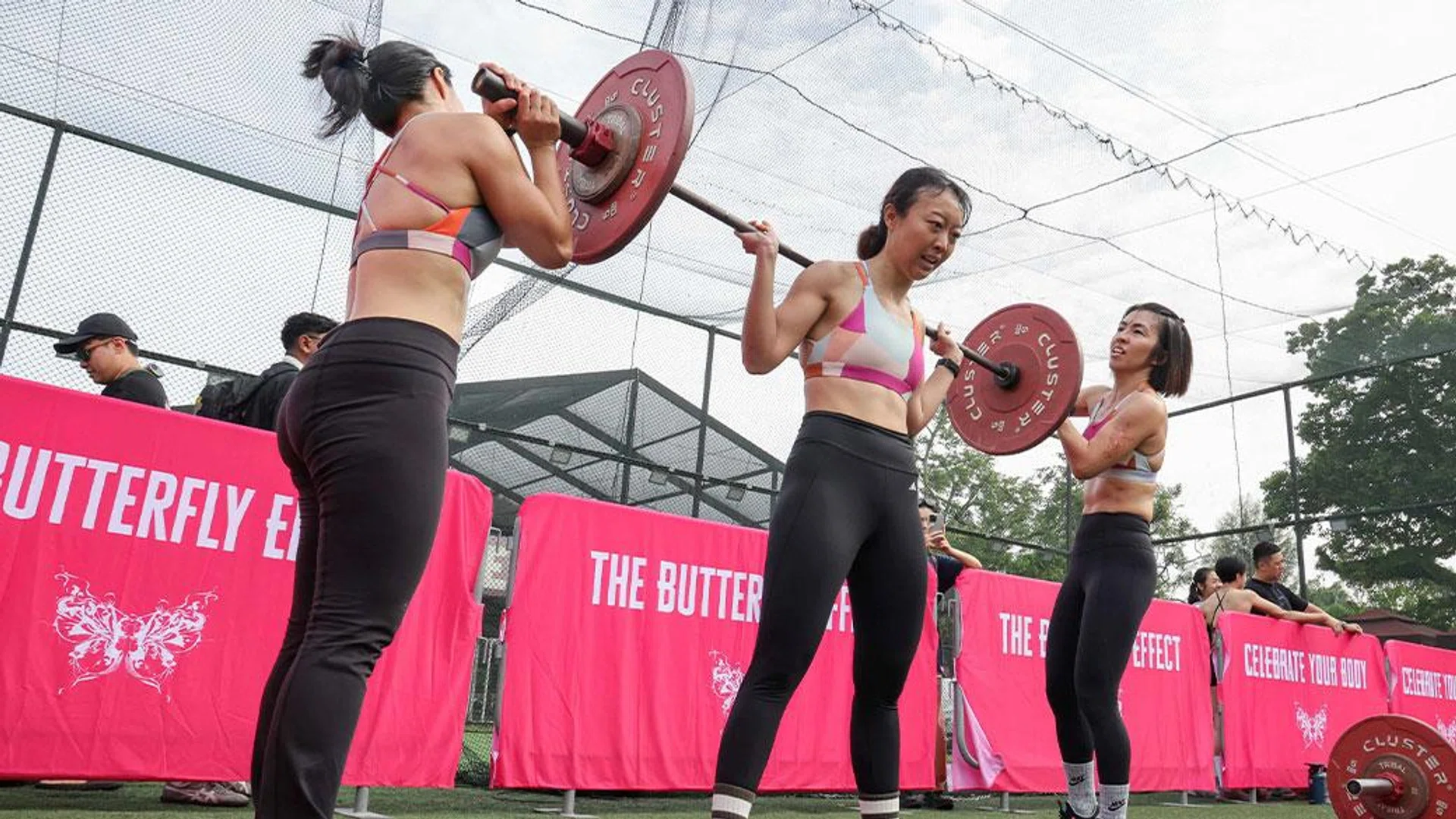
At its core, The Butterfly Effect is not merely a sporting event. It is a movement that’s deliberately designed to dismantle long-held assumptions about women, fitness and the bodies we are expected to inhabit.
“The Butterfly Effect is for all women,” explained Karly Kentwell, Operations Director and co-founder of the movement. “It’s a fitness event, but rather than just focusing on performance, it’s more about the experience and supporting women.”
The competition runs annually from March through November, with events staged across Australia, New Zealand, the United Kingdom, Dubai and now Singapore.
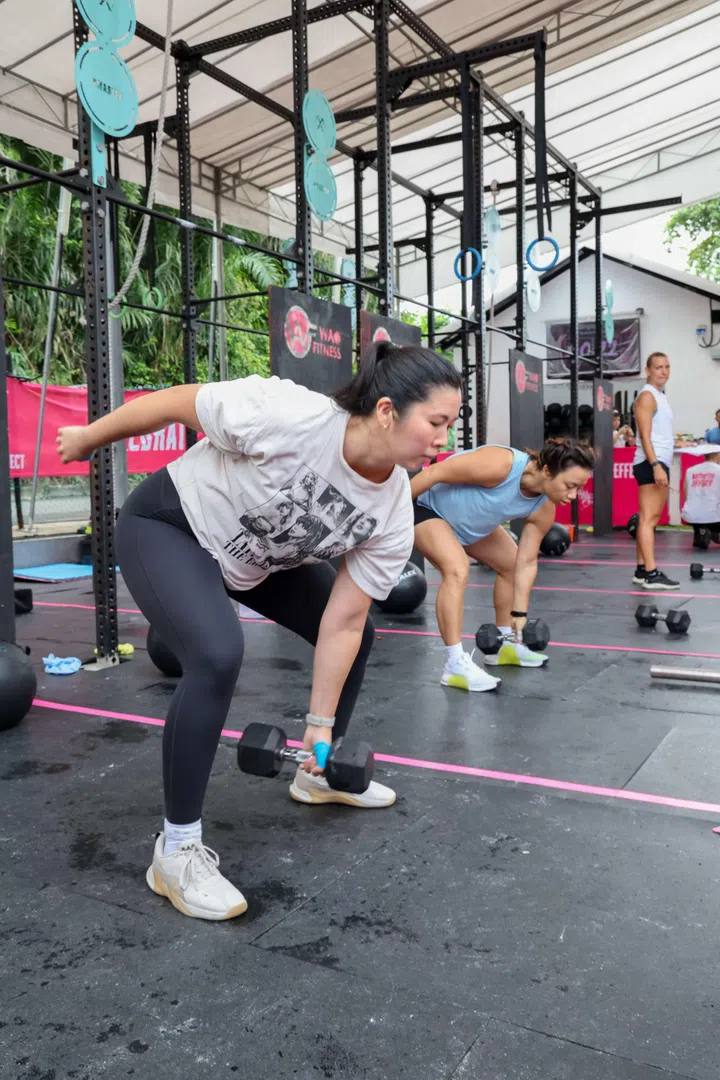
With the rise in interest in competitions like HYROX over the years, The Butterfly Effect, much like othe rfitness competitions, take on a similar format. Here, teams of three compete in four workouts over a single day. But what’s different is that, here, winning is not the central narrative. Community is.
What began in Gold Coast, Australia, nearly a decade ago as a local initiative has steadily grown into a global network of women bound not by comparison, but by shared experience. The movement’s expansion into Singapore marks not only its first foray into Asia, but also a recognition of the region’s rapidly growing appetite for more inclusive and sustainable approaches to health and fitness.
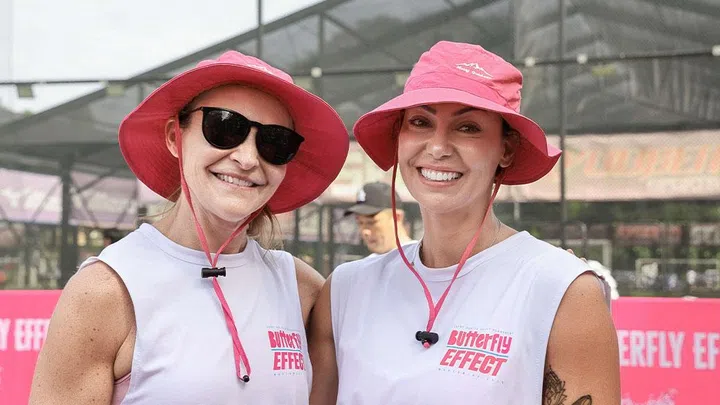
Karly Kentwell, Operations Director of The Butterfly Effect (left), Rowena Calderwood, Founder of The Butterfly Effect (right)
During The Butterfly Effect’s event late last year, we got to chat with Rowena Calderwood, Founder of The Butterfly Effect and Karly Kentwell, Operations Director of The Butterfly Effect, to learn more about how they started the initiative, what motivates them and why this competition is rewriting the narratives about women and their bodies.
It’s all about community in women’s fitness
Kentwell’s belief in The Butterfly Effect is rooted in lived experience.
“Fitness has always been part of my life — physically, emotionally and socially,” she said. “When The Butterfly Effect started at a local gym that I trained at, I saw how it brought people together. The energy and the support for women made us realise that there was something bigger to this than just these four walls.”
That early sense of connection continues to shape every event. Rather than fostering rivalry, the competition encourages camaraderie. Competitors cheer one another on, often forming bonds that extend well beyond the event itself.

For many participants, this environment provides something rare within traditional fitness spaces: psychological safety.
“If a woman feels intimidated by fitness,” Kentwell said, “when she comes to The Butterfly Effect, she’ll see women of all shapes and sizes, ages and abilities. There’s absolutely no judgement. Everyone is so supportive — they’ll cheer for their competitors rather than hope they fail.”
This culture of encouragement, rather than competition, is precisely what continues to draw women from diverse backgrounds into the movement.
Rewriting the narrative around women’s bodies
Central to The Butterfly Effect’s mission is the deliberate rejection of narrow beauty standards that continue to dominate much of modern fitness culture.
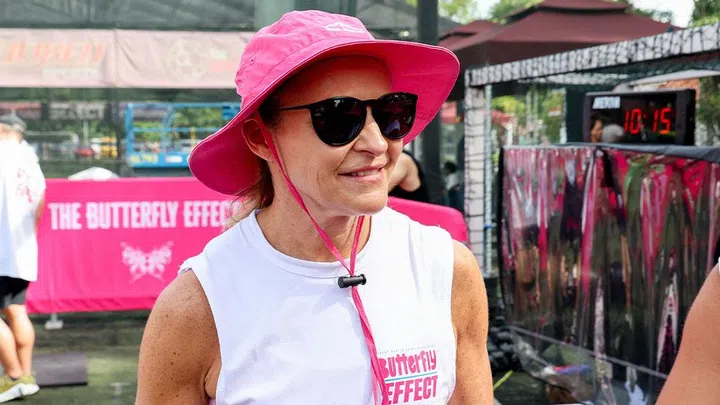
“I think it’s generational,” Kentwell observed. “Women have always been told to be feminine, to be small, to look a certain way, especially on social media. We’re trying to flip the script now: being strong is a good thing. You can never be too masculine. And it’s not about muscles, it’s about what your body can do.”
That philosophy resonates deeply in a society increasingly shaped by curated digital ideals. In Singapore, where fitness culture is thriving but often entwined with aesthetic expectations, The Butterfly Effect offers an alternative model — one that prioritises function over form and wellbeing over appearance.
Creating space for confidence
For founder Rowena Calderwood, the movement’s emphasis on internal growth is intentional.
“Whether they’re on their first-ever fitness journey or they’ve been exercising for many years, we want them to connect and, for one day, take a mental break from everything else. It’s about celebrating each other and celebrating body positivity.”
But for Calderwood, body positivity is not about comfort alone. It is about possibility. “It’s about having the opportunity to move and grow and doing that alongside like-minded women,” she said.
The competition, she added, offers something even more enduring than physical accomplishment: memory.
We encourage participants to stop, be mindful, celebrate their ‘why’ and the journey that brought them here. And at the end, hopefully walk away with a moment that says, ‘I did this.’ Once you create a forged memory for someone, especially when it’s something difficult, it can never be taken away from them.”
The myths around women and strength
One of the most persistent misconceptions surrounding women’s fitness is the belief that training seriously will result in an undesirable, overly muscular physique. It’s common, and undoubtedly, that fear continues to discourage many women from fully engaging with strength-based movement.
“It’s one of the biggest myths we see,” Calderwood said. “To change your body dramatically and put on significant muscle, you actually have to be extremely disciplined and consistent for a long time. Most people don’t realise how difficult it is to achieve that kind of physique.”

Rather than chasing extreme transformations, The Butterfly Effect focuses on “chasing reality”.
“It’s about reinforcing what is actually real for women,” she added. “Looking around and seeing that any shape or size can be fit and well.”
That shift, away from visual ideals and toward functional wellbeing, lies at the core of the movement’s philosophy.
What confidence looks like when it isn’t about appearance
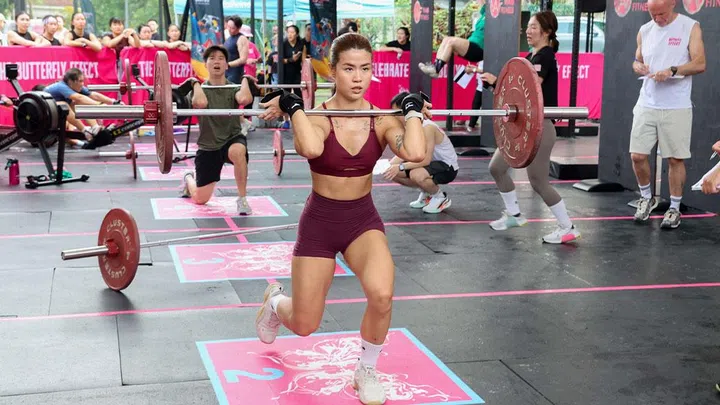
When asked what confidence looks like when it is no longer tied to aesthetics, Calderwood’s response was layered with perspective.
“Confidence has many forms and many seasons,” she said. “Before I became a mother, confidence was about wearing certain clothes and feeling like myself. Since becoming a mother, that’s changed. Now, confidence is walking into a room and owning my truth.”
For Calderwood, that truth does not demand perfection.
“It’s being able to say, ‘Today I’m tired. I’ve done fifty thousand things today.’ And still choosing to show up with confidence and the understanding that that is enough.”
Rebuilding a kinder relationship with the body
Developing a healthier relationship with one’s body, Calderwood believes, begins with awareness.
“As women, we tend to want to look a certain way from a young age in order to fit in,” she said. “For me, it’s about mindfulness. When I’m not feeling confident, I remind myself: I recognise that I’m feeling this way, and that’s okay. Nothing is permanent.”
The approach is neither dismissive nor indulgent — it is simply honest.
“If I’m feeling this way, can I change it? Do I need to change it? And if I can’t, then I roll with it.”
This philosophy is echoed throughout The Butterfly Effect’s programming, which consistently encourages women to listen to their bodies rather than fight against them.
Why Singapore was the natural next step
Singapore’s selection as the movement’s first Asian destination was deliberate.
“We see how strong the fitness community is here,” Kentwell said. “It’s a great stepping stone into Asia. What’s special is that even with cultural differences, women everywhere connect with this message. Everyone is on the same journey.”
That journey, toward acceptance, resilience and collective empowerment, aligns closely with the challenges many Singaporean women face today. In a society that is both hyper-connected and highly visual, pressures around appearance, productivity and self-optimisation can be relentless.
What does it really mean to feel well? Is it lifting heavier, running faster or finally learning to listen to your body? Body Talk is Her World Singapore’s wellness column exploring how women here move, train and care for themselves beyond aesthetics. From strength and stamina to rest, recovery and emotional resilience, each story looks at the physical, mental and emotional sides of wellness and how they show up in real life.