%22%3E%3Cpath%20fill%3D%22%23000%22%20d%3D%22M79.702%2078.555c0%2033.03%2018.767%2046.361%2035.801%2046.361%2014.149%200%2029.738-7.033%2034.505-28.595l-1.445-.306c-3.61%2015.903-14.005%2027.371-33.06%2027.371-13.86%200-13.716-22.173-13.716-41.594V67.415h49.662c0-23.393-13.136-40.674-35.946-40.674-17.034%200-35.801%2018.94-35.801%2051.814m35.801-50.283c14.437%200%2014.005%2026.455%2013.861%2037.617h-27.573c-.004-18.353.865-37.617%2013.712-37.617%22%2F%3E%3C%2Fg%3E%3Cmask%20id%3D%22b%22%20width%3D%22603%22%20height%3D%22126%22%20x%3D%220%22%20y%3D%220%22%20maskUnits%3D%22userSpaceOnUse%22%20style%3D%22mask-type%3Aluminance%22%3E%3Cpath%20fill%3D%22%23fff%22%20d%3D%22M602.5%200H.5v125.074h602z%22%2F%3E%3C%2Fmask%3E%3Cg%20mask%3D%22url(%23b)%22%3E%3Cpath%20fill%3D%22%23000%22%20d%3D%22M86.81%20105.474h-1.445c0%2010.547-4.475%2011.463-5.483%2011.463-2.454%200-4.475-3.514-4.475-11.921V48.264c0-14.83-10.826-21.558-22.229-21.558-10.97%200-22.66%206.118-25.983%2017.276V8.478c-.515-4.763-4.26-8.48-8.893-8.48H.522v1.53H.5c2.886%200%204.763%201.988%204.763%205.045v110.211c0%203.057-1.877%205.045-4.763%205.045h.022v1.531h31.423v-1.531h.021c-2.885%200-4.762-1.988-4.762-5.045V50.252c0-10.395%208.949-18.806%2016.31-18.806%205.338%200%209.813%204.13%209.813%2014.83v58.74c0%2013.909%207.796%2019.874%2016.165%2019.874%209.958.005%2017.318-6.418%2017.318-19.416%22%2F%3E%3C%2Fg%3E%3Cmask%20id%3D%22c%22%20width%3D%22603%22%20height%3D%22126%22%20x%3D%220%22%20y%3D%220%22%20maskUnits%3D%22userSpaceOnUse%22%20style%3D%22mask-type%3Aluminance%22%3E%3Cpath%20fill%3D%22%23fff%22%20d%3D%22M602.5%200H.5v125.074h602z%22%2F%3E%3C%2Fmask%3E%3Cg%20mask%3D%22url(%23c)%22%3E%3Cpath%20fill%3D%22%23000%22%20d%3D%22M225.911%2042.197c0-10.552-11.259-16.818-22.954-16.818-10.682%200-21.513%205.045-25.119%2016.975v-7.352c-.48-4.574-3.977-8.148-8.364-8.398h-18.322v1.53h-.022c2.886%200%204.763%201.99%204.763%205.046v81.371h.004c.293%204.814%203.942%208.633%208.509%208.846v.004h18.173v-1.53h.022c-2.886%200-4.763-1.989-4.763-5.045V48.62c0-10.552%209.094-19.269%2016.602-19.269%204.763%200%208.805%203.672%209.386%2012.693%200%206.881%204.619%2011.773%2011.119%2011.773%206.631%200%2010.966-4.587%2010.966-11.62%22%2F%3E%3C%2Fg%3E%3Cmask%20id%3D%22d%22%20width%3D%22603%22%20height%3D%22126%22%20x%3D%220%22%20y%3D%220%22%20maskUnits%3D%22userSpaceOnUse%22%20style%3D%22mask-type%3Aluminance%22%3E%3Cpath%20fill%3D%22%23fff%22%20d%3D%22M602.5%200H.5v125.074h602z%22%2F%3E%3C%2Fmask%3E%3Cg%20mask%3D%22url(%23d)%22%3E%3Cpath%20fill%3D%22%23000%22%20d%3D%22M234.434%2028.315c2.925%200%205.583%202.312%206.779%205.863l29.782%2089.218h1.597l20.61-61.852%2020.609%2061.852h1.598l29.781-89.218c1.196-3.556%203.855-5.863%206.78-5.863h.183v-1.776h-11.538v1.776h.184c2.925%200%203.99%202.312%202.794%205.863l-18.082%2054.209-18.082-54.209c-1.196-3.556-.131-5.863%202.794-5.863h.183v-1.776h-33.343v1.776h.183c2.925%200%205.583%202.312%206.78%205.863l8.373%2025.058-9.705%2029.15-18.082-54.208c-1.196-3.556-.131-5.863%202.794-5.863h.184v-1.776h-33.344v1.776z%22%2F%3E%3C%2Fg%3E%3Cmask%20id%3D%22e%22%20width%3D%22603%22%20height%3D%22126%22%20x%3D%220%22%20y%3D%220%22%20maskUnits%3D%22userSpaceOnUse%22%20style%3D%22mask-type%3Aluminance%22%3E%3Cpath%20fill%3D%22%23fff%22%20d%3D%22M602.5%200H.5v125.074h602z%22%2F%3E%3C%2Fmask%3E%3Cg%20mask%3D%22url(%23e)%22%3E%3Cpath%20fill%3D%22%23000%22%20d%3D%22M377.826%20124.491c17.034%200%2038.211-15.699%2038.211-48.882%200-33.03-21.177-48.73-38.211-48.73-17.035%200-38.067%2015.857-38.067%2048.73.004%2033.026%2021.032%2048.882%2038.067%2048.882m0-96.085c13.86%200%2016.121%2028.24%2016.121%2047.356%200%2019.116-2.261%2047.198-16.121%2047.198-13.861%200-15.978-27.777-15.978-47.198%200-19.422%202.122-47.356%2015.978-47.356%22%2F%3E%3C%2Fg%3E%3Cmask%20id%3D%22f%22%20width%3D%22603%22%20height%3D%22126%22%20x%3D%220%22%20y%3D%220%22%20maskUnits%3D%22userSpaceOnUse%22%20style%3D%22mask-type%3Aluminance%22%3E%3Cpath%20fill%3D%22%23fff%22%20d%3D%22M602.5%200H.5v125.074h602z%22%2F%3E%3C%2Fmask%3E%3Cg%20mask%3D%22url(%23f)%22%3E%3Cpath%20fill%3D%22%23000%22%20d%3D%22M490.482%2042.197c0-10.552-11.258-16.818-22.953-16.818-10.683%200-21.513%205.045-25.119%2016.975v-7.352c-.48-4.574-3.977-8.148-8.365-8.398h-18.326v1.53h-.022c2.886%200%204.763%201.99%204.763%205.046v81.371h.004c.293%204.814%203.943%208.633%208.509%208.846v.004h18.173v-1.53h.022c-2.885%200-4.763-1.989-4.763-5.045V48.62c0-10.552%209.094-19.269%2016.602-19.269%204.763%200%208.806%203.672%209.386%2012.693%200%206.881%204.619%2011.773%2011.119%2011.773%206.64%200%2010.97-4.587%2010.97-11.62%22%2F%3E%3C%2Fg%3E%3Cmask%20id%3D%22g%22%20width%3D%22603%22%20height%3D%22126%22%20x%3D%220%22%20y%3D%220%22%20maskUnits%3D%22userSpaceOnUse%22%20style%3D%22mask-type%3Aluminance%22%3E%3Cpath%20fill%3D%22%23fff%22%20d%3D%22M602.5%200H.5v125.074h602z%22%2F%3E%3C%2Fmask%3E%3Cg%20mask%3D%22url(%23g)%22%3E%3Cpath%20fill%3D%22%23000%22%20d%3D%22M602.5%20103.974h-1.445c0%2010.553-4.474%2011.468-5.483%2011.468-2.453%200-4.474-3.519-4.474-11.925V6.585c0-3.056%201.877-5.045%204.762-5.045h-.166V.01h-17.715c-4.942%200-8.953%204.24-8.962%209.475h-.009v23.333c-6.063-3.977-9.84-5.503-16.48-5.503-17.034%200-35.801%2014.169-35.801%2047.046%200%2033.183%2013.101%2050.718%2035.801%2050.718%208.085%200%2013.302-2.294%2019.942-8.254%203.03%204.587%207.797%206.575%2012.704%206.575%209.966-.004%2017.326-6.427%2017.326-19.426m-30.75%2011.625c-4.763%204.435-10.84%205.822-13.38%205.822-11.482%200-19.558-16.933-19.558-46.907%200-29.97%2010.914-43.222%2019.885-43.222%203.3%200%206.264.153%2010.307%203.057v69.172c.004%205.04%201.017%209.017%202.746%2012.078%22%2F%3E%3C%2Fg%3E%3Cmask%20id%3D%22h%22%20width%3D%22603%22%20height%3D%22126%22%20x%3D%220%22%20y%3D%220%22%20maskUnits%3D%22userSpaceOnUse%22%20style%3D%22mask-type%3Aluminance%22%3E%3Cpath%20fill%3D%22%23fff%22%20d%3D%22M602.5%200H.5v125.074h602z%22%2F%3E%3C%2Fmask%3E%3Cg%20mask%3D%22url(%23h)%22%3E%3Cpath%20fill%3D%22%23000%22%20d%3D%22M516.984%20121.865c-2.885%200-4.763-1.988-4.763-5.045V9.466C512.2%204.241%20508.196.01%20503.259.01h-17.724v1.53h-.022c2.89%200%204.763%201.989%204.763%205.045v108.418c.515%204.564%204.029%208.129%208.434%208.337v.06h18.252v-1.53h.022z%22%2F%3E%3C%2Fg%3E%3C%2Fsvg%3E)
Running 105km a day: How Natalie Dau plans to run across Peninsular Malaysia in under eight days
Ultra runner Natalie Dau is attempting to break her own Guinness World Record. In this exclusive interview, she tells us why she keeps pushing her limits and what keeps her moving when things get tough
By Shazrina Shamsudin -

Share this article
Running a half-marathon is already a huge achievement for most people, let alone a marathon. Now imagine running more than two marathons a day, for eight days straight.
That is exactly what Natalie Dau is preparing to do.
The ultra runner is attempting a challenge she calls “Breaking 8”, an effort to beat the Guinness World Record she set in 2024 for the fastest crossing of Peninsular Malaysia on foot. Back then, she completed the journey in eight days and 46 minutes. But this time, she hopes to do it in under eight days, which averages about 105 kilometres every day.
The feat will be Natalie’s most physically demanding challenge yet. It pushes far beyond the distances she covered during her previous Project 1000 runs, including her 1,000km journey across Thailand, Malaysia and Singapore in 2024, and her 1,000km solo run across Luzon in the Philippines in 2025.
But for Natalie, the run is not just about breaking records. It is also about proving that limits are often self-imposed.
Running through International Women’s Day, the challenge carries a deeper message about resilience, community and encouraging women to believe in what their bodies can do. Along the route, Natalie will be supported by a crew of friends, family and fellow runners who will join her for parts of the journey.
Ahead of the attempt, we spoke to Natalie about how she first started running, why she keeps pushing herself to go further and what goes through her mind during these extreme endurance challenges.
When did you first start running, and what initially drew you to it?
I first started running in my 20s and it was very much about body image then, trying to stay thin. It wasn’t until later in my life, after I had my child, that I started running for myself. It became time alone and it wasn’t about body image anymore.
As I’ve gotten older, I’ve really enjoyed the challenge of it and it’s become something I do every day.
Most people struggle to even sign up for a 10K. How did you move from that starting line to chasing world records?
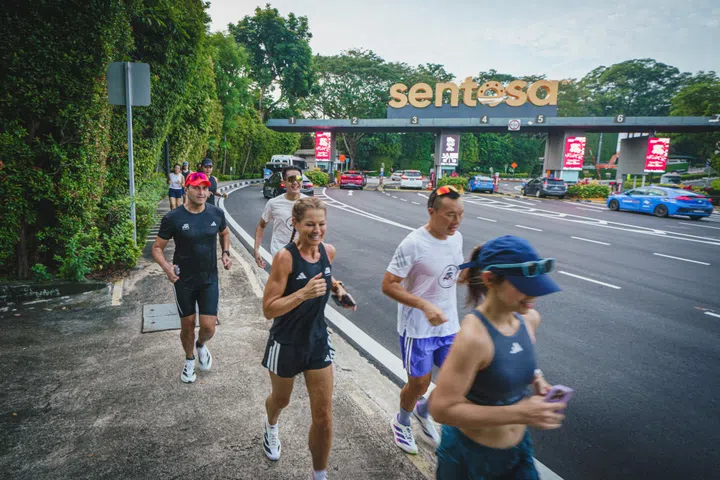
Everyone has to start somewhere, and I certainly did too. Five kilometres was always my distance and I used to laugh at people doing marathons because I thought I could never do that.
But I decided to set myself a challenge. I actually skipped the marathon and went straight to a 100km race. I trained for it, found out that I was good at it and actually won that first race. After that, I was hooked.
For anyone who’s just starting out, take your time and enjoy the distance you’re at. But know that you can always go longer if you want to.
You ran 1,000km in 12 days across Thailand, Malaysia and Singapore, nearly two marathons a day. What was going through your mind during that stretch?
During my first 1,000km and my second 1,000km, not a lot goes through my mind. I don’t listen to music or podcasts. I really like to be 100 percent in the moment and appreciate my surroundings.
There are definitely a lot of low lows, but it’s about having those conversations with yourself and deciding to take the next step forward.
You’re now attempting to break the Guinness World Record running the length of Peninsular Malaysia, averaging 105km a day. Why this challenge and why now?
I wanted to break up the 1,000km in 12 days and set myself a different challenge.
The first run was very much my own doing, the second one was about community, and this one is about high performance. We’re increasing the mileage by about 25 percent every day, which is going to be a real challenge.
I also want to see what I’m capable of two years on, and prove that age and being a woman doesn’t matter. It’s about setting a goal. If I fail, I fail. But if I do it, then fantastic.
How are you preparing physically and mentally for something of that scale?
Physically, preparation happens across the whole year or even multiple years. It’s about spending time on your feet, looking after your body and making sure you don’t get injured.
Right now I’m tapering, which means cutting down my mileage in the final week.
Recovery is everything for me and I keep it simple. Sleep is number one, so I’m quite strict about getting eight to nine hours a night. Hydration is key, and eating right. Nothing fancy, just the basics.
You’re in your 50s and still pushing extreme distances. How has your relationship with your body changed over time?
In my 20s it was about aesthetics. Since then I’ve had a child who is now 16, so my body has been through a lot.
Now I’m at a stage where I appreciate what my body can do for me. I’m proud of it. Every wrinkle, every little bit of fat. It gets me through a 1,000km run.
Our bodies are truly amazing, and I think we are always our own worst critics. We should be celebrating what our bodies can do and looking after them.
Has age changed the way you train or recover?
As I’ve gotten older, I can’t go as fast as I would like to, so I just go further now.
I don’t get caught up in speed. I’m out there to enjoy myself. I leave my ego at the front door and just get my training done.
From a recovery point of view, sleep becomes even more important as we get older. I’m okay with missing out now. I have no FOMO.
Have you ever truly wanted to quit mid-run? What happened in that moment?
I want to quit a thousand times a day when I’m doing these runs, so yes, I’m still human. People are always surprised when I say that.
But it’s about recognising that you’re in a low moment and making a decision. I always think about two choices: I can quit, or I can take the next step forward and see what happens.
I try to take quitting off the table. No matter how bad I feel, it’s always about taking that next step.
Walk us through your race-day routine, from fuel to mindset.
For this challenge we’re actually starting at 9.30 at night. I’ll wake up, tape my toes and get everything ready for the day.
From a nutrition perspective, I’m carb loading constantly. I’m just trying to get in as many calories as possible and staying hydrated.
During training I’ve also been running without music or podcasts so that I’m comfortable being in my own head. You can train physically, but a challenge like this is about 90 percent mental too. You have to trust your mind and trust your body.
You clock serious mileage. What makes a great running shoe for you?
I always have two shoes on rotation. The adidas EVO SL is my go-to, and for Project 1000 Breaking 8 I’ll be spending a lot of time in the adidas Adizero Adios Pro 4.
Both have great responsiveness and cushioning, and they’re lightweight.
I usually run about 500 to 600 kilometres in a pair before switching them out. A good shoe doesn’t always look worn out, so you go by feel and track your mileage.
What keeps you going when things get brutal?
When things get hard, I remember why I’m doing these challenges.

It’s for my family, for myself and for the charity I’m running for. At the core of it, it’s about empowering underprivileged children. This time I’m raising money for the CSB charity in Johor.
I also think about all the people supporting me. The volunteers, the brands like adidas. It’s really a team effort and I don’t want to let anyone down.
What’s next for you? Is there a finish line or are you just getting started?
I’m looking forward to finishing in Singapore on the 15th, where everyone will be coming together for a big community run.

Every year I say I’m never doing this again, and this is the third time. So I’m not going to say that anymore.
I think I’m just getting started and I’m excited to see where it goes. I also hope to pass the baton to others and encourage more people, especially women, to do crazy things.
I always say: find your Project 1000. It doesn’t have to be running. It can be something that’s meaningful to you. Just know that you can make an impact in the world.
For women who think they’re “too old” or “not built for this”, what would you say to them?
If you think you’re too old or not built for this, then you need to change the conversation you’re having with yourself.
We are often held back by our own thoughts. Throw that aside and start fresh. Tell yourself that you can do anything.
If you can dream it, you can do it.
What’s one piece of advice every runner should hear?
Run because you love it.
One third of your runs will feel hard, one third will feel good, and one third will feel great. So if you have a really bad run, know that a better one is probably around the corner.
Just keep going.
What does it really mean to feel well? Is it lifting heavier, running faster or finally learning to listen to your body? Body Talk is Her World Singapore’s wellness column exploring how women here move, train and care for themselves beyond aesthetics. From strength and stamina to rest, recovery and emotional resilience, each story looks at the physical, mental and emotional sides of wellness and how they show up in real life.