%22%3E%3Cpath%20fill%3D%22%23000%22%20d%3D%22M79.702%2078.555c0%2033.03%2018.767%2046.361%2035.801%2046.361%2014.149%200%2029.738-7.033%2034.505-28.595l-1.445-.306c-3.61%2015.903-14.005%2027.371-33.06%2027.371-13.86%200-13.716-22.173-13.716-41.594V67.415h49.662c0-23.393-13.136-40.674-35.946-40.674-17.034%200-35.801%2018.94-35.801%2051.814m35.801-50.283c14.437%200%2014.005%2026.455%2013.861%2037.617h-27.573c-.004-18.353.865-37.617%2013.712-37.617%22%2F%3E%3C%2Fg%3E%3Cmask%20id%3D%22b%22%20width%3D%22603%22%20height%3D%22126%22%20x%3D%220%22%20y%3D%220%22%20maskUnits%3D%22userSpaceOnUse%22%20style%3D%22mask-type%3Aluminance%22%3E%3Cpath%20fill%3D%22%23fff%22%20d%3D%22M602.5%200H.5v125.074h602z%22%2F%3E%3C%2Fmask%3E%3Cg%20mask%3D%22url(%23b)%22%3E%3Cpath%20fill%3D%22%23000%22%20d%3D%22M86.81%20105.474h-1.445c0%2010.547-4.475%2011.463-5.483%2011.463-2.454%200-4.475-3.514-4.475-11.921V48.264c0-14.83-10.826-21.558-22.229-21.558-10.97%200-22.66%206.118-25.983%2017.276V8.478c-.515-4.763-4.26-8.48-8.893-8.48H.522v1.53H.5c2.886%200%204.763%201.988%204.763%205.045v110.211c0%203.057-1.877%205.045-4.763%205.045h.022v1.531h31.423v-1.531h.021c-2.885%200-4.762-1.988-4.762-5.045V50.252c0-10.395%208.949-18.806%2016.31-18.806%205.338%200%209.813%204.13%209.813%2014.83v58.74c0%2013.909%207.796%2019.874%2016.165%2019.874%209.958.005%2017.318-6.418%2017.318-19.416%22%2F%3E%3C%2Fg%3E%3Cmask%20id%3D%22c%22%20width%3D%22603%22%20height%3D%22126%22%20x%3D%220%22%20y%3D%220%22%20maskUnits%3D%22userSpaceOnUse%22%20style%3D%22mask-type%3Aluminance%22%3E%3Cpath%20fill%3D%22%23fff%22%20d%3D%22M602.5%200H.5v125.074h602z%22%2F%3E%3C%2Fmask%3E%3Cg%20mask%3D%22url(%23c)%22%3E%3Cpath%20fill%3D%22%23000%22%20d%3D%22M225.911%2042.197c0-10.552-11.259-16.818-22.954-16.818-10.682%200-21.513%205.045-25.119%2016.975v-7.352c-.48-4.574-3.977-8.148-8.364-8.398h-18.322v1.53h-.022c2.886%200%204.763%201.99%204.763%205.046v81.371h.004c.293%204.814%203.942%208.633%208.509%208.846v.004h18.173v-1.53h.022c-2.886%200-4.763-1.989-4.763-5.045V48.62c0-10.552%209.094-19.269%2016.602-19.269%204.763%200%208.805%203.672%209.386%2012.693%200%206.881%204.619%2011.773%2011.119%2011.773%206.631%200%2010.966-4.587%2010.966-11.62%22%2F%3E%3C%2Fg%3E%3Cmask%20id%3D%22d%22%20width%3D%22603%22%20height%3D%22126%22%20x%3D%220%22%20y%3D%220%22%20maskUnits%3D%22userSpaceOnUse%22%20style%3D%22mask-type%3Aluminance%22%3E%3Cpath%20fill%3D%22%23fff%22%20d%3D%22M602.5%200H.5v125.074h602z%22%2F%3E%3C%2Fmask%3E%3Cg%20mask%3D%22url(%23d)%22%3E%3Cpath%20fill%3D%22%23000%22%20d%3D%22M234.434%2028.315c2.925%200%205.583%202.312%206.779%205.863l29.782%2089.218h1.597l20.61-61.852%2020.609%2061.852h1.598l29.781-89.218c1.196-3.556%203.855-5.863%206.78-5.863h.183v-1.776h-11.538v1.776h.184c2.925%200%203.99%202.312%202.794%205.863l-18.082%2054.209-18.082-54.209c-1.196-3.556-.131-5.863%202.794-5.863h.183v-1.776h-33.343v1.776h.183c2.925%200%205.583%202.312%206.78%205.863l8.373%2025.058-9.705%2029.15-18.082-54.208c-1.196-3.556-.131-5.863%202.794-5.863h.184v-1.776h-33.344v1.776z%22%2F%3E%3C%2Fg%3E%3Cmask%20id%3D%22e%22%20width%3D%22603%22%20height%3D%22126%22%20x%3D%220%22%20y%3D%220%22%20maskUnits%3D%22userSpaceOnUse%22%20style%3D%22mask-type%3Aluminance%22%3E%3Cpath%20fill%3D%22%23fff%22%20d%3D%22M602.5%200H.5v125.074h602z%22%2F%3E%3C%2Fmask%3E%3Cg%20mask%3D%22url(%23e)%22%3E%3Cpath%20fill%3D%22%23000%22%20d%3D%22M377.826%20124.491c17.034%200%2038.211-15.699%2038.211-48.882%200-33.03-21.177-48.73-38.211-48.73-17.035%200-38.067%2015.857-38.067%2048.73.004%2033.026%2021.032%2048.882%2038.067%2048.882m0-96.085c13.86%200%2016.121%2028.24%2016.121%2047.356%200%2019.116-2.261%2047.198-16.121%2047.198-13.861%200-15.978-27.777-15.978-47.198%200-19.422%202.122-47.356%2015.978-47.356%22%2F%3E%3C%2Fg%3E%3Cmask%20id%3D%22f%22%20width%3D%22603%22%20height%3D%22126%22%20x%3D%220%22%20y%3D%220%22%20maskUnits%3D%22userSpaceOnUse%22%20style%3D%22mask-type%3Aluminance%22%3E%3Cpath%20fill%3D%22%23fff%22%20d%3D%22M602.5%200H.5v125.074h602z%22%2F%3E%3C%2Fmask%3E%3Cg%20mask%3D%22url(%23f)%22%3E%3Cpath%20fill%3D%22%23000%22%20d%3D%22M490.482%2042.197c0-10.552-11.258-16.818-22.953-16.818-10.683%200-21.513%205.045-25.119%2016.975v-7.352c-.48-4.574-3.977-8.148-8.365-8.398h-18.326v1.53h-.022c2.886%200%204.763%201.99%204.763%205.046v81.371h.004c.293%204.814%203.943%208.633%208.509%208.846v.004h18.173v-1.53h.022c-2.885%200-4.763-1.989-4.763-5.045V48.62c0-10.552%209.094-19.269%2016.602-19.269%204.763%200%208.806%203.672%209.386%2012.693%200%206.881%204.619%2011.773%2011.119%2011.773%206.64%200%2010.97-4.587%2010.97-11.62%22%2F%3E%3C%2Fg%3E%3Cmask%20id%3D%22g%22%20width%3D%22603%22%20height%3D%22126%22%20x%3D%220%22%20y%3D%220%22%20maskUnits%3D%22userSpaceOnUse%22%20style%3D%22mask-type%3Aluminance%22%3E%3Cpath%20fill%3D%22%23fff%22%20d%3D%22M602.5%200H.5v125.074h602z%22%2F%3E%3C%2Fmask%3E%3Cg%20mask%3D%22url(%23g)%22%3E%3Cpath%20fill%3D%22%23000%22%20d%3D%22M602.5%20103.974h-1.445c0%2010.553-4.474%2011.468-5.483%2011.468-2.453%200-4.474-3.519-4.474-11.925V6.585c0-3.056%201.877-5.045%204.762-5.045h-.166V.01h-17.715c-4.942%200-8.953%204.24-8.962%209.475h-.009v23.333c-6.063-3.977-9.84-5.503-16.48-5.503-17.034%200-35.801%2014.169-35.801%2047.046%200%2033.183%2013.101%2050.718%2035.801%2050.718%208.085%200%2013.302-2.294%2019.942-8.254%203.03%204.587%207.797%206.575%2012.704%206.575%209.966-.004%2017.326-6.427%2017.326-19.426m-30.75%2011.625c-4.763%204.435-10.84%205.822-13.38%205.822-11.482%200-19.558-16.933-19.558-46.907%200-29.97%2010.914-43.222%2019.885-43.222%203.3%200%206.264.153%2010.307%203.057v69.172c.004%205.04%201.017%209.017%202.746%2012.078%22%2F%3E%3C%2Fg%3E%3Cmask%20id%3D%22h%22%20width%3D%22603%22%20height%3D%22126%22%20x%3D%220%22%20y%3D%220%22%20maskUnits%3D%22userSpaceOnUse%22%20style%3D%22mask-type%3Aluminance%22%3E%3Cpath%20fill%3D%22%23fff%22%20d%3D%22M602.5%200H.5v125.074h602z%22%2F%3E%3C%2Fmask%3E%3Cg%20mask%3D%22url(%23h)%22%3E%3Cpath%20fill%3D%22%23000%22%20d%3D%22M516.984%20121.865c-2.885%200-4.763-1.988-4.763-5.045V9.466C512.2%204.241%20508.196.01%20503.259.01h-17.724v1.53h-.022c2.89%200%204.763%201.989%204.763%205.045v108.418c.515%204.564%204.029%208.129%208.434%208.337v.06h18.252v-1.53h.022z%22%2F%3E%3C%2Fg%3E%3C%2Fsvg%3E)
Share this article
As I turned a corner at the end of a cobblestone lane in Emporio, I realised that I had passed that very spot just a few minutes ago. This walking tour of one of Santorini’s prettiest villages in the south turned out to be a series of such deja vu moments within the labyrinth of narrow streets wound up the hillside.
The small homes crammed up against each other on either side of these lanes were painted in bright shades of yellow and orange, and there were few people to be seen anywhere. And I got lost ever-so-often and did not mind it at all.
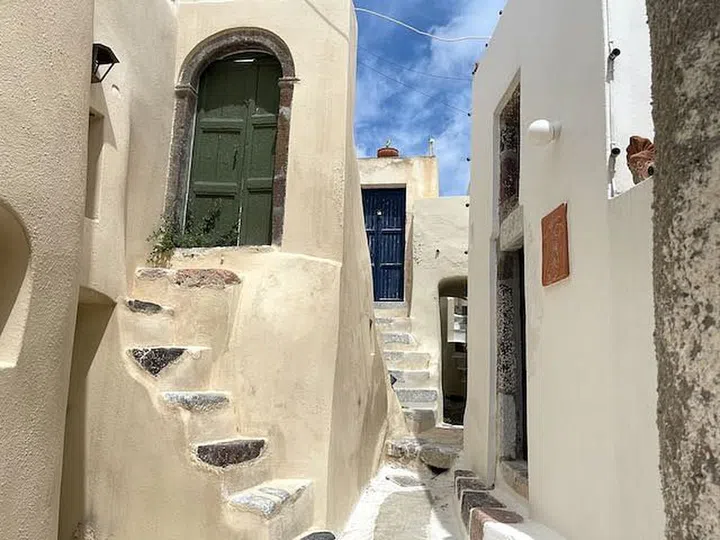
Narrow lanes of Emporio within the castle walls. (Photo: Charukesi Ramadurai)
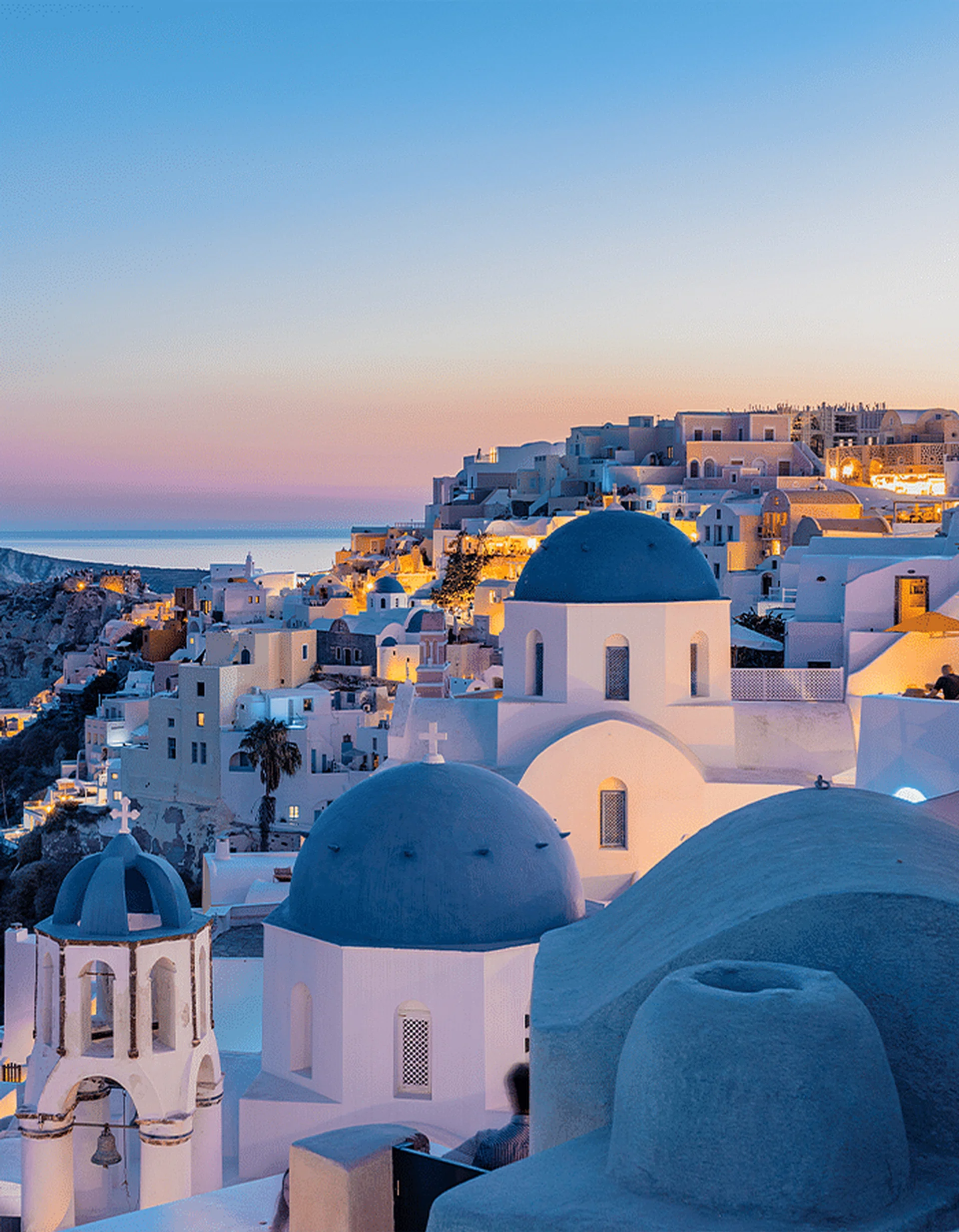
Overall, this inland village was a far cry from the picture-perfect postcard image of Santorini in my mind — and, I suspect, most travellers’ too — with the classic Cycladic architecture of whitewashed homes and blue-domed churches, after the colours of the Greek flag.
Santorini is the most popular destination within the Cyclades group of Aegean Sea islands, known for its distinctive architecture and stunning vistas of the sea. Most of the villages on this island, such as Fira, Firotefani, Imerovigli, or Oia, are crowded around the ridges of the volcanic crater (known as the caldera). And that was also the Santorini I was familiar with before I visited the island.
But thousands of years before eager tourists discovered Santorini, the island had a thriving civilisation. It is believed that sometime around 1600 BC, an enormous volcanic eruption occurred in the area, creating the crater and caldera that still exist around the island. An entire city — now known as Akrotiri, on the southwestern tip of the island — was buried under volcanic ash and is still being excavated.
I knew I was not going to get any sense of Santorini’s fascinating past by staying at my caldera resort in the rather uncrowded village of Imerovigli. Having done all the touristy things, including hiking along the caldera up north to the picturesque village of Oia and south towards Fira in the heart of the island, I wanted to scratch beyond the surface.
And so, bright and early one morning, I got into my rental car for a long drive all the way down to the Bronze Age ruins of Akrotiri.
Although only a small portion of this once thriving port city — older than Pompei i— has been unearthed and is open to visitors, Akrotiri tells a significant story about the history of Santorini. And so, I found it fitting to start my own exploration of the island there, viewing the remains of ceramics and stone walls from this prehistoric site.
The colourful wall frescoes discovered here are now carefully preserved and showcased at the Museum of Prehistoric Thera in Fira and the National Archaeological Museum in Athens. Interestingly, I also discovered that the name Fira comes from the word Thira, or Thera, the ancient name for Santorini derived from Theras, the leaders of the Spartans who ruled over this island.
From the excavation site, I drove on further to catch a glimpse of the Akrotiri lighthouse, partly because I had heard about the spectacular views of the Aegean Sea from that spot. And I was not to be disappointed. I stood silently on the rocks, watching the sea change colours with the mood of the late morning sun.
Then it was time to tackle the narrow lanes of inland Santorini, exploring a few more traditional — and fairly off-the-beaten tourist track — villages along the way.
My first stop was Emporio, the largest village in Santorini, with its mid-15th century Venetian castle (Kasteli) right at the top of the hill. This is one of the five fortified castles that once existed on this island to fend off invaders. And to aid in that defence were the “Goulas” nearby, a now dilapidated watchtower that also served as a common meeting point for the inhabitants in case of crisis.
Although the village seemed oddly quiet and deserted when I visited, the very name Emporio — Italian for trading centre — points to the fact that it was once an important commercial hub on the island. The homes were built so close to each other in order to serve as a sealed settlement, defending against pirates and invaders.
I then made my way to the mediaeval village of Pyrgos, whose location at the highest point on the island once made it the defence lookout point. This settlement was created as a monastery town in the 13th century when the Venetians controlled the island.
With the fortress built in the late 1500s, Pyrgos came to be the capital of Santorini before Fira took over that position. Some of the old walls of the fortified castle still exist in Pyrgos, enclosing homes, shops, and restaurants within the old town area.
There is a restaurant at the top, near where the castle stood. I reached it right in time for lunch, after an unhurried amble through the winding lanes of the village, dotted with pretty cafés and souvenir shops. Franco’s Café was the perfect place to kick back for a leisurely lunch of fresh, local food served with sprawling views of the island.
After lunch, I spent some more time wandering through the village on my way down to the car park before heading to Megalochori. This picturesque village once used to be a winemaking hub, known for exporting local Vinsanto wine, produced in Santorini even today. A handful of wineries are still making wine with grapes harvested from the vineyards surrounding this region, including an indigenous white grape.
A few homes offer visitors free tours of their underground caves, which have been used since ancient times to store wine, olive oil, and other perishable foods. I walked into one of those and instantly found myself transported to a secret and cool world, completely hidden from the outside world.
Like the other villages I had seen so far, Megalochori, too, was a maze of cobblestoned lanes leading towards the main square, scattered with cutesy coffee shops and cafés. I sat down with gelato on a bench at this plaza, with a direct view of the pretty bell tower, and settled down for some post-prandial people-watching.
Driving out of town later in the afternoon, I made my way to the solitary windmill at a distance. A rough trail down that cliff took me to the chapel of Agios Nikolaos, made popular by hundreds of travel influencers on Instagram, posing on its sparkling white walls at sunset. Only the bare walls remain of this whitewashed church named after Saint Nicholas, but the triptych of bells on the tower and the photogenic setting deep in the rocky hillside still made it a worthwhile detour.
I had spent the day walking through scenic alleyways in these small villages with no map in hand and no plan in mind. I had stumbled upon hidden churches and art galleries and discovered a delightfully historic side to Santorini — one that most tourists miss.
This article was originally published in The Peak.