%22%3E%3Cpath%20fill%3D%22%23000%22%20d%3D%22M79.702%2078.555c0%2033.03%2018.767%2046.361%2035.801%2046.361%2014.149%200%2029.738-7.033%2034.505-28.595l-1.445-.306c-3.61%2015.903-14.005%2027.371-33.06%2027.371-13.86%200-13.716-22.173-13.716-41.594V67.415h49.662c0-23.393-13.136-40.674-35.946-40.674-17.034%200-35.801%2018.94-35.801%2051.814m35.801-50.283c14.437%200%2014.005%2026.455%2013.861%2037.617h-27.573c-.004-18.353.865-37.617%2013.712-37.617%22%2F%3E%3C%2Fg%3E%3Cmask%20id%3D%22b%22%20width%3D%22603%22%20height%3D%22126%22%20x%3D%220%22%20y%3D%220%22%20maskUnits%3D%22userSpaceOnUse%22%20style%3D%22mask-type%3Aluminance%22%3E%3Cpath%20fill%3D%22%23fff%22%20d%3D%22M602.5%200H.5v125.074h602z%22%2F%3E%3C%2Fmask%3E%3Cg%20mask%3D%22url(%23b)%22%3E%3Cpath%20fill%3D%22%23000%22%20d%3D%22M86.81%20105.474h-1.445c0%2010.547-4.475%2011.463-5.483%2011.463-2.454%200-4.475-3.514-4.475-11.921V48.264c0-14.83-10.826-21.558-22.229-21.558-10.97%200-22.66%206.118-25.983%2017.276V8.478c-.515-4.763-4.26-8.48-8.893-8.48H.522v1.53H.5c2.886%200%204.763%201.988%204.763%205.045v110.211c0%203.057-1.877%205.045-4.763%205.045h.022v1.531h31.423v-1.531h.021c-2.885%200-4.762-1.988-4.762-5.045V50.252c0-10.395%208.949-18.806%2016.31-18.806%205.338%200%209.813%204.13%209.813%2014.83v58.74c0%2013.909%207.796%2019.874%2016.165%2019.874%209.958.005%2017.318-6.418%2017.318-19.416%22%2F%3E%3C%2Fg%3E%3Cmask%20id%3D%22c%22%20width%3D%22603%22%20height%3D%22126%22%20x%3D%220%22%20y%3D%220%22%20maskUnits%3D%22userSpaceOnUse%22%20style%3D%22mask-type%3Aluminance%22%3E%3Cpath%20fill%3D%22%23fff%22%20d%3D%22M602.5%200H.5v125.074h602z%22%2F%3E%3C%2Fmask%3E%3Cg%20mask%3D%22url(%23c)%22%3E%3Cpath%20fill%3D%22%23000%22%20d%3D%22M225.911%2042.197c0-10.552-11.259-16.818-22.954-16.818-10.682%200-21.513%205.045-25.119%2016.975v-7.352c-.48-4.574-3.977-8.148-8.364-8.398h-18.322v1.53h-.022c2.886%200%204.763%201.99%204.763%205.046v81.371h.004c.293%204.814%203.942%208.633%208.509%208.846v.004h18.173v-1.53h.022c-2.886%200-4.763-1.989-4.763-5.045V48.62c0-10.552%209.094-19.269%2016.602-19.269%204.763%200%208.805%203.672%209.386%2012.693%200%206.881%204.619%2011.773%2011.119%2011.773%206.631%200%2010.966-4.587%2010.966-11.62%22%2F%3E%3C%2Fg%3E%3Cmask%20id%3D%22d%22%20width%3D%22603%22%20height%3D%22126%22%20x%3D%220%22%20y%3D%220%22%20maskUnits%3D%22userSpaceOnUse%22%20style%3D%22mask-type%3Aluminance%22%3E%3Cpath%20fill%3D%22%23fff%22%20d%3D%22M602.5%200H.5v125.074h602z%22%2F%3E%3C%2Fmask%3E%3Cg%20mask%3D%22url(%23d)%22%3E%3Cpath%20fill%3D%22%23000%22%20d%3D%22M234.434%2028.315c2.925%200%205.583%202.312%206.779%205.863l29.782%2089.218h1.597l20.61-61.852%2020.609%2061.852h1.598l29.781-89.218c1.196-3.556%203.855-5.863%206.78-5.863h.183v-1.776h-11.538v1.776h.184c2.925%200%203.99%202.312%202.794%205.863l-18.082%2054.209-18.082-54.209c-1.196-3.556-.131-5.863%202.794-5.863h.183v-1.776h-33.343v1.776h.183c2.925%200%205.583%202.312%206.78%205.863l8.373%2025.058-9.705%2029.15-18.082-54.208c-1.196-3.556-.131-5.863%202.794-5.863h.184v-1.776h-33.344v1.776z%22%2F%3E%3C%2Fg%3E%3Cmask%20id%3D%22e%22%20width%3D%22603%22%20height%3D%22126%22%20x%3D%220%22%20y%3D%220%22%20maskUnits%3D%22userSpaceOnUse%22%20style%3D%22mask-type%3Aluminance%22%3E%3Cpath%20fill%3D%22%23fff%22%20d%3D%22M602.5%200H.5v125.074h602z%22%2F%3E%3C%2Fmask%3E%3Cg%20mask%3D%22url(%23e)%22%3E%3Cpath%20fill%3D%22%23000%22%20d%3D%22M377.826%20124.491c17.034%200%2038.211-15.699%2038.211-48.882%200-33.03-21.177-48.73-38.211-48.73-17.035%200-38.067%2015.857-38.067%2048.73.004%2033.026%2021.032%2048.882%2038.067%2048.882m0-96.085c13.86%200%2016.121%2028.24%2016.121%2047.356%200%2019.116-2.261%2047.198-16.121%2047.198-13.861%200-15.978-27.777-15.978-47.198%200-19.422%202.122-47.356%2015.978-47.356%22%2F%3E%3C%2Fg%3E%3Cmask%20id%3D%22f%22%20width%3D%22603%22%20height%3D%22126%22%20x%3D%220%22%20y%3D%220%22%20maskUnits%3D%22userSpaceOnUse%22%20style%3D%22mask-type%3Aluminance%22%3E%3Cpath%20fill%3D%22%23fff%22%20d%3D%22M602.5%200H.5v125.074h602z%22%2F%3E%3C%2Fmask%3E%3Cg%20mask%3D%22url(%23f)%22%3E%3Cpath%20fill%3D%22%23000%22%20d%3D%22M490.482%2042.197c0-10.552-11.258-16.818-22.953-16.818-10.683%200-21.513%205.045-25.119%2016.975v-7.352c-.48-4.574-3.977-8.148-8.365-8.398h-18.326v1.53h-.022c2.886%200%204.763%201.99%204.763%205.046v81.371h.004c.293%204.814%203.943%208.633%208.509%208.846v.004h18.173v-1.53h.022c-2.885%200-4.763-1.989-4.763-5.045V48.62c0-10.552%209.094-19.269%2016.602-19.269%204.763%200%208.806%203.672%209.386%2012.693%200%206.881%204.619%2011.773%2011.119%2011.773%206.64%200%2010.97-4.587%2010.97-11.62%22%2F%3E%3C%2Fg%3E%3Cmask%20id%3D%22g%22%20width%3D%22603%22%20height%3D%22126%22%20x%3D%220%22%20y%3D%220%22%20maskUnits%3D%22userSpaceOnUse%22%20style%3D%22mask-type%3Aluminance%22%3E%3Cpath%20fill%3D%22%23fff%22%20d%3D%22M602.5%200H.5v125.074h602z%22%2F%3E%3C%2Fmask%3E%3Cg%20mask%3D%22url(%23g)%22%3E%3Cpath%20fill%3D%22%23000%22%20d%3D%22M602.5%20103.974h-1.445c0%2010.553-4.474%2011.468-5.483%2011.468-2.453%200-4.474-3.519-4.474-11.925V6.585c0-3.056%201.877-5.045%204.762-5.045h-.166V.01h-17.715c-4.942%200-8.953%204.24-8.962%209.475h-.009v23.333c-6.063-3.977-9.84-5.503-16.48-5.503-17.034%200-35.801%2014.169-35.801%2047.046%200%2033.183%2013.101%2050.718%2035.801%2050.718%208.085%200%2013.302-2.294%2019.942-8.254%203.03%204.587%207.797%206.575%2012.704%206.575%209.966-.004%2017.326-6.427%2017.326-19.426m-30.75%2011.625c-4.763%204.435-10.84%205.822-13.38%205.822-11.482%200-19.558-16.933-19.558-46.907%200-29.97%2010.914-43.222%2019.885-43.222%203.3%200%206.264.153%2010.307%203.057v69.172c.004%205.04%201.017%209.017%202.746%2012.078%22%2F%3E%3C%2Fg%3E%3Cmask%20id%3D%22h%22%20width%3D%22603%22%20height%3D%22126%22%20x%3D%220%22%20y%3D%220%22%20maskUnits%3D%22userSpaceOnUse%22%20style%3D%22mask-type%3Aluminance%22%3E%3Cpath%20fill%3D%22%23fff%22%20d%3D%22M602.5%200H.5v125.074h602z%22%2F%3E%3C%2Fmask%3E%3Cg%20mask%3D%22url(%23h)%22%3E%3Cpath%20fill%3D%22%23000%22%20d%3D%22M516.984%20121.865c-2.885%200-4.763-1.988-4.763-5.045V9.466C512.2%204.241%20508.196.01%20503.259.01h-17.724v1.53h-.022c2.89%200%204.763%201.989%204.763%205.045v108.418c.515%204.564%204.029%208.129%208.434%208.337v.06h18.252v-1.53h.022z%22%2F%3E%3C%2Fg%3E%3C%2Fsvg%3E)
Jennifer Aniston and Reese Witherspoon talk about the "deeper exploration" of themes in The Morning Show Season 2
The shows' producers and lead actors delve into the hot topics covered in Season 2, such as sexism, ageism, racism, homophobia and cancel culture
By Her World Team -
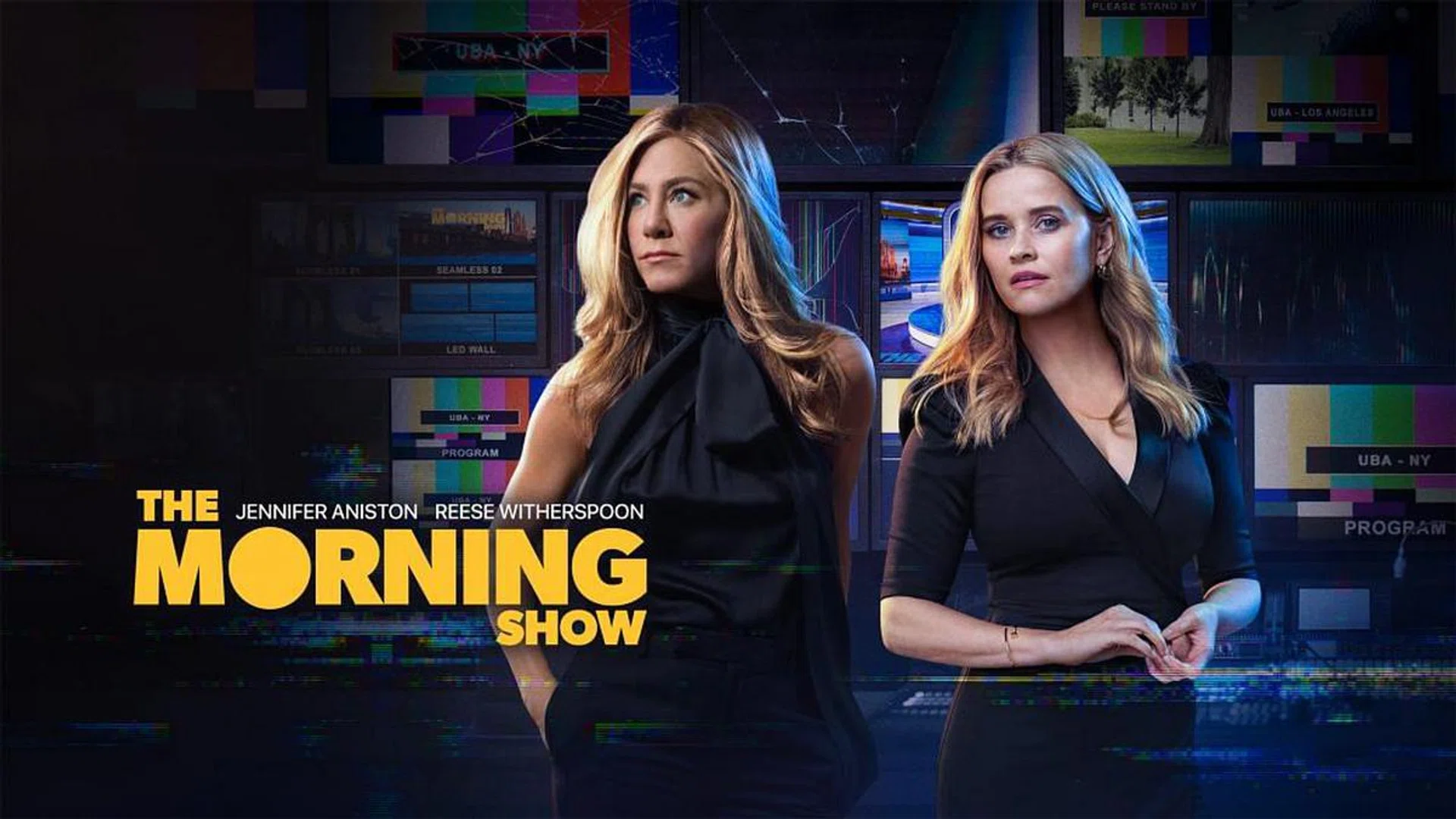
ICYDK: Multi-award winning The Morning Show explores the cutthroat world of morning news and the lives of the people who help America wake up in the morning. Told through the lens of two complicated women working to navigate the minefield of high-octane jobs while facing crises in both their personal and professional lives. The Morning Show is an unapologetically candid drama that looks at the power dynamics between women and men, and women and women, in the workplace.
The previous season left off with the dramatic live broadcast of The Morning Show with newscasters Alex Levy and Bradley Jackson, played by Jennifer Aniston and Reese Witherspoon respectively, speaking out about the network covering up the sexual misconduct allegations within their working environment, when the feed was suddenly cut off.
Here, Jennifer Aniston and Reese Witherspoon, who are also producers of the show, share their thoughts about the hot topics covered in Season 2 such as sexism, racism, cancel culture and the changing journalism landscape, as well as challenges in creating the show during the pandemic.
What should audiences expect from this second season of The Morning Show? And how would you compare it to the first season?
Jennifer Aniston: Initially we are basically dealing with the repercussions of what the first season handed us, and then it takes a lot of twists and turns, introducing more characters. Everyone is sort of walking around with their own guilt of what they allowed to happen or not, so there is a lot of self-reckoning. And it definitely gets spicy!
Reese Witherspoon: Yes, it’s a deeper exploration of all those themes. Season One was a lot about MeToo, whereas this second season explores that time just before the world shut down because of the Covid-19 pandemic. So, we are dealing with systematic racism, homophobia, ageism, and what our relationship to power is as women inside a news organisation.
So, what would you say is the challenge and thrill of portraying modern history in the moment?
JA: It’s very exciting! And then there’s the fun of creating a show as things happen in real time and we are watching the world learn its new normal, portraying it as honestly as we can because it’s what we are experiencing. So, it’s a lot of responsibility, but it keeps it exciting.
Being also producers of the show, how did you work with the screenwriters to craft this second season?
RW: Well, we had initial conversations with Kerry Ehrin and the team of writers, but it was really up to them to steer the show in the direction they felt would be satisfying to the audience, while also tackling these issues and big ideas. We were lucky to have such a diverse group of writers talking about different issues that affect our lives.
JA: Yes, and I also think that what was very important to us both in the first season and in this second one was not to address things in black and white. We address them head on, wanting to hear the conversations that are taking place behind closed doors – the conversations people don’t feel that they can have out loud because they’ll be immediately outcast. We wanted to portray the grey areas, as opposed to the black and white “definites” that the world can sometimes put upon people.
How did the effects of the Covid-19 pandemic challenge both your characters in the show and you making it?
JA: Well, it really took me down. It was hard! And I think it took Reese down too. It was challenging because we had already shot the first part of the show before the pandemic hit, and then we shut down. Then it was rewritten to incorporate the Covid-19 pandemic, and we had to deal with all the protocols. We had endless Zoom meetings with our incredible epidemiology team and each department, because the main thing was everyone’s safety. So, we had a very strict protocol, which was difficult because we like to see people’s faces. It was bizarre to be so interactive with such a creative group of people.
Even during rehearsals we had our masks and shields on, to then take them off when we had to roll, as if all of a sudden the virus didn’t exist during the five-minute scene we were doing. It took some adjusting, until it oddly ended up becoming normal – which hopefully won’t be for that much longer. So, it was definitely not without its challenges, as we were all given less amount of time to work during the day and there were a lot of rules around it; but we got through it and survived it, and I think we ended up making a really good show!
RW: And as far as what’s going on inside the show, we are kind of dealing with all those things that happened before the entire world shut down. We are all invested in our own struggles, ideas and pursuits, and then something bigger than all of us takes over. So, the show has great themes, and I am very proud of it. We worked hard and were very thoughtful with what people were dealing with during this pandemic. It has been devastating for the world in so many different ways, and we wanted to address that with thoughtfulness and a real focus on humanity. That was very important to us.
RW: A lot! We had several different storylines, so we had to divide the work, but whenever we saw each other we would have a coffee or just squeal, “How are you doing?” and, “What’s going on in your world?”
JA: And I would be over here with this, while she was over there in her storyline. We had an amazing time together too, but not as much as we maybe would have liked, because of the protocol we were given, where everybody was assigned to a kind of pod of people. We have also known each other for so many years and respect each other’s work, so the fact that we get to do this together just feels very natural.
There is so much pressure to be perfect, and at the same time everyone seems replaceable. Have you ever felt this way?
RW: All the time! I think there has never been a time of more change in our culture, or a more unforgiving time to live in. And I think we are just humans trying to figure it out. We’re all capable of terrible and great things, and none of us are just the one horrible thing we ever did. So, I think this show really addresses cancel culture and that there is a human cost to exiling people or condemning them for one thing they did in their lives, because no one is perfect.
After portraying your characters in this show, has it changed your perspective on the profession of journalism and the meaning of it?
RW: That’s an interesting question, because I think journalism has shifted so much in the past 5 years with the emergence of social media, misinformation and politicised news. It’s very hard for audiences to find the truth, and we are all searching for it. There used to be one sort of universally accepted truth, and now there are a thousand different ways of getting news. It’s just what it is, as news isn’t centralised anymore. I see it with my kids.
JA: Kids are so black and white. They’re like, “No, that’s wrong!” instead of, “Well, wait a minute…” There are all these different generations that are being explored on our show, which is fascinating. But I also think that there used to be a safer place to go to for news. Everyone’s just out for blood now!
If you were both journalists in real life, what aspect of the media would attract you?
RW: I honestly have such respect for journalists and journalism, because it’s hard to process everything in this digital age. I just feel lucky I grew up in a time when there were things I didn’t know.
JA: Me too! It has to be difficult with these phones – as they are exploding with one news story after the next – to practise any kind of self-care or sanity in the midst of all of that right now.
RW: It’s such an interesting time for sure. I just feel lucky that we live in a country that is all about freedom of press.
Do you believe in the statement that there is a cost to success and fame?
JA: I agree with it a hundred per cent! But you can be the conductor of what the cost is eventually, and that’s when you realise that there doesn’t have to be a cost. And if you can’t do the things you used to be able to do, then you figure out a way around that. But you know you put yourself out there as an artist, and it’s become a sport for people to sort of decide how they feel about a different person this week or the following.
RW: I think that success without meaning or purpose is really difficult – it can feel very empty. And there are many people that have achieved a lot but are not happy. There is a lot going on in the world, so I think it’s great that our show can explore different themes and dig into them.
JA: And I’m glad that we weren’t doing a show that was out of the reality of what was happening, and that we are able to be immersed in something meaningful, trying to make a difference and leave a stamp on something. We weren’t on a spaceship trying to live in an alternative universe where Covid-19 doesn’t exist…
What were the most difficult topics to cover during the filming of Season 2 of The Morning Show?
RW: We were processing different things like systematic racism within the media industry, homophobia, sexism, ageism… They are all meaningful, so it was about allocating time to every important issue that’s on people’s minds. We are in a cultural reckoning, and I think people are comfortable voicing it and interested in hearing it.
JA: And people really appreciate when you kind of go there on a topic that is taboo and say the unspeakable or the unthinkable or things that are normally said behind closed doors. It’s such a relief for an audience to think, “Oh, that’s me;” because, again, it’s not black and white.
JA: I love Alex’s absolute ability to be professional in one moment, and then lose her shit uncontrollably the next moment. She is a pendulum! It’s fun to sort of navigate and dissect that as a character.
RW: Well, in this second season I feel Bradley is very vulnerable. She is on a journey of self-discovery and identity, and she’s really questioning the places she came from and her own place in the world. That was fun to play, because I know people who are in their 40s and still discovering who they are. So, that was meaningful.
Laura Peterson, played by Julianna Margulies, has a crucial role in the character development of the leads Alex and Bradley. Laura plays a mentor role to Bradley while also going toe to toe with Alex.
Also look out for Stella Bak, played by Korean-American actress Greta Lee. A young, successful, independent woman who is not afraid to shake things up, Stella plays a crucial role in their news organisation as the youngest and only female President of News tasked with changing the culture of the workplace, addressing workplace toxicity and implementing real changes to address systems of misogyny and racism.
The Morning Show (season 2) is currently airing on AppleTV+ with a new episode dropping every Friday.