%22%3E%3Cpath%20fill%3D%22%23000%22%20d%3D%22M79.702%2078.555c0%2033.03%2018.767%2046.361%2035.801%2046.361%2014.149%200%2029.738-7.033%2034.505-28.595l-1.445-.306c-3.61%2015.903-14.005%2027.371-33.06%2027.371-13.86%200-13.716-22.173-13.716-41.594V67.415h49.662c0-23.393-13.136-40.674-35.946-40.674-17.034%200-35.801%2018.94-35.801%2051.814m35.801-50.283c14.437%200%2014.005%2026.455%2013.861%2037.617h-27.573c-.004-18.353.865-37.617%2013.712-37.617%22%2F%3E%3C%2Fg%3E%3Cmask%20id%3D%22b%22%20width%3D%22603%22%20height%3D%22126%22%20x%3D%220%22%20y%3D%220%22%20maskUnits%3D%22userSpaceOnUse%22%20style%3D%22mask-type%3Aluminance%22%3E%3Cpath%20fill%3D%22%23fff%22%20d%3D%22M602.5%200H.5v125.074h602z%22%2F%3E%3C%2Fmask%3E%3Cg%20mask%3D%22url(%23b)%22%3E%3Cpath%20fill%3D%22%23000%22%20d%3D%22M86.81%20105.474h-1.445c0%2010.547-4.475%2011.463-5.483%2011.463-2.454%200-4.475-3.514-4.475-11.921V48.264c0-14.83-10.826-21.558-22.229-21.558-10.97%200-22.66%206.118-25.983%2017.276V8.478c-.515-4.763-4.26-8.48-8.893-8.48H.522v1.53H.5c2.886%200%204.763%201.988%204.763%205.045v110.211c0%203.057-1.877%205.045-4.763%205.045h.022v1.531h31.423v-1.531h.021c-2.885%200-4.762-1.988-4.762-5.045V50.252c0-10.395%208.949-18.806%2016.31-18.806%205.338%200%209.813%204.13%209.813%2014.83v58.74c0%2013.909%207.796%2019.874%2016.165%2019.874%209.958.005%2017.318-6.418%2017.318-19.416%22%2F%3E%3C%2Fg%3E%3Cmask%20id%3D%22c%22%20width%3D%22603%22%20height%3D%22126%22%20x%3D%220%22%20y%3D%220%22%20maskUnits%3D%22userSpaceOnUse%22%20style%3D%22mask-type%3Aluminance%22%3E%3Cpath%20fill%3D%22%23fff%22%20d%3D%22M602.5%200H.5v125.074h602z%22%2F%3E%3C%2Fmask%3E%3Cg%20mask%3D%22url(%23c)%22%3E%3Cpath%20fill%3D%22%23000%22%20d%3D%22M225.911%2042.197c0-10.552-11.259-16.818-22.954-16.818-10.682%200-21.513%205.045-25.119%2016.975v-7.352c-.48-4.574-3.977-8.148-8.364-8.398h-18.322v1.53h-.022c2.886%200%204.763%201.99%204.763%205.046v81.371h.004c.293%204.814%203.942%208.633%208.509%208.846v.004h18.173v-1.53h.022c-2.886%200-4.763-1.989-4.763-5.045V48.62c0-10.552%209.094-19.269%2016.602-19.269%204.763%200%208.805%203.672%209.386%2012.693%200%206.881%204.619%2011.773%2011.119%2011.773%206.631%200%2010.966-4.587%2010.966-11.62%22%2F%3E%3C%2Fg%3E%3Cmask%20id%3D%22d%22%20width%3D%22603%22%20height%3D%22126%22%20x%3D%220%22%20y%3D%220%22%20maskUnits%3D%22userSpaceOnUse%22%20style%3D%22mask-type%3Aluminance%22%3E%3Cpath%20fill%3D%22%23fff%22%20d%3D%22M602.5%200H.5v125.074h602z%22%2F%3E%3C%2Fmask%3E%3Cg%20mask%3D%22url(%23d)%22%3E%3Cpath%20fill%3D%22%23000%22%20d%3D%22M234.434%2028.315c2.925%200%205.583%202.312%206.779%205.863l29.782%2089.218h1.597l20.61-61.852%2020.609%2061.852h1.598l29.781-89.218c1.196-3.556%203.855-5.863%206.78-5.863h.183v-1.776h-11.538v1.776h.184c2.925%200%203.99%202.312%202.794%205.863l-18.082%2054.209-18.082-54.209c-1.196-3.556-.131-5.863%202.794-5.863h.183v-1.776h-33.343v1.776h.183c2.925%200%205.583%202.312%206.78%205.863l8.373%2025.058-9.705%2029.15-18.082-54.208c-1.196-3.556-.131-5.863%202.794-5.863h.184v-1.776h-33.344v1.776z%22%2F%3E%3C%2Fg%3E%3Cmask%20id%3D%22e%22%20width%3D%22603%22%20height%3D%22126%22%20x%3D%220%22%20y%3D%220%22%20maskUnits%3D%22userSpaceOnUse%22%20style%3D%22mask-type%3Aluminance%22%3E%3Cpath%20fill%3D%22%23fff%22%20d%3D%22M602.5%200H.5v125.074h602z%22%2F%3E%3C%2Fmask%3E%3Cg%20mask%3D%22url(%23e)%22%3E%3Cpath%20fill%3D%22%23000%22%20d%3D%22M377.826%20124.491c17.034%200%2038.211-15.699%2038.211-48.882%200-33.03-21.177-48.73-38.211-48.73-17.035%200-38.067%2015.857-38.067%2048.73.004%2033.026%2021.032%2048.882%2038.067%2048.882m0-96.085c13.86%200%2016.121%2028.24%2016.121%2047.356%200%2019.116-2.261%2047.198-16.121%2047.198-13.861%200-15.978-27.777-15.978-47.198%200-19.422%202.122-47.356%2015.978-47.356%22%2F%3E%3C%2Fg%3E%3Cmask%20id%3D%22f%22%20width%3D%22603%22%20height%3D%22126%22%20x%3D%220%22%20y%3D%220%22%20maskUnits%3D%22userSpaceOnUse%22%20style%3D%22mask-type%3Aluminance%22%3E%3Cpath%20fill%3D%22%23fff%22%20d%3D%22M602.5%200H.5v125.074h602z%22%2F%3E%3C%2Fmask%3E%3Cg%20mask%3D%22url(%23f)%22%3E%3Cpath%20fill%3D%22%23000%22%20d%3D%22M490.482%2042.197c0-10.552-11.258-16.818-22.953-16.818-10.683%200-21.513%205.045-25.119%2016.975v-7.352c-.48-4.574-3.977-8.148-8.365-8.398h-18.326v1.53h-.022c2.886%200%204.763%201.99%204.763%205.046v81.371h.004c.293%204.814%203.943%208.633%208.509%208.846v.004h18.173v-1.53h.022c-2.885%200-4.763-1.989-4.763-5.045V48.62c0-10.552%209.094-19.269%2016.602-19.269%204.763%200%208.806%203.672%209.386%2012.693%200%206.881%204.619%2011.773%2011.119%2011.773%206.64%200%2010.97-4.587%2010.97-11.62%22%2F%3E%3C%2Fg%3E%3Cmask%20id%3D%22g%22%20width%3D%22603%22%20height%3D%22126%22%20x%3D%220%22%20y%3D%220%22%20maskUnits%3D%22userSpaceOnUse%22%20style%3D%22mask-type%3Aluminance%22%3E%3Cpath%20fill%3D%22%23fff%22%20d%3D%22M602.5%200H.5v125.074h602z%22%2F%3E%3C%2Fmask%3E%3Cg%20mask%3D%22url(%23g)%22%3E%3Cpath%20fill%3D%22%23000%22%20d%3D%22M602.5%20103.974h-1.445c0%2010.553-4.474%2011.468-5.483%2011.468-2.453%200-4.474-3.519-4.474-11.925V6.585c0-3.056%201.877-5.045%204.762-5.045h-.166V.01h-17.715c-4.942%200-8.953%204.24-8.962%209.475h-.009v23.333c-6.063-3.977-9.84-5.503-16.48-5.503-17.034%200-35.801%2014.169-35.801%2047.046%200%2033.183%2013.101%2050.718%2035.801%2050.718%208.085%200%2013.302-2.294%2019.942-8.254%203.03%204.587%207.797%206.575%2012.704%206.575%209.966-.004%2017.326-6.427%2017.326-19.426m-30.75%2011.625c-4.763%204.435-10.84%205.822-13.38%205.822-11.482%200-19.558-16.933-19.558-46.907%200-29.97%2010.914-43.222%2019.885-43.222%203.3%200%206.264.153%2010.307%203.057v69.172c.004%205.04%201.017%209.017%202.746%2012.078%22%2F%3E%3C%2Fg%3E%3Cmask%20id%3D%22h%22%20width%3D%22603%22%20height%3D%22126%22%20x%3D%220%22%20y%3D%220%22%20maskUnits%3D%22userSpaceOnUse%22%20style%3D%22mask-type%3Aluminance%22%3E%3Cpath%20fill%3D%22%23fff%22%20d%3D%22M602.5%200H.5v125.074h602z%22%2F%3E%3C%2Fmask%3E%3Cg%20mask%3D%22url(%23h)%22%3E%3Cpath%20fill%3D%22%23000%22%20d%3D%22M516.984%20121.865c-2.885%200-4.763-1.988-4.763-5.045V9.466C512.2%204.241%20508.196.01%20503.259.01h-17.724v1.53h-.022c2.89%200%204.763%201.989%204.763%205.045v108.418c.515%204.564%204.029%208.129%208.434%208.337v.06h18.252v-1.53h.022z%22%2F%3E%3C%2Fg%3E%3C%2Fsvg%3E)
Japan’s hottest athletes who are living rent-free in our heads
One viral apology sent us down a rabbit hole of Japan’s most attractive athletes
By Syed Zulfadhli -
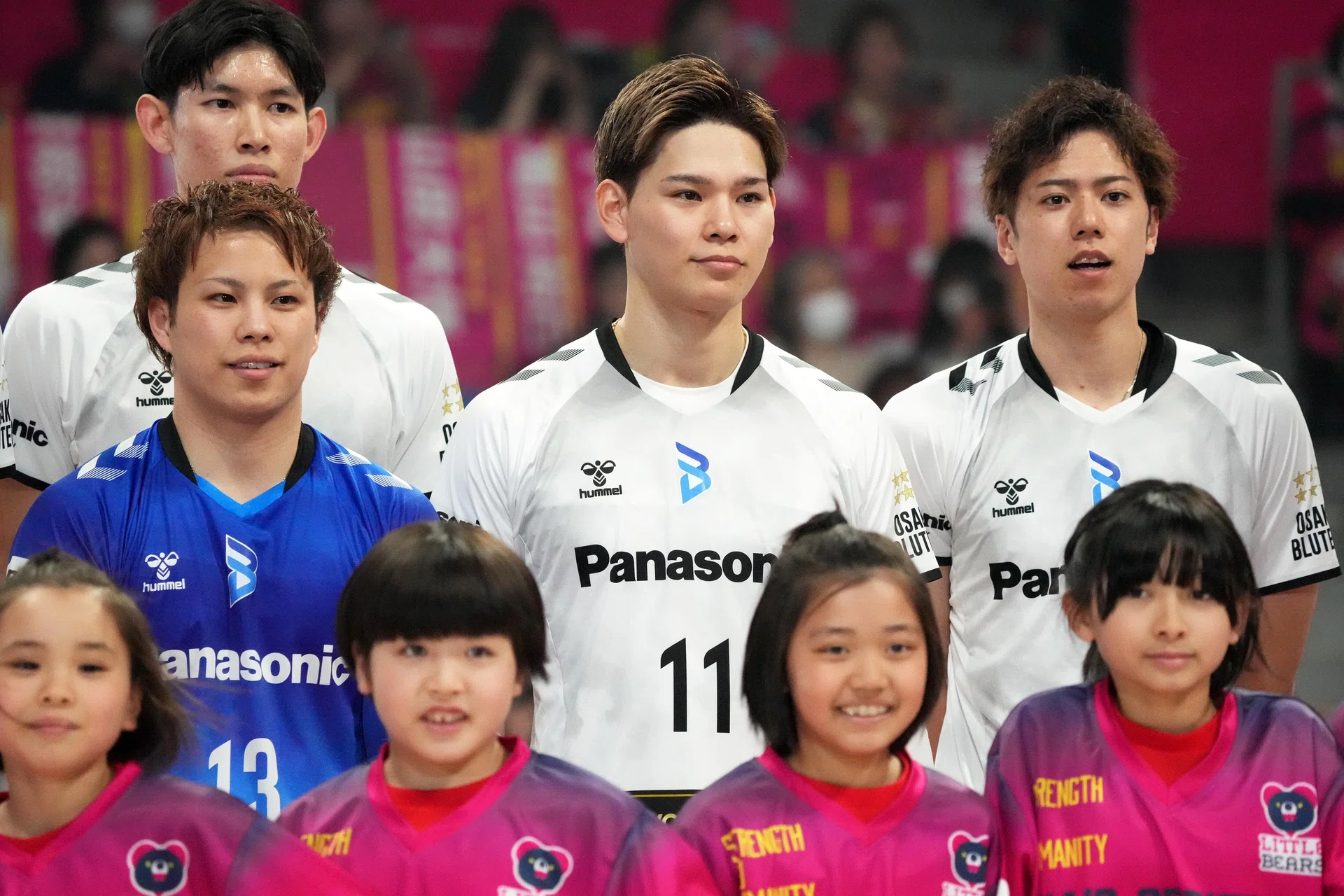
Just last week, Japanese volleyball star Yuji Nishida became an unexpected global sensation – not for a killer spike, but for the most committed apology you’ll see all year.
During the SV League All-Star Game in Kobe on Feb 1, Yuji’s serve accidentally hit a courtside staffer. Rather than offer a quick bow, the 26-year-old slid head-first across the court on his tummy, nose to the floor, before dropping to his knees and bowing deeply, in a gesture that quickly went viral. The clip racked up over 8.5 million views in less than 24 hours on X (, with fans calling it “peak anime energy” – an internet-worthy mix of humility and humour.
Despite the awkward moment, Yuji’s team won 3–0 and he was named the Most Valuable Player of the All-Star Game, proving once again he’s a hit both on and off the court.
And just who is Yuji Nishida?
More than just a viral moment, Yuji is one of Japan’s most prominent volleyball stars, and his appeal runs far deeper than a single clip.
A powerful opposite hitter known for explosive spikes, agility and competitive fire, he regularly anchors both his club Osaka Bluteon and Japan’s national team, often driving momentum when it matters most. He’s competed on some of the sport’s biggest stages, from the Olympic Games to the FIVB World Cup, earning MVP honours and individual awards along the way.
Off the court, Yuji’s following stretches into the millions, with fans drawn to his mix of sportsmanship, humility and easy charm – qualities that made his now-viral apology feel sincere rather than staged. At 1.87 metres with an athletic build and an expressive, almost anime-hero presence, he neatly straddles the line between elite athlete and pop-culture heart-throb.
Other hot Japanese athletes on our radar
Shohei Ohtani
Shohei Ohtani is a once-in-a-generation baseball phenomenon – a true two-way player who dominates Major League Baseball as both an elite hitter and pitcher, a feat not seen at this level since Babe Ruth. After rising to stardom in Japan with the Hokkaido Nippon-Ham Fighters, he moved to the U.S. in 2018 and rewrote the sport’s record books, becoming a multiple-time, often unanimous MLB Most Valuable Player, an AP Male Athlete of the Year, and the first player in league history to hit 50 home runs and steal 50 bases in a single season.
Now with the Los Angeles Dodgers, Shohei is also one of the most commercially powerful athletes in the world, earning an estimated US$100 million annually in endorsements from brands including New Balance, Hugo Boss, Seiko, Porsche Japan and Japan Airlines. Yet what truly fuels his global appeal is his humility, relentless work ethic and refusal to court controversy – qualities that have made him not just baseball’s biggest star, but a rare cross-cultural icon beloved well beyond the sport.
Kota Miura
The 23-year-old rising Japanese combat sports star who has steadily carved out his own identity in MMA and kickboxing, beyond the famous surname he carries as the son of football legend Kazuyoshi Miura.
Competing in the featherweight division under RIZIN Fighting Federation, Kota has drawn attention for his physicality, composure in the ring, and willingness to take on high-pressure bouts on some of Japan’s biggest fight cards, including the promotion’s headline New Year’s Eve events. His breakout moment came with a first-round knockout victory at a major RIZIN show in late 2024, cementing him as a young fighter to watch.
Outside the cage, Kota’s appeal extends into fashion and pop culture – he was tapped by Japanese denim label EVISU as the face of its 2025 campaign, signalling his crossover potential as a style and youth icon. Fans are not only smitten by his athletic grit, but also to his understated confidence, disciplined work ethic and striking screen presence.
Ran Takahashi
Ran Takahashi first caught national attention as a teenage prodigy, becoming one of Japan’s youngest-ever volleyball stars to leap from high school standout to Olympic athlete in the span of just a few years. An outside hitter known for his explosive jump, fluid movement and fearless attacking style, Takahashi made history when he represented Japan at the Tokyo 2020 Olympics while still a student, later sharpening his game in Italy’s top professional league before returning to play for Suntory Sunbirds.
His rise has been marked by early accolades – including MVP honours at Japan’s All-Japan High School Championships – and a growing reputation as one of the national team’s most dynamic offensive weapons. Beyond the court, Takahashi’s appeal stretches firmly into fashion and pop culture: he has fronted campaigns for luxury house Dior, partnered with beauty brand Kosé, and signed with ASICS, positioning him as a rare crossover figure in Japanese sport.
His appeal extends beyond athleticism – his youthful energy, approachable personality and leading-man looks have helped him transcend volleyball to become one of Japan’s most recognisable and beloved modern athletes.
Tomoa Narasaki
Tomoa Narasaki, 29, is one of Japan’s most accomplished and influential sport climbers, widely regarded as a pioneer of modern competition bouldering. Rising through the youth ranks before dominating the global circuit, he became a two-time IFSC World Champion (2016, 2019) and a multiple IFSC Boulder World Cup overall winner, establishing himself as one of the most consistent performers of his generation. Tomoa represented Japan at the Tokyo 2020 Olympics, finishing just off the podium in fourth place, and competed again at Paris 2024, cementing his status as a mainstay of the sport’s Olympic era.
Beyond medals, his legacy includes technical innovation – he popularised the now-widely adopted “Tomoa skip” in speed climbing – and entrepreneurship, having launched his own Japan-made climbing brand, WISE. Fans are captivated not only by his explosive, creative climbing style, but by his calm competitiveness and role in helping propel sport climbing from a niche pursuit to a global, Olympic-level spectacle.
Yuki Ishikawa
Few athletes have done more to elevate Japanese men’s volleyball globally than Yuki Ishikawa. Now in his early thirties, the long-time captain of Japan’s men’s national team has built his reputation on consistency, leadership and elite-level performance, both at home and abroad. An accomplished outside hitter, Ishikawa has spent much of his professional career in Italy’s SuperLega – widely regarded as the world’s toughest club league – and made history as the first Japanese male player to win the CEV Champions League and the FIVB Club World Championship.
Internationally, he has collected multiple Best Outside Spiker awards at major tournaments including the FIVB World Cup, Volleyball Nations League and Asian Championships, alongside MVP honours that underline his role as Japan’s offensive anchor.
Off the court, his fame extends well beyond volleyball: Ishikawa became the first volleyball player immortalised with a wax figure at Madame Tussauds Tokyo, a marker of rare mainstream recognition. Fans admire not only his powerful, reliable play under pressure, but also his quiet authority, longevity and professionalism – qualities that have made him both a national sporting icon and a role model for a new generation of Japanese athletes.
Katsumi Nakamura
Katsumi Nakamura is a seasoned Japanese swimmer and two-time Olympian known for representing Japan in the 2016 Rio de Janeiro and 2020 Tokyo Summer Olympics, specialising in the 50 m and 100 m freestyle events and holding national records in those distances. Before his appearance on Netflix’s Physical: Asia, Katsumi established himself on the international swimming stage and claimed medals in world-class short-course and Pan-Pacific championships, including being the first Japanese man to break 48 seconds in the 100 m freestyle.
On Physical: Asia, the 31-year-old impressed viewers not only with his athleticism in mixed-discipline challenges but also with his fighting spirit and work ethic in quests that pushed competitors far outside their usual sporting arenas. Beyond competition, Nakamura’s presence in the media has grown through daily training content and fitness channels, and his charismatic blend of both looks and resilience has helped him build a broader fanbase that appreciates him for both competitive grit and his grounded approach to sport and life.
Daiki Hashimoto
Still in his early twenties, Daiki Hashimoto has already rewritten gymnastics history. He burst onto the global stage at the Tokyo 2020 Olympics, becoming the youngest men’s individual all-around Olympic champion at just 19, while also adding gold on horizontal bar and team silver to his medal haul.
Since then, his dominance has only deepened – Daiki has claimed three consecutive World Championship all-around titles, a feat achieved by only a handful of gymnasts before him, placing him firmly in the lineage of Japan’s greats. Known for his precision, composure and consistency across all six apparatuses, he has emerged as the backbone of Japan’s men’s gymnastics programme in the post-Kohei Uchimura era.
While relatively low-key off the competition floor, his performances have transcended sport, earning global media attention and even accolades in sports photography, underscoring his visual and cultural impact. Fans admire him not just for the medals, but for the quiet authority, resilience and technical mastery that make him one of the defining gymnasts of his generation.
Yuki Kawamura
In a sport that depends a lot on height, Yuki Kawamura has become famous for proving that size isn’t destiny. Standing at just 1.70 metres, he has earned global attention as one of the shortest players to reach the NBA ecosystem – a feat that’s turned him into a cult favourite and internet-certified short king.
Before that, Yuki dominated Japan’s B.League, where he was named Rookie of the Year and league MVP, establishing himself as an elite playmaker with speed, vision and fearless confidence. His rise continued on the international stage, representing Japan at the FIBA World Cup and Paris 2024 Olympics, where his performances against taller, more physical opponents drew widespread praise.
Now splitting time between the NBA and its developmental league, Yuki’s appeal goes far beyond stats: fans love him for his underdog energy, relentless hustle and infectious joy on court.