%22%3E%3Cpath%20fill%3D%22%23000%22%20d%3D%22M79.702%2078.555c0%2033.03%2018.767%2046.361%2035.801%2046.361%2014.149%200%2029.738-7.033%2034.505-28.595l-1.445-.306c-3.61%2015.903-14.005%2027.371-33.06%2027.371-13.86%200-13.716-22.173-13.716-41.594V67.415h49.662c0-23.393-13.136-40.674-35.946-40.674-17.034%200-35.801%2018.94-35.801%2051.814m35.801-50.283c14.437%200%2014.005%2026.455%2013.861%2037.617h-27.573c-.004-18.353.865-37.617%2013.712-37.617%22%2F%3E%3C%2Fg%3E%3Cmask%20id%3D%22b%22%20width%3D%22603%22%20height%3D%22126%22%20x%3D%220%22%20y%3D%220%22%20maskUnits%3D%22userSpaceOnUse%22%20style%3D%22mask-type%3Aluminance%22%3E%3Cpath%20fill%3D%22%23fff%22%20d%3D%22M602.5%200H.5v125.074h602z%22%2F%3E%3C%2Fmask%3E%3Cg%20mask%3D%22url(%23b)%22%3E%3Cpath%20fill%3D%22%23000%22%20d%3D%22M86.81%20105.474h-1.445c0%2010.547-4.475%2011.463-5.483%2011.463-2.454%200-4.475-3.514-4.475-11.921V48.264c0-14.83-10.826-21.558-22.229-21.558-10.97%200-22.66%206.118-25.983%2017.276V8.478c-.515-4.763-4.26-8.48-8.893-8.48H.522v1.53H.5c2.886%200%204.763%201.988%204.763%205.045v110.211c0%203.057-1.877%205.045-4.763%205.045h.022v1.531h31.423v-1.531h.021c-2.885%200-4.762-1.988-4.762-5.045V50.252c0-10.395%208.949-18.806%2016.31-18.806%205.338%200%209.813%204.13%209.813%2014.83v58.74c0%2013.909%207.796%2019.874%2016.165%2019.874%209.958.005%2017.318-6.418%2017.318-19.416%22%2F%3E%3C%2Fg%3E%3Cmask%20id%3D%22c%22%20width%3D%22603%22%20height%3D%22126%22%20x%3D%220%22%20y%3D%220%22%20maskUnits%3D%22userSpaceOnUse%22%20style%3D%22mask-type%3Aluminance%22%3E%3Cpath%20fill%3D%22%23fff%22%20d%3D%22M602.5%200H.5v125.074h602z%22%2F%3E%3C%2Fmask%3E%3Cg%20mask%3D%22url(%23c)%22%3E%3Cpath%20fill%3D%22%23000%22%20d%3D%22M225.911%2042.197c0-10.552-11.259-16.818-22.954-16.818-10.682%200-21.513%205.045-25.119%2016.975v-7.352c-.48-4.574-3.977-8.148-8.364-8.398h-18.322v1.53h-.022c2.886%200%204.763%201.99%204.763%205.046v81.371h.004c.293%204.814%203.942%208.633%208.509%208.846v.004h18.173v-1.53h.022c-2.886%200-4.763-1.989-4.763-5.045V48.62c0-10.552%209.094-19.269%2016.602-19.269%204.763%200%208.805%203.672%209.386%2012.693%200%206.881%204.619%2011.773%2011.119%2011.773%206.631%200%2010.966-4.587%2010.966-11.62%22%2F%3E%3C%2Fg%3E%3Cmask%20id%3D%22d%22%20width%3D%22603%22%20height%3D%22126%22%20x%3D%220%22%20y%3D%220%22%20maskUnits%3D%22userSpaceOnUse%22%20style%3D%22mask-type%3Aluminance%22%3E%3Cpath%20fill%3D%22%23fff%22%20d%3D%22M602.5%200H.5v125.074h602z%22%2F%3E%3C%2Fmask%3E%3Cg%20mask%3D%22url(%23d)%22%3E%3Cpath%20fill%3D%22%23000%22%20d%3D%22M234.434%2028.315c2.925%200%205.583%202.312%206.779%205.863l29.782%2089.218h1.597l20.61-61.852%2020.609%2061.852h1.598l29.781-89.218c1.196-3.556%203.855-5.863%206.78-5.863h.183v-1.776h-11.538v1.776h.184c2.925%200%203.99%202.312%202.794%205.863l-18.082%2054.209-18.082-54.209c-1.196-3.556-.131-5.863%202.794-5.863h.183v-1.776h-33.343v1.776h.183c2.925%200%205.583%202.312%206.78%205.863l8.373%2025.058-9.705%2029.15-18.082-54.208c-1.196-3.556-.131-5.863%202.794-5.863h.184v-1.776h-33.344v1.776z%22%2F%3E%3C%2Fg%3E%3Cmask%20id%3D%22e%22%20width%3D%22603%22%20height%3D%22126%22%20x%3D%220%22%20y%3D%220%22%20maskUnits%3D%22userSpaceOnUse%22%20style%3D%22mask-type%3Aluminance%22%3E%3Cpath%20fill%3D%22%23fff%22%20d%3D%22M602.5%200H.5v125.074h602z%22%2F%3E%3C%2Fmask%3E%3Cg%20mask%3D%22url(%23e)%22%3E%3Cpath%20fill%3D%22%23000%22%20d%3D%22M377.826%20124.491c17.034%200%2038.211-15.699%2038.211-48.882%200-33.03-21.177-48.73-38.211-48.73-17.035%200-38.067%2015.857-38.067%2048.73.004%2033.026%2021.032%2048.882%2038.067%2048.882m0-96.085c13.86%200%2016.121%2028.24%2016.121%2047.356%200%2019.116-2.261%2047.198-16.121%2047.198-13.861%200-15.978-27.777-15.978-47.198%200-19.422%202.122-47.356%2015.978-47.356%22%2F%3E%3C%2Fg%3E%3Cmask%20id%3D%22f%22%20width%3D%22603%22%20height%3D%22126%22%20x%3D%220%22%20y%3D%220%22%20maskUnits%3D%22userSpaceOnUse%22%20style%3D%22mask-type%3Aluminance%22%3E%3Cpath%20fill%3D%22%23fff%22%20d%3D%22M602.5%200H.5v125.074h602z%22%2F%3E%3C%2Fmask%3E%3Cg%20mask%3D%22url(%23f)%22%3E%3Cpath%20fill%3D%22%23000%22%20d%3D%22M490.482%2042.197c0-10.552-11.258-16.818-22.953-16.818-10.683%200-21.513%205.045-25.119%2016.975v-7.352c-.48-4.574-3.977-8.148-8.365-8.398h-18.326v1.53h-.022c2.886%200%204.763%201.99%204.763%205.046v81.371h.004c.293%204.814%203.943%208.633%208.509%208.846v.004h18.173v-1.53h.022c-2.885%200-4.763-1.989-4.763-5.045V48.62c0-10.552%209.094-19.269%2016.602-19.269%204.763%200%208.806%203.672%209.386%2012.693%200%206.881%204.619%2011.773%2011.119%2011.773%206.64%200%2010.97-4.587%2010.97-11.62%22%2F%3E%3C%2Fg%3E%3Cmask%20id%3D%22g%22%20width%3D%22603%22%20height%3D%22126%22%20x%3D%220%22%20y%3D%220%22%20maskUnits%3D%22userSpaceOnUse%22%20style%3D%22mask-type%3Aluminance%22%3E%3Cpath%20fill%3D%22%23fff%22%20d%3D%22M602.5%200H.5v125.074h602z%22%2F%3E%3C%2Fmask%3E%3Cg%20mask%3D%22url(%23g)%22%3E%3Cpath%20fill%3D%22%23000%22%20d%3D%22M602.5%20103.974h-1.445c0%2010.553-4.474%2011.468-5.483%2011.468-2.453%200-4.474-3.519-4.474-11.925V6.585c0-3.056%201.877-5.045%204.762-5.045h-.166V.01h-17.715c-4.942%200-8.953%204.24-8.962%209.475h-.009v23.333c-6.063-3.977-9.84-5.503-16.48-5.503-17.034%200-35.801%2014.169-35.801%2047.046%200%2033.183%2013.101%2050.718%2035.801%2050.718%208.085%200%2013.302-2.294%2019.942-8.254%203.03%204.587%207.797%206.575%2012.704%206.575%209.966-.004%2017.326-6.427%2017.326-19.426m-30.75%2011.625c-4.763%204.435-10.84%205.822-13.38%205.822-11.482%200-19.558-16.933-19.558-46.907%200-29.97%2010.914-43.222%2019.885-43.222%203.3%200%206.264.153%2010.307%203.057v69.172c.004%205.04%201.017%209.017%202.746%2012.078%22%2F%3E%3C%2Fg%3E%3Cmask%20id%3D%22h%22%20width%3D%22603%22%20height%3D%22126%22%20x%3D%220%22%20y%3D%220%22%20maskUnits%3D%22userSpaceOnUse%22%20style%3D%22mask-type%3Aluminance%22%3E%3Cpath%20fill%3D%22%23fff%22%20d%3D%22M602.5%200H.5v125.074h602z%22%2F%3E%3C%2Fmask%3E%3Cg%20mask%3D%22url(%23h)%22%3E%3Cpath%20fill%3D%22%23000%22%20d%3D%22M516.984%20121.865c-2.885%200-4.763-1.988-4.763-5.045V9.466C512.2%204.241%20508.196.01%20503.259.01h-17.724v1.53h-.022c2.89%200%204.763%201.989%204.763%205.045v108.418c.515%204.564%204.029%208.129%208.434%208.337v.06h18.252v-1.53h.022z%22%2F%3E%3C%2Fg%3E%3C%2Fsvg%3E)
The Mum Tax: Have you been punished just for being a mum at work?
From missed promotions to assumptions about ambition, many women discover that the penalty for taking a career break doesn’t end when they return to work.
By Rebecca Rachel Wong -
Share this article
For mothers in Singapore, the idea of stepping away from work, even temporarily, feels less like a choice and more like a risk.
Clara, a mother of three who works part-time in marketing, shared that she feared taking a break from work due to the nature of her industry. “It’s very easy to be out of touch with the market, especially with trends like the use of AI,” she says.
But the risk isn’t just about skills. It’s about signalling.
“Taking a break from work often signals to your employers that you have different priorities compared to others who might be chasing the corporate ladder,” says Clara.
Then there’s the CV gap to consider.
Beyond that, she points to something less visible but just as critical: networks.
“You may lose touch with work contacts if out of the field for too long,” she says. “This network is hard to rebuild, and some people are hired for their work connections.”
Despite these fears, Clara chose to take a one and a half year career break to focus on her family. Upon returning, she found a part-time marketing position that allowed her to balance family and career.
Dr Sharon, a dentist and mother of one, shared similar fears to Clara. “If I take a career break, I may struggle to return to the workplace and have to rebuild my patient base again,” she says.
She chose not to take a break after maternity leave, but opted for shorter hours at work. “I did not take a longer hiatus as I did not want to lose my confidence in her hand skills,” she explains.
Her return to work was emotionally difficult. “The first day back to work was the most challenging as I experienced separation anxiety from my baby and the thought of leaving her made me cry.”
Support systems helped — her husband brought her home during lunch, and her family sent videos throughout the day.
Clara and Sharon’s fears regarding a career break reflect a broader reality: for many women, the cost of stepping away is not just time, but momentum at work.
Why mothers may fear taking career breaks
According to Michelle Soliano, a psychotherapist at Relational Wellness Studio, the hesitation many women feel about career breaks operates on two levels: practical risk and psychological pressure.
“At a psychological level, this fear usually comes from loss of safety and identity,” she explains.
Work, she notes, provides financial security, structure, and a sense of contribution. Stepping away means stepping into uncertainty.
There is also a deeper conditioning at play.
“Many women have been socialised to believe they must “do it all well” — to be present caregivers while maintaining successful careers,” Michelle observes. “Taking a break can feel like falling behind or losing ground and traction.”
The fears that surface are familiar: What if I can’t get back in? Will others think I lack ambition?
What if I become financially dependent?
Some of these concerns are grounded in reality, Michelle acknowledges. Career progression may stall, and skills may become outdated. Re-entry can be challenging, depending on the industry.
But others are shaped by societal expectations — the idea that worth is tied to productivity, or that a “successful woman” is always advancing.
This is why the decision is rarely straightforward. Even choosing to stay at work can come at a cost.
“If a woman continues working despite wanting a break, it may create internal strain which could lead to chronic stress and burnout, alongside guilt and resentment,” Michelle notes.
What to consider when contemplating a break
Career coach Kim Underhill sees the decision to take a break as complex, involving many factors.
“Mothers considering a career break often weigh a mix of practical, financial, and social concerns,” she says, pointing to issues like slowed career progression, reduced visibility, and the risk of re-entering at a lower level.
There is also what she describes as the “motherhood penalty”, where employers may assume reduced commitment after a break.
The issue has increasingly entered the national conversation as Singapore grapples with record-low fertility rates and growing discussions around caregiving responsibilities.
In April, the Government announced a new work group to support Singaporeans’ marriage and parenthood aspirations.
Speaking to the media, Minister in the Prime Minister’s Office Indranee Rajah said one indicator of its success would be reducing the “maternity penalty” faced by women, and spoke about the need to normalise career breaks taken for family and caregiving responsibilities
But while attitudes may be gradually evolving at a policy and societal level, the realities many mothers face remain deeply personal and practical. For women considering a career break, the decision is rarely just about stepping away from work — it is about weighing the bigger picture.
Kim mentions several factors mothers should consider: financial impact, career stage, and how quickly skills may become outdated in their industry. A break early in one’s career may slow momentum but be easier to recover from, while mid-career breaks can affect leadership trajectories.
Then there’s the issue of identity.
The decision also extends beyond the individual. Household dynamics, financial dependence, and whether there are caregiving alternatives all come into play.
Why a career break needs to be planned carefully
If there is one consistent piece of advice from both Kim and Michelle, it is this: a career break should be planned as carefully as any career move.
- Be clear about your reasons: Before stepping away, Kim suggests being clear on both the “what” and the “why” of a break. Financial implications should be considered not just in the short term but also in terms of other factors, such as missed raises and long-term savings.
- Maintain a connection to the industry: During the break, maintaining some connection to one’s professional identity is key — whether through upskilling, networking, or freelance work. Michelle adds that even small efforts can protect confidence. Staying engaged through reading, occasional projects, or conversations with peers helps maintain continuity.
- Have a mindset reframe: Equally important is reframing the break itself. “Instead of viewing it as a ‘gap,’ reframe it as a period of caregiving, growth, and life experience,” Michelle advises.
- Pre-plan your re-entry: Planning for re-entry early can reduce anxiety, even if those plans evolve.
What employers actually think
The fear that a career break will permanently derail employability is not entirely unfounded — but it may not be as severe as many assume.
“In my experience, many of the concerns mothers have about taking a career break are valid, but they may not always fully align with how hiring managers think today,” says Allie Teh, senior manager for sales & marketing at Robert Walters Singapore.
She observes that there has been a shift towards skills-based hiring, where capabilities and potential are prioritised over strictly linear career paths.
That said, duration matters. A six-month break is typically easier to navigate than a five-year one.
At the CV screening stage, a two- to three-year caregiving gap is “rarely an automatic disadvantage” if it is clearly explained, Allie notes.
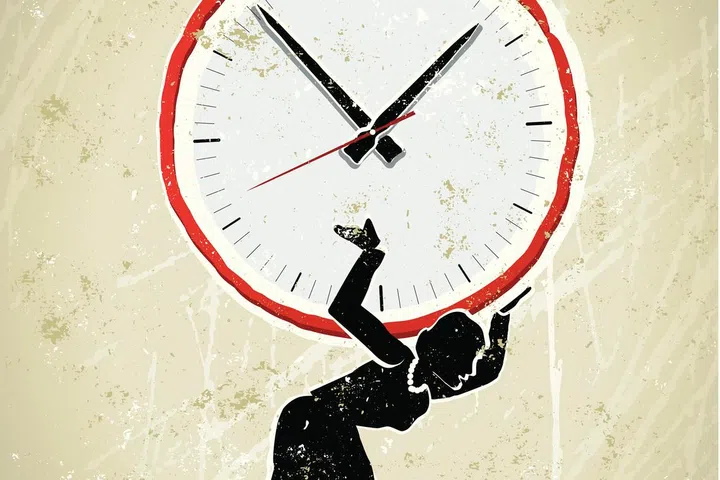
Atlas Saving Time!A stylized vector cartoon of a business woman carrying a clock on her back. Reminiscent of an old screen print poster and suggesting time, save time, body clock,saving, deadline, time management, time management, efficiency or speed. Man, clock, piggy bank, clock, paper texture, and background are on different layers for easy editing. Please note: this is an eps 10 illustration and clipping masks have been used.
“Hiring managers look for signs that candidates have remained engaged — whether through part-time work, upskilling, volunteering, or freelance projects,” says Alllie. “A well-articulated narrative around the break can make a significant difference.”
There are, however, industry differences. Rapidly-evolving areas like AI may be challenging to re-enter, if one chooses to take a longer break.
Still, attitudes are evolving. “Greater emphasis on diversity and inclusion has led to more flexible work arrangements, returnship programmes, and structured re-entry pathways, reflecting a growing recognition of the value that returning mothers bring,” Allie says.
Staying competitive even while stepping back
For women considering a career break, Allie also offers her advice:
- Preparation and consistency is key: “Before taking a break, maintaining strong professional networks and discussing potential return pathways with employers can help.”
- Consider upskilling if possible: During the break, staying connected through courses, certifications and networking can keep skills relevant and confidence intact.Echoing Michelle’s advice, Allie notes that small, consistent efforts can make a meaningful difference when it comes time to return to the workforce.
- Be transparent about the break: “When returning, candidates should be transparent and confident about their career break,” adds Allie. “Frame the period positively, highlighting any skills gained or learnings undertaken, and how these experiences have strengthened both personal and professional capabilities.”
- Don’t overexplain yourself: On a CV, a brief and clear explanation is sufficient. “In interviews, the focus should be on your readiness to contribute and the value you bring,” says Allie.