
Career confessions: What this 16-year-old learned about entrepreneurial success after interviewing 18 founders
Surina Bharwani was just 14 when she launched podcast ‘The Entrepreneur’s Equation’. She tells us three lessons about success she’s learned after hosting over 18 high-profile founders like Nas Daily and hotelier and restaurateur Loh Lik Peng
By Charis Gan -
Share this article
For many of us, entrepreneurship and career success were the last things on our minds in our early teens. Those years were spent buried in textbooks, figuring out who to sit with at recess and chasing the latest trends. Not so for 16-year-old Surina Bharwani.
At just 14, she launched The Entrepreneur’s Equation, a podcast and YouTube channel, driven by one burning question: what actually drives entrepreneurial success?
The idea came after she found the answers from adults around her and from online searches vague and predictable. So she cold emailed founders from around the world, who had no reason to reply.
Unexpectedly, many did. Guests including media personality Nuseir Yassin (better known as Nas Daily), Sujay Tyle (founder of two unicorns and co-owner of the NBA’s Portland Trail Blazers) and Loh Lik Peng (hotelier, restaurateur and founder of the Unlisted Collection) agreed to speak on her channel, as did Forbes 30 Under 30 honourees and Shark Tank investors.
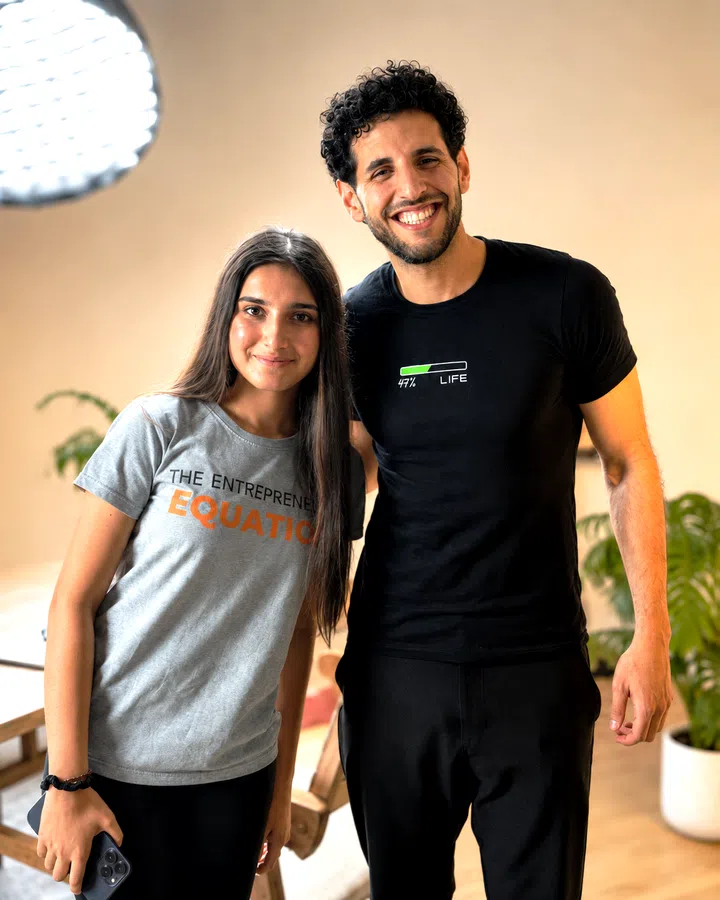
Surina Bharwani and Nas Daily
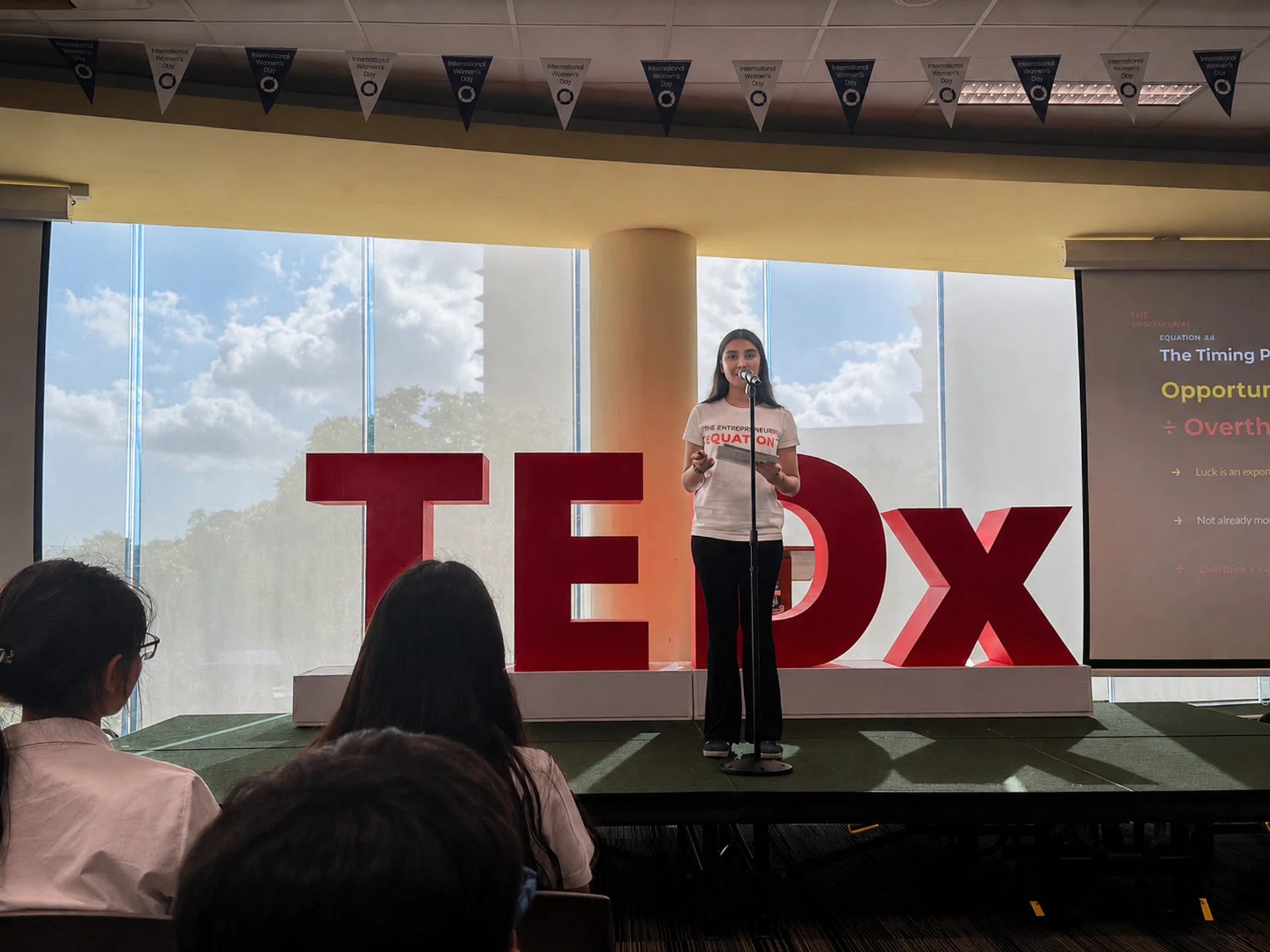
After hours of conversations with more than 18 successful founders, Surina compiled a handbook for entrepreneurial success, also titled ‘The Entrepreneur’s Equation’. She launched it after hosting EmpowerX 2026 at *SCAPE in August, Singapore’s first entirely youth-run entrepreneurship summit, which featured six youth speakers from across the region.
In the handbook, she introduces a framework for success built from those conversations, which she defined as the integral of everything a founder builds (character, hunger, network, team, opportunity and gratitude), divided by the friction working against them (ego, self-interest, control, overthinking and fear), compounded over time.
The name was also inspired by her dyscalculia, a diagnosed learning difficulty with numbers, which left her convinced for months that she would never understand maths. Now, she continues to host guests on ‘The Entrepreneur’s Equation’, releasing an episode each month, while balancing her studies and volunteering at Willing Hearts on weekends.
Here are three key lessons she has learned from these conversations.
Luck cannot be manufactured but you can widen your surface area for it
“Work hard and luck will come to you” is a common saying, but it isn’t always true. Plenty of people work extremely hard and never catch a break. What you can do instead is increase the number of chances luck has to find you: show up in rooms you don’t belong in yet, take more swings (more asks, more pitches, more introductions), and become someone people would genuinely vouch for. In other words, build your network and your reputation.
I learnt this especially when I interviewed Dubai-based content creator and entrepreneur Rosemin Madhavji, she told me about the time she attended a talk at the Costume Society to hear fashion designer Tom Ford speak.
She ended up sitting next to the brand’s UK PR Director, who asked her for her resume. That is how she started interning at their press office and later was headhunted by Tom Ford himself and worked alongside him.
She had walked into the talk with no connections and no plan whatsoever. She couldn’t control who would be sitting next to her that day, but she could control whether she was in the room in the first place.
You don’t have to be fully qualified to take the risk
I had expected the entrepreneurs I interviewed to be total adrenaline junkies; absolutely fearless, but instead found that most were not. Many of them were highly calculated about what could go wrong.
For instance, Loh Lik Peng’s journey from an established lawyer to a hotelier and restaurateur was a calculated leap into something completely unfamiliar. He took his biggest risk when he opened his first hotel, Hotel 1929, in Singapore’s red light district. At the time banks were reluctant to finance his idea and he did not know whether his idea would succeed.
Instead of allowing that uncertainty to stop him though, he saw what others did not – an undervalued heritage building and the opportunity to create a unique boutique hotel.
Successful founders don’t necessarily perceive risk the way everyone else does. Lik Peng had to be convinced enough to bet on a red-light district without knowing how it would turn out. So he spent time walking the neighbourhood, getting to know it, and forming his own view rather than accepting its reputation. In other words, he took a calculated risk, then jumped in.
We can apply this by simply changing our relationship with risk. We do not need to eliminate all uncertainty before moving ahead with our idea. We don’t need to always be fully qualified, have a complete fully formed plan and know that our idea will work.
All we need to do is to understand the risk well enough to decide whether it is worth taking. What is important here is conviction backed by calculation.
Success is about removing obstacles, not necessarily adding “more”
When I began ‘The Entrepreneur’s Equation’, I was looking for what successful founders had. Was it grit? Drive? The right network? Opportunity? Confidence? Through these conversations, I also started noticing what gets in the way of success, and that was ego, fear, overthinking, self-interest, and defensiveness.
When I interviewed Margaret Wang, CEO of reproductive health service Rhea Fertility and fertility network GenPrime, she mentioned that someone told her that she was an “undisciplined thinker”. She could have become defensive and dismissed the criticism. However, she stayed with it and took it as valuable feedback that could be true and worked on improving it.
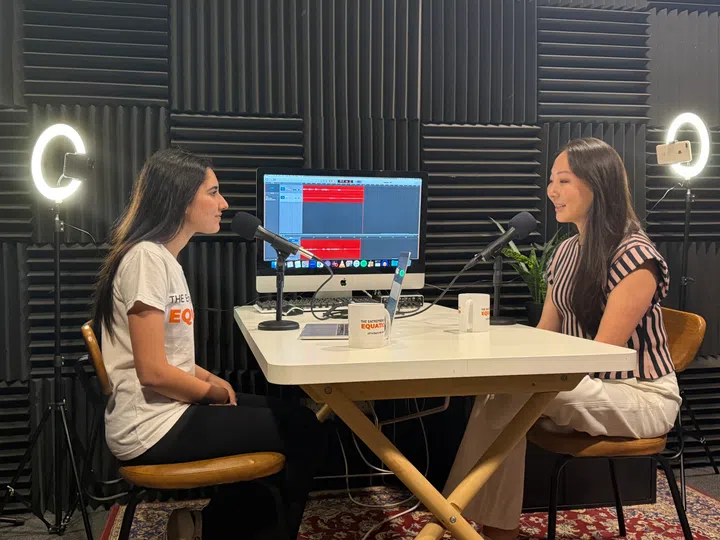
Surina in talks with Magaret
When something is not moving forward in our lives, our instinct is always to assume we need to do more. We need to question ourselves in the most detailed way and think about what is creating friction. Am I overthinking my decision? Am I holding on too tightly because I find it hard to give up control? Am I resisting feedback because it makes me uncomfortable? Is fear making the decision for me?
We need to dig deep and realise that sometimes to get to the next stage doesn’t require adding something new but instead requires removing the thing that is holding us back.