%22%3E%3Cpath%20fill%3D%22%23000%22%20d%3D%22M79.702%2078.555c0%2033.03%2018.767%2046.361%2035.801%2046.361%2014.149%200%2029.738-7.033%2034.505-28.595l-1.445-.306c-3.61%2015.903-14.005%2027.371-33.06%2027.371-13.86%200-13.716-22.173-13.716-41.594V67.415h49.662c0-23.393-13.136-40.674-35.946-40.674-17.034%200-35.801%2018.94-35.801%2051.814m35.801-50.283c14.437%200%2014.005%2026.455%2013.861%2037.617h-27.573c-.004-18.353.865-37.617%2013.712-37.617%22%2F%3E%3C%2Fg%3E%3Cmask%20id%3D%22b%22%20width%3D%22603%22%20height%3D%22126%22%20x%3D%220%22%20y%3D%220%22%20maskUnits%3D%22userSpaceOnUse%22%20style%3D%22mask-type%3Aluminance%22%3E%3Cpath%20fill%3D%22%23fff%22%20d%3D%22M602.5%200H.5v125.074h602z%22%2F%3E%3C%2Fmask%3E%3Cg%20mask%3D%22url(%23b)%22%3E%3Cpath%20fill%3D%22%23000%22%20d%3D%22M86.81%20105.474h-1.445c0%2010.547-4.475%2011.463-5.483%2011.463-2.454%200-4.475-3.514-4.475-11.921V48.264c0-14.83-10.826-21.558-22.229-21.558-10.97%200-22.66%206.118-25.983%2017.276V8.478c-.515-4.763-4.26-8.48-8.893-8.48H.522v1.53H.5c2.886%200%204.763%201.988%204.763%205.045v110.211c0%203.057-1.877%205.045-4.763%205.045h.022v1.531h31.423v-1.531h.021c-2.885%200-4.762-1.988-4.762-5.045V50.252c0-10.395%208.949-18.806%2016.31-18.806%205.338%200%209.813%204.13%209.813%2014.83v58.74c0%2013.909%207.796%2019.874%2016.165%2019.874%209.958.005%2017.318-6.418%2017.318-19.416%22%2F%3E%3C%2Fg%3E%3Cmask%20id%3D%22c%22%20width%3D%22603%22%20height%3D%22126%22%20x%3D%220%22%20y%3D%220%22%20maskUnits%3D%22userSpaceOnUse%22%20style%3D%22mask-type%3Aluminance%22%3E%3Cpath%20fill%3D%22%23fff%22%20d%3D%22M602.5%200H.5v125.074h602z%22%2F%3E%3C%2Fmask%3E%3Cg%20mask%3D%22url(%23c)%22%3E%3Cpath%20fill%3D%22%23000%22%20d%3D%22M225.911%2042.197c0-10.552-11.259-16.818-22.954-16.818-10.682%200-21.513%205.045-25.119%2016.975v-7.352c-.48-4.574-3.977-8.148-8.364-8.398h-18.322v1.53h-.022c2.886%200%204.763%201.99%204.763%205.046v81.371h.004c.293%204.814%203.942%208.633%208.509%208.846v.004h18.173v-1.53h.022c-2.886%200-4.763-1.989-4.763-5.045V48.62c0-10.552%209.094-19.269%2016.602-19.269%204.763%200%208.805%203.672%209.386%2012.693%200%206.881%204.619%2011.773%2011.119%2011.773%206.631%200%2010.966-4.587%2010.966-11.62%22%2F%3E%3C%2Fg%3E%3Cmask%20id%3D%22d%22%20width%3D%22603%22%20height%3D%22126%22%20x%3D%220%22%20y%3D%220%22%20maskUnits%3D%22userSpaceOnUse%22%20style%3D%22mask-type%3Aluminance%22%3E%3Cpath%20fill%3D%22%23fff%22%20d%3D%22M602.5%200H.5v125.074h602z%22%2F%3E%3C%2Fmask%3E%3Cg%20mask%3D%22url(%23d)%22%3E%3Cpath%20fill%3D%22%23000%22%20d%3D%22M234.434%2028.315c2.925%200%205.583%202.312%206.779%205.863l29.782%2089.218h1.597l20.61-61.852%2020.609%2061.852h1.598l29.781-89.218c1.196-3.556%203.855-5.863%206.78-5.863h.183v-1.776h-11.538v1.776h.184c2.925%200%203.99%202.312%202.794%205.863l-18.082%2054.209-18.082-54.209c-1.196-3.556-.131-5.863%202.794-5.863h.183v-1.776h-33.343v1.776h.183c2.925%200%205.583%202.312%206.78%205.863l8.373%2025.058-9.705%2029.15-18.082-54.208c-1.196-3.556-.131-5.863%202.794-5.863h.184v-1.776h-33.344v1.776z%22%2F%3E%3C%2Fg%3E%3Cmask%20id%3D%22e%22%20width%3D%22603%22%20height%3D%22126%22%20x%3D%220%22%20y%3D%220%22%20maskUnits%3D%22userSpaceOnUse%22%20style%3D%22mask-type%3Aluminance%22%3E%3Cpath%20fill%3D%22%23fff%22%20d%3D%22M602.5%200H.5v125.074h602z%22%2F%3E%3C%2Fmask%3E%3Cg%20mask%3D%22url(%23e)%22%3E%3Cpath%20fill%3D%22%23000%22%20d%3D%22M377.826%20124.491c17.034%200%2038.211-15.699%2038.211-48.882%200-33.03-21.177-48.73-38.211-48.73-17.035%200-38.067%2015.857-38.067%2048.73.004%2033.026%2021.032%2048.882%2038.067%2048.882m0-96.085c13.86%200%2016.121%2028.24%2016.121%2047.356%200%2019.116-2.261%2047.198-16.121%2047.198-13.861%200-15.978-27.777-15.978-47.198%200-19.422%202.122-47.356%2015.978-47.356%22%2F%3E%3C%2Fg%3E%3Cmask%20id%3D%22f%22%20width%3D%22603%22%20height%3D%22126%22%20x%3D%220%22%20y%3D%220%22%20maskUnits%3D%22userSpaceOnUse%22%20style%3D%22mask-type%3Aluminance%22%3E%3Cpath%20fill%3D%22%23fff%22%20d%3D%22M602.5%200H.5v125.074h602z%22%2F%3E%3C%2Fmask%3E%3Cg%20mask%3D%22url(%23f)%22%3E%3Cpath%20fill%3D%22%23000%22%20d%3D%22M490.482%2042.197c0-10.552-11.258-16.818-22.953-16.818-10.683%200-21.513%205.045-25.119%2016.975v-7.352c-.48-4.574-3.977-8.148-8.365-8.398h-18.326v1.53h-.022c2.886%200%204.763%201.99%204.763%205.046v81.371h.004c.293%204.814%203.943%208.633%208.509%208.846v.004h18.173v-1.53h.022c-2.885%200-4.763-1.989-4.763-5.045V48.62c0-10.552%209.094-19.269%2016.602-19.269%204.763%200%208.806%203.672%209.386%2012.693%200%206.881%204.619%2011.773%2011.119%2011.773%206.64%200%2010.97-4.587%2010.97-11.62%22%2F%3E%3C%2Fg%3E%3Cmask%20id%3D%22g%22%20width%3D%22603%22%20height%3D%22126%22%20x%3D%220%22%20y%3D%220%22%20maskUnits%3D%22userSpaceOnUse%22%20style%3D%22mask-type%3Aluminance%22%3E%3Cpath%20fill%3D%22%23fff%22%20d%3D%22M602.5%200H.5v125.074h602z%22%2F%3E%3C%2Fmask%3E%3Cg%20mask%3D%22url(%23g)%22%3E%3Cpath%20fill%3D%22%23000%22%20d%3D%22M602.5%20103.974h-1.445c0%2010.553-4.474%2011.468-5.483%2011.468-2.453%200-4.474-3.519-4.474-11.925V6.585c0-3.056%201.877-5.045%204.762-5.045h-.166V.01h-17.715c-4.942%200-8.953%204.24-8.962%209.475h-.009v23.333c-6.063-3.977-9.84-5.503-16.48-5.503-17.034%200-35.801%2014.169-35.801%2047.046%200%2033.183%2013.101%2050.718%2035.801%2050.718%208.085%200%2013.302-2.294%2019.942-8.254%203.03%204.587%207.797%206.575%2012.704%206.575%209.966-.004%2017.326-6.427%2017.326-19.426m-30.75%2011.625c-4.763%204.435-10.84%205.822-13.38%205.822-11.482%200-19.558-16.933-19.558-46.907%200-29.97%2010.914-43.222%2019.885-43.222%203.3%200%206.264.153%2010.307%203.057v69.172c.004%205.04%201.017%209.017%202.746%2012.078%22%2F%3E%3C%2Fg%3E%3Cmask%20id%3D%22h%22%20width%3D%22603%22%20height%3D%22126%22%20x%3D%220%22%20y%3D%220%22%20maskUnits%3D%22userSpaceOnUse%22%20style%3D%22mask-type%3Aluminance%22%3E%3Cpath%20fill%3D%22%23fff%22%20d%3D%22M602.5%200H.5v125.074h602z%22%2F%3E%3C%2Fmask%3E%3Cg%20mask%3D%22url(%23h)%22%3E%3Cpath%20fill%3D%22%23000%22%20d%3D%22M516.984%20121.865c-2.885%200-4.763-1.988-4.763-5.045V9.466C512.2%204.241%20508.196.01%20503.259.01h-17.724v1.53h-.022c2.89%200%204.763%201.989%204.763%205.045v108.418c.515%204.564%204.029%208.129%208.434%208.337v.06h18.252v-1.53h.022z%22%2F%3E%3C%2Fg%3E%3C%2Fsvg%3E)
You’re not just a “Pilates Princess” or a “Muscle Mommy”
They’re the catchy, aspirational fitness archetypes tied to the workouts we love — but when did wellness become about choosing which “type” of woman is more desirable?
By Charis Gan -
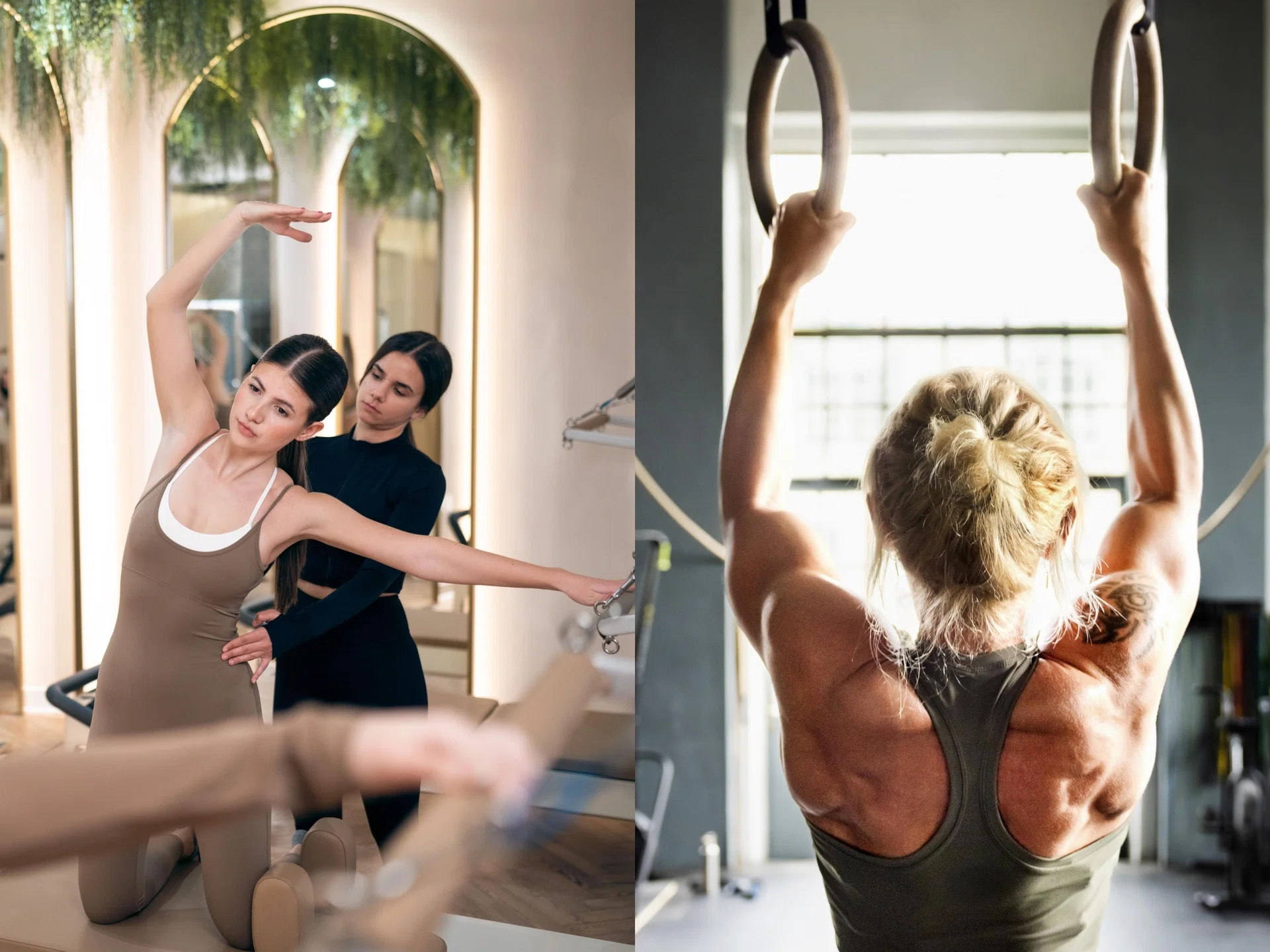
Keeping at wellness and fitness habits everyday is no easy feat – even downright dreadful at times — especially after a long day of work and returning home just to shoulder even more emotional labour.
But sometimes, the one thing that snaps me back into a “just do it” mindset and gets me into the gym is stepping into the shoes of someone who would go anyway — an alter ego, if you will. And it seems many women are doing the same too. If you’ve scrolled through fitness TikTok or Instagram, you’ve likely come across the internet’s aspirational poster girls for today’s most popular workout forms, each with her own unique aesthetic and habits.
Cardio Bunnies, Pilates Princesses and Muscle Mommies — the gym archetypes that we know and love
First, there’s the “cardio bunny”: the girl who seems permanently glistening in sweat — from the marathon-chasing, Strava-posting runner to the spin class devotee or StairMaster and treadmill lover.
Then, there’s the “muscle mommy”: the muscular woman who spends hours at the gym, tracks progressive overload and macro-nutrients religiously, and flexes her gains in sculpted gym wear.
And of course, the “pilates princesses” seen in their expensive matching activewear sets, matcha in hand, heading from a reformer class to a chic brunch spot with their girlfriends, often with a “pilates body” — a slender and lean figure to match.
These labels are harmless, even endearing on the surface. On days I feel especially drained, imagining myself as a “muscle mommy” posing under impeccable downlighting in the gym, ready to hit a new personal record (PR) on my lift really works to put me in the zone.
The girls (or what’s imagined of them) also live lives full of aspirational wellness habits; waking up early, detox concoctions day and night, balanced and colourful meals, and staying relentlessly disciplined. It’s no wonder that channelling these personas and emulating their routines can feel motivating when you’re trying to stay consistent on your fitness journey.
Within each archetype is also an entire online community of women encouraging and inspiring one another, which can give you a sense of belonging in a male-dominated space.
But just as I’m up and ready for my lift, a deeper scroll into videos comparing these women suddenly had me wondering whether my years of building muscle and feeling strong had somehow made me a less desirable woman.
How the male gaze infiltrated women’s fitness
A few months ago, several viral TikTok interviews in a gym in the US made their rounds online, where men were asked to choose: “cardio bunnies or muscle mommies?” There was an overwhelming preference for the former and it came with familiar justifications —“I don’t like girls to be too muscular”, “I don’t like feeling small”, “muscle mommies don’t look good”, “pilates princesses are more attractive”.
Both men and women rushed to either defend or criticise the interview responses. Some argued that everyone was entitled to their own preferences, while others (myself included) felt the comparison was unnecessary and harmful.
It’s a sobering thought: when men are asked to comment on women’s health and fitness, the conversation so often circles back to one thing — how desirable a woman is perceived to be. And when women consume these messages repeatedly, it becomes easy to internalise the idea that there is only one “ideal” body worth striving for. We may start to base our whole fitness journey almost entirely on aesthetics and external validation. Taken to its extreme, this mindset can fuel body image issues and even restrictive eating or lifestyle habits.
Unfortunately, this isn’t the only instance of these fitness poster girls being pitted against one another online. Scroll a little further and you’ll find more commentaries from other men debating which archetype they prefer in a woman, or videos of a “muscle mommy” admitting she wishes she had the smaller frame of a “pilates princess”, and vice versa.
The discourse also reminded me how discouraging it could feel to work so hard for a body and lifestyle you’re proud of, only for it to be dismissed online because it doesn’t align with what is attractive to the male gaze.
Comment sections turn into debates over which body type is “better” and which lifestyle is more “feminine”. The irony is that many of these supposedly gendered forms of exercise weren’t created with women in mind at all. Pilates was invented by a man to rehabilitate injured soldiers, and yoga was historically practised largely by men. Yet online, we’ve somehow managed to turn them into symbols of competing versions of womanhood.
Soon enough, even women within these communities — whether pilates, running or lifting — begin turning against one another, shaming others for not fitting the ideal associated with their sport.
Which made me wonder: when did these fun archetypes centred around health and movement become another debate over which type of woman is more desirable? And does resonating with one ideal suddenly mean we have to reject or distance ourselves from the others?
One is not better than the other
What I’ve come to realise is that while these archetypes can absolutely serve as inspiration, boxing yourself into just one can become limiting. Once you treat one as better than another, it becomes a slippery slope into body shaming and judging other women for how they choose to move.
When every form of exercise is presented through neatly packaged identities, it can also start to feel like you need to look and dress a certain way or follow a certain routine in order to belong. But in reality, you don’t have to at all.
Admittedly, I used to only look up to “muscle mommies”, believing that they were the only blueprints to female fitness. I lifted weights religiously and avoided pilates entirely, convinced it just “wasn’t for me”. But letting go of that mindset has been quietly freeing.
These days, I still love lifting heavy, but I also enjoy a good long-distance run. I’ll try a pilates class, go for spin occasionally, or simply listen to my body and move in ways that feel good that day. Ironically, embracing all forms of movement instead of confining myself to one identity has made my fitness journey feel far more sustainable and enjoyable.
That’s not to say these archetypes are inherently harmful. If stepping into the shoes of a pilates princess gets you excited for a 7am class, or priding yourself for being a muscle mommy makes you feel stronger and push harder, then that’s wonderful. The problem only begins when we start believing that one body type, lifestyle or version of femininity is somehow more worthy than the rest.
Because there is no singular look for strength and no universal aesthetic for health. You don’t have to choose between pushing to failure at the gym or light reformer workouts, picking up a strawberry matcha or dry-scooping a caffeine-packed pre-workout. You can do it all—or none of it at all—and still be valid in your fitness journey. After all, aren’t we all on the same team? Aren’t we all trying to feel a little stronger, healthier and more at home in our own bodies?